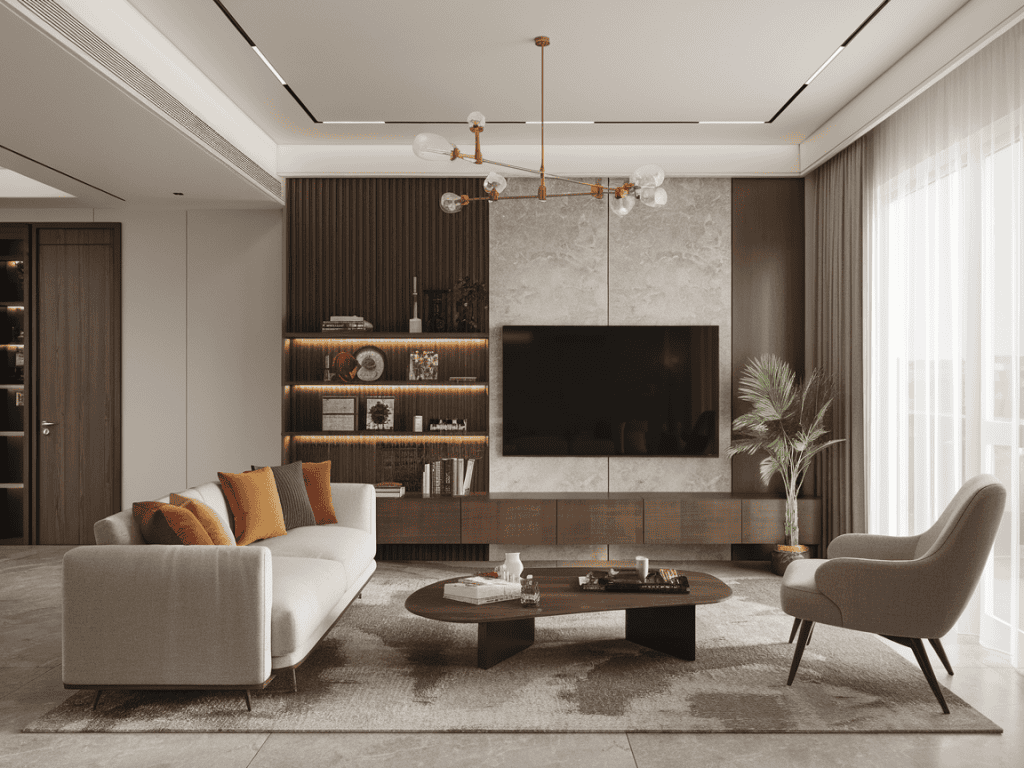
You know the feeling. You’ve spent three hours moving that heavy sectional back and forth across the floor. Your knee is bruised from hitting the coffee table. The TV glare is blinding you from the window. And somehow, the path from the kitchen to the front door still cuts straight through your favorite rug. It’s frustrating. It’s exhausting. And honestly? It’s unnecessary.
We’ve all been there. Staring at a blank wall or a cramped corner, wondering why our home doesn’t feel like home. We buy nice things. We pick out pretty colors. But we forget the most important part: the flow. In 2026, with so many tools and tips available, there is no excuse for living in a space that fights against you. It’s time to stop guessing. It’s time to measure, plan, and finally, relax.
The Heavy Lifting Starts With a Tape Measure
Before you lift a single cushion, put down the sofa legs and pick up a tape measure. I know, it sounds boring. Nobody wakes up excited to measure their baseboards. But here’s the truth: guessing is expensive. Buying a couch that’s too big means returning it, which costs time and often money. Buying one that’s too small leaves you with a weird, empty void that no amount of throw pillows can fix.
Start by mapping out the room’s dimensions. Not just the length and width, but the obstacles. Where are the outlets? Where do the doors swing open? How wide is the hallway leading into the room? These details matter more than you think. A beautiful chair is useless if you can’t get it through the doorframe. Or if it blocks the light switch. Write everything down. Sketch it out on paper or use a simple app on your phone. Seeing the space on paper helps your brain process it differently. It stops being a vague "room" and starts being a solvable puzzle.
Don’t forget vertical space too. Ceiling height affects how large your furniture feels. Low ceilings demand lower-profile pieces to keep the room from feeling cave-like. High ceilings can handle taller bookshelves and dramatic drapes. By gathering this data first, you’re not just decorating; you’re engineering a space that works. It’s the difference between hoping something fits and knowing it does.
Finding Your Focal Point (Or Creating One)
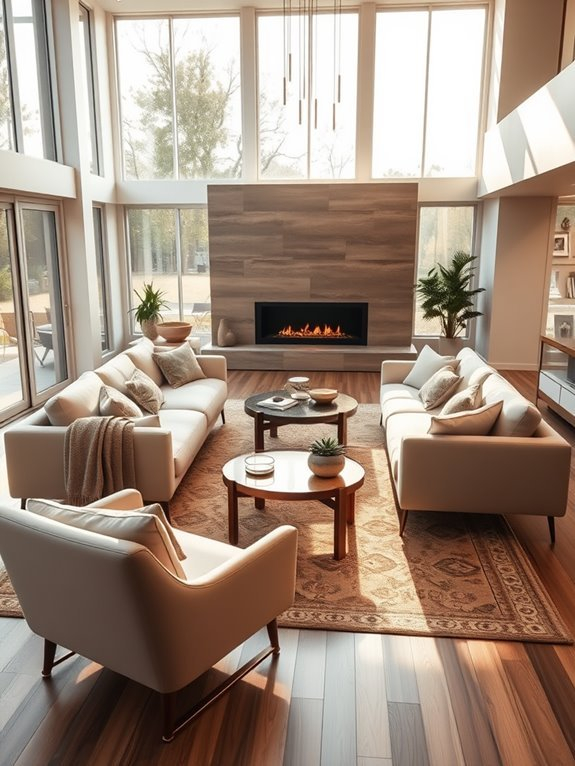
Every room needs an anchor. A place where your eyes naturally rest. In older homes, this was usually a fireplace. In modern apartments, it might be a large window with a view. But what if you don’t have either? What if you’re staring at a blank white wall? That’s okay. You can create a focal point. It doesn’t have to be architectural. It can be a piece of art, a media center, or even a bold rug.
The rule of thumb is simple: orient your main seating toward this focal point. If you have a TV, that’s likely your anchor. But be careful. Don’t let the TV dominate the room so much that conversation becomes impossible. Angle your seats slightly toward each other, not just straight ahead at the screen. This encourages interaction. It makes the space feel social, not just like a movie theater.
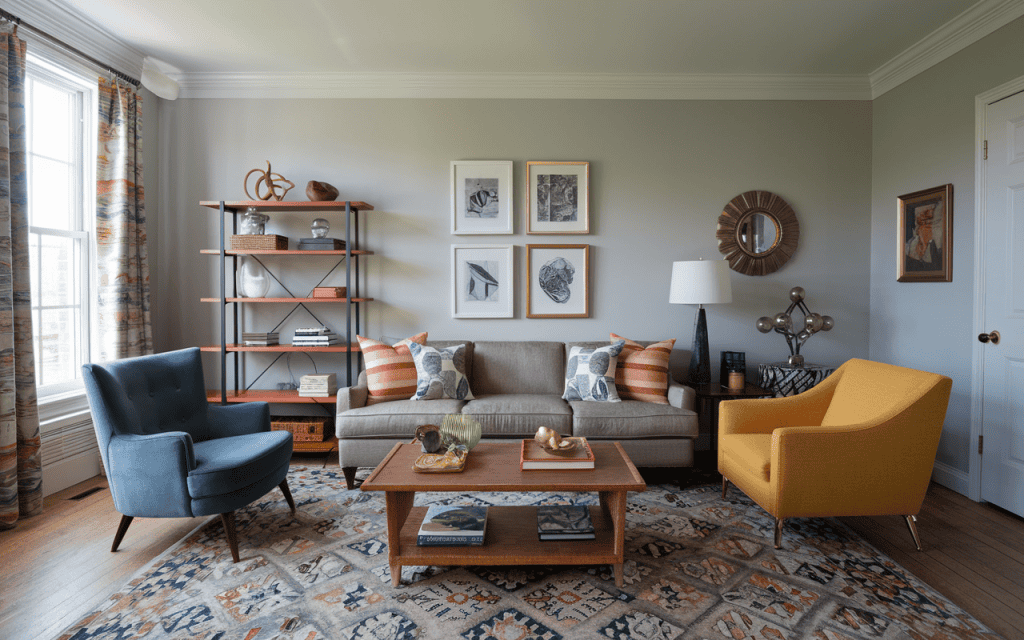
If you don’t watch much TV, try making a bookshelf or a gallery wall the star. Place your sofa facing it. Add two chairs angled inward. Suddenly, you’ve created a cozy reading nook or a chat zone. The key is intentionality. Don’t just push the sofa against the longest wall because that’s what everyone does. Ask yourself: What do I want to look at? What do I want to do here? Let the answer guide your placement.
The Magic Numbers: Clearances and Spacing
Here is where most people mess up. They buy furniture that looks good in the showroom but feels claustrophobic in their house. Why? Because they ignored the clearances. Interior designers use specific measurements to ensure comfort and flow. You don’t need a degree to use them. You just need to remember a few key numbers.
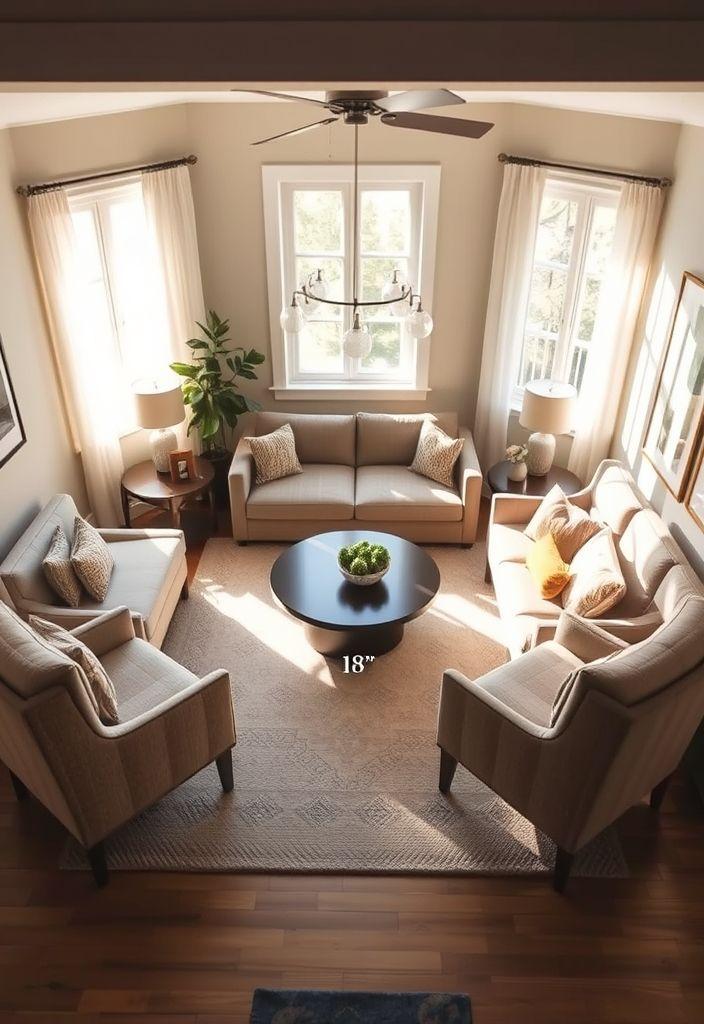
First, walkways. You need at least 30 to 36 inches of clear space for main traffic paths. This allows people to walk through without squeezing past your knees. If it’s a secondary path, like behind a chair, 24 inches might suffice, but 30 is safer. Second, the coffee table. It should be about 14 to 18 inches away from your sofa. Close enough to reach your drink, but far enough to stretch your legs. Any less, and you’re constantly bumping your shins. Any more, and you’re leaning forward uncomfortably.
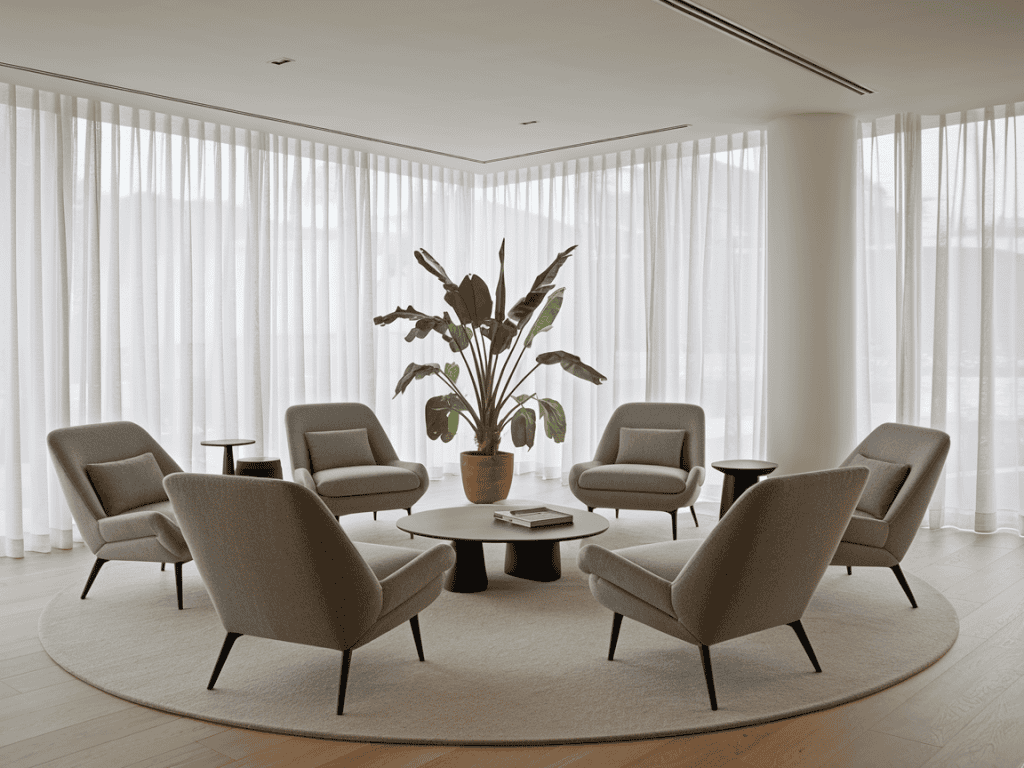
Third, consider the space between seating groups. If you have a sofa and two chairs, keep them within 8 feet of each other. This distance allows for easy conversation without shouting. If the gap is wider, the room feels disjointed. People won’t talk; they’ll just sit in silence. These aren’t rigid laws, but they are guidelines proven to work. Use them as a starting point. Adjust based on your body size and how you actually live. But don’t ignore them completely. Space is a luxury. Treat it like one.
Breaking the Wall Habit
For decades, we were taught to push all our furniture against the walls. It was supposed to make the room look bigger. Spoiler alert: it doesn’t. It actually makes large rooms feel empty and cold, and small rooms feel like a waiting room. In 2026, the trend is firmly toward "floating" furniture. Pulling pieces away from the walls creates intimacy. It defines zones. It makes the space feel curated, not just stored.
Try pulling your sofa six to twelve inches off the wall. Even that small gap adds depth. It lets light flow behind it. It makes the wall feel like a backdrop rather than a barrier. If you have an open-concept living and dining area, use your sofa to divide the spaces. Place it in the middle of the room, with a console table behind it. Now you have a clear boundary between "living" and "eating" without building a single wall.
This approach takes courage. It feels wrong at first. You worry about wasting space. But trust the process. Floating furniture allows for better circulation. It creates interesting angles. It invites you to walk around the room, not just along the edges. Experiment with different positions. Move the rug under the front legs of the sofa only, or fully under everything. See what feels right. There is no single correct answer, but pushing everything to the perimeter is rarely it.
Lighting and Layers: The Invisible Furniture
Lighting is often an afterthought. We plug in a lamp wherever there’s an outlet. But lighting is just as important as your sofa. It sets the mood. It defines areas. Bad lighting can make a perfectly arranged room feel sterile or gloomy. Good lighting makes it feel warm and inviting. Think of light as invisible furniture. It occupies space. It shapes how we see the room.
Avoid relying on a single overhead light. It casts harsh shadows and flattens the room. Instead, layer your lighting. Use ambient light for general illumination. Task lighting for reading or working. And accent lighting to highlight art or architectural features. Place floor lamps next to chairs. Use table lamps on side tables. Consider LED strips behind your TV or shelving for a soft glow.
Pay attention to the height of your lights. Eye level is usually around 60 inches. Place lamps so the bottom of the shade is at eye level when seated. This prevents glare and creates a cozy pool of light. Also, think about natural light. Don’t block windows with tall furniture unless you have to. Let the sun do the work during the day. At night, mimic that warmth with bulbs in the 2700K to 3000K range. Soft, yellow-toned light is forgiving. It makes skin tones look better and spaces feel softer.
Let’s be real. Moving furniture is hard work. Luckily, technology has caught up. In 2026, there are countless apps and AI tools that let you visualize layouts before you lift a finger. You can scan your room, drop in virtual furniture, and see how it fits. Some even account for sunlight patterns throughout the day. These tools are incredible for avoiding costly mistakes. Use them. Play with different configurations. Try a layout you’d never attempt in real life just to see if it works.
But don’t let the screen dictate everything. Technology can’t tell you how a fabric feels. It can’t tell you if the vibe is right. Once you have a plan, test it in real life. Live with the arrangement for a few days. Sit in the chairs. Watch a movie. Have a friend over. Does the flow work? Do you find yourself adjusting the pillows constantly? Is the TV glare still annoying?
It’s okay to break the rules. If floating the sofa feels too exposed, push it back. If a symmetrical layout feels too stiff, go asymmetrical. Your home should reflect you, not a magazine spread. If a layout looks perfect on paper but feels awkward in person, change it. Trust your instincts. You know how you live. You know where you drop your keys. You know which chair you prefer for morning coffee. Let those habits guide your final decisions. The best layout is the one that disappears, letting you just live.
So, take a breath. Put down the tape measure. Look at your room with fresh eyes. You don’t need new furniture. You don’t need a renovation. You just need a plan. Stop guessing. Start measuring. And most importantly, start living in a space that actually supports your life. It’s easier than you think. And frankly, you deserve it.