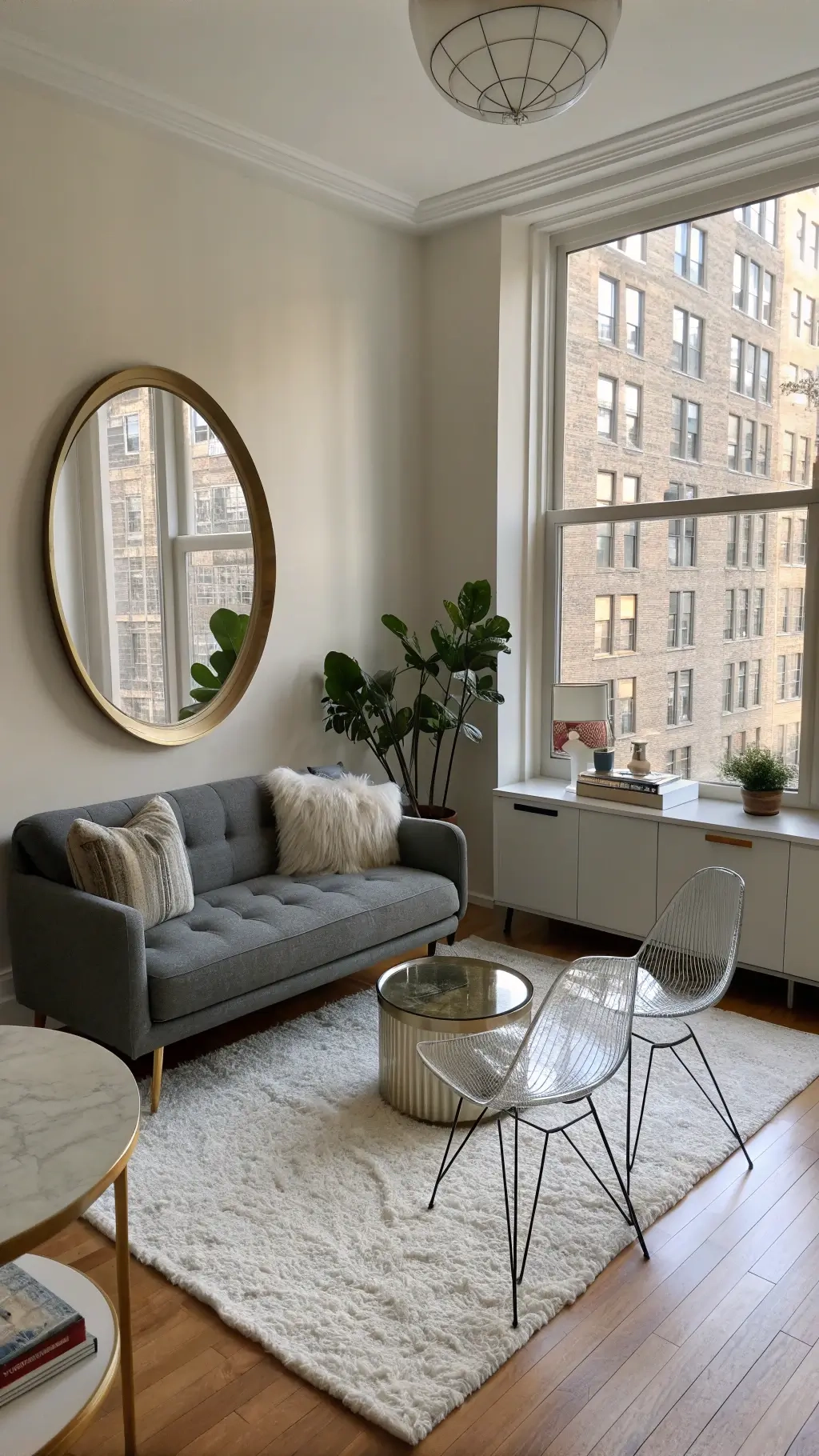
Ever walked into a tiny apartment and felt instantly trapped. We’ve all been there. It’s that heavy, claustrophobic feeling where the walls seem to be leaning in for a hug you never asked for. But then, you step into another place of the exact same size, and it feels like a breezy, sunlit haven. What gives?
It is not magic, and it is definitely not about spending a fortune on custom Italian furniture. It is entirely about psychology. Our brains are constantly calculating space based on visual cues, light, and how our bodies move through a room. By changing those cues, you can completely fool your mind into thinking a cramped area is actually quite spacious.
The Trick of the Unobstructed Pathway
When you walk into a room, your brain immediately maps out a route. If your eyes hit the back of a sofa or you have to shimmy past a coffee table, your subconscious registers a barrier. This instantly triggers a mini claustrophobic response.
To combat this, you want to create what designers call an open sightline. Keep the entryways completely clear. When you can see straight across the room to a window or a piece of art without anything blocking your view, the mind registers the entire distance as available space. It’s a simple trick, but it instantly lowers your mental stress when entering the room.
Floating Your Furniture
Most of us have an instinct to push every single piece of furniture flat against the walls. We think we are saving precious floor space in the center, right. Well, it actually does the exact opposite. Pushing everything against the drywall highlights the boundaries of the room, making it feel like a tight box.
Instead, try pulling your couch just a few inches away from the wall. This is called "floating" your furniture. Even a tiny gap creates shadows and depth, hinting to your brain that there is extra room to spare behind the seating. It breathes life into a stagnant layout.
The Magic of Low Profiles
Our perception of openness is highly tied to vertical clearance. If you fill a small room with tall, heavy bookshelves and high-backed armchairs, you block out the natural light and air flow. The room ends up feeling top-heavy and crowded.
Choosing furniture with a lower profile is a total game-changer. Low-slung couches and sleek coffee tables keep the middle zone of the room totally open. This allows your eyes to glide over the space effortlessly, making the ceiling feel much higher than it actually is.
Tricking the Eye with Leggy Pieces
Have you ever noticed how chunky, solid furniture looks like it weighs a ton. Pieces that sit flat on the floor block your view of the carpet or hardwood underneath. When you can’t see the floor, your brain assumes the room ends where the furniture begins.
Swap out a boxy chair for one with tapered, open legs. When you can see the floor extending underneath a sofa or a side table, your mind perceives more total square footage. It’s an optical illusion that adds instant lightness and breeze to any corner.
The Power of Strategic Mirrors
We all know mirrors make rooms look bigger, but placement is everything. Just hanging one randomly won’t do the trick. You need to think about what the mirror is actually reflecting.
If you place a large mirror directly across from a window, it bounces the outdoor light deep into the room and mimics a second window. It tricks your brain into seeing double the depth. Avoid reflecting messy areas or dark corners, as that only multiplies the visual clutter.
Visual noise is the ultimate enemy of a bright space. Every little knick-knack, loose cable, and stray magazine demands a tiny bit of your brain’s attention. When a room is packed with stuff, your mind feels overwhelmed and cramped.
Keep surfaces clean and invest in hidden storage. Use closed cabinets instead of open shelving to hide the daily mess. By reducing the number of objects your eyes have to process, the room instantly feels calmer, brighter, and significantly larger.
Making a small living room feel spacious isn’t about knocking down walls or living like a total minimalist. It’s about understanding how we perceive our surroundings and using those habits to our advantage.
By clearing sightlines, choosing smart furniture shapes, and maximizing light reflection, you can transform any tiny box into an inviting retreat. Take a look at your current setup today—sometimes, just moving a chair three inches can change everything.