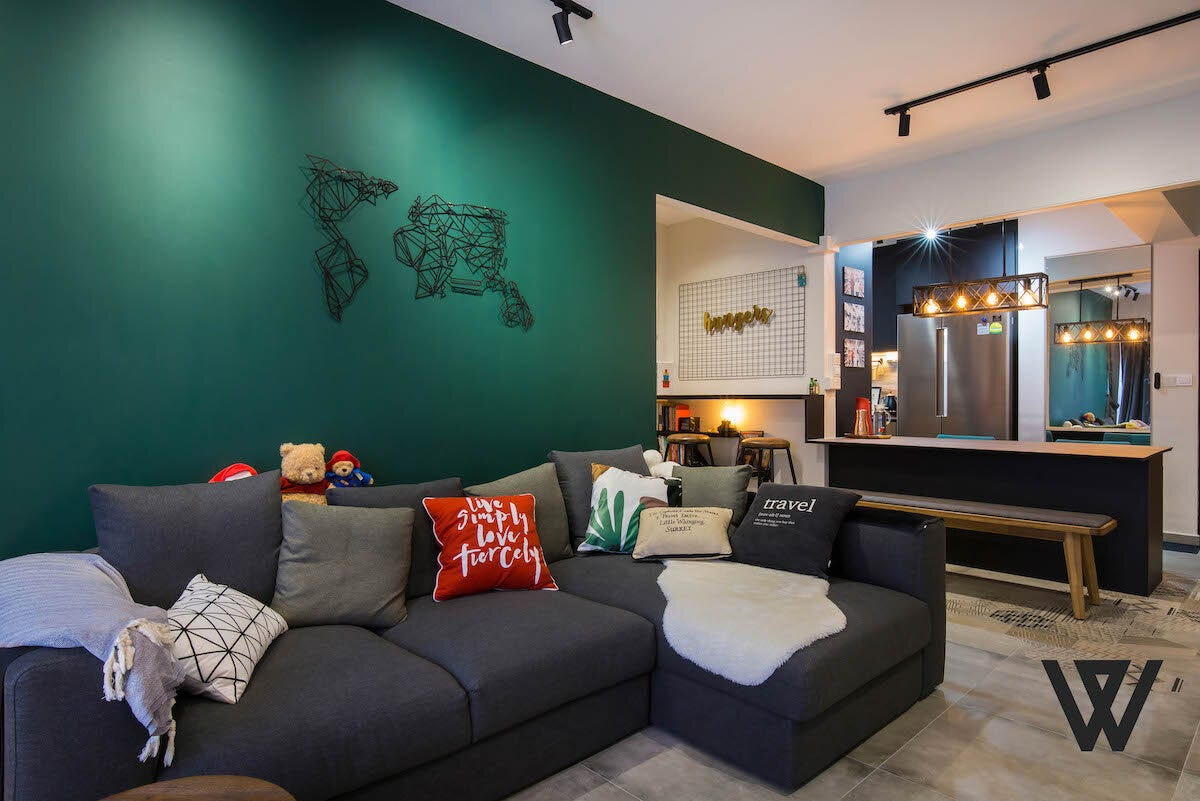
You walk into your living room. You sigh. It’s not that anything is broken. The sofa is fine. The rug isn’t torn. But something feels… off. Like wearing a shirt that’s one size too small. Or sitting in a chair that’s slightly wobbly. You can’t quite put your finger on it, but the space just doesn’t work.
Maybe you’ve tried moving the coffee table. Maybe you swapped out the pillows. Yet, the unease remains. In 2026, our homes are under more pressure than ever. They are offices, gyms, schools, and sanctuaries all at once. If the layout fights you instead of supporting you, every day feels harder. It’s exhausting.
The truth is, most living rooms don’t fail because of bad furniture. They fail because of invisible rules we stopped following—or never knew existed. Designers are seeing a huge shift this year. It’s not about buying new stuff. It’s about understanding how space breathes. Let’s look at why your room feels stuck, and how to unstick it.
The Trap of the "Open Concept" Hangover
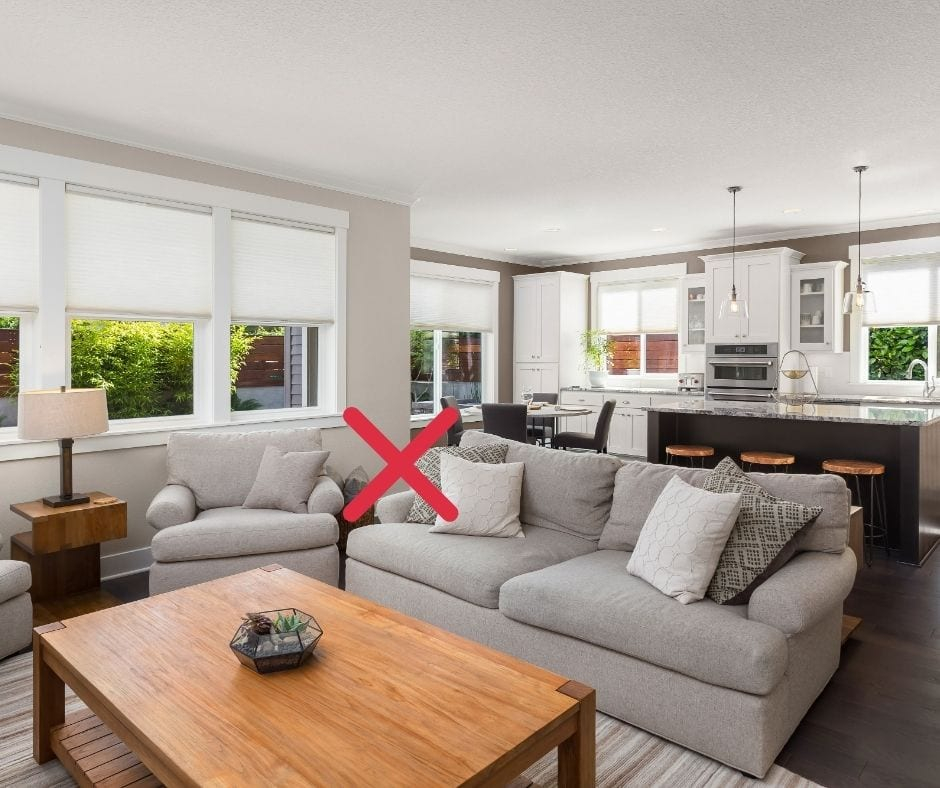
For years, we knocked down walls. We wanted everything open. Airy. Connected. But in 2026, that wide-open expanse often feels cold and undefined. Without clear boundaries, your living room bleeds into the kitchen or dining area until it has no identity of its own. It becomes a hallway with sofas.
Designers are calling this out as a major mistake. An open concept doesn’t mean "no zones." In fact, the lack of visual anchors makes the space feel chaotic. Your brain craves structure. When everything is visible at once, nothing feels special. The eye has nowhere to rest. It just scans. And scanning is tiring.
To fix this, you don’t need to build walls. You need to create "soft" boundaries. Use a large area rug to define the seating group. Place a console table behind the sofa to create a backstop. Think of it like drawing invisible lines on the floor. These lines tell your brain, "This is the lounge zone. This is the eating zone." Suddenly, the room feels intentional, not accidental. It’s a small shift, but it changes everything.
The Myth of the Perfect Symmetry
We love symmetry. It feels safe. Balanced. So, we push two identical sofas against opposite walls. We flank the TV with matching bookshelves. It looks like a magazine spread. But does it feel good? Often, no. Strict symmetry can feel stiff and formal, like a museum exhibit you’re afraid to touch.
In 2026, rigid symmetry is out. Life isn’t symmetrical. Your habits aren’t symmetrical. Maybe you lean left when you watch movies. Maybe your partner needs a side table on the right. A perfectly mirrored layout ignores how you actually live. It forces you to adapt to the furniture, rather than the furniture adapting to you.
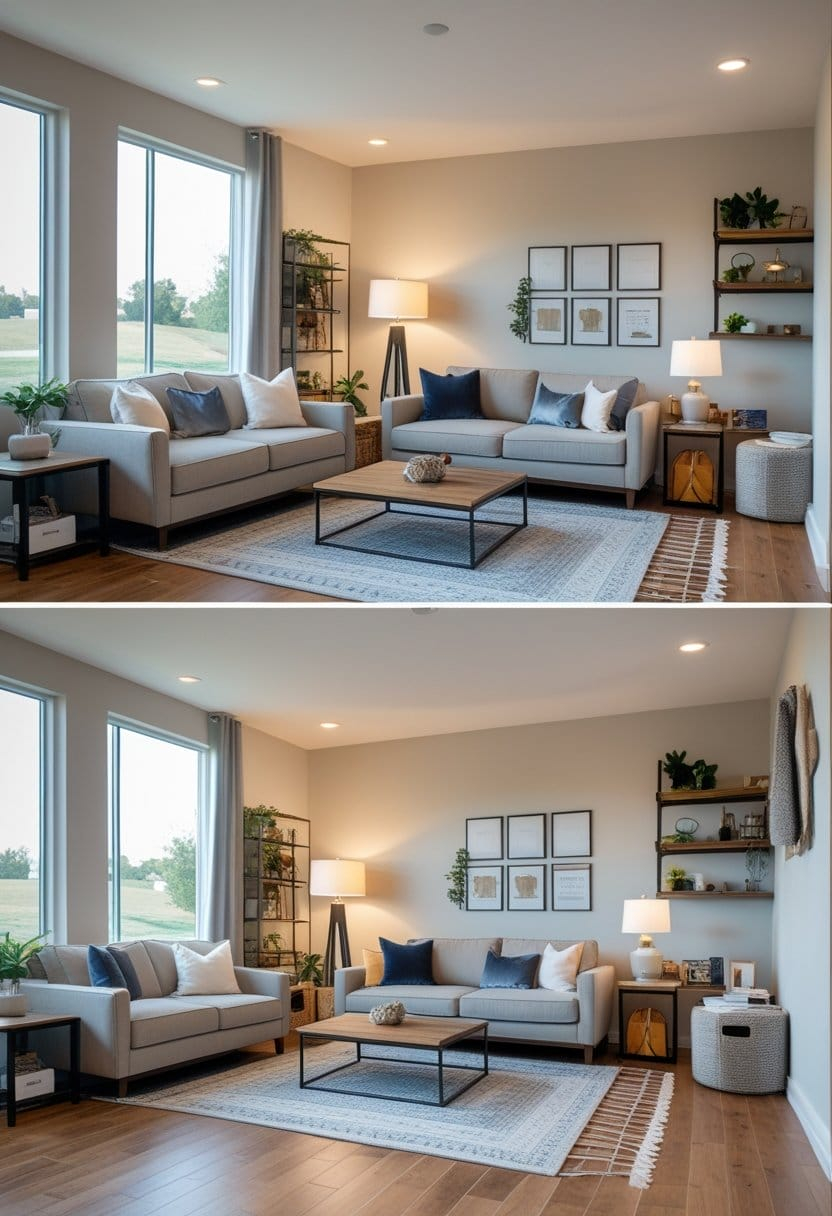
Try breaking the mirror. Swap one sofa for a pair of armchairs. Offset the coffee table slightly. Mix heights and shapes. Asymmetry creates movement. It invites the eye to travel around the room, discovering new angles. It feels more relaxed and human. Don’t be afraid of imbalance. Sometimes, a little chaos is exactly what a room needs to feel alive. It’s about balance, not mirroring. Big diference.
Ignoring the "Third Dimension" of Light
Most people think about lighting as an afterthought. You put a big light in the center of the ceiling. Done. But overhead lighting is the enemy of comfort. It casts harsh shadows. It flattens the room. It makes everyone look tired. In 2026, designers say poor lighting is the number one reason a layout feels "wrong," even if the furniture is perfect.
Lighting is the third dimension of design. It adds depth. It creates mood. A single source of light kills intimacy. You need layers. Think of it like an orchestra. You need the bass (ambient light), the melody (task light), and the harmony (accent light). When you only have one instrument playing, the song is boring.
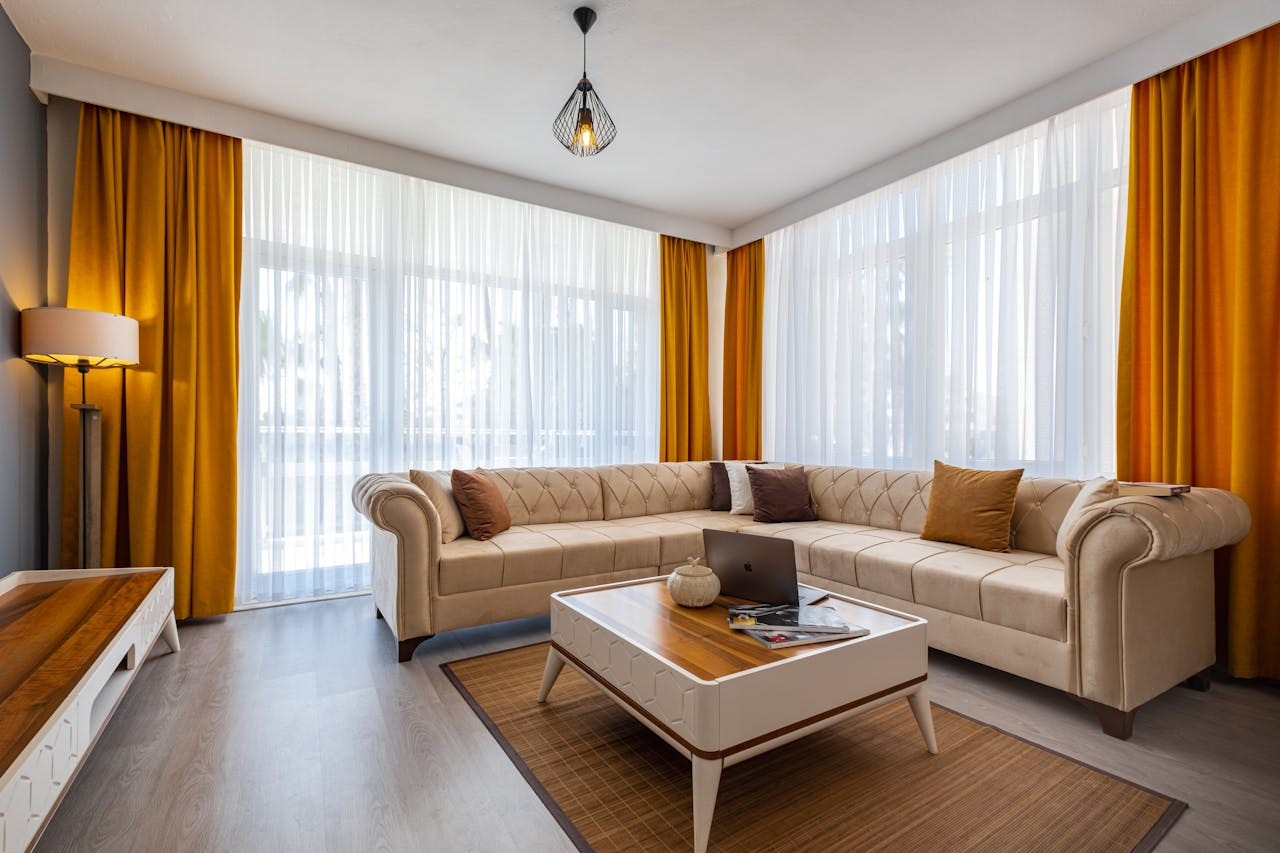
Start by turning off the big ceiling light. Seriously. Use floor lamps to wash light up the walls. Add table lamps at eye level for reading. Use small LED strips behind shelves or under cabinets for a soft glow. This creates pockets of warmth. It draws people in. It makes corners feel cozy, not dark. When you layer light, the layout suddenly feels deeper. More inviting. It’s magic, but it’s just physics.
The Furniture Float vs. The Wall Hugger
Here is a classic mistake. Pushing all your furniture against the walls. It seems logical. It opens up the middle of the room, right? Wrong. It creates a "dance floor" effect. A big empty void in the center that no one uses. It makes conversation difficult because people are shouting across a gap. It feels distant. Cold.
Designers call this "wall hugging." And they want you to stop. In 2026, the trend is pulling furniture in. Create a floating island of seating. Even if you have a small room, pull the sofa six inches off the wall. It creates breathing room. It lets light flow behind the pieces. It makes the room feel larger, paradoxically.
When furniture floats, it creates pathways around it, not just through the center. This improves traffic flow. People can move naturally without feeling like they are intruding on a stage. If you have a large room, use the back of the sofa to define a walkway. Don’t let the walls dictate your layout. Let the conversation dictate it. Bring the seats closer. Intimacy matters.
The Scale Mismatch Nobody Talks About
You bought a beautiful sectional. It looked great in the store. But in your room, it feels massive. Or maybe your coffee table looks like a toy next to your giant sofa. This is a scale issue. And it’s subtle. It’s not just about size; it’s about proportion. A room can feel cramped even with plenty of floor space if the furniture proportions are wrong.
In 2026, fast furniture is falling out of favor, partly because it often ignores scale. Pieces are made to fit in boxes, not necessarily to fit in homes. A low-profile sofa might disappear in a room with high ceilings. A bulky armchair might block a view. These mismatches create visual tension. Your brain senses the discord, even if you can’t name it.
Measure twice. Buy once. But also, look at vertical space. If you have high ceilings, use tall bookshelves or art to draw the eye up. If you have low ceilings, keep furniture low and streamlined. Ensure your coffee table is roughly two-thirds the length of your sofa. Check the height of your seat cushions. Do they align with your knees? Small details matter. Get the scale right, and the room feels harmonious. Get it wrong, and it feels like a puzzle with missing pieces.
Finally, the biggest hidden reason your layout fails? It lacks soul. It looks designed, not lived-in. In 2026, there is a huge pushback against sterile, Instagram-perfect spaces. People crave authenticity. They want rooms that tell their story. If your layout is technically correct but feels empty, it’s because the human details are missing.
This isn’t about clutter. It’s about intentionality. Where do you put your coffee cup? Is there a surface within reach? Where do you charge your phone? Is there a spot for it? These micro-functions are crucial. A layout that ignores daily habits will always feel frustrating. You’ll constantly be reaching too far or tripping over cords.
Add personal touches. A stack of books you’re actually reading. A blanket that’s soft, not just pretty. Plants that thrive in the light you have. These elements soften the hard edges of design. They make the space yours. Designers note that rooms with personal artifacts feel more "complete." They anchor the layout in reality. Don’t just arrange furniture. Arrange your life. Make space for the mess, the joy, and the quiet moments. That’s what makes a room work.
So, take a fresh look at your living room. Don’t just see the sofa. See the flow. See the light. See the gaps. Fixing your layout isn’t about spending money. It’s about paying attention. Move that lamp. Pull out that chair. Break the symmetry. Let the room breathe.
It might feel strange at first. Change always does. But soon, you’ll notice the difference. The sigh you used to give when walking in? It’ll be replaced by a sense of ease. Your home will finally feel like it fits. And in 2026, that’s the ultimate luxury. Not the newest trends, but the deepest comfort. Start small. Be patient. Your room is waiting to work for you.