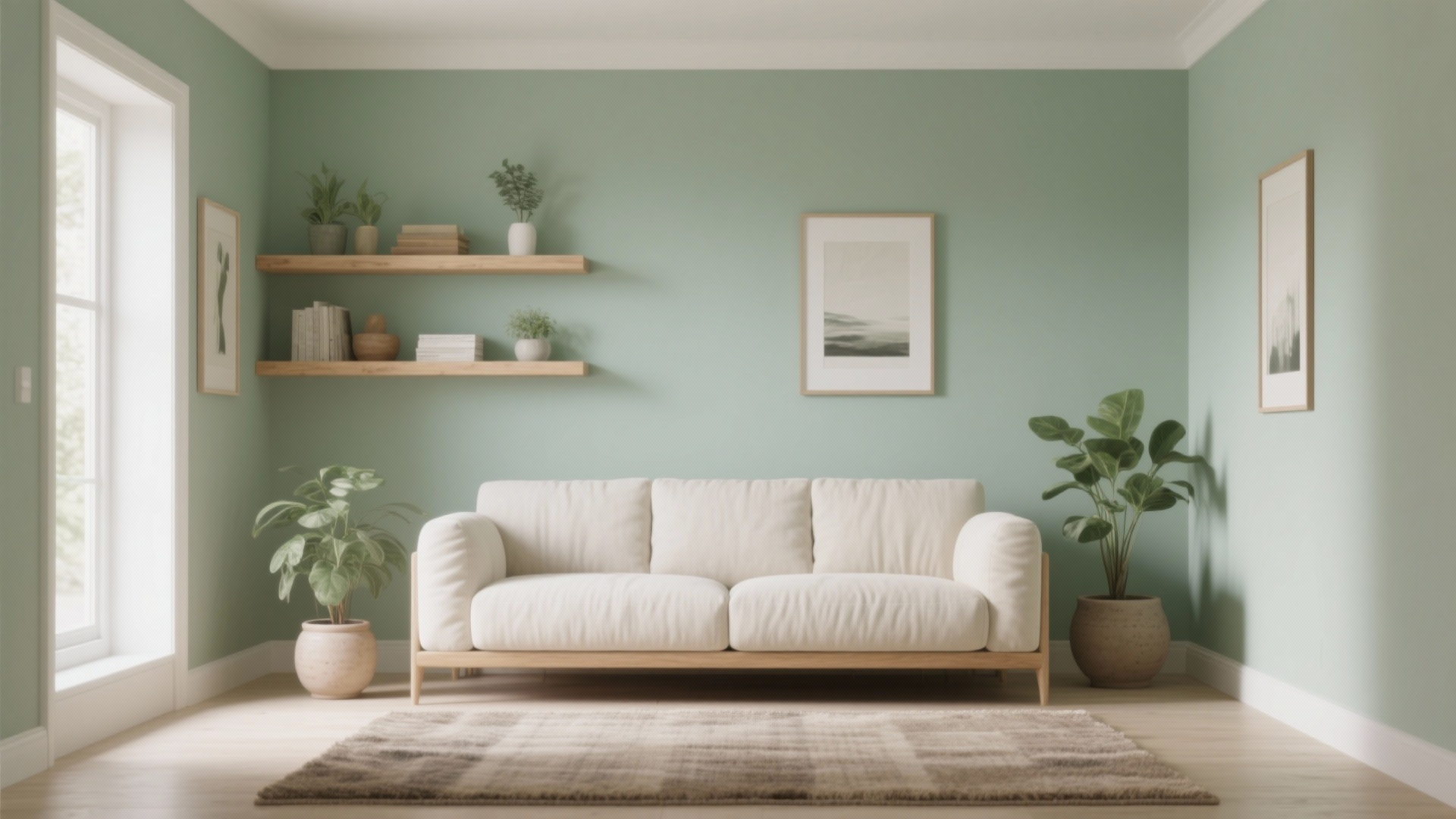
The evening light cuts through the window blinds of a compact urban apartment, casting long, dusty slats across a room that has seen too many gray-toned trends. For years, the default prescription for tight footprints was an austere, bleach-white minimalism meant to trick the eye into expanding square footage. Yet, stepping into those rooms often felt less like entering a sanctuary and more like inhabiting a sterile clinic. The walls closed in not because of physical dimensions, but because of an emotional vacuum.
Enter the quiet rebellion of green. Far from a passing fad, green has emerged as the definitive palette for interiors seeking a recalibration toward nature and mental restoration. When applied to a small living room, the color acts as a chameleon. It can swallow the harsh edges of awkward corners, blur the boundaries of cramped layouts, and infuse stale air with the psychological illusion of a sunlit forest canopy. Yet, designing a green room when you only have a few square meters to work with demands a delicate hand. Too dark, and your lounge morphs into a subterranean cave; too bright, and it risks overwhelming the senses.
Achieving a genuinely cozy, breathable green living room within a tight footprint requires an intimate understanding of how color saturation, light refraction, textures, and spatial psychology interact. This is not merely about splashing a trendy sage or olive paint onto a focal wall. It is an architectural and sensory puzzle that balances visual weight with functional grace, turning limited square footage into a deeply grounding personal retreat.
The Psychology of Canopy Tones in Compact Spaces
Spatial anxiety is real. When you spend hours confined within four walls measuring less than fifteen square feet across, the nervous system constantly registers physical boundaries. Color is the first line of defense against this claustrophobia. Evolutionary psychology suggests that human brains associate green with safety, water availability, and abundant foliage—signals that lower cortisol levels and normalize heart rates. In a compact living room, wrapping the space in green mimics the dappled, protective environment of a forest edge, lowering the psychological ceiling of confinement.
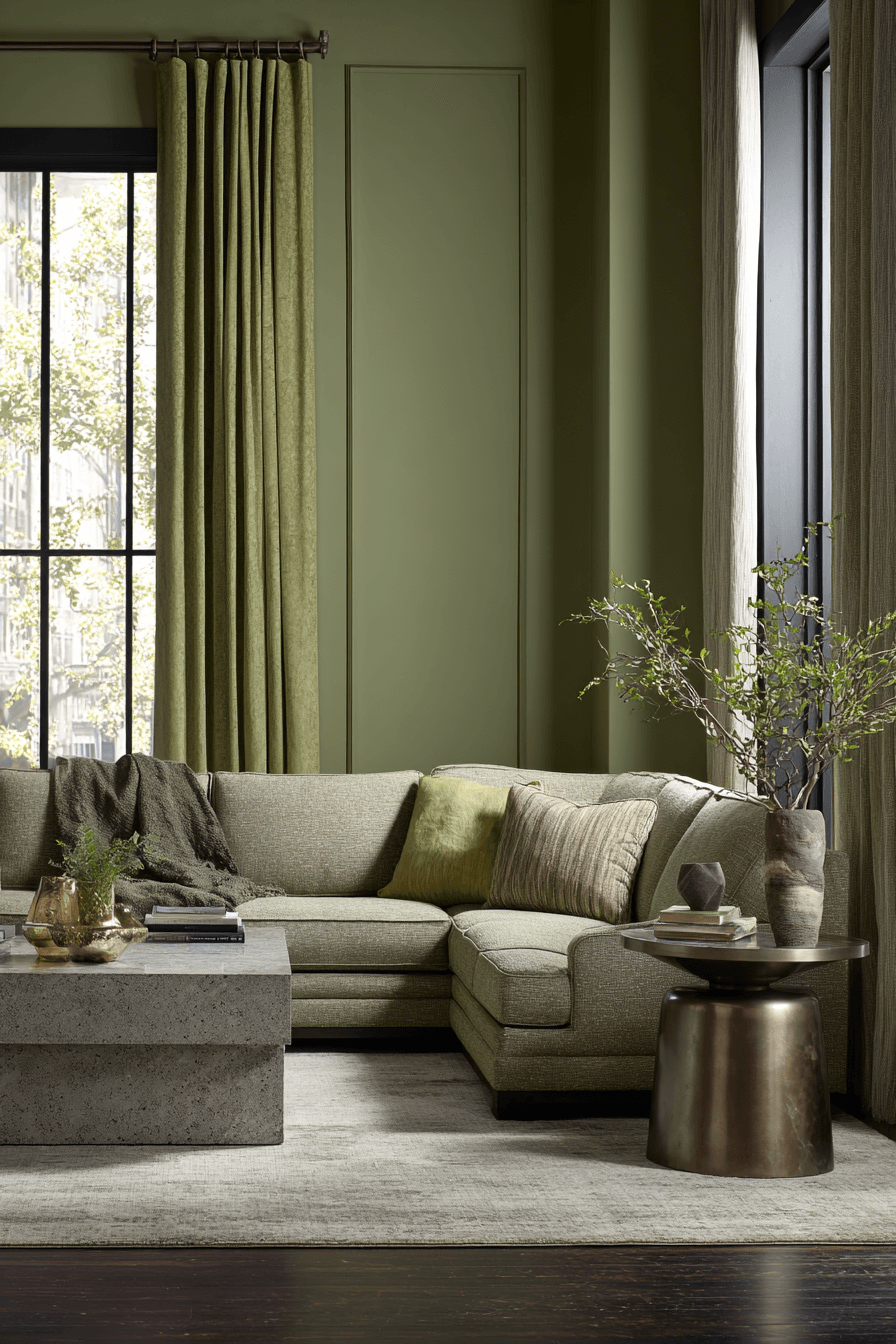
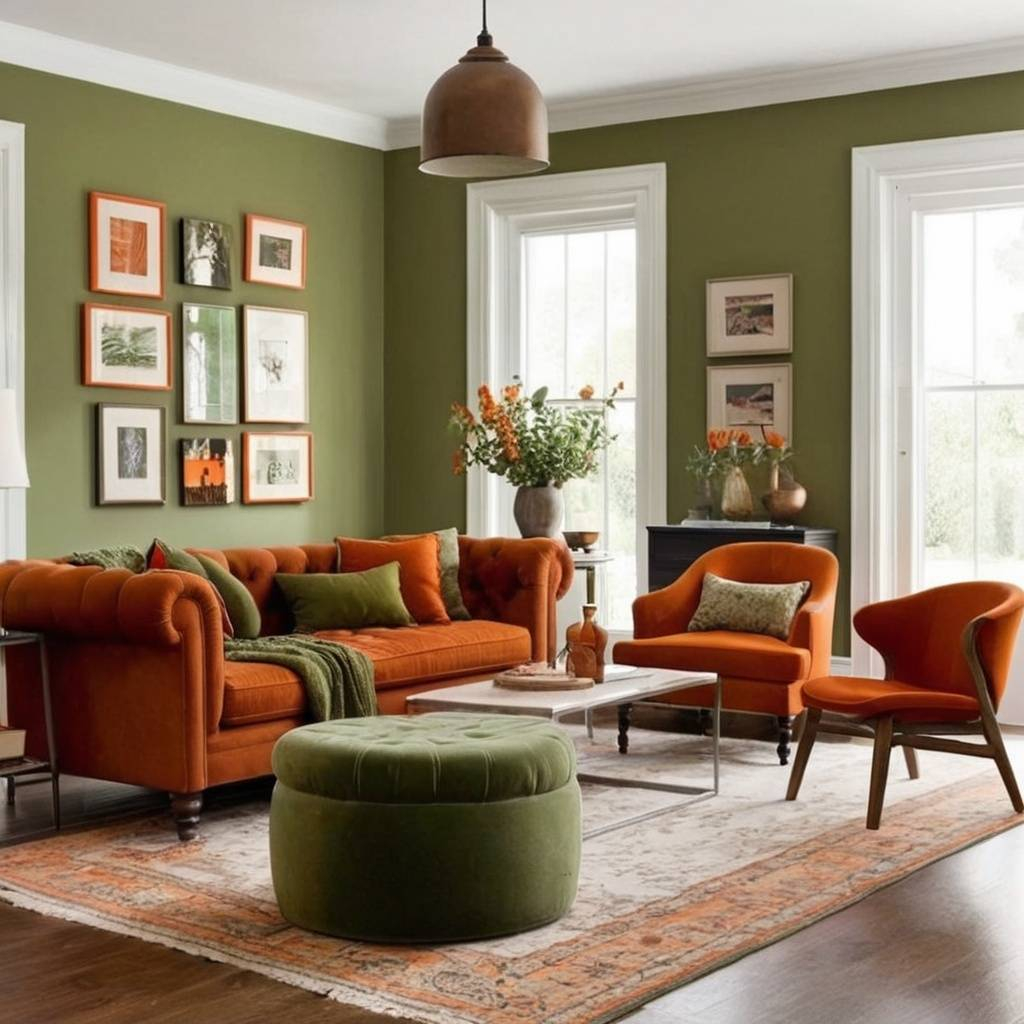
However, the specific undertone of green dictates how tight square footage reacts. Cool greens—such as mint, eucalyptus, and pale seafoam—have high reflectance values. They bounce incoming daylight around the room, visually pushing back the walls and tricking the eye into perceiving a wider expanse. Warm greens—olive, moss, and rich avocado—absorb light rather than reflecting it. While they threaten to make a small room feel microscopic if applied haphazardly, they excel at creating a cocooning, intimate atmosphere when paired with warm amber lighting.
Balancing these properties requires mapping out how natural light travels through your specific space. A north-facing small living room receives cold, bluish light that can easily turn a light green wall into an institutional mint. Here, leaning into the warmth of a dusty olive or introducing brass and terracotta accents rescues the room from feeling chilly. Conversely, a south-facing room drenched in afternoon sun can handle the crisp, breezy nature of a soft sage or pistachio without losing its welcoming pulse.
Calibrating Textures and Materials to Prevent Visual Clutter
In a tight footprint, every single square inch carries immense visual weight. If you rely solely on paint to create a green sanctuary, the room risks falling flat, looking like a painted shoebox. The secret to breathing life into a compact room lies in tactical layering of organic textures. Nature does not present itself in flat, monochromatic planes; it is an intricate tapestry of rough bark, translucent leaves, damp earth, and smooth stone.
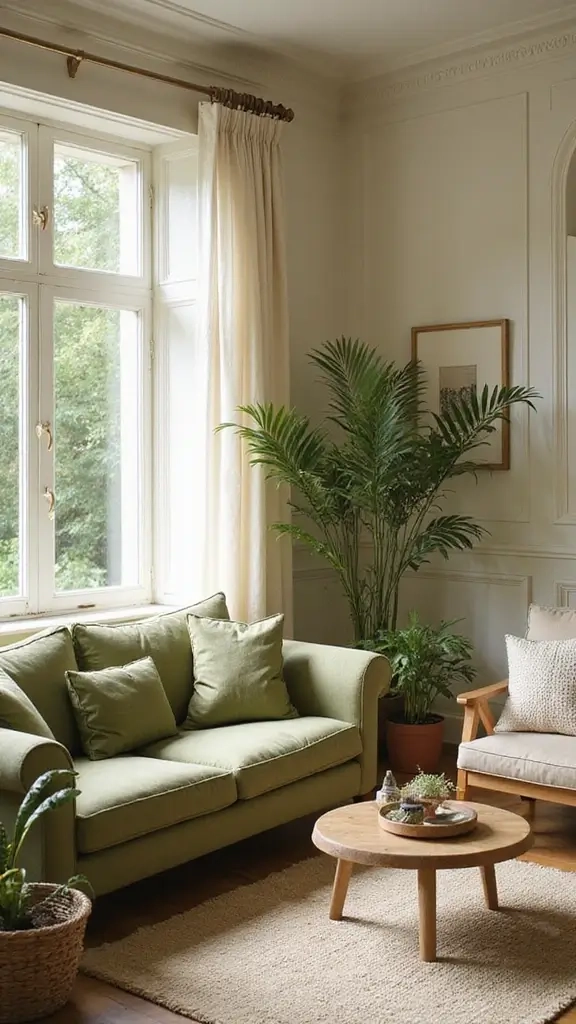
Begin from the ground up. A woven jute or seagrass rug introduces a warm, blonde, earthy neutral that grounds the dominant green tones without competing with them. Unlike heavy, high-pile wool rugs that can visually swallow a small floor plan, natural fiber flatweaves keep the floor plane looking open and breathable. Pair this with furniture frames crafted from exposed-grain woods like white oak, ash, or walnut. The golden undertones of these woods provide an essential biological counterpoint to the green backdrop, preventing the room from feeling cold or synthetic.
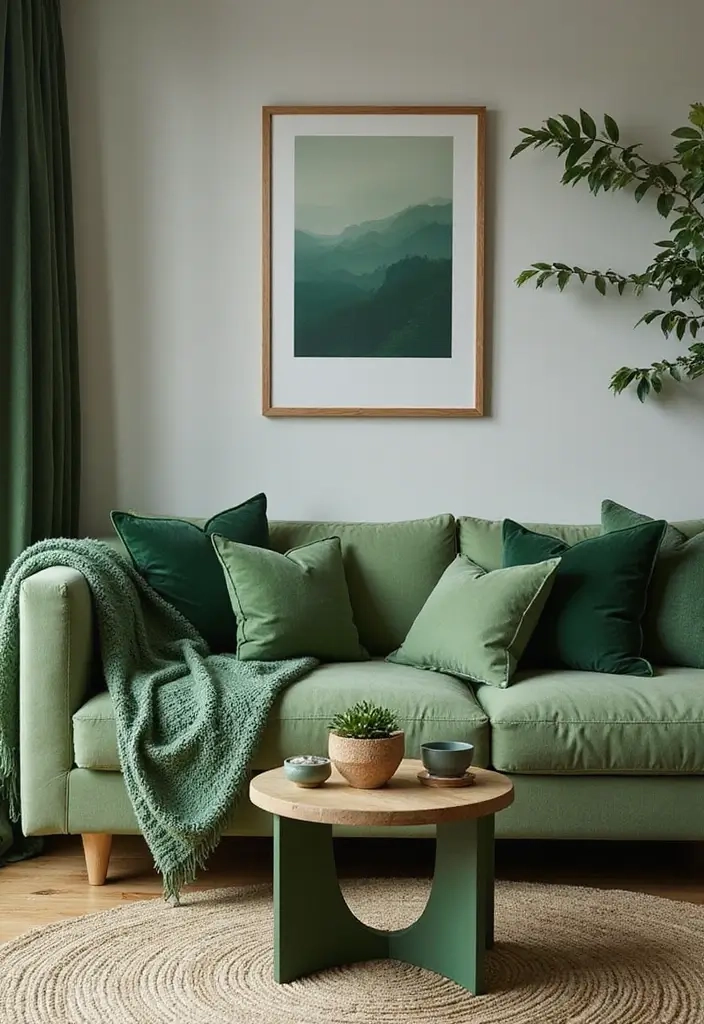
Upholstery and soft furnishings demand equal scrutiny. Heavy velvets in emerald or hunter green can look breathtaking, but in a small space, a sprawling velvet sectional will suffocate the room’s circulation. Instead, opt for apartment-scale seating with exposed wooden legs—a mid-century modern silhouette allows light to flow underneath the furniture, keeping the floor visible and making the room feel larger. Introduce tactile variety through linen cushion covers, bouclé throw blankets, and matte ceramic decor items that catch the ambient light differently throughout the day.
Step-by-Step Practical Implementation Guide
Transforming a cramped living room into a lush, breathable green haven requires a methodical approach. Skipping steps or rushing into a monochromatic paint job without accounting for lighting and layout will result in a disjointed, heavy-handed space. Follow this five-phase framework to execute a balanced design.
- Step 1 (Light and Undertone Audit): Observe your living room at three distinct times of day—morning, high noon, and dusk. Identify whether your light source is warm or cool, and select a green paint swatch (sage, moss, or eucalyptus) that neutralizes harsh glares or warms up dark shadows accordingly.
- Step 2 (Strategic Surface Application): Avoid the "cave effect" in tight footprints by painting only the architectural focal wall green, or commit to color-drenching (walls, trim, and ceiling in the same soft shade) to intentionally blur the room’s boundaries and make the corners disappear.
- Step 3 (Furniture Scale and Legibility): Audit your seating and storage pieces. Replace bulky, floor-skimming furniture with raised-leg profiles in light woods or slender metal frames to maximize visible floor space and light circulation.
- Step 4 (Vertical and Botanical Integration): Introduce plant life by utilizing vertical space rather than consuming precious floor area. Mount trailing plants like Pothos or Heartleaf Philodendron on high shelves, or install slim wall-mounted propagation stations to draw the eye upward.
- Step 5 (Tactile Layering and Illumination): Layer the space with warm, multi-source lighting (table lamps, picture lights, and floor uplights) rather than a single harsh overhead fixture. Accent with natural textures like rattan, raw ceramics, and unbleached linens.
Common Pitfalls and Field-Tested Workarounds
Even seasoned design enthusiasts stumble when translating grand aesthetic visions into modest square footage. Overlooking the physics of light and scale can turn a sanctuary project into a cramped disappointment. Recognizing these common missteps saves both time and budget.
- Pitfall 1 (The Monochromatic Trap): Painting every surface the exact same dark green without varying sheens or breaking up the planes makes a small room feel oppressive. Workaround: If color-drenching with a mid-to-dark green, use an eggshell finish on the walls and a satin or semi-gloss on the trim to catch light differently, and break up large expanses with large-scale mirrors or light-toned art.
- Pitfall 2 (Overcrowding with Foliage): The impulse to create an indoor jungle often leads to floor-standing monsteras and fiddle-leaf figs gobbling up precious legroom in a tiny lounge. Workaround: Pivot from floor plants to hanging baskets, vertical wall planters, and compact windowsill herbs that add botanical life without shrinking your walking paths.
- Pitfall 3 (Neglecting Lighting Temperature): Pairing cool sage green walls with stark 5000K LED daylight bulbs turns the living room into a sterile commercial office. Workaround: Standardize your lighting bulbs to a warm 2700K color temperature, which coaxes out the golden, organic undertones of olive and moss greens.
- Pitfall 4 (Choosing High-Contrast Rugs): Laying down a dark, heavily patterned area rug chops up a small floor plan, making the room feel fragmented and claustrophobic. Workaround: Stick to large, light-reflective natural fiber rugs that extend close to the baseboards, unifying the room and visually expanding the floor expanse.
- Pitfall 5 (Ignoring Functional Storage): Clutter destroys the restorative calm of a green living room faster than poor color choices. Workaround: Invest in multifunctional furniture pieces, such as an oak storage ottoman upholstered in a textured oatmeal or sage fabric, keeping everyday items out of sight.
The Broader Impact of Biophilic Design in Urban Living
The movement toward green interiors is not merely a styling preference; it is a direct response to the increasing mechanization of modern life. As urban densities rise and screen time dominates waking hours, the domestic interior has become our primary psychological bulkhead against sensory burnout. Biophilic design—the practice of connecting people and nature within our built environments—demonstrates measurable benefits for human wellness. Studies in environmental psychology consistently show that indoor plants and nature-inspired color palettes reduce blood pressure, enhance cognitive function, and foster a deeper sense of contentment.
When applied to tight footprints, biophilic principles do double duty. They solve a spatial problem by fostering an open-air illusion while simultaneously addressing a neurological need for natural stimulation. Choosing low-VOC (volatile organic compound) plant-based paints and sustainably harvested wood furniture further extends this ethos, ensuring that the materials breathing life into your room do not compromise the air quality of your home. In an era where sustainability is paramount, curating a living room with heirloom-quality vintage pieces, natural fibers, and living flora creates a closed-loop aesthetic that honors both the planet and the resident’s state of mind.
This approach shifts our relationship with small spaces. Instead of viewing a compact living room as a frustrating compromise—a box to be constantly reconfigured and tricked with mirrors—we begin to see it as an intentional jewel box. It is a concentrated dose of nature that requires less maintenance, consumes less energy to heat and light, and provides an outsized emotional return on investment.
Actionable Recommendations and Key Takeaways
Translating these insights into your own renovation or styling refresh requires a clear, prioritized framework. Focus your energy on high-impact interventions that alter spatial perception and sensory comfort without requiring structural overhauls.
- Anchor with Cohesive Palettes: Choose a singular dominant green tone (such as sage for maximum light reflection or muted olive for cocooning warmth) and use neutral supporting tones like oatmeal, raw linen, and warm oak to keep the palette grounded.
- Prioritize Sightlines: Keep windows unobstructed by heavy drapery. Opt for sheer linen panels mounted close to the ceiling line to draw the eye upward and flood the green walls with unfiltered daylight.
- Embrace Multifunctionality: Select furniture that serves dual purposes, such as nesting coffee tables that can be tucked away or a slim console that doubles as a workspace without disrupting the room’s calm flow.
- Curate Lighting Layers: Eliminate harsh overhead lighting in favor of warm, low-level illumination using floor lamps, wall sconces, and rechargeable table lamps placed at varying heights throughout the room.
- Incorporate Living Elements: Introduce at least three forms of botanical life—a trailing vine, a structural tabletop succulent, and a medium-sized statement plant in a breathable terracotta pot—to complete the nature-inspired atmosphere.
Redesigning a compact living room through the lens of green is ultimately an exercise in editing. It teaches us that abundance is not a function of square footage, but of intention. When you strip away the unnecessary clutter, honor the natural light available to you, and wrap your walls in the soothing cadence of forest tones, even the smallest urban apartment transforms into an expansive refuge.
The journey does not end the moment the last cushion is fluffed or the final plant is watered. A living room is an organic space that evolves alongside its inhabitants. As seasons shift, so too can your tactile layers—swapping heavy wool throws for breezy cotton weaves in the summer, or introducing dried seed pods and rich velvet accents as the winter chill sets in. By letting nature guide your hand, you create a home that does not merely occupy space, but actively breathes life into every moment spent within its walls.