Ever walk into your bedroom at the end of a long day and feel… nothing? Or worse, do you feel a low-level hum of anxiety because there’s just so much stuff staring back at you? We’ve all been there. Your room should be the place where the world stops spinning. It shouldn’t be another item on your to-do list.
If your space feels more like a storage unit with a bed in it, you aren’t alone. In 2026, the push for true rest is stronger than ever. We are tired. We are overstimulated. And honestly, we are done with bedrooms that look like magazine spreads but feel like ice rinks. Real minimalism isn’t about having less for the sake of it. It’s about keeping only what helps you breathe easier. Let’s talk about how to strip away the noise and find the calm.
The Psychology of Less: Why Clutter Steals Your Sleep
It’s not just in your head. Science has known for years that visual clutter creates mental clutter. When your eyes scan a room filled with piles of clothes, half-read books, and random knick-knacks, your brain is processing all of it. Even if you aren’t consciously thinking about that pile of laundry, your subconscious is flagging it as an unfinished task. This keeps your cortisol levels elevated right when they should be dropping.
Think about the last time you stayed in a high-end hotel. Why did you sleep so well? Sure, the mattress was nice. But mostly, it was because there was nowhere for your anxiety to land. The surfaces were clear. The lines were clean. Your brain got the signal: "There is nothing to do here but rest." That is the goal. By removing the excess, you aren’t just decorating; you are hacking your nervous system to switch off.
This doesn’t mean you need to live in an empty white box. That’s sterile, not serene. It means being ruthless about what earns a spot in your sanctuary. If an object doesn’t bring you joy or serve a critical function, it’s stealing energy from your rest. In a world that demands our attention 24/7, your bedroom is the one place where you can reclaim your focus by giving it nothing to focus on.
Color Palettes That Whisper Instead of Shout
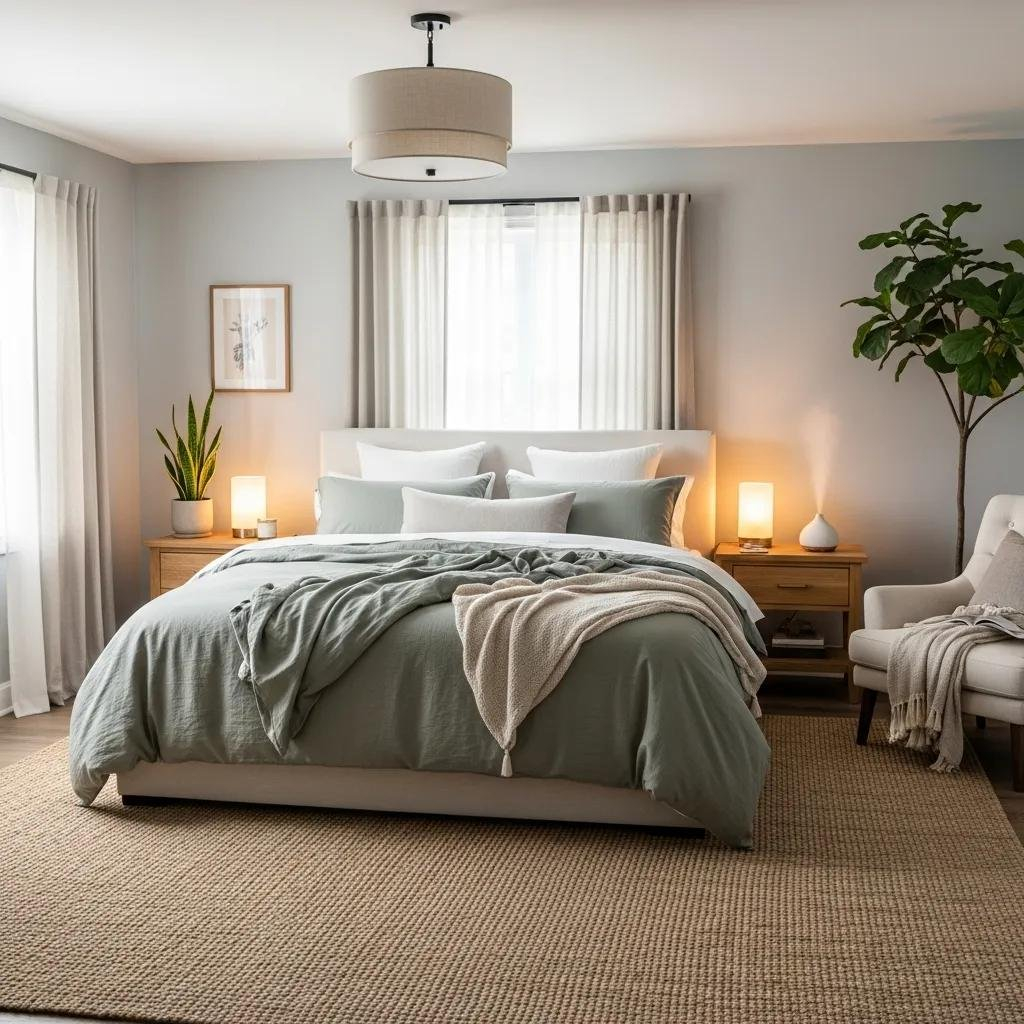
Color is the first thing you notice when you walk in, and it sets the emotional tone of the room. In 2026, we are moving away from the stark, clinical whites of the early 2010s. Those spaces often felt cold and uninviting. Today’s minimalist approach favors warmth. We are talking about earthy neutrals, soft greiges, and muted greens. These colors mimic the natural world, which our brains are hardwired to find calming.
Consider shades like warm oatmeal, soft clay, or dusty sage. These tones absorb light rather than reflecting it harshly, creating a cocoon-like effect. If you love color, keep it low-saturation. A deep, moody navy or a charcoal accent wall can actually be incredibly restful because it mimics the darkness of night, signaling to your body that it’s time to wind down. The key is consistency. Too many competing colors create visual vibration, which is the opposite of relaxation.
Don’t forget the ceiling. It’s often called the "fifth wall," and painting it a slightly lighter shade of your wall color can make the room feel taller and airier. Or, go bold with a dark ceiling to create a sense of intimacy and enclosure. Just avoid bright whites on large surfaces if you are sensitive to light. The goal is to soften the edges of the room. You want the space to feel like a gentle hug, not a spotlight.
Lighting Layers for a Soft Evening Glow
Lighting can make or break a minimalist bedroom. Overhead lighting is the enemy of relaxation. It’s flat, harsh, and reminds you of office buildings or grocery stores. If you only have one central light fixture, stop using it after sunset. Seriously. Put a lamp on it if you have to. The goal is to bring the light source down to eye level or below. This creates a softer, more intimate atmosphere that prepares your mind for sleep.
Layer your lighting with intention. Start with ambient light from a dimmable bedside lamp with a warm bulb (2700K or lower). Add task lighting if you read in bed, but keep it focused. In 2026, smart lighting systems are more accessible than ever, allowing you to schedule your lights to dim automatically as bedtime approaches. This gradual shift helps regulate your circadian rhythm without you having to think about it.
Candles are still a classic choice for a reason. The flickering flame provides a dynamic, organic light source that static LEDs can’t replicate. But be safe. Use flameless LED candles if you’re worried about fire hazards or have pets. The point is to avoid sharp shadows and bright spots. You want a glow that feels like dusk. If you can see the bulb directly, it’s too bright. Diffuse everything. Use linen shades or frosted glass to soften the output.
Furniture That Breathes: Choosing Essentials Wisely
In a minimalist bedroom, every piece of furniture needs to pull its weight. If it doesn’t serve a purpose or bring you genuine aesthetic pleasure, it has to go. Start with the bed. It’s the anchor. Choose a frame with clean lines and a low profile. Platform beds are great because they eliminate the need for a box spring and often offer built-in storage, reducing the need for extra dressers. Keep the headboard simple—a padded upholstered one adds softness and comfort for reading, while a wooden slat design adds texture without bulk.
Nightstands should be small and functional. You really only need space for a lamp, a book, and maybe a glass of water. If you find yourself piling stuff on them, they are too big or you have too much clutter. Consider floating shelves instead of traditional nightstands to free up floor space. Seeing the floor continue under your furniture makes the room feel larger and less cramped. It’s a simple trick that adds significant visual breathing room.
Be wary of the "chair in the corner" syndrome. We all know that chair. It starts out as a place to sit, but quickly becomes a landing pad for clothes. If you don’t actively use a chair for reading or dressing, get rid of it. Replace it with a small ottoman that can be tucked away or used as a footrest. The floor space is valuable real estate for your peace of mind. Keep pathways clear. You should be able to walk around your bed without navigating an obstacle course.
Textures Over Things: Adding Warmth Without Clutter
One of the biggest misconceptions about minimalism is that it has to be cold or bare. It doesn’t. The secret to making a sparse room feel cozy is texture. Since you are limiting the number of objects, you need to maximize the sensory experience of the ones you keep. Think about how things feel against your skin. This is where your budget should go: high-quality linens, a weighted blanket, or a plush wool rug.
Layer your bedding with intention. Start with crisp cotton or breathable bamboo sheets. Add a lightweight quilt or duvet, and top it with a textured throw blanket folded at the foot of the bed. Mix materials—linen, wool, cotton, velvet—but keep the color palette tight. This creates visual interest without chaos. When you slide into bed, the tactile experience should be luxurious. It’s a small daily pleasure that adds up to a major boost in well-being.
Rugs are essential for softening the acoustics and the feel of the room. A large natural fiber rug under the bed anchors the space and adds warmth underfoot. If you have hardwood floors, this is non-negotiable for comfort. Don’t be afraid of imperfection. A hand-knotted rug with slight variations adds character and humanity to the space. It reminds you that the room is lived-in, not staged. The goal is to create a space that invites you to slow down and touch, feel, and rest.
Minimalism fails when you don’t have a place for your stuff. You can’t just throw things away; you have to have a home for what remains. The best storage is the kind you don’t see. Clutter is visual noise, so hiding it is crucial for maintaining that sense of calm. Invest in closed storage solutions like dressers with solid fronts or wardrobes with doors. Open shelving looks nice in photos, but in real life, it requires constant styling and dusting. It’s a trap.
Use the space under your bed wisely. If your bed frame allows, use shallow drawers for off-season clothes or extra linens. This keeps bulky items out of sight but easily accessible. Inside your closets, use uniform hangers and drawer dividers. When you open a drawer and see everything neatly organized, it reduces decision fatigue in the morning. You don’t have to dig or sort. You just grab and go. This smoothness translates to a calmer start to your day.
Adopt the "one in, one out" rule to maintain the balance. If you buy a new shirt, an old one has to leave. This prevents the slow creep of accumulation that ruins minimalist spaces over time. Regularly audit your surfaces. If your nightstand or dresser top starts to collect receipts, hair ties, and loose change, reset it every Sunday evening. Take five minutes to clear the decks. This small ritual signals to your brain that the week is over and the space is ready for rest. It’s maintenance, but it’s easy maintenance.
Creating a minimalist bedroom isn’t about perfection. It’s about intention. It’s about looking at your space and asking, "Does this help me rest?" If the answer is no, let it go. Start small. Clear one surface. Change one lightbulb. Wash your sheets. Notice how it feels. That feeling of lightness? That’s the point.
You don’t need to overhaul your entire house overnight. Just start with the room where you spend a third of your life. Make it a place that supports you, not a place that drains you. In 2026, rest is a radical act. Protect it. Curate your space to protect your peace. You deserve to wake up feeling refreshed, not overwhelmed.
So, take a breath. Look around your room. What’s the one thing you can remove right now? Do it. Then, sit on your bed and just be. That silence? That’s the sound of your new sanctuary. Enjoy it.