Ever walk into your bedroom and feel like the walls are closing in? You’re not alone. In 2026, with urban living spaces shrinking and rent prices climbing, more of us are squeezing into cozy quarters than ever before. It’s a common struggle. But here’s the secret: square footage is just a number. Perception is everything.
You don’t need to knock down walls or hire an expensive architect to breathe new life into a cramped sleeping nook. Sometimes, the smallest changes yield the biggest results. A shift in perspective, a tweak in lighting, or a clever storage solution can trick the eye into seeing space where there seemingly is none. It’s about working with what you have, not fighting against it.
Let’s be honest. A cluttered, dark room feels suffocating. But a well-curated, bright space? That feels like a retreat. The difference isn’t always in the size of the room, but in how you dress it up. By understanding how light, color, and layout interact, you can transform a shoebox into a sanctuary. It’s not magic. It’s just smart design. And the best part? Most of these tweaks cost next to nothing.
Let There Be Light (And Let It Travel)
Light is the single most powerful tool in your arsenal. Natural light is gold. If you have windows, don’t block them. Heavy, dark curtains are the enemy of a small space. They absorb light and make the room feel smaller and heavier. Instead, opt for sheer fabrics or lightweight linen that allow sunlight to filter through. This softens the edges of the room and makes it feel airier. If privacy is a concern, layer sheer panels under heavier drapes that you only pull when needed.
But what if your room lacks natural light? Or what if it faces north and stays gloomy? That’s where artificial lighting comes in. Relying on a single overhead fixture creates harsh shadows and flattens the room. It highlights every corner and makes the ceiling feel lower. Try layering your light sources. Use table lamps, floor lamps, and even wall sconces to create pools of light at different heights. This draws the eye around the room and adds depth. Warm white bulbs (around 2700K-3000K) create a cozy, inviting atmosphere that feels expansive rather than sterile.
Don’t forget the corners. Dark corners shrink a room. Placing a floor lamp or a tall plant with uplighting in a corner pushes the boundaries out visually. It tells your brain that the space continues. It’s a subtle psychological trick, but it works. In 2026, smart bulbs are affordable and easy to use. You can adjust brightness and color temperature to match the time of day, ensuring your room always feels open and welcoming, no matter the hour.
The Mirror Magic Trick
Mirrors are the oldest trick in the interior design book, and for good reason. They reflect light and create the illusion of depth, effectively doubling the visual space. But placement matters. Slapping a mirror on any old wall won’t necessarily do the job. You want to position it to reflect something pleasant, like a window or a piece of art. This bounces natural light around the room and creates a view that isn’t really there. It’s like adding a virtual window.
Consider a large floor mirror leaned against a wall. It doesn’t require drilling holes and can be moved easily. A full-length mirror not only serves a functional purpose but also reflects the entire height of the room, making ceilings feel taller. If you have a narrow room, placing a mirror on one of the long walls can make the space feel wider. It breaks up the monotony of the wall and adds a sense of movement.
You can also get creative with mirrored furniture. A nightstand with a mirrored surface or a dresser with mirrored drawers can add glamour while keeping the visual weight low. These pieces blend into the background rather than dominating the space. Just be careful not to overdo it. Too many mirrors can feel disorienting or like a funhouse. One or two well-placed pieces are enough to create that spacious feel without going overboard. It’s about balance, not excess.
Color Your World (But Keep It Light)
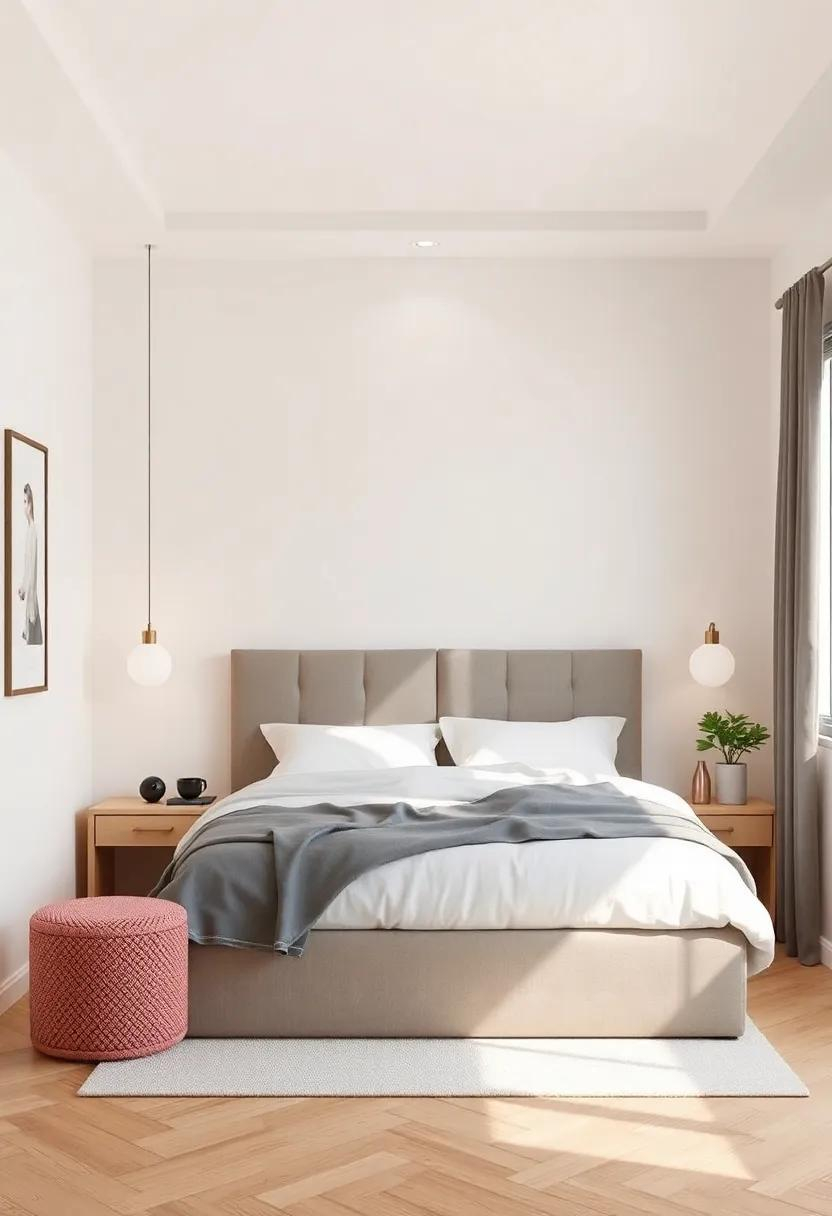
Paint is cheap, but its impact is huge. Dark colors absorb light and make walls feel like they’re closing in. Light colors reflect light and make surfaces recede. This is basic physics, but it’s crucial for small spaces. Whites, creams, soft grays, and pale pastels are your friends. They create a seamless backdrop that allows the eye to travel uninterrupted. When the walls and ceiling are the same light color, the boundaries blur, and the room feels larger.
But “light” doesn’t have to mean boring white. In 2026, we’re seeing a rise in warm neutrals and earthy tones that still keep things bright. Think sandy beiges, soft sage greens, or muted blues. These colors add personality without sacrificing the sense of space. If you love bold colors, use them as accents. A colorful throw pillow, a vibrant rug, or a piece of artwork can add punch without overwhelming the room. Keep the large surfaces neutral and let the small items bring the energy.
Another pro tip? Paint your trim and baseboards the same color as your walls. Contrasting white trim against colored walls chops up the wall space and defines the boundaries sharply. By blending them together, you remove those visual interruptions. The wall looks like one continuous plane, which makes it feel taller and wider. It’s a tiny detail that often gets overlooked, but it makes a surprising difference. Don’t be afraid to test samples on your walls before committing. Light changes throughout the day, so see how the color looks in the morning, afternoon, and evening.
Furniture That Floats and Multiplies
In a small bedroom, every piece of furniture needs to earn its keep. Bulky, heavy furniture sucks the life out of a small space. It blocks sightlines and makes the room feel cluttered. Opt for pieces with legs. Sofas, chairs, and beds that are raised off the floor allow light and air to flow underneath. This creates a sense of openness and makes the floor space appear larger. It’s called “visual breathing room,” and it’s essential.
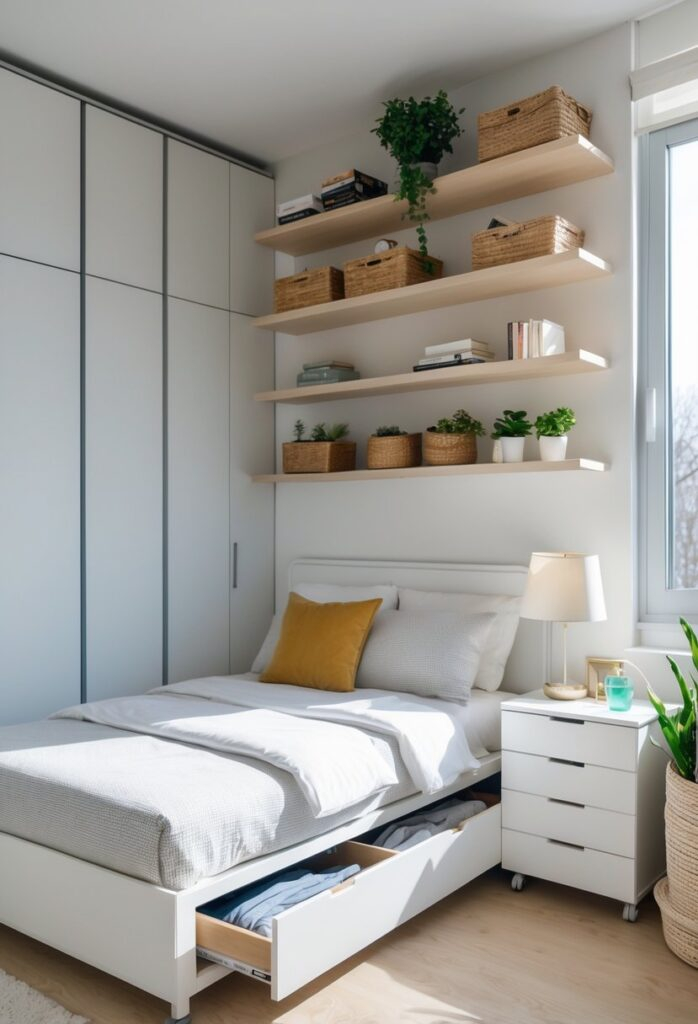
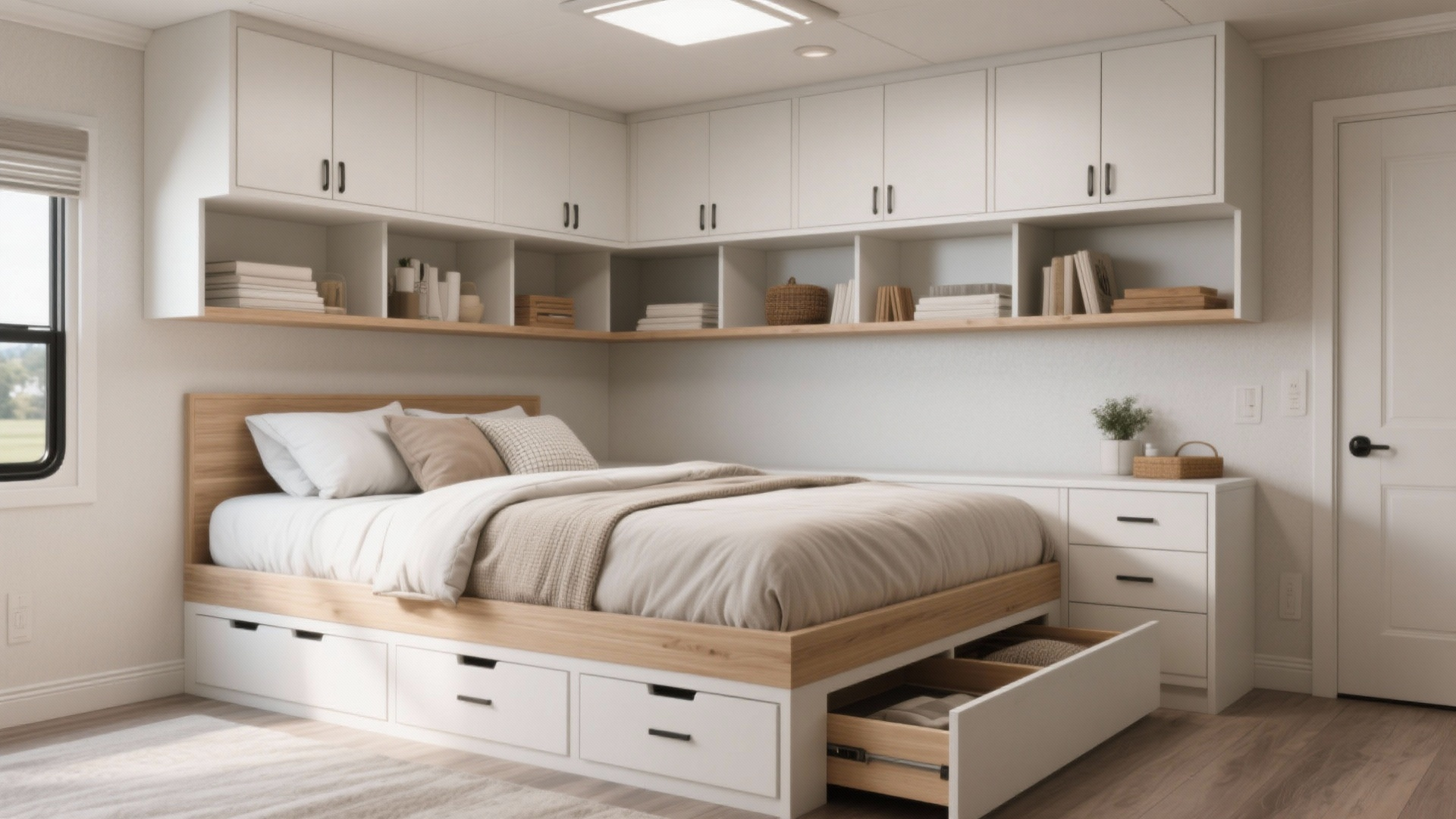
Multifunctional furniture is your best friend. A bed with built-in storage drawers eliminates the need for a bulky dresser. A nightstand that doubles as a desk saves floor space. Look for pieces that serve double duty. In 2026, modular furniture is trending, allowing you to customize layouts to fit your specific needs. A fold-down desk that mounts to the wall can disappear when not in use, freeing up valuable floor space for movement.
Scale is also important. A king-sized bed in a tiny room leaves no room for anything else. Consider a full or even a twin bed if space is extremely tight. It’s better to have a appropriately sized bed and room to walk around than a massive bed that dominates the entire floor plan. Floating shelves are another great option. They provide storage without taking up floor space. Mount them high on the walls to draw the eye upward and emphasize vertical space. Keep the surfaces clear to maintain that airy feel. Clutter on shelves makes the room feel busy and small.
Declutter Like Your Sanity Depends On It (It Does)
Clutter is the number one enemy of small spaces. Every item out on display competes for attention and visual space. In a large room, a few stray items might go unnoticed. In a small bedroom, they scream for attention. The first step to making your room feel bigger is to edit ruthlessly. Ask yourself: Do I need this? Do I love this? If the answer is no, it goes. Donate, sell, or toss. Be brutal.
Storage is key, but hidden storage is better. Baskets, bins, and boxes can corral items and keep them out of sight. Under-bed storage is prime real estate. Use it for off-season clothes, extra linens, or shoes. Closets should be organized meticulously. Use slim hangers, shelf dividers, and hanging organizers to maximize every inch. A chaotic closet spills stress into the bedroom. A tidy closet contributes to a calm, open atmosphere.
Surfaces should be kept clear. Nightstands, dressers, and desks should have only a few essential items. A lamp, a book, maybe a glass of water. That’s it. Visual noise creates mental noise. When your eyes rest on clean surfaces, your brain perceives more space. It’s a calming effect. Make it a habit to reset your room every morning. Put things away, fluff the pillows, and clear the decks. This daily ritual keeps the space feeling intentional and spacious, rather than accidental and cramped.
Your eyes naturally follow lines. In a small room, you want to guide them upward and outward. Horizontal lines can make a room feel wider but also shorter. Vertical lines make ceilings feel higher. Use this to your advantage. Hang curtains high and wide. Mount the curtain rod close to the ceiling, not just above the window frame. Let the curtains fall all the way to the floor. This elongates the walls and makes the room feel grander. It’s a simple installation tweak with a massive payoff.
Artwork placement matters too. Hanging art at eye level is standard, but in a small room, try hanging it slightly higher. This draws the eye up and emphasizes the height of the ceiling. Large-scale art can actually make a small room feel bigger than several small pieces. Small pieces create visual clutter and chop up the wall. One large statement piece anchors the space and creates a focal point that doesn’t overwhelm.
Rugs can also play a role. A large rug that fits under the bed and extends out on both sides anchors the furniture and defines the space. It makes the floor area feel cohesive and larger. A tiny rug floating in the middle of the room makes the space feel disjointed and smaller. Choose a rug with a subtle pattern or solid color to avoid visual busyness. Stripes running lengthwise can elongate the room. It’s all about directing the gaze. You’re the director of your own visual experience. Control where the eye goes, and you control how big the room feels.
So, there you have it. Making a small bedroom feel twice as big isn’t about major renovations or breaking the bank. It’s about intention. It’s about understanding how light bounces, how colors recede, and how furniture occupies space. It’s about clearing the clutter that weighs you down and letting the room breathe. These tweaks are simple, yes, but their impact is profound.
Start with one thing. Maybe it’s swapping out those heavy curtains. Maybe it’s decluttering your nightstand. Maybe it’s adding a mirror. See how it feels. Then move to the next. Small steps lead to big changes. Your bedroom should be a place of rest, not stress. It should feel like a refuge, not a cage. With a little creativity and some smart design choices, you can create that feeling, no matter how many square feet you’re working with.
Remember, it’s not just about aesthetics. It’s about how the space makes you feel. A room that feels open and airy promotes better sleep and lower stress levels. It’s an investment in your well-being. So take a look around. What’s one tweak you can make today? Your future self, sleeping soundly in a spacious-feeling sanctuary, will thank you. It’s time to let your small room shine.