The notifications never truly stop. Even when the phone screen goes dark, the hum of the refrigerator, the faint vibration of an upstairs neighbor’s floorboards, and the low-grade background hum of unfinished administrative tasks linger in the nervous system. Walking through the front door at the end of a relentless week often feels less like an arrival and more like a change of venue for ongoing cognitive friction. Most domestic environments are accidental assemblies of hand-me-down furniture, impulse purchases, and visual clutter picked up over years of transactional living.
When a living space fails to buffer the senses, the human body pays a biological toll. Cortisol levels remain elevated, sleep latency stretches out as the mind tracks every unfinished corner, and breathing stays shallow. Reclaiming peace requires shifting the objective of interior design away from hosting impressions or filling square footage. The mandate becomes architectural restoration: building a physical container that signals safety to the autonomic nervous system the second a threshold is crossed.
Achieving this requires a dual approach that marries spatial geometry with chromatic neuroscience. Space planning determines how the body moves through and inhabits a room, eliminating physical friction points that unconsciously trigger frustration. Concurrently, color palettes act as silent regulators of mood, tapping into evolutionary responses wired deep within the human visual cortex. Together, these elements transform a chaotic collection of rooms into a unified, breathing sanctuary.
The Neurological Architecture of Restful Domestic Environments
Human beings are biological organisms poorly adapted to the visual hyper-stimulation of contemporary life. Every object in a field of view demands a tiny fraction of cognitive processing power—a phenomenon known in environmental psychology as cognitive load. When a room is packed with competing patterns, aggressive geometries, and scattered belongings, the brain’s prefrontal cortex works overtime just to filter out the noise. Restful space planning begins by dismantling this visual static, replacing it with layouts that respect human ergonomics and the psychological need for defensive positioning.
Environmental psychologists frequently point to the prospect-refuge theory as a foundational rule for interior sanctuaries. Humans feel most secure when they occupy a sheltered space (refuge) that simultaneously offers a clear line of sight across an open area (prospect). Translating this evolutionary preference into bedroom or living room design means positioning the primary seating or sleeping furniture so the occupant’s back is anchored to a solid wall while facing the primary entry point. This single spatial adjustment lowers baseline anxiety because the unconscious mind no longer expends energy scanning for unseen threats behind a vulnerable bed or sofa.
Furthermore, circulation paths dictate the emotional rhythm of a home. If navigating from the doorway to the bed requires dodging a sharp nightstand corner or squeezing past an overstuffed armchair, the body experiences micro-stresses repeatedly throughout the day. True rest starts with wide, unhindered pathways that allow for fluid, thoughtless movement. By stripping away redundant furniture and honoring the negative space—the empty areas between objects—rooms are allowed to exhale. Negative space is not wasted square footage; it is the visual equivalent of silence in music, giving the eye a place to rest.
Chromatic Psychology and the Mechanics of Soothing Color Palettes
Color is rarely just a decorative choice; it is a direct chemical messenger sent through the eyes to the hypothalamus, regulating hormones, body temperature, and heart rates. While high-saturation reds and yellows stimulate adrenaline and encourage rapid interaction, restful spaces demand wavelengths that cue the parasympathetic nervous system to take over. Understanding how different hues interact with light and mood is the difference between a room that merely looks nice in a photograph and one that physically helps a racing pulse slow down.
Soft blues and muted green-grays remain perennial favorites for sleep and relaxation spaces because evolutionary biology links them to water and dense, safe vegetation. Clinical observations show that low-saturation blues can lower systolic blood pressure and reduce respiratory rates. However, getting the undertone wrong can make a room feel sterile or clinical rather than tranquil. A true sanctuary blue requires gray or green undertones to mute its intensity, avoiding the jarring vibrancy of primary or electric blues that mimic midday summer skies.
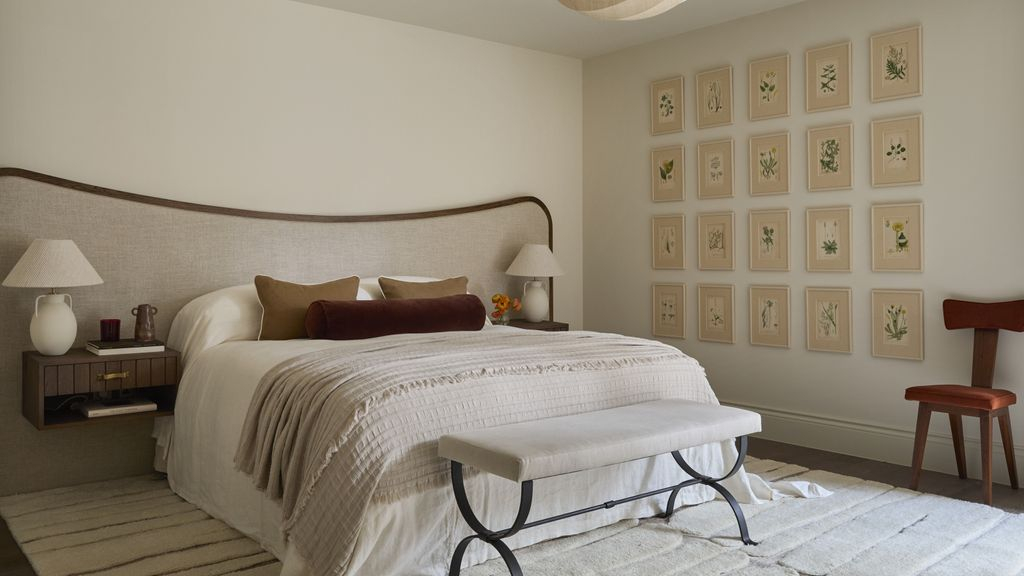
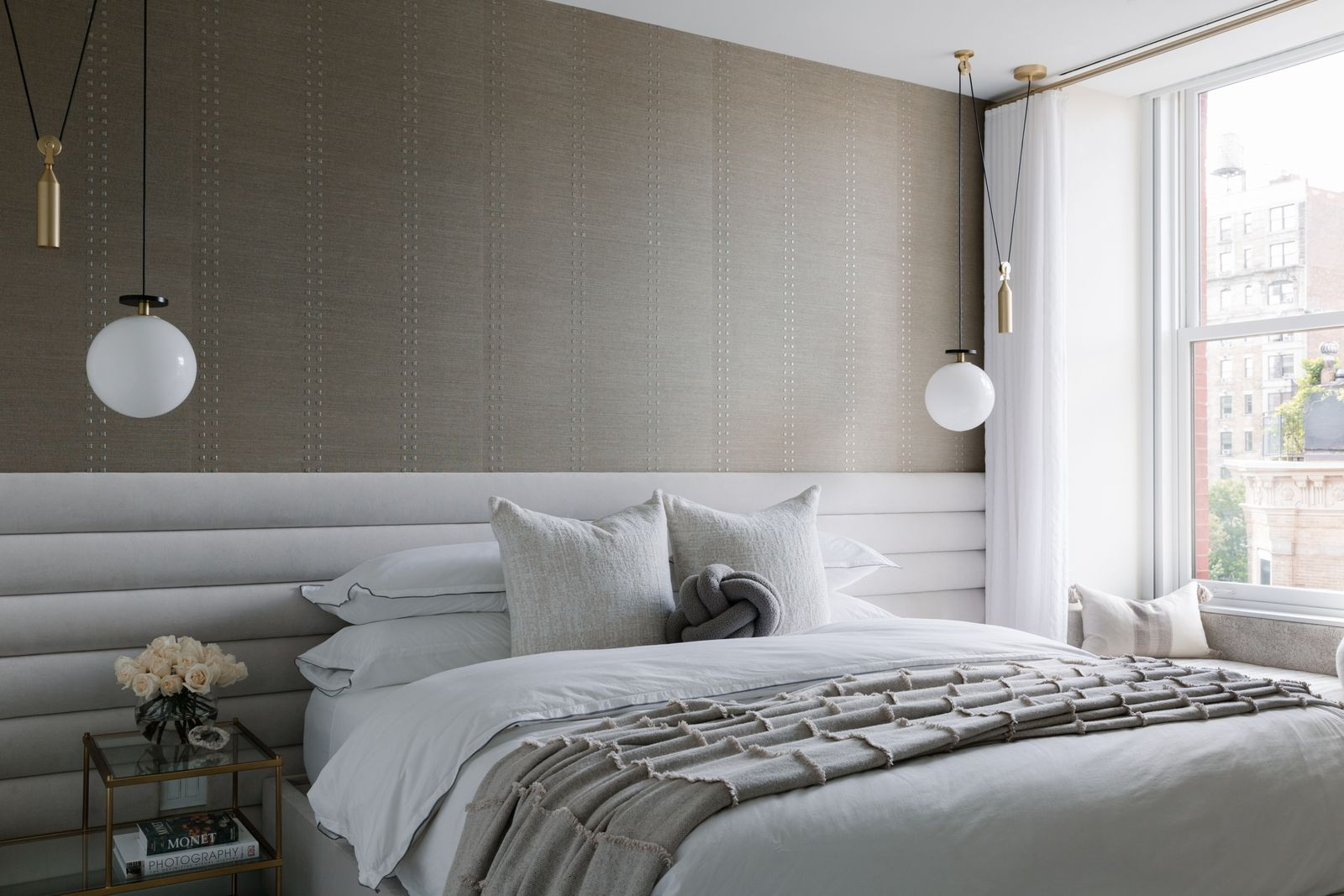
Warm neutrals—ranging from raw linen and unbleached parchment to soft clay and oatmeal—offer an alternative rooted in earth and stone. These hues do not demand attention; they recede gracefully, allowing the textures of wood, wool, and ceramic to take center stage. When working with neutral palettes, the danger lies in creating a space that feels flat or lifeless. The secret to a successful monochromatic sanctuary is tonal layering. By combining matte chalk walls with brushed brass fixtures, textured boucle fabrics, and dark walnut grain, a monochromatic room gains depth through tactile variety rather than aggressive color contrasts.
Step-by-Step Methodology for Designing Your Restful Sanctuary
Transforming an overstimulating room into a quiet retreat requires a methodical sequence of editing, planning, and layering. Skipping steps often leads to the same cluttered result with a fresh coat of paint.
- Step 1 (The Total Environmental Audit): Strip the room down to its architectural bones by removing every piece of furniture, art, and decor item. Stand in the empty space and evaluate the natural light sources, draft patterns, and acoustic echo to understand the room’s innate character.
- Step 2 (Traffic and Ergonomic Mapping): Measure the room precisely and map out primary pathways. Ensure there is a minimum clearance of thirty-six inches along main walking routes, and position the bed or primary lounge furniture to adhere to prospect-refuge principles.
- Step 3 (Color and Undertone Selection): Sample at least three calm, low-LRV (Light Reflectance Value) paint colors on different walls. Observe how the swatches shift from harsh morning light to amber evening incandescent glow before committing to a final hue.
- Step 4 (Tactile Textile Layering): Introduce natural, breathable fibers like washed linen, raw cotton, heavy wool, and untreated wood. Avoid synthetic sheens and high-gloss plastics that reflect light harshly and disrupt the organic atmosphere.
- Step 5 (Sensory and Digital Decontamination): Install dimmable, warm-spectrum lighting (under 2700K) and establish a strict boundary by removing televisions, laptops, and LED-emitting charging stations from the immediate sleeping or resting zone.
Navigating Common Spatial and Chromatic Missteps
Even well-intentioned interior projects can veer off course if specific traps are ignored during execution. Recognizing these pitfalls early saves both time and emotional energy.
- Pitfall 1 (Overlooking Lighting Temperature): Painting a room in a soothing sage green, only to illuminate it with harsh 5000K daylight-balanced bulbs, instantly ruins the calm ambiance. Workaround: Always pair calm color palettes with warm, dimmable LED sources between 2200K and 2700K to mimic the natural amber glow of dusk and candlelight.
- Pitfall 2 (Ignoring Scale and Proportion): Placing oversized, bulky furniture into a modest room instantly chokes off circulation and eliminates vital negative space. Workaround: Choose low-profile furniture with exposed legs to let light pass underneath, creating an illusion of expansive floor area.
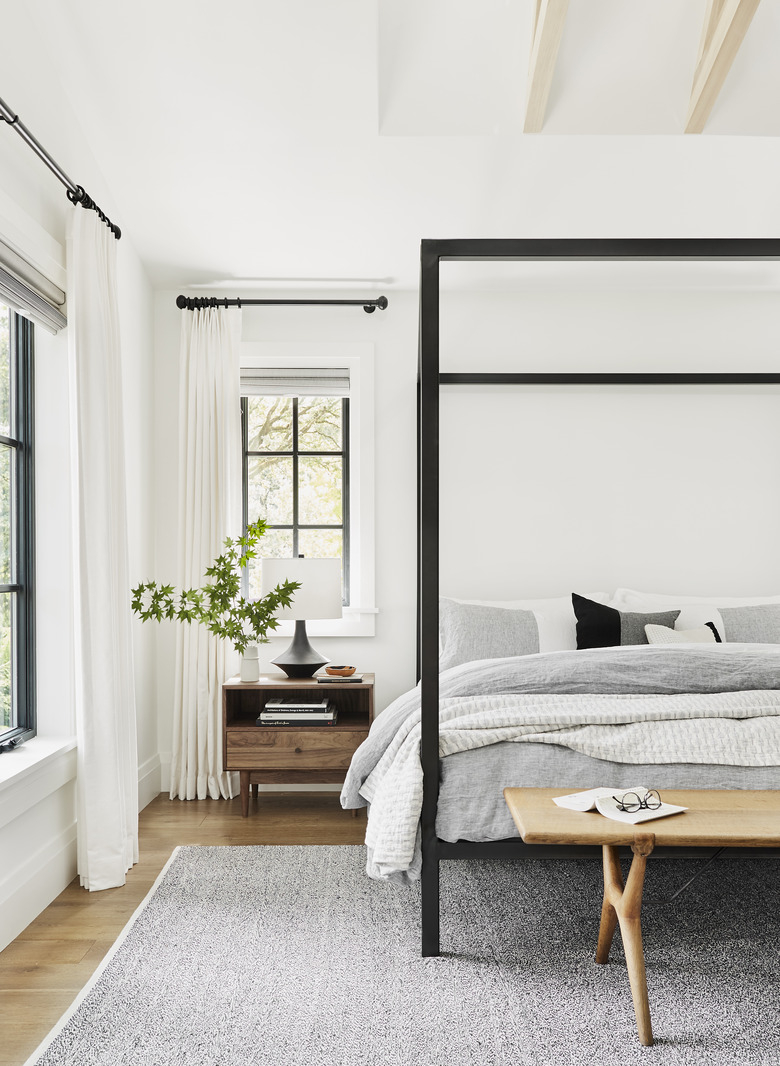
- Pitfall 3 (Relying Solely on White for Calm): Assuming that stark, brilliant white equals minimalism and peace, resulting in a clinical environment that feels cold and unwelcoming. Workaround: Opt for complex off-whites infused with drops of yellow, umber, or green to soften the light reflections.
- Pitfall 4 (Clutter Creep on Horizontal Surfaces): Allowing nightstands, dressers, and windowsills to collect daily miscellany that reintroduces cognitive load. Workaround: Implement closed storage systems with doors or baskets, ensuring every small item has a hidden home out of sight.
- Pitfall 5 (Neglecting Acoustic Softening): Designing a visually minimalist room that features hard wood floors, bare glass windows, and concrete walls, creating an echo chamber that magnifies every drop of sound. Workaround: Add heavy wool area rugs, lined linen drapery, and upholstered acoustic panels disguised as art to absorb ambient noise.
The Broader Impact of Domestic Sanctuaries on Long-Term Well-Being
Creating a restful sanctuary is not merely an exercise in interior decoration; it is an act of preventative healthcare. Modern society demands continuous output, turning homes into auxiliary offices, entertainment hubs, and transit lounges. When the domestic sphere mirrors the external world’s frantic pace, the nervous system never enters restorative repair cycles. Over years, this chronic micro-stress erosion manifests as burnout, sleep disorders, and persistent fatigue.
Investing in intentional space planning and calming color palettes alters this trajectory by anchoring the physical self in an environment designed for recovery. The economic and personal value of a home that actively lowers blood pressure and promotes deep sleep cannot be overstated. When the bedroom or living sanctuary functions properly, it acts as a psychological buffer, increasing emotional resilience for the challenges faced outside those walls. Sustainability in interior design also finds its roots here: by choosing durable, natural materials and timeless, unpretentious color schemes, homeowners step off the consumer treadmill of fast-trend renovations, building spaces that age gracefully over decades.
Actionable Frameworks for Maintaining Your Restful Retreat
Once the sanctuary is built, maintaining its restorative power requires ongoing intentionality. Physical spaces are living systems that naturally drift back toward entropy without boundary enforcement.
- The One-In, One-Out Rule: Whenever a new decorative object, book, or piece of clothing enters the sanctuary, an equivalent item must leave to prevent the slow creep of visual clutter.
- The Evening Reset Ritual: Spend five minutes before sleep clearing horizontal surfaces, fluffing pillows, and returning items to their designated storage zones so the morning visual field remains entirely clean.
- Seasonal Textile Rotation: Swap heavy wool throws and flannel sheets for lighter gauze cotton and linen as the seasons shift, keeping the sensory experience of the room dynamically attuned to the natural climate.
- Digital Fast Zones: Maintain a strict policy against bringing work laptops or late-night scrolling devices past the entryway of the rest sanctuary.
The journey toward a restful home begins not with a trip to the furniture showroom, but with a quiet willingness to subtract. In a culture obsessed with addition—more square footage, more gadgets, more color variations—true luxury is found in reduction. By honoring the negative space, choosing colors that speak the quiet language of the natural world, and arranging furniture to honor basic human needs for safety and flow, domestic architecture becomes a profound form of self-care.
Take a single room this weekend—perhaps the bedroom where rest is most desperately needed—and apply the fundamental audit. Clear the surfaces, evaluate the lighting, and soften the palette. Listen to the way the room sounds when the clutter is gone and the light hits the wall just right. In that quiet moment of stillness, the true purpose of a sanctuary reveals itself: a place where the world stops pressing in, and breathing becomes easy again.