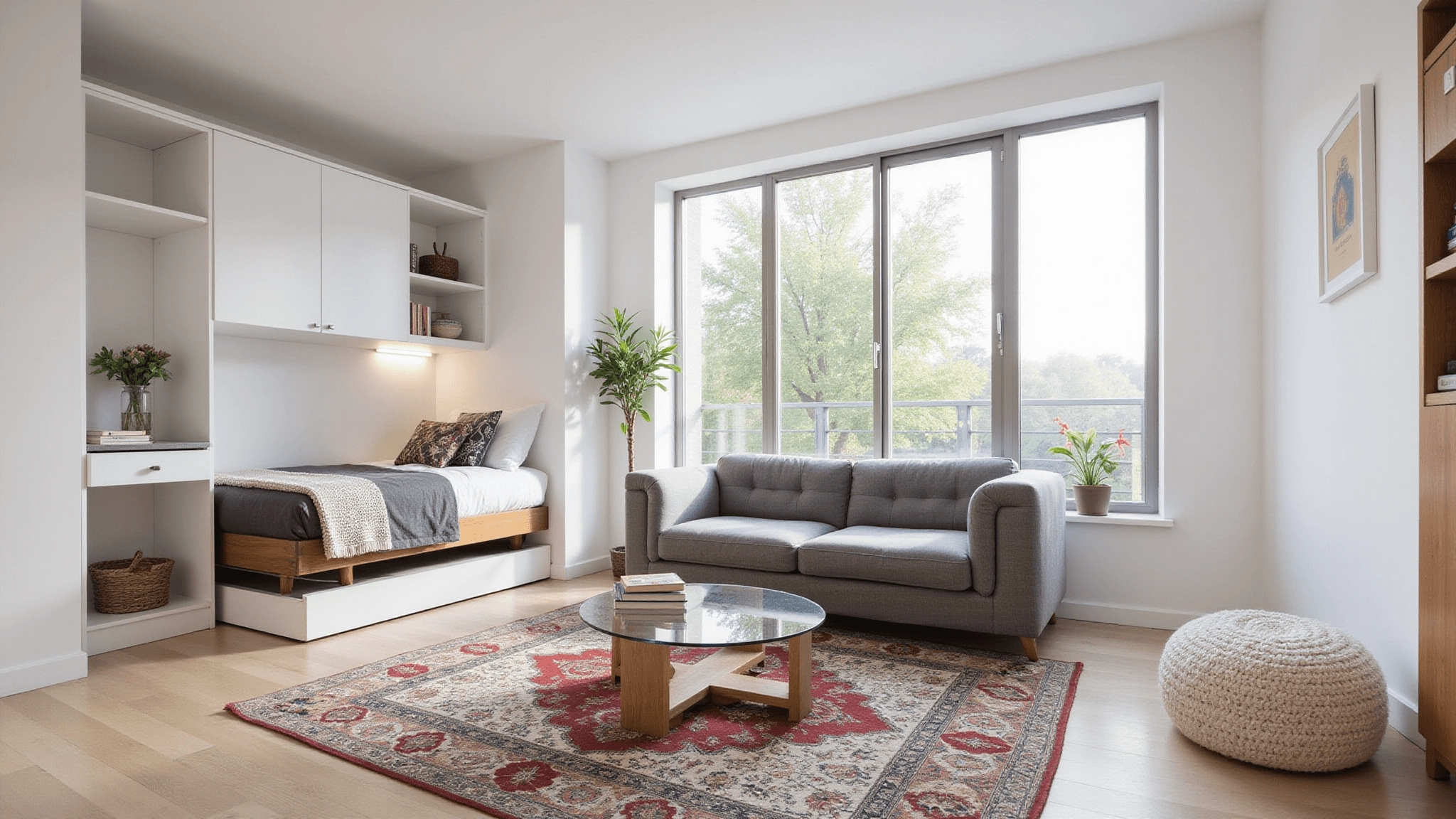
You know that feeling. You walk into your apartment after a long day, kick off your shoes, and immediately trip over a pile of mail you swore you’d sort last week. The walls feel like they’re closing in. Not because the room is actually shrinking, but because every surface is covered in stuff. It’s exhausting. Living small shouldn’t mean living cluttered. But when you’re renting, especially in those shoebox studios or one-bedrooms that seem to be the only option in cities these days, it feels like you’re fighting a losing battle against your own belongings.
We’ve all been there. Staring at a closet that’s barely deep enough for hangers, let alone winter coats. Wondering where on earth to put the extra towels, the board games, or that blender you use exactly twice a year. Most advice tells you to buy bigger bins or drill holes in the wall for shelves. But what if you can’t? What if your landlord has a strict "no nails" policy? Or what if you just don’t want to damage the security deposit? The truth is, the space is there. It’s just hiding. And once you learn how to see it, you’ll wonder how you ever lived without using it.
The Dead Zone Above Your Doorways
Let’s talk about the space above your door frames. Seriously, look up right now. See that gap between the top of the door and the ceiling? It’s probably about six to ten inches high and spans the entire width of the doorway. For most people, it’s empty air. Dust collects there. Maybe a spider builds a web. But for the savvy renter, that is prime real estate. It’s completely out of sight unless someone is specifically looking for it, which makes it perfect for storing things you need but don’t need to see every day.
Think about those seasonal items gathering dust in your bedroom corner. Holiday decorations, extra bedding, or luggage that only comes out twice a year. Instead of shoving them under the bed where they take up valuable floor space, slide them onto a shallow shelf installed right above the door. You don’t even need to drill. In 2026, tension rod shelves and heavy-duty command strip brackets are stronger than ever. A simple, lightweight floating shelf can hold surprising weight if distributed correctly. Just make sure it’s shallow enough that it doesn’t block the door from opening fully. It’s a spy-level spot that guests rarely notice, keeping your visual clutter low while freeing up your actual closets for daily essentials.
This trick works wonders in bathrooms too. The space above the bathroom door is often humid-free compared to the shower area, making it ideal for storing extra toilet paper rolls or unopened toiletries. Use uniform, labeled bins so it looks intentional rather than messy. If you’re worried about aesthetics, paint the bins the same color as the door frame or wall. They virtually disappear. It’s about turning dead air into functional volume. You aren’t adding square footage, but you are adding cubic footage, and in a tiny apartment, every inch counts.
The Underside of Your Furniture
We all know about under-bed storage. It’s the classic move. But are you really using it well? Most people throw a few plastic bins under there and call it a day. But look closer. Is there a gap between your mattress and the bed frame? Are you using the space under your sofa? What about the bottom of your kitchen island or bar stools? These are the "blind spots" of furniture design. In 2026, modular furniture is huge, but even standard pieces have hidden potential if you look at them differently.
Take your sofa, for instance. If it sits on legs, the space underneath is often wasted. Slide in flat, rolling drawers or low-profile bins. These are perfect for things like magazines, remote controls, or even pet toys. If your sofa is flush with the floor, consider risers. Cheap, sturdy furniture risers can lift your couch by three or four inches. Suddenly, you have a new drawer’s worth of space. Just ensure the risers match the style of your room so it doesn’t look like your furniture is sinking into quicksand. It’s a subtle change that yields massive results.
Don’t forget the kitchen. If you have a dining table or a desk, the underside is a goldmine. Attach adhesive hooks or small wire baskets to the underside of the tabletop. You can hang lightweight items like placemats, napkins, or even charging cables. It keeps them off the surface where they create visual noise. For desks, this is a game-changer for managing tech clutter. Stick a power strip to the underside of the desk, and run cables through a managed clip. The floor stays clear, and your workspace feels twice as big. It’s about utilizing the negative space that exists beneath the objects you already own.
Vertical Real Estate on Cabinet Doors
Open a kitchen cabinet. What do you see? Mostly empty air behind the doors. Now, look at the inside of the door itself. It’s a flat, blank canvas. Yet, so many renters leave it bare. This is one of the easiest, most impactful changes you can make without any permanent alterations. Over-the-door organizers aren’t just for coats anymore. In fact, the market in 2026 has exploded with specialized, slim-profile organizers designed specifically for the insides of cabinets.
Start with the spices. Magnetic spice racks are fantastic, but if you don’t have a metal fridge, the inside of a cabinet door is the next best thing. Use adhesive strips to mount thin racks. You can fit twenty or thirty jars in the space that usually holds nothing. Move on to cleaning supplies. Under the sink is often a chaotic mess of bottles falling over. Mount a tension rod or a small caddy on the inside of the cabinet door to hold spray bottles upright. Instantly, the floor of the cabinet becomes usable for larger items like sponges or bulk refills.
This strategy extends to the bathroom vanity too. The inside of the mirror cabinet or the vanity door can hold hair tools, makeup brushes, or first-aid supplies. Use clear, adhesive pockets. They’re cheap, removable, and keep small items from getting lost in the dark depths of a drawer. The key here is visibility. When you open the door, everything should be at eye level and easy to grab. No more digging through piles. It turns a passive surface into an active storage unit. And since it’s all adhesive or tension-based, your landlord will never know it was there.
The Awkward Corners and Nooks
Every apartment has them. Those weird, awkward corners that don’t quite fit a standard bookshelf. The sliver of space between the fridge and the wall. The niche next to the radiator. Most people ignore these spots because they’re difficult to furnish. But in a tiny home, awkward is just another word for opportunity. These irregular spaces are often deeper or taller than you think, and they’re perfect for custom-fit solutions that don’t require carpentry.
Consider the gap between appliances. If there’s a six-inch gap between your stove and the counter, or your fridge and the wall, slide in a narrow rolling cart. These "gap carts" are designed specifically for this purpose. They’re perfect for storing oils, vinegars, or canned goods. They pull out like a drawer, giving you access to items that would otherwise be stuck in the back of a deep cupboard. It’s efficient, sleek, and uses space that was previously just a dust trap.
For those odd corners in the living room, think vertical. A tall, thin corner shelf unit can turn a dead angle into a display area or a book nook. If you can’t buy furniture, try tension poles. Floor-to-ceiling tension shelves can be adjusted to fit any height and width. Place one in a corner, and you suddenly have five or six levels of storage for plants, books, or decor. Because they rely on tension rather than walls, they’re completely renter-friendly. They also draw the eye upward, making the ceiling feel higher and the room more spacious. It’s a psychological trick as much as a physical one.
The Back of Your Bedroom Door
We mentioned cabinet doors, but the main entry doors and bedroom doors are often overlooked. The back of your bedroom door is a massive, unused surface. It’s right there, every time you enter the room. Hanging an over-the-door organizer is a classic hack, but let’s upgrade it for 2026. Forget the bulky, fabric shoe holders that look dorm-room chic. Opt for sleek, hard-plastic hooks or modular rail systems that attach via strong adhesive strips or over-the-door clamps.
This spot is ideal for "outfit planning" items. Hang jewelry organizers, scarves, belts, or even tomorrow’s outfit. By moving these items off your dresser or out of your cramped closet, you free up significant drawer space. If you work from home, the back of the bedroom door can also serve as a quiet zone for hanging headphones, lanyards, or small bags. Keep it organized, though. A cluttered door back looks messy every time you walk in. Use matching hooks and limit the items to things you use daily.
Another clever use is for laundry. If your bedroom is near the bathroom, hang a collapsible hamper on the back of the door. It keeps dirty clothes off the floor and out of sight until wash day. When it’s full, just take it down and go. It’s simple, but it prevents the "chair of doom" where clothes pile up because there’s nowhere else to put them. Utilizing the vertical plane of the door keeps the horizontal surfaces clear, which is crucial for maintaining a sense of calm in a small space.
Look up again. Higher this time. Above the windows. In older buildings, windows often have high transoms or just empty wall space above the frame. In newer builds, there’s often a gap between the top of the window and the ceiling. This area is rarely used because it’s hard to reach. But that’s exactly why it’s great for storage. It’s out of the way, out of sight, and safe from accidental bumps. Install a high floating shelf here for items you rarely need. Think archives, old photos, or sentimental items you want to keep but don’t need to touch.
Radiators are another tricky spot. In many rentals, they’re ugly, bulky, and take up wall space. But the space above and around them can be utilized with caution. Never cover a radiator completely, as it’s a fire hazard and reduces heating efficiency. However, you can install a narrow shelf above the radiator, leaving a safe gap for heat to rise. This shelf can hold lightweight items like books or plants that enjoy the warmth. Just ensure the materials are heat-resistant.
Alternatively, use the sides of the radiator. Magnetic hooks can attach to the radiator itself (if it’s metal) to hang lightweight items like tea towels in the kitchen or socks in the bedroom. It’s a quirky, unconventional spot, but it works. The key is safety and airflow. As long as you respect the heat output, you can turn a functional eyesore into a multi-purpose zone. It’s about seeing the potential in the infrastructure you can’t change, rather than fighting against it.
Living in a tiny apartment doesn’t mean you have to live with less. It just means you have to be smarter about where you put what you have. The secrets aren’t in buying more stuff or bigger boxes. They’re in seeing the invisible spaces. The air above the door. The void under the sofa. The back of the cabinet. These spots are there, waiting. They don’t require renovations. They don’t require permission. They just require a shift in perspective.
Start small. Pick one of these zones today. Clear it out. Measure it. Find a solution that fits. You’ll be surprised at how much breathing room you gain. And as you reclaim these hidden squares, you’ll find that your apartment feels less like a container for your things and more like a home for you. It’s not about perfection. It’s about possibility. So, look up. Look down. Look behind. The space is there. You just have to claim it.