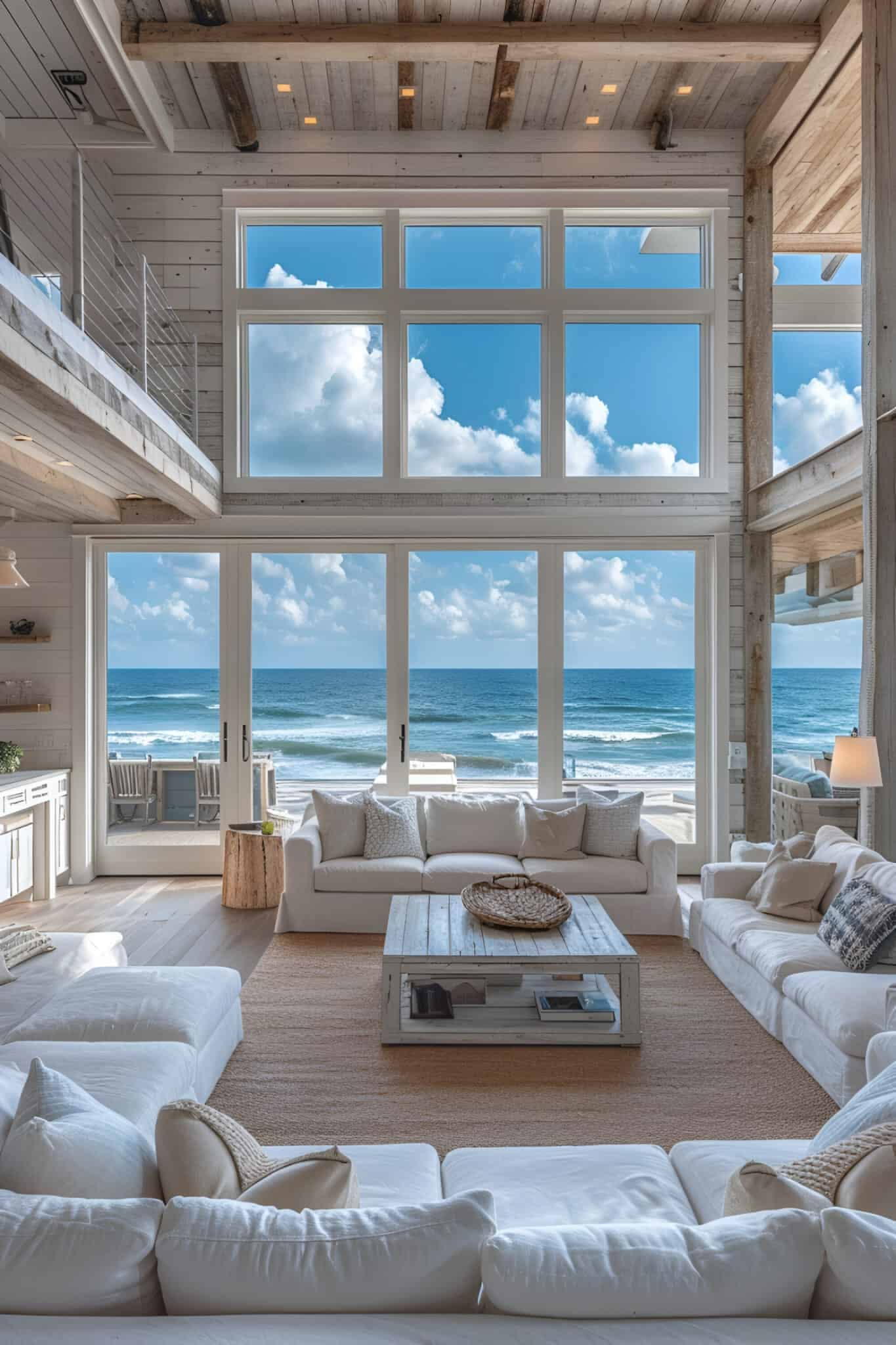
Step into a home where the harsh edge of the daily grind dissolves the moment you cross the threshold. You remember what it felt like to stand on a quiet stretch of coastline at dawn—the cool, damp wood beneath bare feet, the pale light filtering through morning mist, and the slow, rhythmic breathing of the tide. Most of us try to recreate this feeling by packing our suitcases and driving hours toward the nearest shore, treating peace as an occasional vacation luxury rather than a daily baseline.
Yet, the physiological shift that happens when we reach the coast—our shoulders dropping, our heart rates steadying—does not strictly require salt air or crashing surf. It is an atmospheric experience rooted in sensory cues: light diffusion, tactile warmth, monochromatic restraint, and an intuitive flow of space. When we learn to translate these elements into interior architecture and decor, we stop decorating with literal beach souvenirs and start building structural calm. We shift from mimicking a beach resort to capturing the actual essence of seaside serenity inside our living rooms, kitchens, and private quarters.
For decades, the standard formula for coastal home design relied heavily on a predictable script. Navy blue stripes, decorative anchors, framed photographs of lighthouses, and distressed wooden signs bearing cheerful beach slogans dominated the market. While well-intentioned, these literal interpretations often turned modern living spaces into novelty themed environments that felt cluttered rather than restorative. By 2026, interior stylists and architects have pivoted toward a sophisticated, grown-up iteration of coastal calm—one that favors subtlety, restraint, and an uncompromising respect for natural materials.
This modern approach treats the seaside not as a collection of clichés, but as a masterclass in minimalism and organic balance. It draws inspiration from dune grasses, bleached driftwood, fog-softened horizons, and sun-washed stone. When you walk into a truly tranquil coastal room, nothing screams for your attention. Instead, the space invites you to exhale. Achieving this effect across every room you inhabit requires a deliberate dismantling of urban clutter, an overhaul of your color psychology, and a deep appreciation for the way light interacts with raw, unvarnished textures.
The Architecture of Light and the Neutral Coastal Palette
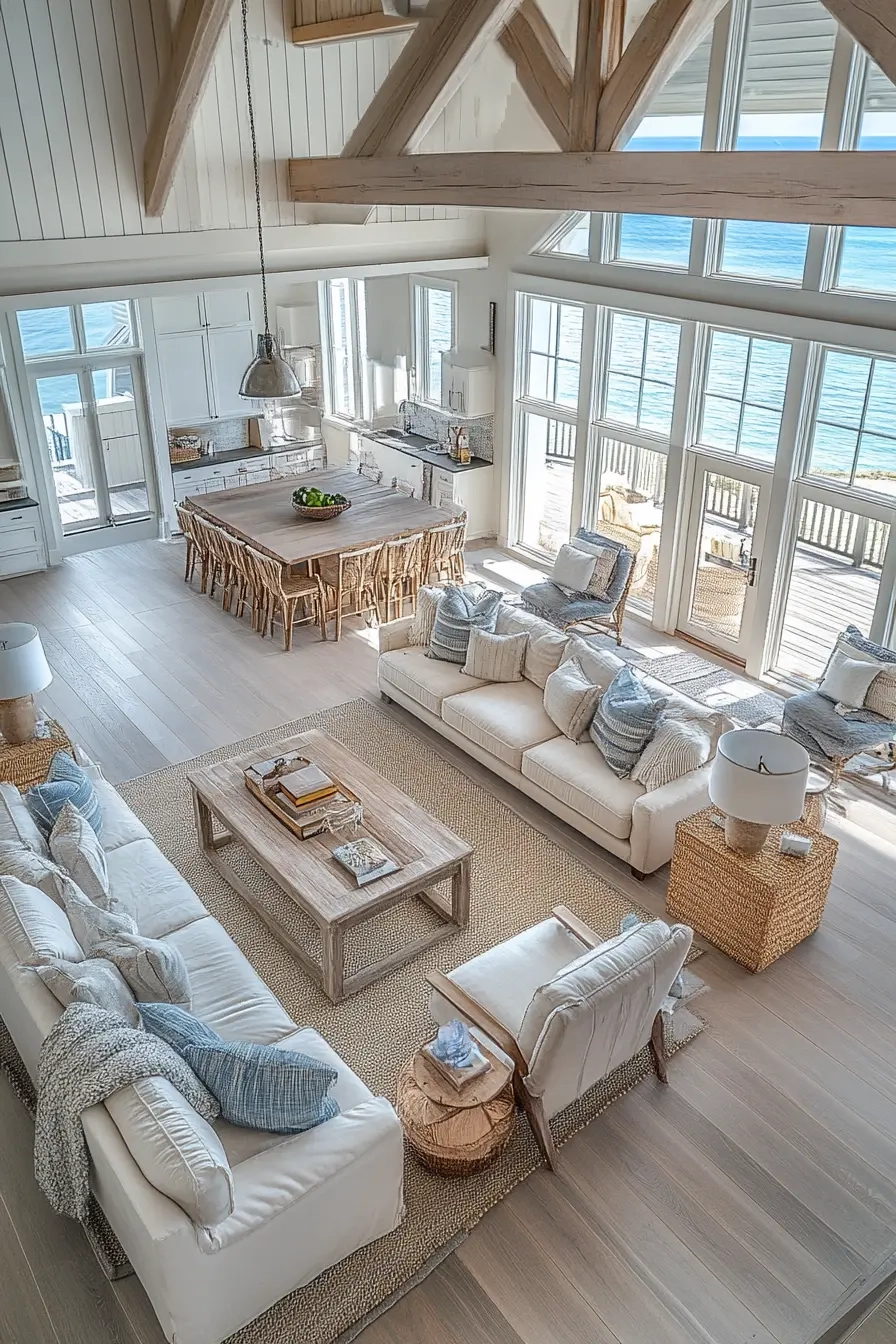
Light is the foundational building block of any seaside environment. Think of how sunlight behaves at the ocean’s edge; it does not hit the landscape in harsh, direct shafts. Instead, it bounces off vast expanses of water, filters through dense marine layers, and diffuses into a soft, luminous glow that softens every shadow. To replicate this phenomenon indoors, you must first audit your windows. Heavy, light-blocking draperies and high-contrast window frames work against the coastal ethos, trapping darkness and compartmentalizing rooms.
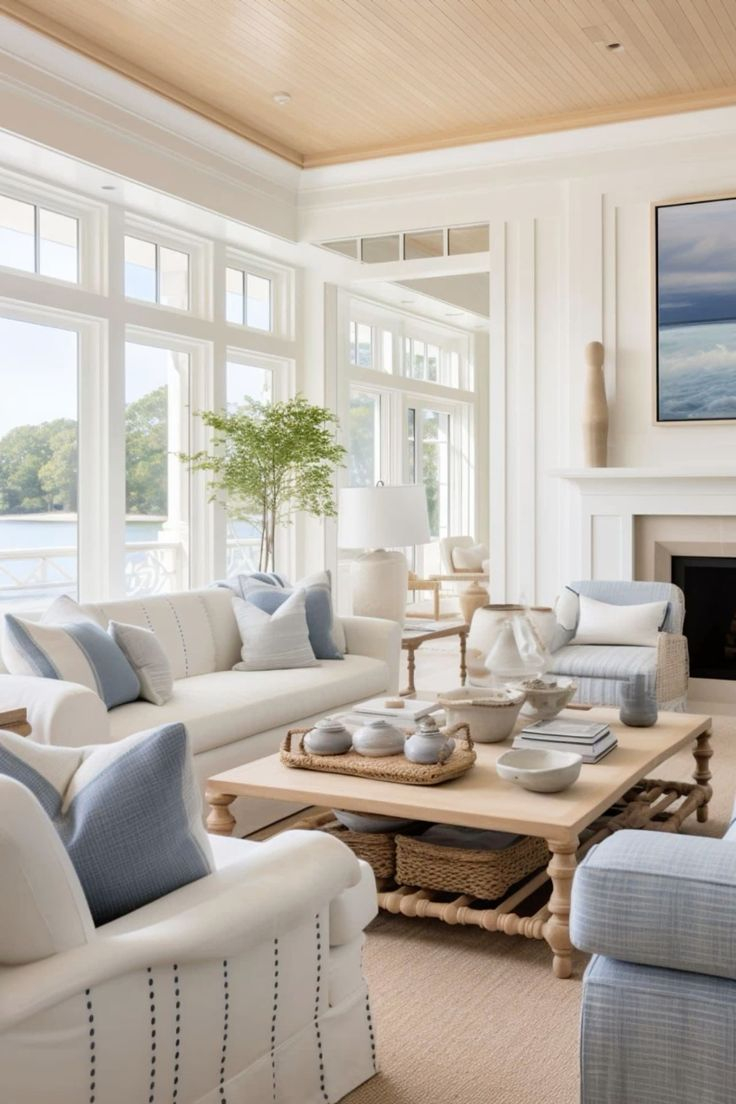
Replacing heavy window treatments with sheer linen panels or unlined cotton gauze allows natural light to flood the interior, turning every window into a glowing canvas. If privacy is an issue, consider top-down, bottom-up cellular shades in a crisp chalk white that disappear when retracted. Next, evaluate your wall colors. Avoid stark, industrial whites that feel clinical and cold. Instead, look to the muted spectrum found between the tide lines: warm chalk, soft alabaster, weathered bone, and the faint grey-green of sea kale. These hues possess high light-reflectance values, meaning they bounce ambient light around the room, making even modest apartments feel expansive and breathable.
The contemporary seaside palette relies on a restrained foundation of neutrals punctuated by whisper-quiet chromatic accents. Think of the water not as a flat primary blue, but as a shifting gradient of seafoam, pale aqua, misty slate, and sun-bleached seagrass. When you introduce color, do so with surgical precision. A single oversized ceramic vase in a deep, moody indigo can anchor a corner filled with pale wood and cream upholstery, grounding the space without overwhelming its airy equilibrium. By prioritizing tonal harmony over high-contrast drama, you create an uninterrupted visual flow that mimics the infinite horizon of the open sea.
Textural Layering and the Honest Appeal of Raw Materials
A room painted entirely in beach-inspired hues will still feel flat and unconvincing if it lacks tactile depth. At the shore, your senses are constantly engaged by varying textures: the grit of wet sand, the coarse weave of a fisherman’s net, the smooth polish of sea glass, and the deeply grained grooves of sun-baked driftwood. Translating these tactile sensations indoors is where true interior transformation occurs. Synthetic materials, high-gloss plastics, and overly polished metals disrupt the rustic, unpretentious calm of the coast.
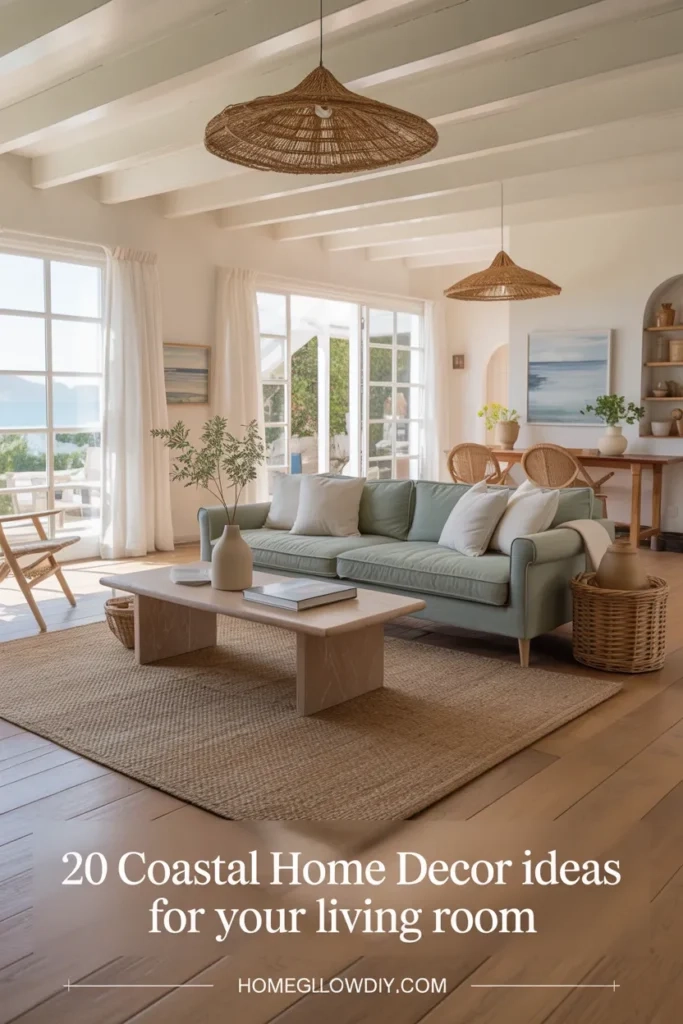
Embrace materials that show the passage of time. White oak flooring with a wire-brushed finish mimics the look of timber weathered by salt spray and wind. Rattan, seagrass, and jute bring an earthy, organic roughness to area rugs, pendant lighting, and accent furniture. These natural fibers do more than look beautiful; they absorb sound, dampening the harsh acoustics of modern drywall and hardwood, creating an acoustic softness that contributes heavily to the overall serenity of the space.
Layering textiles is an art form when designing for coastal calm. Swap out stiff synthetic upholstery for stonewashed linen slipcovers that drape casually over sofas and armchairs. Linen breathes exceptionally well, feels cool against the skin, and develops a relaxed, lived-in patina over time. Pair these slipcovers with heavy cotton throw blankets and chunky wool knit pillows that mimic the texture of coastal fishermen’s sweaters. When you combine rough jute flooring, smooth plaster walls, woven rattan, and rumpled linen, you create a rich, tactile environment that feels grounded, authentic, and profoundly comforting to inhabit.
Room-by-Room Implementation of Coastal Serenity
Bringing the seaside into every corner of your home requires adapting these core principles to the specific functional demands of each room. A kitchen has entirely different mechanical and aesthetic needs than a bedroom, yet both can exude the same tranquil, breezy spirit when styled with intent.
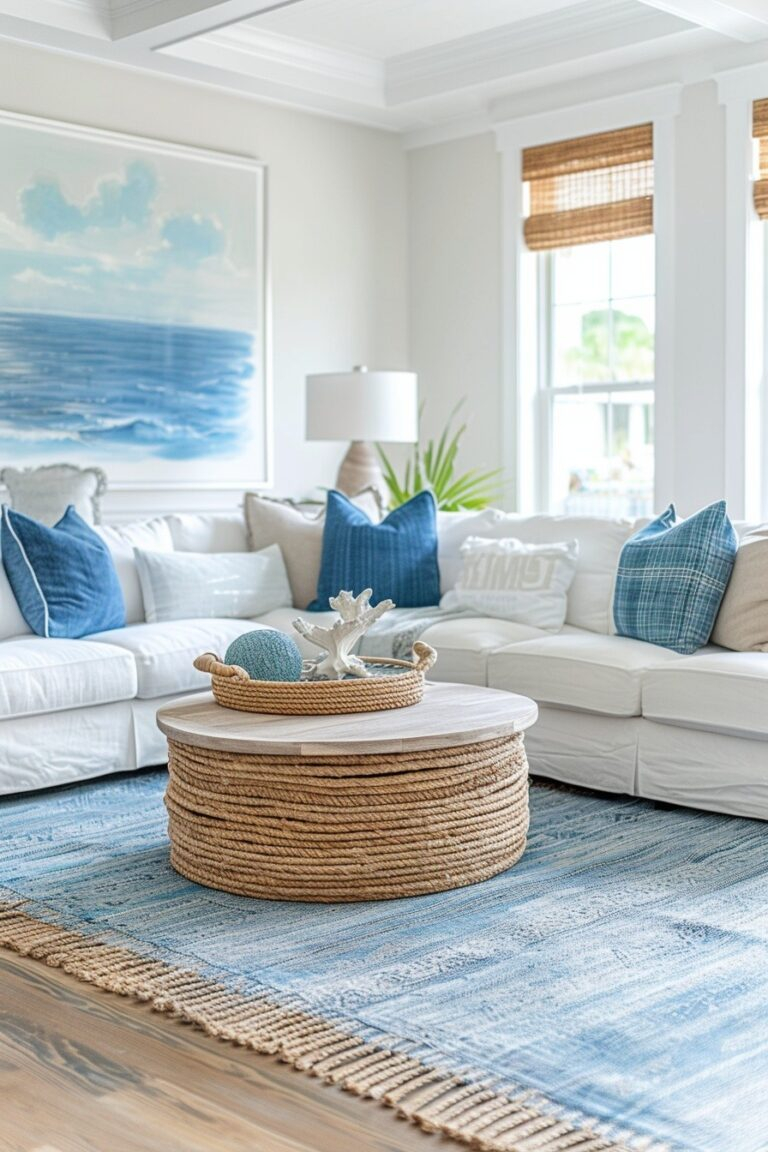
- Step 1 (The Living Room Sanctuary): Anchor your primary gathering space with low-profile, deep-seated furniture upholstered in high-performance neutral linen. Keep surfaces clean by replacing heavy coffee tables with reclaimed wood or fluted plaster drum tables that invite bare feet and relaxed conversation.
- Step 2 (The Restful Coastal Bedroom): Design your sleeping quarters as a misty dune retreat by utilizing layered white bedding, untreated pine or driftwood headboards, and bedside lighting that casts a warm, amber glow reminiscent of a beach bonfire at dusk.
- Step 3 (The Serene Culinary Kitchen): Infuse the heart of your home with coastal calm by trading upper cabinets for open white oak shelving displaying simple white ironstone dishware, paired with honed quartz countertops that echo the look of smooth river stones.
- Step 4 (The Spa-Like Bathroom Retreat): Transform your daily bathing routine into a tidal ritual by incorporating unlacquered brass or brushed nickel fixtures, woven baskets for rolled organic cotton towels, and frosted glass jars filled with coarse sea salt.
- Step 5 (The Tranquil Workspace or Entryway): Ground transitional zones and home offices with simple, light-wood writing desks, botanical prints of coastal grasses under simple wooden frames, and an absence of digital clutter that clears the mind before you even sit down.
Common Pitfalls and Field-Tested Workarounds
Even with the best intentions, homeowners attempting a coastal aesthetic frequently fall into traps that disrupt the serene atmosphere they are trying to build. Recognizing these missteps before you begin saves time, money, and aesthetic regret.
- Pitfall 1 (Literal Themed Decor Overload): Filling shelves with seashells, miniature lighthouses, ship wheels, and anchors instantly turns a sophisticated home into a tacky souvenir shop. Workaround: Curate nature with absolute discipline. Instead of a shelf full of plastic beach trinkets, display a single, large, architecturally interesting piece of weathered driftwood or a single specimen-grade whelk shell resting on a stack of art books.
- Pitfall 2 (Cold, Clinical Minimalism): Stripping a room down to stark white walls and minimalist chrome furniture in an attempt to look "breezy" often results in a space that feels sterile and uninviting. Workaround: Counterbalance bright whites with ample organic warmth. Introduce honey-toned rattan, vintage terracotta pots, and unvarnished timber to ensure the room retains human scale and tactile coziness.
- Pitfall 3 (Ignoring Lighting Temperature): Installing cool-toned, blue-tinted LED light bulbs (5000K+) ruins the warm, inviting atmosphere of a seaside home, making interiors look like a hospital corridor. Workaround: Stick strictly to warm color temperatures between 2700K and 3000K across all interior fixtures to mimic the golden hour glow of the setting sun over the water.
- Pitfall 4 (High-Maintenance Impracticality): Selecting delicate, high-maintenance fabrics like pure white silk or untreated raw canvas for high-traffic family zones creates constant household anxiety. Workaround: Opt for commercially washed, pre-shrunk linen blends and performance fabrics that feature stain-resistant treatments without sacrificing their soft, matte hand-feel.
- Pitfall 5 (Cluttered Surface Spaces): Piling coastal-themed knick-knacks across every mantel, console, and countertop creates visual noise that directly opposes the meditative quiet of the sea. Workaround: Practice radical editing. Leave at least forty percent of every flat surface entirely bare to give the eye a place to rest, honoring the wide-open expanse of an empty beach.
The Long-Term Psychological Value of Coastal Design
Interior design trends come and go, but the pull of the seaside remains constant because it speaks directly to our evolutionary need for safety, openness, and connection to the natural world. Environmental psychologists have long studied what they term " blue space"—environments rich in water or water-like cues that consistently lower cortisol levels, reduce mental fatigue, and promote restorative cognitive function. When you deliberately shape your indoor habitat to reflect these cues, you are engaging in a form of preventative wellness.
Living in a home defined by soft light, unhurried neutral tones, and organic textures alters how you move through your day. The visual tranquility acts as a psychological buffer against the relentless acceleration of modern life. When work is stressful and digital demands are high, your physical environment stops being another source of stimulation and instead becomes a decompression chamber. You begin to notice the changing quality of light as the afternoon sun sweeps across your white oak floors, and you find yourself taking deeper, slower breaths without even realizing it.
Furthermore, building a coastal-inspired interior using authentic, sustainable materials aligns your living space with environmental stewardship. Choosing reclaimed timber, organic linen, non-toxic lime washes, and durable natural fibers reduces your reliance on synthetic plastics and fast-decor manufacturing cycles. This creates a deeply satisfying alignment between personal well-being and ecological mindfulness. Your home becomes more than a shelter; it becomes a resilient, timeless sanctuary that honors both the earth and your own internal need for peace.
Actionable Recommendations for Immediate Transformation
You do not need to gut-renovate your house or replace every piece of furniture to capture the gentle serenity of the seaside. Transformation can begin today through small, highly strategic shifts that yield immediate atmospheric dividends.
Start by clearing out the visual clutter. Remove dark, heavy accessories, busy patterned rugs, and superfluous plastic decor from your primary living spaces. Pack them away or donate them, allowing the architecture of the room to breathe. Next, tackle your textiles. Replace heavy winter bedding and synthetic throw pillows with laundered linen alternatives in shades of fog, sand, and chalk. This single change alters the tactile signature of your bedroom or living room instantly.
Incorporate living elements that bring the vitality of the outdoors inside. Potted sea grasses, trailing pothos, or simple branches foraged from local trees placed in heavy ceramic vessels bridge the gap between indoor architecture and organic nature. Finally, adjust your lighting ecosystem. Install dimmer switches on your main overhead lights and switch out bulbs to a warm, inviting 2700K spectrum. Turn off the overhead lights entirely as evening falls, relying instead on low-level table lamps and amber candle glow to recreate the soft, shadowed tranquility of dusk by the shore.
The journey toward a home infused with seaside serenity is not a checklist to be completed over a single weekend, but an ongoing practice of refinement and simplification. It asks you to look closely at your living spaces and strip away everything that feels frantic, noisy, or disconnected from nature. By prioritizing light, honesty in materials, and a restrained palette, you build an environment that acts as a permanent antidote to modern chaos.
Whenever you feel overwhelmed by the demands of the world outside your door, remember that peace is not an unattainable geographic destination. It is a design philosophy waiting to be built room by room, texture by texture. By bringing the gentle rhythm of the coast into your daily life, you ensure that no matter how loud the world gets, your home remains a place of quiet tides and restorative calm.