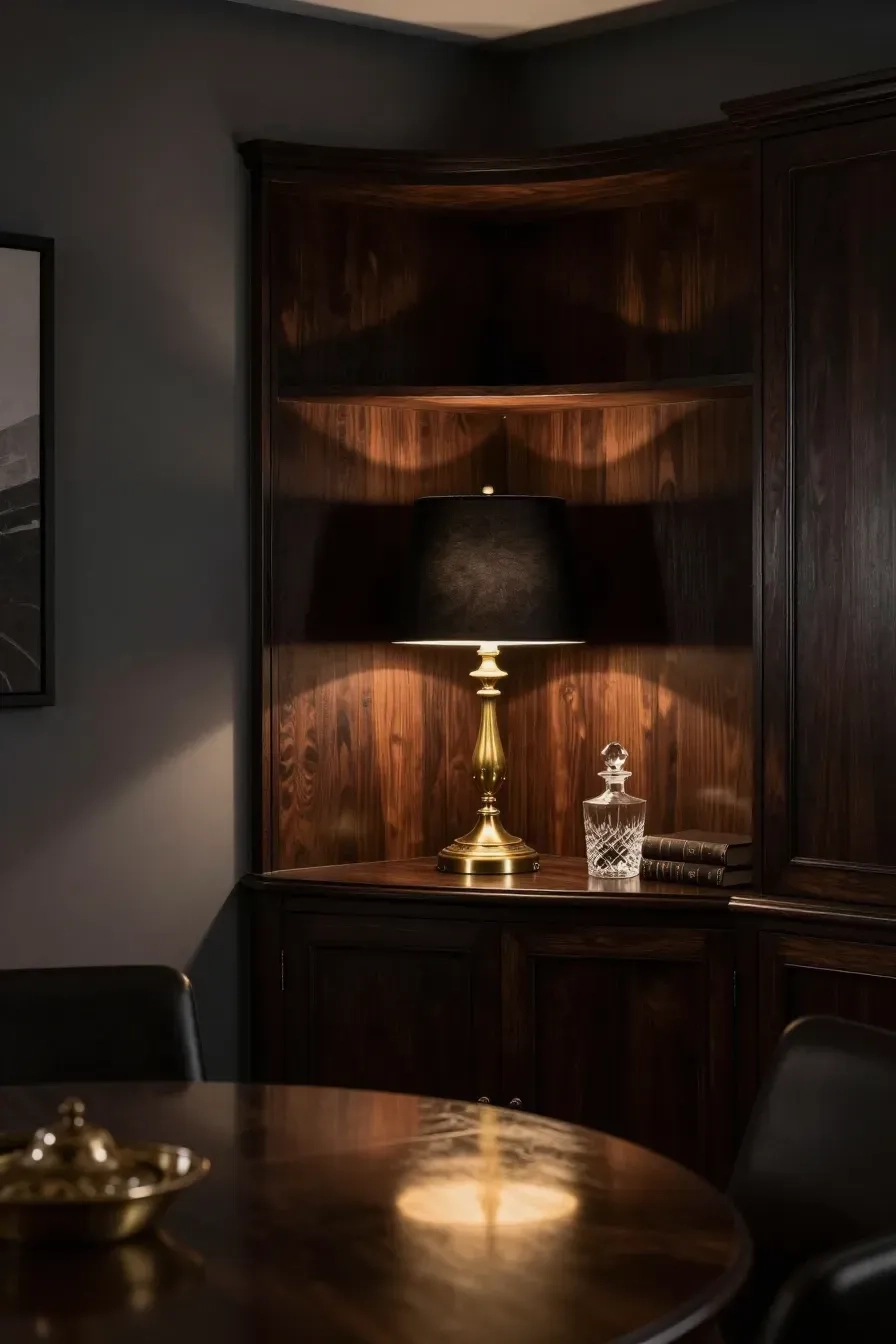
You walk into an eight-by-ten bedroom, and the sheer weight of the walls feels like it is pressing in against your shoulders. There is barely enough room to slide past the bed frame without bruising a shin against a bulky nightstand, and the single overhead pendant lamp casts harsh, unforgiving shadows that turn every corner into a cave. Most people respond to this claustrophobic layout by trying to stuff more furniture into the margins, or worse, resigning themselves to living in a dim, cave-like box. They assume square footage is an unyielding mathematical prison.
Yet, step into a thoughtfully designed urban micro-apartment or a carefully renovated historic attic in 2026, and you will find that tight quarters can actually feel more expansive and serene than a sprawling, poorly lit master suite. The secret weapon of modern interior architects is not knocking down load-bearing drywall or spending a fortune on custom built-ins; it is the calculated manipulation of photons. By treating light as a physical building material—layering washes across vertical planes, eliminating floor clutter, and manipulating color temperatures—you can trick the human eye into perceiving boundaries that simply do not exist.
Lighting design for tiny rooms has undergone a quiet revolution. Gone are the days when a small bedroom required nothing more than a generic flush-mount dome light or an oversized bedside table lamp that hogged half your surface area. Today, smart lighting ecosystems, micro-profile hardwired profiles, and wireless magnetic fixtures allow us to sculpt illumination with pinpoint precision. When you understand how light interacts with matte versus reflective surfaces, and how vertical illumination draws the gaze upward toward the ceiling line, the physical dimensions of your room instantly dissolve.
The Physics of Illumination: How Light Tricks the Eye in Compact Interiors
When a room is small, traditional illumination methods usually backfire. A single center-mounted ceiling light creates an island of brightness surrounded by dark, receding corners. These heavy shadows act as visual anchors, constantly reminding the brain of the room’s actual boundaries. To make a tiny space feel huge, you have to banish these perimeter shadows and wash the vertical boundaries with ambient light. Human depth perception relies heavily on luminance gradients; when walls are evenly lit, they appear to recede, effectively pushing the physical perimeter outward.
The choice of color temperature plays an equally vital role in spatial expansion. While ultra-warm 2200K bulbs create a cozy, cave-like atmosphere that makes tight spaces feel even more enclosed, and harsh 5000K daylight turns a bedroom into a sterile operating theater, the sweet spot for a small footprint in 2026 sits between 2700K and 3000K with a high Color Rendering Index (CRI) of 90+. This balanced spectrum renders wood tones and textiles accurately while introducing enough crispness to lift the visual weight of the room. Pairing this with dimming capabilities allows the room to shift seamlessly from an energizing morning workspace to an airy, boundless evening sanctuary.
Another fundamental principle involves the elimination of visual clutter at eye level. Bulky lamps, tangled cords, and heavy floor fixtures chop up the floor plan, making the footprint feel cluttered and congested. By clearing the horizontal surfaces and transitioning light sources to vertical surfaces—such as headboards, walls, and ceiling coves—you preserve precious floor space while drawing the eye along elongated paths. This vertical tracking creates an uninterrupted line of sight, which is the cornerstone of making any compact bedroom feel twice its actual size.
Space-Saving Wall Fixtures and Swing-Arm Sconces for Floor-Free Illumination
The single fastest way to reclaim precious square footage in a tiny bedroom is to completely clear your nightstands. Traditional table lamps take up valuable surface area that is desperately needed for books, phones, and water glasses, while also introducing a tangle of power cords that create visual noise. Wall-mounted lighting solves this instantly by floating your fixtures entirely off the furniture. Swing-arm sconces, in particular, offer unmatched versatility, letting you pull the light source directly toward your book for reading and push it flat against the wall when you are ready to sleep.
When installing wall sconces in a small room, placement height is everything. Rather than mounting them at traditional eye level while standing, measure the height from the mattress surface when you are sitting up in bed, typically positioning the shade around 24 to 28 inches above the top of the mattress. This ensures the light cone falls directly onto your reading material without glaring into your eyes. For an ultra-clean, minimalist aesthetic in 2026, plug-in wall sconces with integrated fabric-wrapped cords provide a bespoke look without requiring you to cut into drywall or hire an electrician.
Beyond swing-arms, consider asymmetric wall sconces that cast light both upward and downward. This dual-direction wash creates a dramatic hourglass effect on the wall, breaking up flat surfaces and making the wall height appear substantially taller. If your bedroom features textured plaster, exposed brick, or vertical slat wood paneling behind the bed, a grazing wall sconce placed just a few inches away from the surface will highlight every contour, adding rich depth and dimension that visually pushes the wall backward.
Harnessing Verticality: Pendant Lights and Ceiling Washes That Elevate the Roofline
Low ceilings are the nemesis of small bedrooms. When the ceiling feels low, the entire room closes in like a sleeping bag. Pendant lights and semi-flush fixtures offer a brilliant counter-strategy by manipulating vertical scale. Hanging a slender, sculptural pendant light in a corner instead of a bedside table lamp draws the eye upward, forcing the brain to register the vertical volume of the room rather than its narrow floor area. This vertical elongation is a classic trick used by interior designers to make eight-foot ceilings feel remarkably lofty.
When selecting hanging fixtures for tight spaces, proportion is critical. An oversized drum pendant will overwhelm a small bedroom, making the ceiling feel heavy and oppressive. Instead, look for elongated, minimalist silhouettes—such as slender brass rods, frosted glass globes, or perforated metal cylinders—that occupy minimal visual mass while delivering maximum illumination. Hanging a pair of mini-pendants on either side of the bed, suspended at a height just above your head when sitting up, creates a sophisticated hotel-like symmetry that feels both luxurious and intentional.
Ceiling washes take verticality a step further by bouncing light off the overhead plane rather than shining it directly down. Installing a low-profile LED track system or perimeter cove lighting that directs a soft glow upward onto a bright white ceiling turns the entire overhead surface into a giant, diffuse light source. This eliminates hot spots and harsh glares, flooding the room with a shadow-free ambient glow that mimics open-air daylight. When the ceiling itself appears to glow, the physical boundaries of the room seem to lift away entirely.
Integrated LED Strips and Hidden Profiles for Seamless Perimeter Expansion
We live in an era where lighting hardware has become virtually invisible, thanks to the maturation of ultra-slim LED tape and architectural aluminum profiles. In a small bedroom, hidden linear lighting acts as a secret architectural upgrade. By tucking warm-white LED strips behind floating headboards, underneath floating bed frames, or inside crown molding troughs, you introduce a continuous ribbon of light that erases harsh corners and creates a floating effect for your furniture.
Under-bed lighting is a particularly transformative move for tiny footprints. When a bed frame rests directly on the floor, it creates a heavy, grounded visual mass that eats up spatial energy. Lifting the bed slightly and running a dimmable, warm-white LED strip along the underside casts a soft pool of light onto the flooring, making the heavy mattress appear to hover effortlessly in mid-air. This illusion of weightlessness tricks the eye into perceiving more open floor space than actually exists.
Behind the headboard is another prime real estate for hidden linear profiles. Mounting an LED strip vertically or horizontally along the back edge of a custom wooden or upholstered headboard creates a stunning halo effect. This backlighting separates the bed from the wall, adding a layer of sophisticated depth that prevents the bed from swallowing the room. For 2026, smart-enabled LED strips paired with circadian rhythm controls allow this hidden perimeter lighting to shift automatically from a bright, cool light during morning hours to a warm, amber glow at night, supporting healthy sleep cycles without requiring bulky desk lamps.
Step-by-Step Implementation Guide for Transforming Your Small Bedroom Lighting
- Step 1 (Audit and Declutter Your Light Sources): Walk into your bedroom at night and take inventory of every existing light source. Remove any oversized table lamps, tangled extension cords, and floor lamps with wide footprints that encroach upon walking paths.
- Step 2 (Map the Three Lighting Layers): Design a balanced lighting plan by establishing ambient light (overhead or ceiling wash), task light (reading sconces or targeted desk lights), and accent light (hidden LED strips or picture lights). Ensure every layer operates on independent circuits or smart dimmers.
- Step 3 (Go Vertical with Wall and Hanging Fixtures): Install swing-arm wall sconces or mini-pendants to completely clear your nightstands. Position them at comfortable heights for seated activities while keeping cords concealed within cord covers or routed directly into wall cavities.
- Step 4 (Incorporate Hidden Perimeter Elements): Apply flexible LED tape channels beneath floating shelves, behind headboards, and underneath bed frames to wash surfaces in soft, shadow-defeating glows that expand perceived boundaries.
- Step 5 (Upgrade to Smart Dimmers and Warm-Dim Technology): Replace standard toggle switches with smart dimmers or smart bulbs that support color temperature shifting. Calibrate your presets so the room transitions effortlessly from a crisp, expansive daytime look to a soft, cocooning evening atmosphere.
Common Pitfalls and Field-Tested Workarounds for Tiny Room Lighting
- Pitfall 1 (Relying Solely on a Single Overhead Light): A lone central flush-mount fixture casts harsh downward shadows and ignores the dark room perimeters. Workaround: Supplement the overhead light with at least two secondary layers—such as wall sconces and hidden LED strips—to distribute luminance evenly across all vertical surfaces.
- Pitfall 2 (Choosing Bulbs That Are Too Cool or Too Bright): Over-illuminating a tiny room with high-lumen, clinical 5000K bulbs creates a sterile, overwhelming environment. Workaround: Stick to bulbs rated between 2700K and 3000K with a high CRI, keeping bedside task lights around 400 to 600 lumens maximum to maintain a relaxing mood.
- Pitfall 3 (Ignoring Cord Management and Visual Clutter): Dangling wires and exposed power strips instantly ruin the minimalist illusion required to make a small room feel large. Workaround: Utilize adhesive paintable cord covers, cordless rechargeable magnetic lamps, or professional in-wall cable routing to keep all electrical paths completely hidden.
- Pitfall 4 (Selecting Oversized, Heavy Fixtures): Massive drum shades or chunky ceramic lamp bases consume precious visual volume, making a compact room feel cramped. Workaround: Choose slender, transparent, or open-wire profiles—such as glass globes, slim metal rods, and perforated shades—that allow light to pass through unobstructed.
- Pitfall 5 (Neglecting Dimmers and Control Zones): Operating every light in the bedroom on a single on/off switch strips away the ability to curate atmosphere and control spatial perception. Workaround: Install smart dimmers or wireless control pucks so you can dial back ambient light levels independently while keeping task lights functional.
The Future of Compact Living: Sustainable Energy, Wireless Tech, and Smart Integration
The intersection of interior design and smart home technology in 2026 has made it easier than ever to achieve high-end architectural lighting without structural renovations. Wireless, battery-operated LED wall sconces and rechargeable magnetic puck lights have eliminated the need for hardwiring, allowing renters and homeowners alike to place light precisely where it is needed without drilling into lath and plaster or hiring licensed electricians. These portable fixtures charge via USB-C and offer weeks of illumination on a single charge, representing a massive leap forward in flexible interior styling.
Simultaneously, the push toward energy efficiency has cemented LED technology as the absolute standard, drastically lowering power consumption while generating zero excess heat—a crucial factor in small, poorly ventilated bedrooms. Modern smart lighting systems integrate seamlessly with home automation hubs, allowing residents to control lighting scenes via voice commands or automated sunrise simulations. By programming your bedroom lights to gradually wake you with a soft, expanding dawn wash rather than a blaring alarm, you harness natural biological rhythms to enhance well-being within a compact footprint.
Looking ahead, the philosophy of small-space design is moving away from the compromise of simply "making do" with less. Instead, tiny bedrooms are increasingly celebrated as intentional, highly curated sanctuaries where every element—especially illumination—serves a dual purpose of beauty and spatial liberation. By replacing bulky fixtures with integrated, layered light sources, we prove that square footage is merely a number, and that true spatial expansion happens in the realm of perception.
Key Recommendations for Crafting an Expansive Small Bedroom Atmosphere
- Prioritize Multi-Functional Fixtures: Choose lamps and sconces that combine reading lights with ambient backlighting or integrated USB charging ports to reduce the number of separate objects in the room.
- Embrace Reflective and Matte Pairings: Combine warm-wash lighting with light, matte paint finishes on walls to diffuse light evenly rather than creating harsh, distracting hot spots.
- Eliminate Floor and Surface Clutter: Keep nightstands and dressers completely free of heavy lamps by migrating all light sources to walls, ceilings, and hidden architectural channels.
- Layer Your Control Ecosystems: Ensure every lighting zone can be dimmed independently, allowing you to manipulate the visual weight of the room depending on the time of day and your specific activity.
- Focus on Vertical Lines: Use vertical sconces, tall slender pendants, and upward-directed washes to draw the eye continuously toward the ceiling, maximizing perceived room height.
Transforming a cramped, dim bedroom into an expansive sanctuary does not require a sledgehammer or an expanded floor plan. It requires a fundamental shift in how you view illumination—moving away from lighting as a mere utility and embracing it as an architectural medium that sculpts space, dissolves corners, and elevates the spirit. When you clear the surfaces, lift your fixtures onto the walls, and wash your vertical planes in warm, balanced radiance, the physical walls of your room simply fade into the background.
Take a critical look at your own sleeping space tonight. Notice where the shadows pool, where the cords tangle, and where heavy furniture steals your breathing room. By implementing even a few of these twenty-seven strategic lighting shifts, you can reclaim your sanctuary from the constraints of square footage. Step into this new era of interior design with confidence, and let your small bedroom finally breathe.