Morning light hits the edge of a honed Calacatta marble countertop, casting sharp geometric shadows across walnut cabinet doors that hide every trace of chaos. Somewhere beneath that monolithic, minimalist surface hums the quiet reality of 2026 domestic life: contact solution bottles, high-frequency serums, electric toothbrushes, and plumbing traps engineered to squeeze maximum clearance out of a compact footprint.
For decades, outfitting a bathroom meant choosing between an industrial-grade utility locker disguised as a cabinet or a fragile, sculptural piece of furniture that surrendered all practical storage to aesthetic ambition. Today’s architectural and interior design movements reject that tired binary. The modern vanity has evolved into a high-performance focal point where the rigorous demands of daily routines meet uncompromising artistic expression.
Achieving this equilibrium requires a deliberate shift in how designers and homeowners view the bathroom. It is no longer just a hygienic washroom; it is a domestic sanctuary where tactile materials, invisible technology, and smart ergonomics converge. Navigating this space successfully demands an understanding of how form and function negotiate for dominance, and how to build a vanity that looks like a gallery installation while functioning like a precision instrument.
The Architectural Evolution of the Modern Washbasin
The contemporary vanity owes its existence to the broader architectural movement toward spatial minimalism and the blurring lines between living quarters and utility zones. Historically, bathroom fixtures were treated as purely utilitarian additions—plumbing fixtures bolted to walls with little regard for interior narrative. As open-plan living and wellness-focused architecture gained momentum through the late 2010s and early 2020s, the bathroom transformed into a private retreat. This evolution elevated the vanity from an afterthought into the primary anchor of the room’s design language.
Modern bathroom design in 2026 is defined by tension—the meeting point of presence and restraint, of raw materiality and digital integration. Floating wall-mounted vanities, modular freestanding consoles, and monolithic stone blocks challenge traditional notions of cabinetry. By lifting heavy wooden boxes off the floor, floating designs create an illusion of expansive square footage, drawing the eye across continuous flooring while masking the structural wall brackets required to support hundreds of pounds of marble, quartz, and timber.
Material sophistication sits at the heart of this evolution. Where builders once relied on moisture-sealed MDF wrapped in synthetic veneers, today’s artisans utilize quarter-sawn white oak treated with deep-penetrating hardwax oils, fluted slabs of travertine, and ultra-compact sintered stone surfaces that resist thermal shock and chemical staining. This material honesty brings an organic warmth to spaces that might otherwise feel cold or sterile. The art lies in letting the raw characteristics of stone and wood speak for themselves, while engineering the internal carcass to withstand 95 percent relative humidity without warping.
Anatomy of a Balanced Vanity: Merging Visual Restraint with Ergonomic Utility
Creating a vanity that satisfies both the eye and the daily routine demands a rigorous critique of interior ergonomics. A visually stunning cantilevered marble slab fails its user if the drawer pulls slam into adjacent knee walls, or if the basin depth causes water to splash across high-end architectural wall sconces. True balance requires treating the vanity as a micro-architecture, where every cubic inch is accounted for and assigned a specific mechanical or aesthetic purpose.
Consider the layout of internal storage. The traditional deep-drawer vanity often turns into a chaotic graveyard for half-used cosmetics and tangled cords. Modern high-end solutions implement tiered, stepped drawer boxes that wrap around the sanitary P-trap, leaving the center open while capturing the dead space flanking the plumbing lines. Integrated electrical charging drawers—outfitted with GFCI-protected USB-C ports and heat-resistant stainless steel holsters for styling tools—keep countertops entirely clear of cord clutter, allowing the sculptural beauty of the stone surface to remain uninterrupted.
Hardware selection further bridges the gap between art and utility. Push-to-open magnetic latches eliminate the visual noise of handles, reinforcing a clean, monolithic facade. However, for heavily used family bathrooms, minimalist edge-pulls or brushed brass channels offer a tactile anchor that prevents finger oils from marring matte-lacquered surfaces. The choice of basin—whether an integrated trough sink cast from the same composite material as the countertop or an above-counter vessel crafted from hand-thrown ceramic—determines the visual weight of the fixture and dictates daily cleaning protocols.
Blueprint for Selecting and Designing Your Hybrid Vanity
- Step 1 (Assess Spatial Geometry and Traffic Flow): Measure the exact clearance between the vanity edge and opposing walls, showers, or doors, ensuring a minimum of 36 inches of open walking space to prevent pinch points during morning rushes.
- Step 2 (Determine Structural Load and Wall Capacity): Evaluate whether your framing can support a floating vanity; if hanging on standard wood or steel studs, specify heavy-duty concealed carrier brackets rated for at least 500 pounds to prevent catastrophic sagging over time.
- Step 3 (Select Material Palettes with Lifecycle in Mind): Balance visual drama against daily maintenance by pairing porous natural stones like honed marble with robust, water-resistant cabinet woods like teak or thermally modified ash treated with multi-coat conversion varnishes.
- Step 4 (Map Internal Storage to Daily Rituals): Inventory your actual skincare, grooming, and plumbing accessories, and design custom vertical dividers, acrylic cosmetic trays, and pull-out lazy Susans before finalizing drawer box depths.
- Step 5 (Coordinate Plumbing and Electrical Rough-Ins Early): Work closely with your contractor to align wall-mounted faucet rough-in valves, centered sink drains, and hidden internal power strips with the exact interior layout of your chosen vanity frame.
Navigating Structural Flaws and Aesthetic Missteps in Custom Millwork
Even the most thoughtfully curated bathroom renovations can derail when aesthetic ambition outpaces the harsh physical realities of plumbing and moisture. One of the most common pitfalls involves specifying sleek, ultra-shallow wall-mounted vanities without verifying whether standard U-bend plumbing traps can physically fit within the slim drawer configurations. When the plumber arrives, homeowners are frequently forced to cut massive, unsightly notches into custom wood drawer boxes, destroying both the interior symmetry and the clean geometric lines originally envisioned. The workaround requires utilizing specialized space-saving low-profile traps or specifying offset tailpieces that route gray water flush against the back wall.
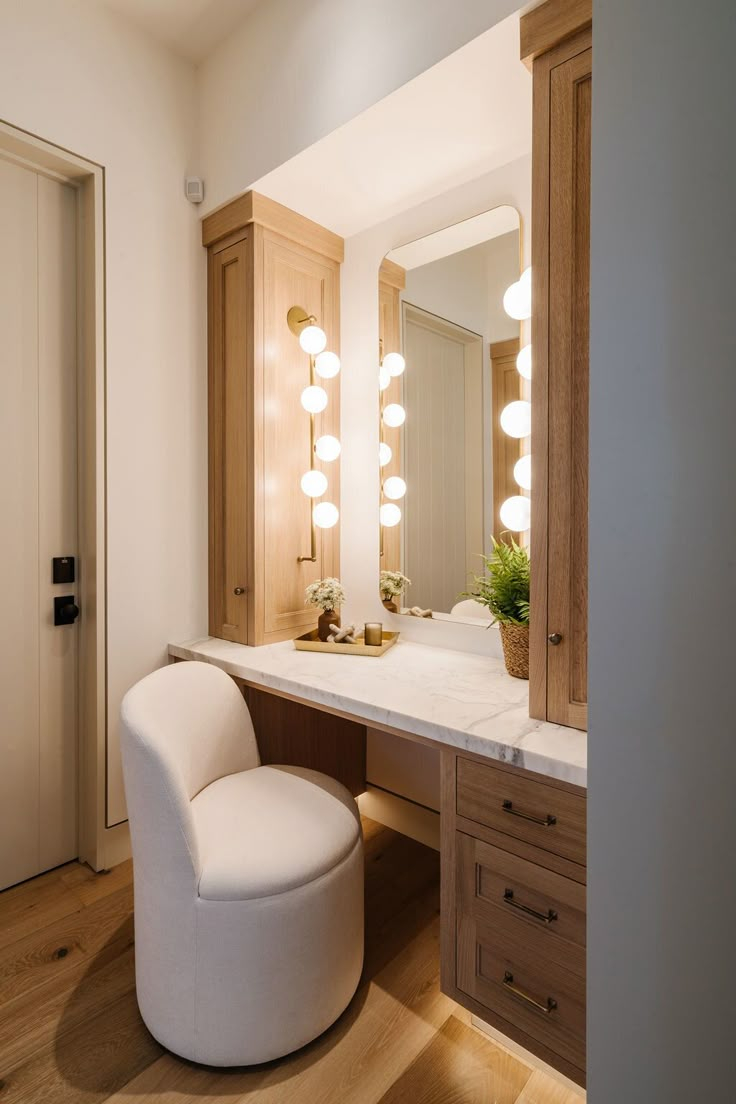
Another frequent miscalculation is the neglect of lighting physics around the vanity mirror. Dramatic overhead architectural downlighting casts harsh shadows down the bridge of the nose and eye sockets, rendering makeup application and shaving frustratingly difficult. Conversely, relying solely on decorative backlighting behind a floating mirror fails to provide adequate facial illumination. Practitioners solve this by layering light: incorporating side-mounted vertical task sconces at eye level to eliminate shadows, paired with dimmable ambient LEDs tucked beneath the floating vanity toe-kick to create a weightless nighttime glow.
Moisture management remains the silent killer of high-end vanities. Homeowners often fall in love with unsealed, raw-edge live timber or porous calcareous stones, only to watch them stain within months from rogue toothpaste foam or standing water droplets. The practitioner’s safeguard is threefold: applying industrial-grade penetrating sealers to stone every twelve months, specifying marine-grade plywood or solid hardwoods for interior boxes rather than moisture-sensitive particle board, and ensuring continuous ventilation through high-CFM, humidistat-controlled exhaust fans that clear ambient steam within minutes of a shower turning off.
The Broader Impact: Wellness, Sustainability, and Long-Term Asset Value
The obsession with balancing art and function in modern vanities extends far beyond immediate domestic convenience; it touches on deeper questions of psychological well-being, ecological responsibility, and real estate economics. In contemporary interior architecture, the bathroom is increasingly recognized as a daily decompression chamber. A clutter-free countertop backed by soothing, tactile materials signals visual quietude to the brain, helping to lower cortisol levels during the frantic transition between sleep and the workday. When storage is intuitive and surfaces are pristine, the bathroom ceases to be a chore space and becomes a ritualistic zone of self-care.
Simultaneously, the sustainability conversation has forced a reckoning among high-end furniture and millwork manufacturers. Sourcing rare exotic hardwoods harvested illegally is no longer acceptable in luxury design circles. Modern eco-conscious vanity design relies on Forest Stewardship Council (FSC) certified domestic hardwoods, reclaimed architectural timbers, and durable zero-VOC finishes that do not off-gas toxic formaldehydes into enclosed bathroom spaces. Furthermore, the longevity of modular vanities—where individual components like drawer fronts or countertops can be replaced or refinished independently—counters the throwaway culture of fast furniture, turning a bathroom renovation into a multi-decade investment.
From an asset valuation standpoint, a master bathroom anchored by a bespoke, highly functional vanity remains one of the highest-return upgrades in residential real estate. Prospective buyers instantly recognize the difference between a cheap big-box vanity that wobbles under pressure and an engineered, custom-anchored piece built with meticulous attention to detail. By treating the vanity as both a sculptural art object and a heavy-duty storage engine, homeowners protect their financial investment while elevating their daily quality of life in subtle, profound ways.
Strategic Frameworks for Harmonizing Storage, Style, and Space
- Prioritize Negative Space: Resist the urge to fill every square inch of wall or floor area; letting a floating vanity breathe with open surrounding wall space amplifies its sculptural presence.
- Invest in Hidden Infrastructure: Spend budget on high-end drawer slides, soft-close undermount hardware, and integrated power management rather than superficial decorative trim that dates quickly.
- Adopt the One-Touch Rule: Ensure that items used every single morning—daily cleansers, toothbrushes, moisturizer—have an assigned, immediately accessible home on the surface or in top-tier drawers, while seasonal or backup products are relegated to lower cabinetry.
- Anchor with Cohesive Finishes: Tie the vanity hardware, plumbing fixtures, and lighting trim into a singular metallic or matte finish family to unify disparate design elements without creating visual clutter.
- Plan for Maintenance Accessibility: Always ensure that plumbing access panels or removable drawer backs are engineered into custom millwork so that minor leaks or valve replacements never require demolishing the entire vanity structure.
The modern vanity stands as a testament to the fact that practicality and beauty do not need to exist in opposition. By stripping away extraneous ornamentation and focusing on the purity of line, the honesty of materials, and the ergonomic realities of daily life, we transform a mundane fixture into an architectural masterpiece. It is an exercise in editing—knowing what to conceal behind seamless walnut panels and what to celebrate in the raw veining of a marble basin.
As we look toward the future of residential design, this synthesis of art and utility will only deepen. Smart home integrations, adaptive storage systems, and sustainable material sciences will continue to expand what a single piece of furniture can achieve within the compact footprint of a washroom. Yet, the core philosophy will remain unchanged: creating spaces that ground us, serve us efficiently, and offer a quiet moment of visual grace each time we step up to the mirror.