You know that feeling. You walk into your bathroom first thing in the morning, half-asleep, ready to start the day. But instead of a serene sanctuary, you’re greeted by a visual assault. Bottles teetering on the edge of the sink. A towel hanging limp and damp because there’s nowhere else for it to go. The mirror fogged up before you’ve even brushed your teeth. It feels tight. Suffocating, almost. And the worst part? You swear you just cleaned it yesterday.
It’s frustrating, isn’t it? Especially when you look at those glossy magazine spreads or Instagram feeds where tiny bathrooms look like spa retreats. You wonder if it’s your fault. Did you buy the wrong stuff? Are you just messy? Here’s the truth: it’s probably not you. It’s the space itself fighting against you. A cramped bathroom is rarely just about square footage. In fact, most designers will tell you that a small room feels cluttered because of a failure in visual continuity and functional organization, not because the walls are too close together.
Let’s fix that. We’re going to dig into the real reasons your powder room or main bath feels like a storage closet gone wrong. More importantly, we’ll look at how the pros tackle these issues. Not with magic, but with smart, intentional choices that you can actually make. Whether you’re renting or owning, there are ways to reclaim your peace of mind.
The Counter Top Trap and Why Surface Space Lies
Think about your vanity counter for a second. What’s on it right now? Maybe a toothbrush holder, three different serums, a candle you lit once, and a soap dispenser that’s slightly sticky. Now imagine trying to put your makeup bag down. There’s no room. This is the number one culprit for that "cluttered" feeling. When every horizontal surface is covered, your eye has nowhere to rest. It creates visual noise. And in a small room, that noise is deafening.
Designers call this "surface saturation." It happens when we treat countertops as storage shelves instead of workspaces. The fix isn’t just to hide things away; it’s to change how you view that surface. In 2026, the trend is moving heavily toward "zero-countertop" aesthetics in small baths. This doesn’t mean you have no counter; it means you keep it clear. How? By moving the daily essentials elsewhere. Wall-mounted dispensers for soap and shampoo are huge right now. They look sleek, they save space, and they eliminate the bottle jungle.
If you can’t drill holes in your wall, look for vertical storage solutions that sit on the counter but draw the eye up, not out. A tall, narrow tray for your daily items takes up less visual weight than five separate bottles scattered around. It groups the chaos into one manageable unit. Simple, right? But it makes a massive difference. Your brain processes one object (the tray) instead of ten (the bottles). That’s instant calm.
Lighting Mistakes That Shrink Your Room Instantly
Bad lighting is a silent killer of small spaces. Most older bathrooms have one single overhead light, usually right above the mirror or in the center of the ceiling. This creates harsh shadows under your eyes and in the corners of the room. Shadows make spaces feel smaller and dingier. It’s an optical illusion, but it’s a powerful one. When corners are dark, your brain assumes the room ends there, effectively shrinking the perceived size of the bathroom.
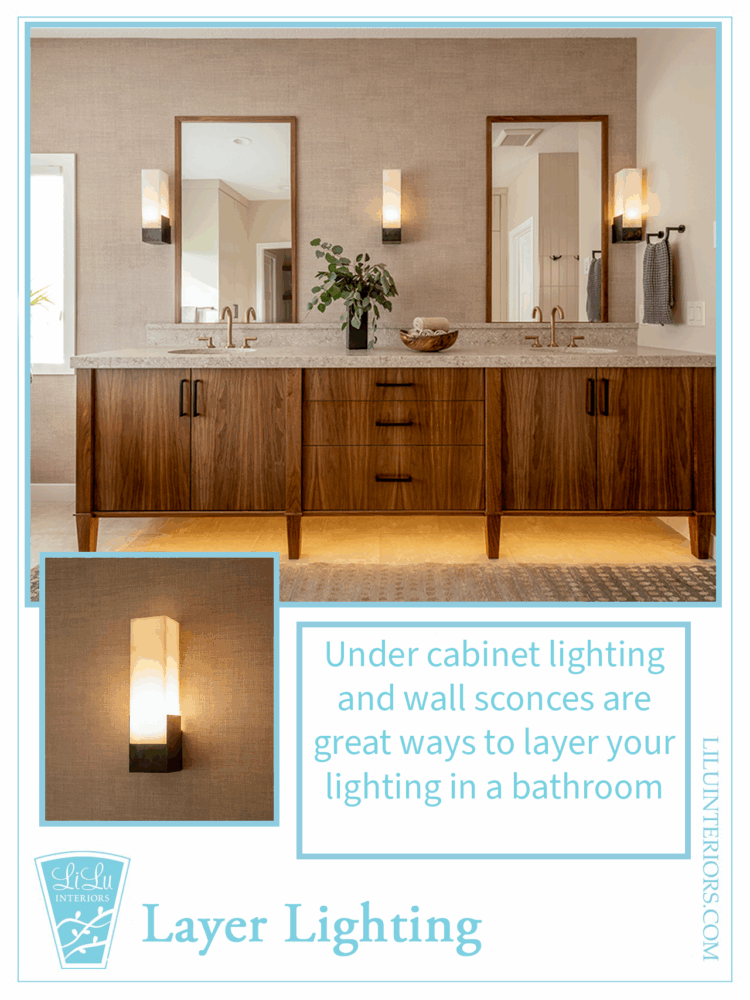
Professional designers layer light. They don’t rely on a single source. In a small bath, this might mean adding sconces on either side of the mirror at eye level. This eliminates face shadows and brightens the entire width of the room. If you’re renting or can’t rewire, plug-in wall sconces or even high-quality battery-operated puck lights inside cabinets can help. The goal is to bounce light off the walls and ceiling.
Also, consider the color temperature. Cool, blue-white bulbs can feel clinical and stark, making a small space feel like an operating room. Warm white or soft white bulbs (around 2700K to 3000K) create a cozier, more inviting atmosphere. They soften the edges of the room. It’s a subtle shift, but try swapping out one bulb and see how the room feels less "tight." It’s like taking a deep breath.
The Mirror Illusion and Visual Continuity Breaks
Mirrors are the oldest trick in the book for small spaces, but most people use them wrong. They slap up a standard medicine cabinet mirror and call it a day. While functional, a small mirror framed by thick wood or metal chops up the wall. It creates a border that says "this is the end of the reflection." To really open up a room, you need visual continuity. This means uninterrupted lines that lead the eye across the space.
Think bigger. A large, frameless mirror that spans the width of the vanity, or even floor-to-ceiling if you’re feeling bold, reflects more light and more of the room. It doubles the visual depth. In 2026, we’re seeing a rise in "mirror walls" in tiny powder rooms, where the entire back wall is mirrored. It’s disorienting at first, but incredibly effective at making a 5×5 foot room feel like 10×10.
But it’s not just about size. It’s about placement. If your mirror reflects a cluttered shower curtain or a pile of laundry, you’ve just doubled the clutter. Make sure what’s being reflected is something pleasant—a nice tile pattern, a plant, or empty space. Also, consider the shape. Round mirrors can soften the hard angles of a small rectangular room, making the flow feel more organic and less boxy. It breaks up the rigid geometry that often makes small baths feel like cells.
Storage Solutions That Actually Work (Not Just Baskets)
We’ve all been there. You buy a cute wicker basket to hide the clutter. For a week, it looks great. Then the basket overflows, and you just shove more stuff on top. Now you have a visible pile of junk in a cute container. That’s not storage; that’s hiding. And hiding doesn’t solve the problem. Real storage solutions need to be intentional and accessible. If it’s hard to put things away, you won’t do it.
Vertical space is your best friend. In small bathrooms, the wall area above the toilet or beside the vanity is often wasted. Floating shelves can hold towels and decorative items without the visual bulk of a cabinet. But here’s the key: keep them styled, not stuffed. Leave some negative space. Empty space on a shelf makes the items you do have look curated, not crammed.
Inside the vanity, organizers are crucial. Drawer dividers prevent the "junk drawer" effect. Use clear acrylic bins so you can see what you have. If you can’t see it, you’ll buy duplicates. And don’t forget the back of the door. Over-the-door hooks or racks for towels and robes free up valuable floor and wall space. It’s about using every inch efficiently, but not chaotically. Think of it as Tetris, but with your toiletries.
Color and Texture Choices That Add Weight
Dark, moody bathrooms are trendy, no doubt. But in a tiny space with no natural light, dark paint can feel like you’re standing in a cave. It absorbs light rather than reflecting it. This adds visual "weight" to the walls, making them feel closer. If you love dark colors, use them as accents—maybe on the lower half of the wall or on the vanity cabinet—while keeping the upper walls and ceiling light and airy.
Texture matters too. Busy patterns on small tiles can create visual vibration. Imagine a small floor covered in intricate, high-contrast mosaic tiles. It’s exciting, but it’s also exhausting for the eye. It makes the floor feel busy and crowded. Large-format tiles with minimal grout lines create a smoother, more seamless look. Fewer lines mean less visual interruption, which translates to a feeling of more space.
Same goes for textiles. A thick, shaggy bath mat in a tiny room can look overwhelming. Opt for low-pile mats or even teak wood mats that allow water to drain and take up less visual bulk. Keep fabrics light and breathable. Sheer shower curtains instead of heavy opaque ones let light filter through, maintaining that sense of openness. It’s about reducing the density of objects and surfaces. Light bounces better off smooth, light-colored surfaces. Let it work for you.
Finally, let’s talk about how you move through the space. A cluttered feeling isn’t just visual; it’s physical. If you have to sidestep a trash can to get to the shower, or if the door hits the toilet, your body registers that stress. Every time you bump into something, your brain notes the confinement. Good layout is about clear pathways. Even in a small room, you need a "dance floor"—a clear spot where you can stand and turn without hitting anything.
Sometimes, this means downsizing fixtures. A pedestal sink takes up less visual space than a bulky vanity, though it offers less storage. A corner sink can free up wall space. In 2026, compact, multi-functional fixtures are huge. Think vanities with integrated sinks that offer deep drawers, or shower niches built into the wall so shampoo bottles don’t hang off the faucet.
It’s also about zoning. Keep wet zones (shower, sink) and dry zones (toilet, towel rack) distinct. Don’t let wet towels drip onto dry storage areas. This keeps things organized and reduces the mental load of dealing with damp messes. When everything has a logical place based on how you use it, the room flows better. You stop fighting the space and start working with it. It becomes a routine, not a struggle.
So, take a look around your bathroom again. What’s the first thing that bothers you? Is it the counter? The light? The dark corner? Pick one thing. Just one. Fix that. Maybe it’s clearing off the sink tonight. Maybe it’s buying a warmer lightbulb tomorrow. Small changes add up. You don’t need a full renovation to feel like you have more room. You just need to understand why it feels small in the first place. And now you do. Go make some space.