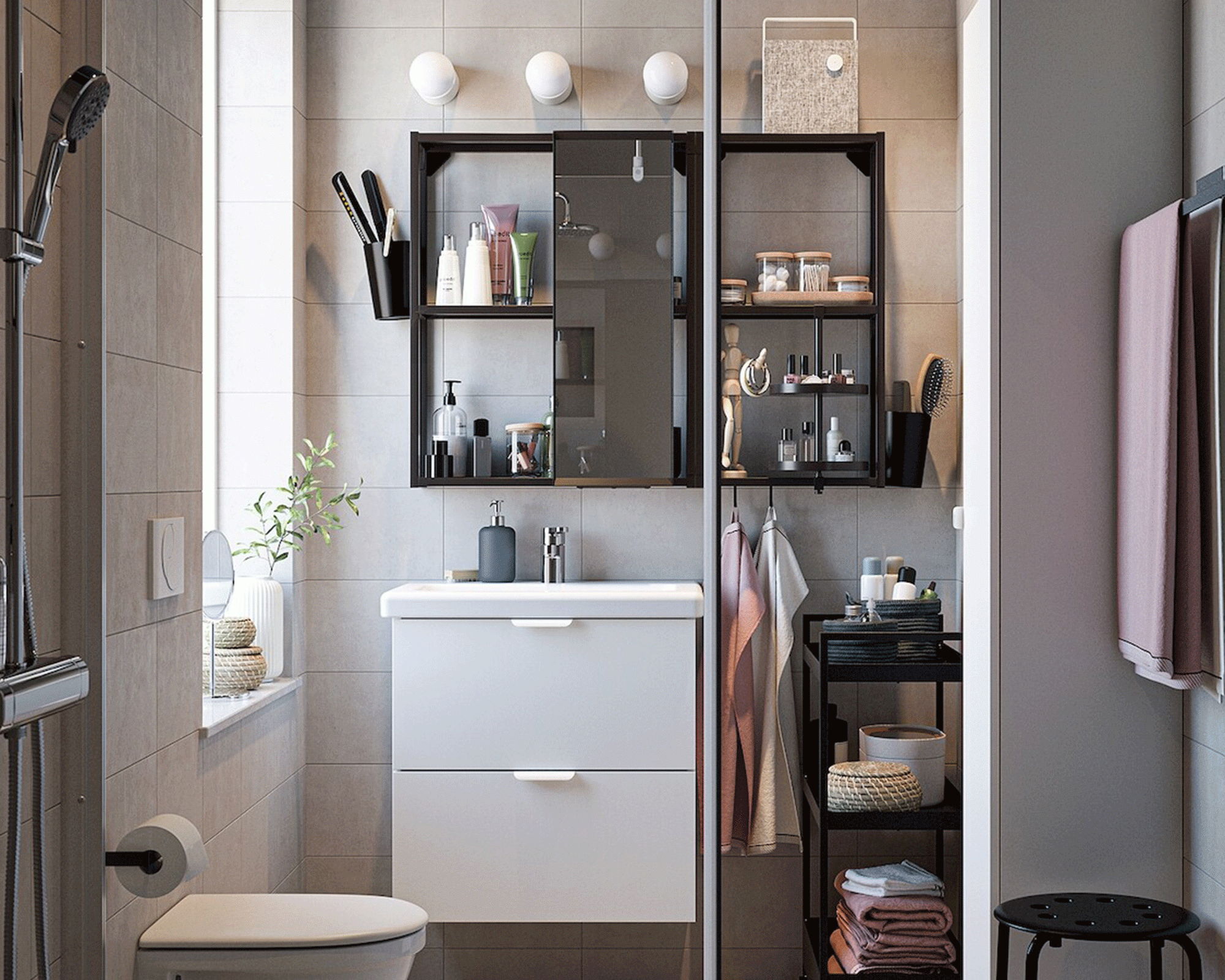
Ever stood in your bathroom, elbow hitting the wall before you’ve even picked up your toothbrush? Yeah. We’ve all been there. In a city where a closet can cost more than a car, the bathroom is often the tightest squeeze of all. It’s not just about square footage; it’s about sanity. When you’re living in 450 square feet, every inch feels like it’s watching you. But here’s the thing: New Yorkers have cracked the code. We don’t knock down walls (usually). We don’t always beg landlords for permits. We just change what we look at. Specifically, we change the mirrors.
It sounds too simple, right? Just hang a piece of glass and call it a day. But if you’ve ever tried to shave or apply mascara in a dark, tiny box of a room, you know it’s not that easy. The mirror isn’t just an accessory. It’s a tool. It’s a psychological hack. According to recent reports, nearly 70% of NYC renters deal with "cramped anxiety." That’s real stress. And while we can’t expand the footprint of a pre-war walk-up, we can definitely expand how it feels. This isn’t about buying expensive stuff. It’s about knowing what works when space is the ultimate luxury.
Go Big or Go Home (Literally)
Here’s the first rule that trips everyone up: small rooms need big mirrors. I know, I know. Your instinct says, "This bathroom is tiny, so I should get a tiny mirror to match." Wrong. Designers across the boroughs are saying the exact opposite this year. A small mirror in a small room just highlights how small the room is. It creates a visual full stop. You want a visual run-on sentence. You want flow.
Think about it. A large mirror, especially one that stretches from countertop to ceiling or spans the entire width of the vanity, reflects the rest of the room. It doubles the visual depth. If you have a window opposite that mirror? Boom. You’ve just imported natural light into the darkest corner of your apartment. It’s not magic; it’s physics. But it feels like magic when you’re trying to get ready for work in a shoebox. Frameless options are huge right now because they remove visual clutter. No thick borders eating up your precious reflection space. Just clean, uninterrupted glass.
And don’t worry if you think a huge mirror will overwhelm the space. It won’t. It’ll anchor it. An 18-inch mirror might seem safe, but in a compact NYC bath, it can look like an afterthought. Go as wide as your vanity allows. If you can go wider, do it. The goal is to make the wall disappear. When the wall disappears, the room feels bigger. It’s a trick as old as Versailles, but it works just as well in a Queens studio.
Shape Matters More Than You Think
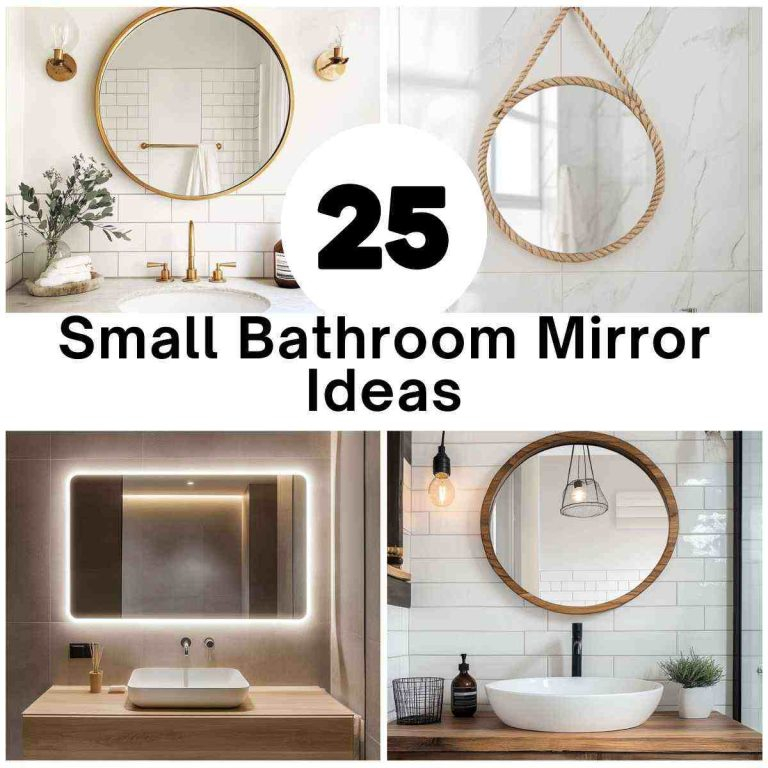
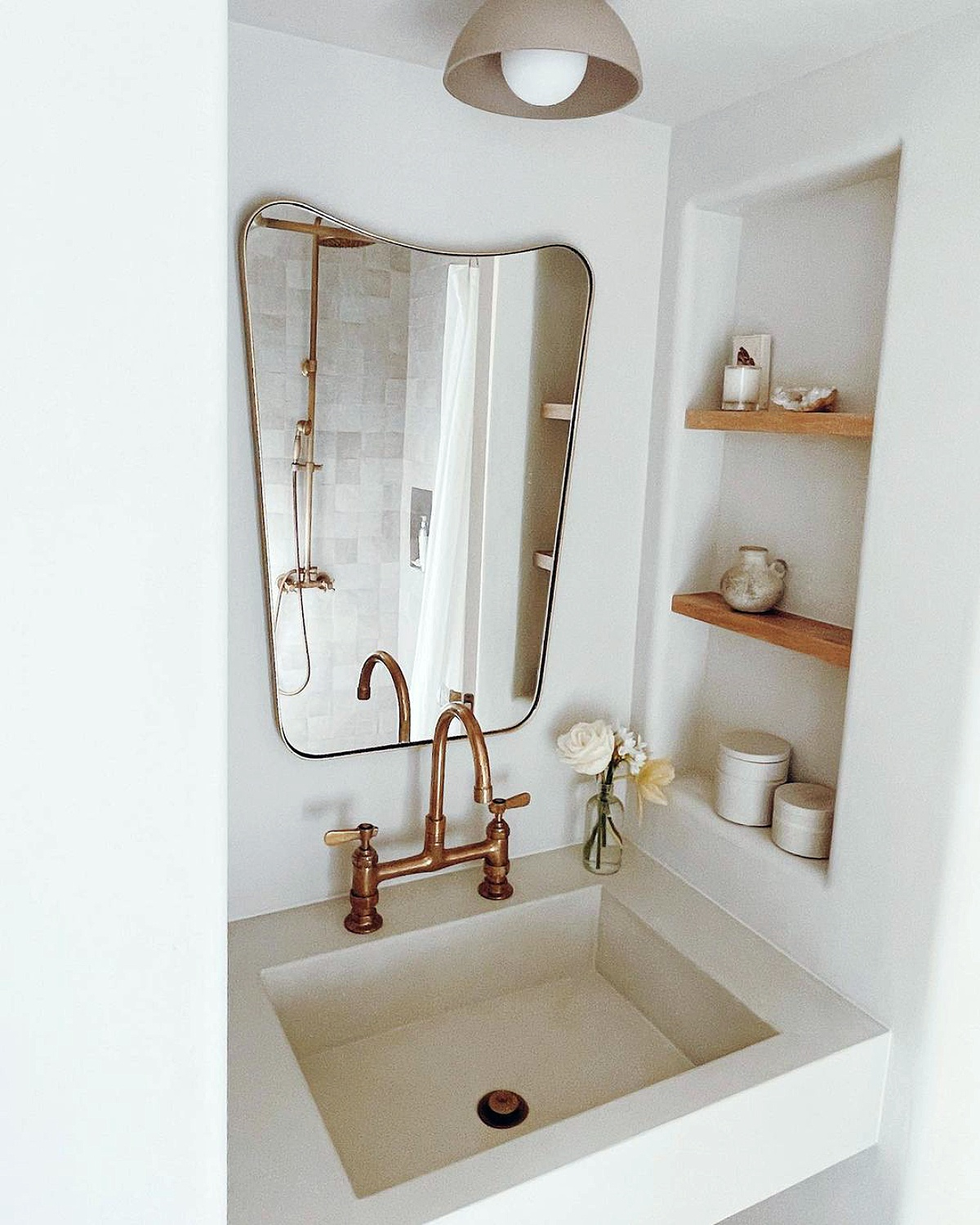
Once you’ve decided on size, you have to pick a shape. This is where personality comes in. For years, the standard rectangle was king. Boring, but functional. But lately? We’re seeing a shift. Round and oval mirrors are having a major moment in small NYC bathrooms. Why? Because sharp corners feel aggressive in tight spaces. They create visual tension. Soft curves, on the other hand, guide the eye gently. They break up the boxy nature of most apartment bathrooms.
If your bathroom is all right angles—square tiles, rectangular sink, door frame—an oval mirror softens the whole vibe. It adds a bit of organic flow. It’s less rigid. Plus, round mirrors often come in smaller footprints but still offer plenty of reflection area because there’s no wasted corner space. It’s efficient. And let’s be honest, efficiency is the NYC motto.
Frameless, oval, or round styles also tend to look cleaner. They don’t fight with the tile pattern or the faucet hardware. They just sit there, doing their job. If you’re going for a modern, minimalist look—which is pretty much the only way to survive visually in a small space—these shapes are your best friends. They maximize usable area without adding visual weight. It’s about keeping things airy. Heavy, ornate frames might look nice in a brownstone parlor floor, but in a fifth-floor walk-up? They’ll just make the ceiling feel lower. Keep it light. Keep it simple.
Lighting Is Half the Battle
You can have the biggest, prettiest mirror in Manhattan, but if the lighting is bad, it’s useless. Actually, it’s worse than useless. Bad lighting makes a small bathroom feel like a cave. Or a interrogation room. Neither is a good look for a Tuesday morning. The secret isn’t just having light; it’s having the right light hitting that mirror.
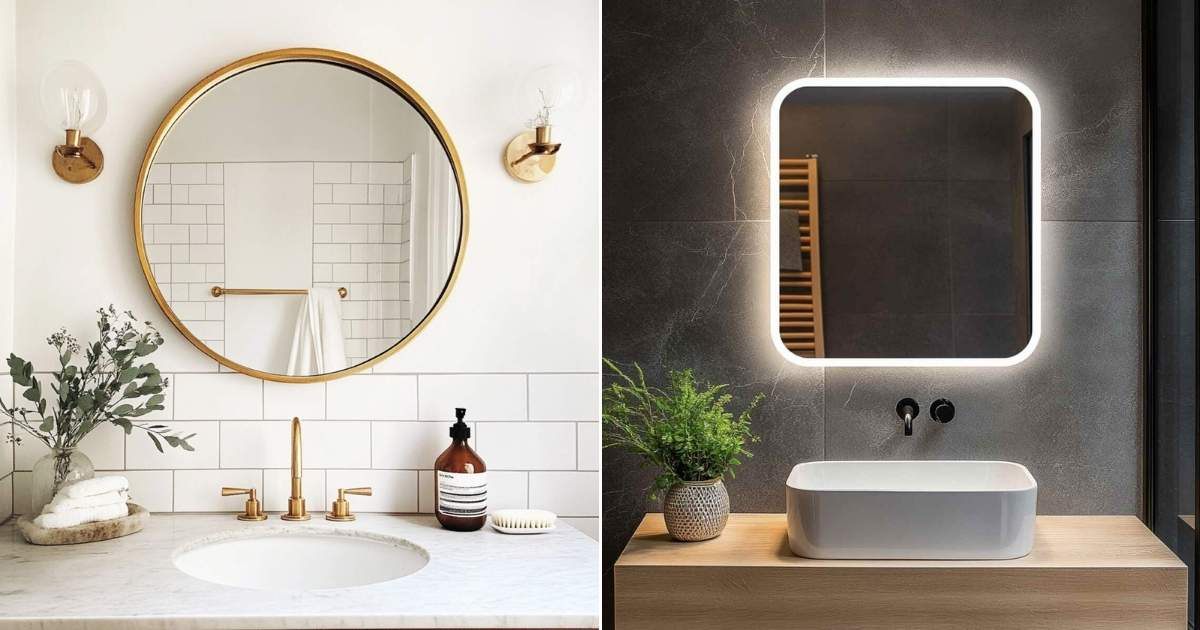
Most older NYC apartments have one sad little fixture in the center of the ceiling. It casts shadows under your eyes and makes everything look dreary. Not ideal. The pro move? Side lighting. Sconces placed on either side of the mirror at eye level provide even illumination. No shadows. No harsh contrasts. Just clear, flattering light. If you can’t hardwire new sconces (and let’s face it, most landlords won’t let you), plug-in wall sconces are a game changer. Or even better, LED strips mounted behind the mirror.
Backlighting creates a halo effect. It pushes the mirror visually forward, making it seem like it’s floating. This adds depth. It separates the mirror from the wall, which again, tricks the brain into thinking there’s more space. Plus, it’s ambient. It’s soft. It turns a utilitarian task into a slightly more luxurious experience. And if you’re using a smart bulb, you can adjust the color temperature. Cool white for waking up, warm white for winding down. It’s a small upgrade with a massive payoff. Don’t underestimate the power of good lumens.
Storage Without the Bulk
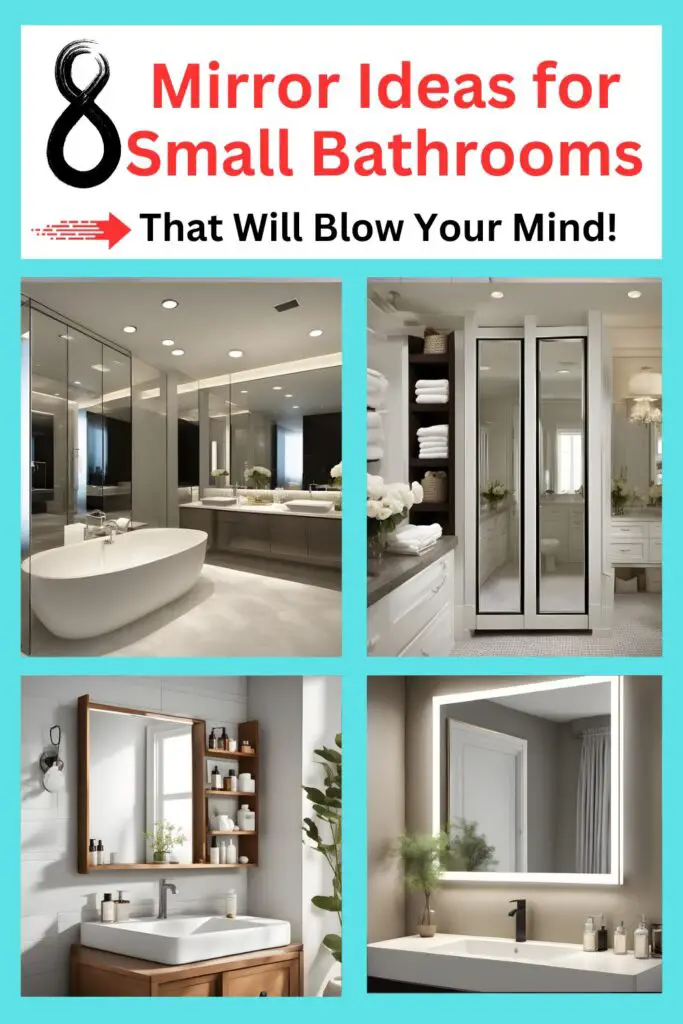
Space is premium. So where do you put your toothpaste? Your razor? Your three different serums? Traditional medicine cabinets are bulky. They stick out. They eat up air space. But going completely open-shelf can look messy fast. The solution? Mirrors with integrated storage. But not the clunky ones from the 90s. We’re talking sleek, modern designs with hidden shelves or slim profiles.
Some newer models have shelves built into the bottom edge or the sides, barely protruding from the wall. Others are recessed. If you’re lucky enough to have a recessed cabinet, keep it. If not, look for ultra-thin mirrored cabinets. The key is functionality without visual noise. You want the mirror to look like a mirror, not a cupboard. DAPAI and other brands are pushing these hybrid designs hard in 2026 because they solve two problems at once: reflection and organization.
But here’s a tip: don’t overstuff it. The point of a small bathroom is minimalism. If your mirror shelf is overflowing, it defeats the purpose. Use it for the essentials only. Keep the counter clear. A clear counter reflects more light. A cluttered counter absorbs it. It’s a subtle difference, but your eyes will notice. The mirror becomes a focal point, not a distraction. And if you can’t find a mirrored cabinet you love, just use a beautiful, simple mirror and add a tiny floating shelf elsewhere. Just keep it off the main reflection zone if possible.
Placement Precision
Where you hang the mirror matters almost as much as the mirror itself. Too high? You’re staring at your forehead. Too low? You’re hunching over like a gargoyle. The sweet spot is eye level. For most people, that means the center of the mirror should be about 5 to 10 inches above the sink rim. But "eye level" varies. If you’re tall, adjust up. If you’re shorter, adjust down. It’s your bathroom. Make it work for your body.
Also, consider what the mirror reflects. Ideally, you want it to reflect something pleasant. A window. A nice tile pattern. A plant. If it reflects the toilet or the shower curtain rod, maybe rethink the angle. Angled mirrors can be tricky in small spaces, but sometimes tilting a mirror slightly downward can help if you have high ceilings and want to capture more of the room below. However, straight-on is usually safest for maximizing the sense of width.
Don’t forget the edges. Leave a little breathing room between the mirror and the walls or fixtures. Cramping it right against the tile grout can look unfinished. A half-inch gap can make it look intentional and designed. It’s those little details that separate a rental hack from a designer look. And if you’re renting, use heavy-duty adhesive strips or French cleats that don’t require drilling huge holes. Landlords appreciate that. You’ll appreciate getting your security deposit back.
Let’s get real for a second. Living in a tiny space is stressful. The Urban Wellbeing Report from 2025 highlighted that cramped living conditions are a top stressor for city dwellers. It’s not just about aesthetics; it’s about mental health. A bathroom that feels open and bright is a sanctuary. It’s a place to breathe. A bathroom that feels dark and closed-in is just another cage.
Mirrors are stealthy allies in this battle. They don’t just reflect light; they reflect possibility. They remind you that there’s space beyond the immediate walls. When you look in a well-placed mirror, you see depth. You see continuity. It breaks the monotony of four close walls. It’s a small psychological win, but those wins add up. Over time, a well-designed small bathroom can actually reduce that feeling of being trapped.
So don’t treat the mirror as an afterthought. Treat it as a vital piece of infrastructure. Invest time in choosing the right one. Install it with care. Light it properly. It’s not vanity. It’s survival. It’s about claiming your space, however small it may be. And in New York City, claiming your space is the ultimate act of defiance. You’re not just surviving the square footage; you’re mastering it.
At the end of the day, your bathroom doesn’t need to be big to be great. It just needs to feel like yours. And a mirror is the easiest, most effective way to start that conversation. Whether you go round, rectangular, lit, or simple, the goal is the same: open up the box. Let the light in. Make the walls recede. It’s a small change with a massive impact. So take a look. Really look. And then make it bigger.