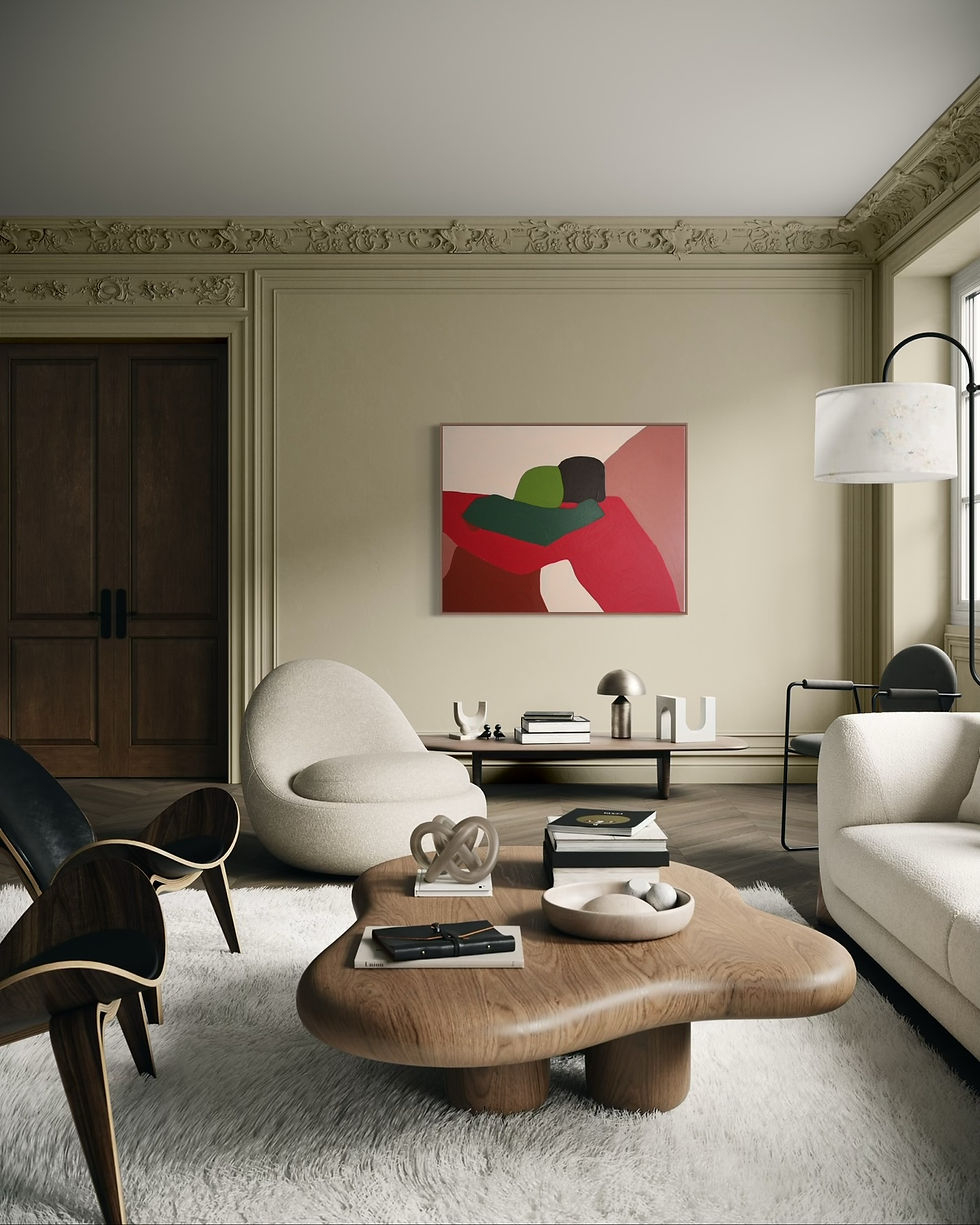
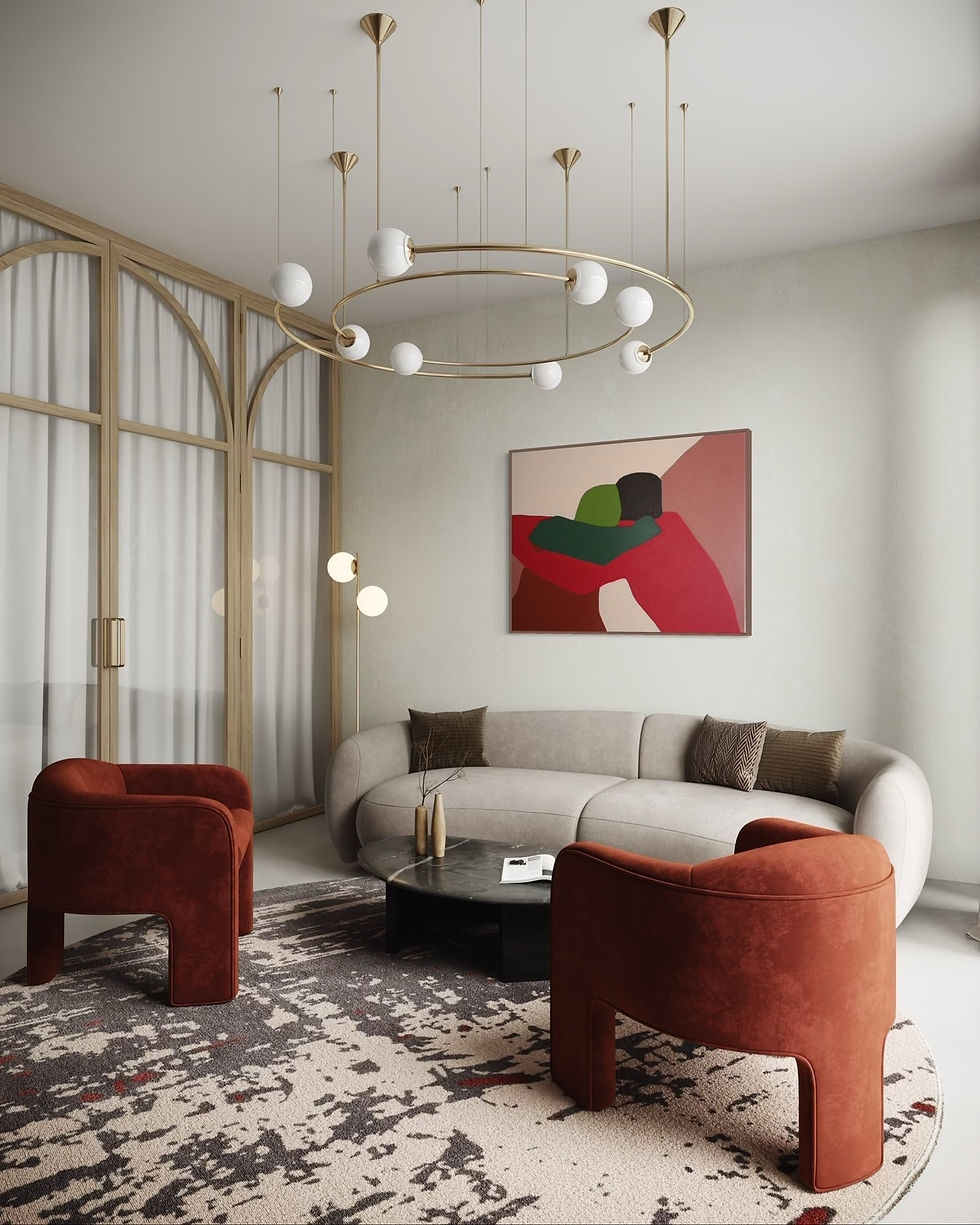
The evening light cuts across the polished concrete floor, catching every speck of dust suspended in the air. Instead of casting a comforting glow, the sunset reflects off brushed steel table legs and stark white walls, turning the living room into a sterile laboratory rather than a sanctuary. There is an unmistakable chill in the air—and it has nothing to do with the thermostat. It comes from an excess of raw edges, empty expanses, and a relentless clinical perfection that leaves no room for human error, or human comfort.
For years, contemporary design culture championed a ruthless pursuit of emptiness. Houses were stripped to their structural bones, adorned with high-gloss surfaces, invisible hardware, and a monochromatic palette of icy grays and stark whites. Yet, walking into these architectural showpieces often triggers a subtle, unconscious exhaustion. The human eye scans the room, registering dozens of competing geometric lines and hard surfaces, and the nervous system quietly responds with fatigue.
The pendulum is finally swinging back. Homeowners and designers are realizing that true modern luxury is no longer about living in an art gallery where nothing can be touched. It is about distilling a room down to its essential components—stripping away the visual noise that clutters the subconscious mind—and replacing it with an intentional, tactile warmth. This design shift is redefining how we inhabit our homes, proving that simplicity does not have to mean coldness.
We live in an age of constant digital saturation, notification pings, and relentless visual input. Stepping across the threshold of your front door should feel like lowering the volume on a roaring crowd. When spaces contain too many small objects, competing shapes, or an overload of decorative items out at once, the brain works overtime. It continually processes that visual data, even unconsciously, which generates subtle mental fatigue. Stripping away the noise is the mandatory first step toward reclaiming peace of mind.
However, minimalism historically fell into a trap of ascetic austerity. By rejecting clutter, early modernists frequently rejected comfort along with it. Rooms became museums for furniture rather than habitats for humans. The evolution taking place in interiors corrects this imbalance. It honors the clean lines and unburdened layouts of minimalism while injecting organic textures, deep earth tones, and soulful imperfections. It asks a fundamental question: how do you remove the excess without sacrificing the soul?
Achieving this balance requires understanding the architecture of a room. It means looking at a space not as a canvas to be filled with decorations, but as a volume of air, light, and shadow that needs to be respected. When you stop treating empty space as a problem to be solved with more furniture, the room begins to breathe. The air circulates differently. The mind settles. The physical environment finally supports the psychological need for rest.
The Cognitive Architecture of Calm and the Burden of Visual Clutter
Human biology was never designed to cope with the visual onslaught of the twenty-first century. Evolutionary psychology tells us that our ancestors scanned natural landscapes for predators and resources, processing organic patterns that lowered heart rates and reduced cortisol levels. Modern interiors, by contrast, often assault the senses with a barrage of synthetic materials, neon glare, erratic shadows, and chaotic arrangements of small objects. This creates an environment of low-grade, perpetual stress.
When a room is crowded with knick-knacks, floating shelves laden with unread books, and competing furniture legs, the brain registers visual noise. Every single item demands a fraction of cognitive bandwidth. Eliminating this clutter is not merely an aesthetic choice; it is a neurological necessity. By reducing the number of focal points in a room, you give the prefrontal cortex permission to relax. The space stops demanding attention and starts offering sanctuary.
Yet, simply throwing everything into a storage bin is not enough. If you clear a room of all its contents without understanding the structural qualities of what remains, you are left with an echo chamber. The hardness of bare drywall, the acoustic bounce of open-plan layouts, and the flat, sterile quality of modern recessed lighting will quickly expose the emptiness. Stripping away the noise must be paired with an acute awareness of scale, proportion, and acoustic dampening.
This analytical approach to interior design treats the home as an ecosystem. Every element—from the width of a floor plank to the grain of a wooden bowl—either contributes to the harmony of the room or disrupts it. By understanding how light interacts with matte surfaces versus gloss finishes, you can curate an environment that feels expansive yet deeply grounded. It is about editing ruthlessly, keeping only what serves a functional purpose or sparks genuine emotional resonance.
The Sensory Anatomy of Warmth: Moving Beyond Polished Steel and Glass
A common misstep in minimalist design is the reliance on a monolithic material palette. When a space features only smooth, cold surfaces—polished concrete floors, glass tabletops, brushed steel light fixtures, and lacquered cabinetry—it reads as institutional, regardless of the price tag. These materials reflect light uniformly and absorb no sound, resulting in a cold, echoing environment that feels hostile to human habitation.
Warmth in design is not about quantity; it is about specificity and sensory variation. To counteract the hardness of modern architecture, you must introduce textural disruption. This means layering materials that invite touch and absorb light rather than bouncing it aggressively. Think of raw terracotta tiles with subtle surface irregularities, hand-knotted wool rugs with varied pile heights, heavy linen drapery that pools softly on the floor, and furniture crafted from unsealed white oak or walnut.
Tactile variety triggers positive emotional responses in the human brain. Touching a rough-hewn wooden coffee table or sinking bare feet into a dense, loop-pile wool carpet grounds us in the physical present. It counters the disembodying effect of screens and digital work. When you strip away unnecessary decorative objects, the few items you choose to keep must carry more weight. They become tactile anchors that command the room through their material integrity rather than their loud colors or intricate shapes.
Furthermore, color temperature plays a monumental role in this sensory equation. Warm minimalism eschews stark, blue-based brilliant whites in favor of mineral-rich neutrals, chalky ivories, soft clays, ochres, and muted olives. These hues mimic the natural pigments found in stone, soil, and unbleached fibers. When illuminated by warm lighting—ideally bulbs emitting between 2400K and 2700K—these tones wrap around the room like a physical blanket, turning simplicity into an embrace.
Methodical Minimalism: A Step-by-Step Blueprint for Restoring Lived-In Comfort
Transforming a cluttered, chaotic interior into a warm, intentional sanctuary cannot happen overnight. It requires a systematic dismantling of old habits and a deliberate curation of your living environment. Follow this field-tested methodology to strip away the noise without stripping away your personality.
- Step 1 (The Total Environmental Audit): Clear every horizontal surface—countertops, mantels, coffee tables, and open shelves—completely. Live with the bare architecture for 48 hours to identify where the natural light falls and how you actually move through the space without relying on your belongings as landmarks.
- Step 2 (The Tactile Material Assessment): Audit your existing furnishings for texture. Identify and remove or replace cold, highly reflective synthetic finishes. Introduce at least three contrasting organic textures into every room, such as raw linen, patinated leather, and heavy ceramics.
- Step 3 (Architectural Lighting Overhaul): Eliminate glaring overhead recessed lighting. Layer your illumination by incorporating low-level floor lamps, wall sconces with diffused shades, and table lamps that cast a warm, downward pool of light, keeping color temperatures strictly between 2400K and 2700K.
- Step 4 (The One-In, Three-Out Curation Rule): When reintroducing decorative objects, adopt a strict curation policy. For every single decorative item you place on display, remove three smaller, distracting items to maintain open expanses of negative space.
- Step 5 (Acoustic and Spatial Softening): Address room echoes by introducing sound-absorbing elements. Hang thick woven draperies, lay down dense wool area rugs over hard flooring, and incorporate upholstered seating with tactile, textured fabrics like boucle or heavy cotton canvas.
Navigating the Trapdoors: Common Pitfalls in Minimalist Design and How to Fix Them
Attempting to design a warm, minimalist space is fraught with aesthetic traps. Many well-intentioned homeowners end up swinging wildly from cluttered chaos to an unlivable museum. Recognizing these pitfalls before you pick up a paintbrush will save you time, money, and frustration.
- Pitfall 1 (The Sterile Showroom Trap): Filling a room exclusively with expensive designer pieces and sleek, matching furniture sets. Workaround: Mix eras and provenances. Pair a clean-lined modern sofa with a vintage, weathered wooden stool or a hand-thrown ceramic vessel found at a local market to inject instant history and soul.
- Pitfall 2 (Monochromatic Monotony): Relying on a single shade of gray or beige throughout the entire home, resulting in a flat, washed-out visual experience. Workaround: Layer tone-on-tone neutrals by varying the undertones and saturations. Combine a cool limestone wall with a warm cream wool rug and rich, dark walnut timber accents.
- Pitfall 3 (Neglecting Negative Space): Panic-filling empty corners with large plants or awkward accent chairs just because the area looks "unfinished." Workaround: Reframe your perception of empty space. Negative space is an active design element that allows the eye to rest and emphasizes the beautiful forms of the furniture you actually use.
- Pitfall 4 (Harsh, Flat Illumination): Relying on bright white, daylight-balanced LED bulbs that make a simplified room feel like a hospital ward. Workaround: Swap all high-Kelvin bulbs for warm, dimmable LED sources between 2400K and 2700K, and ensure light sources are distributed at varying heights across the room.
- Pitfall 5 (Surface Over-Styling): Arranging curated vignettes on every available tabletop, completely defeating the purpose of minimalism. Workaround: Leave most surfaces entirely bare. Let a single, substantial object—such as a large architectural branch in a heavy stoneware vase—stand alone without competing accessories.
The Philosophy of Enough: Designing Homes for Long-Term Mental Well-Being
The movement toward warm minimalism is more than a fleeting seasonal trend; it is a profound philosophical rejection of consumerist excess. For decades, the modern housing market encouraged the accumulation of goods as a proxy for identity and success. Walk into any big-box retailer, and you are met with endless rows of disposable, mass-produced decor designed to be rotated out every few months. This cycle of consumption leaves homes bloated with plastic and cheap composites that add zero emotional value.
When you embrace simplicity, you redefine your relationship with material objects. You begin to value provenance, craftsmanship, and durability over novelty. Buying one heirloom-quality dining table crafted from sustainably harvested white oak by a local artisan costs significantly more upfront than buying flat-pack furniture every three years. Yet, that single piece anchors a room, develops a rich patina over time, and tells a story that mass-market items never can.
This shift also transforms how we care for our living spaces. Cleaning a home stripped of unnecessary clutter ceases to be an exhausting weekend chore and becomes a meditative practice. When every item has a designated home and a clear purpose, tidying up takes minutes rather than hours. The physical maintenance of the home mirrors the mental maintenance of the mind: clear, methodical, and calm.
Ultimately, designing a home with this philosophy creates a resilient living environment. Tastes change, trends cycle in and out every decade, but a home built on the pillars of natural light, tactile materiality, functional simplicity, and deep warmth remains timeless. It is a space that adapts to your life rather than demanding that you adapt to its aesthetic rules.
Cultivating Sanctuary: Practical Frameworks for Sustaining Simplicity
Maintaining a warm, simplified space requires ongoing mindfulness. It is entirely possible to slip back into old habits of accumulation if you do not establish healthy household boundaries. The key to sustaining this lifestyle lies in adopting practical, repeatable frameworks that protect your newly won peace of mind.
- The Seasonal Rotation Framework: Instead of keeping all your decorative objects, textiles, and ceramics out at the same time, divide them into seasonal collections. Display a handful of heavy wool throws and deep-toned ceramics in the winter, and swap them for lighter linen textiles and pale stone accents in the summer.
- The One-In, One-Out Acquisition Rule: Once your home has been edited down to its ideal state of warm minimalism, adopt a strict replacement policy for non-essential items. If you purchase a new piece of art, a lamp, or a decorative object, another must be permanently removed and donated or sold.
- The Tactile Maintenance Routine: Regularly condition your raw wood furniture with natural beeswax, launder your linen draperies, and vacuum wool rugs with a high-powered brush roll to keep organic materials looking vibrant and lived-in rather than tired or dusty.
The modern home should never feel like a performance staged for visitors or a sterile magazine spread detached from reality. It should be an exhale at the end of a long day, a physical manifestation of quietude in a world that never stops shouting. By stripping away the visual noise, editing out the superfluous, and grounding your rooms in rich, organic textures, you do more than just decorate a house. You curate a sanctuary for the human spirit.
Simplicity is not about deprivation. It is about making deliberate room for the things that truly matter—light, air, comfort, and connection. As you look around your own living spaces today, consider what can be removed, what can be softened, and what can be allowed to breathe. The most luxurious thing you can own is not more stuff; it is the profound, restorative peace of a home that knows how to hold you.