The coffee cup is halfway to your mouth when the notification chime breaks the silence. Simultaneously, a toddler shrieks in the hallway, an unread email thread pings from your laptop screen, and your foot grazes an unboxed package sitting right where you left it three days ago. Your shoulders hitch toward your ears. You did not consciously invite this chaos into your house; it simply accreted, layer by dusty layer, until your physical surroundings began to mirror the frantic noise inside your head.
We live in a culture that treats accumulation as an unalloyed good. From algorithmically curated shopping feeds to the sheer ease of same-day delivery, society whispers a constant invitation to buy, collect, and store. Yet, the physical architecture of our homes tells a different story. Cupboards groan, closets refuse to close, and flat surfaces become parking lots for miscellaneous clutter. When your home is saturated with excess, your nervous system never truly powers down.
Minimalism is often misunderstood as an ascetic punishment—a joyless exercise in throwing away your favorite things until you are left living in a sterile white box. True minimalism, however, is not about deprivation. It is an intentional reclamation of space, time, and attention. By curating a living environment built around essentials, you remove the constant visual static that drains your cognitive energy. This guide explores the philosophy, design mechanics, and step-by-step methodologies required to transform your home into a resilient sanctuary of modern minimalist living.
The Architecture of Calm: Understanding the Roots and Rules of Minimalist Interiors
The concept of minimalist design did not materialize out of thin air to fill pages in interior design magazines. It draws deep inspiration from traditional Japanese architecture—specifically the concept of ma, which translates to negative space or interval—and the mid-century modern movement governed by the architectural maxim "less is more." When you strip away ornamentation, what remains must stand on its own merits: proportion, light, texture, and structural integrity.
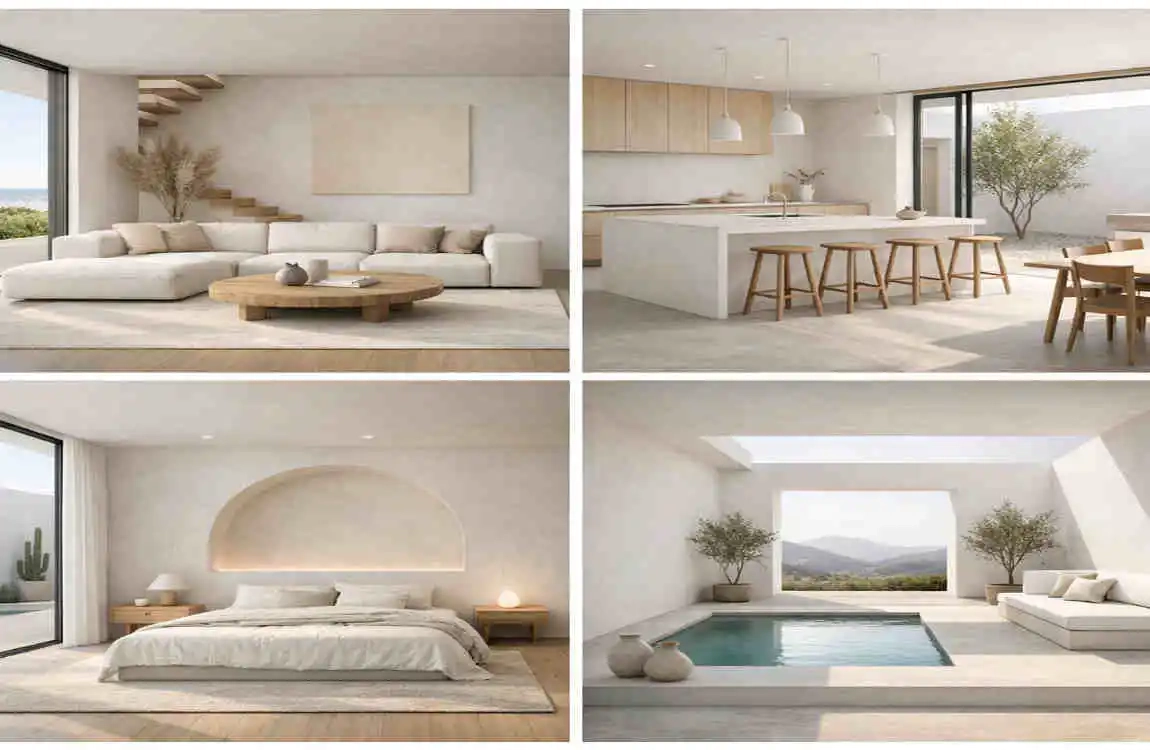
In a modern minimalist living space, every object performs a function or holds deep, uncompromised emotional resonance. This requires a radical shift in how we evaluate interior square footage. Most homes suffer from an overabundance of visual weight concentrated at eye level. Books stacked haphazardly, decorative trinkets crowding side tables, and conflicting patterns on textiles force the brain to constantly process extraneous data. Minimalist interior design relies on clean lines, a disciplined neutral color palette—think warm ivories, bone, soft charcoals, and desaturated earth tones—and the interplay of natural light across unadorned surfaces.
Achieving this balance is not about buying expensive designer furniture; it is about honoring the breathing room between objects. When a room has empty corners and bare walls, those blank spaces become active participants in the design. They allow the eye to rest. Materials matter immensely when you scale back on the sheer volume of possessions. Because you have fewer items competing for attention, the tactile qualities of your environment take center stage. Brushed brass, oiled oak, linen, wool, and raw concrete gain prominence, introducing warmth and sensory richness without clutter.
The Cognitive Toll of Clutter and Why Your Living Space Controls Your Mood
Environmental psychology offers compelling evidence for what we intuitively feel: our physical surroundings directly dictate our mental state. A landmark study conducted by the UCLA Center on Everyday Lives of Families found that chronic clutter triggers sustained spikes in cortisol, the body’s primary stress hormone. Mothers and fathers living in densely packed homes exhibited physiological signatures similar to combat veterans or emergency room nurses. Your brain reads visual clutter as an unfinished task list, continuously whispering that you need to clean, organize, fix, or discard.
This phenomenon is compounded by what behavioral economists call the endowment effect. Once an object enters your home, your brain assigns it an inflated value simply because it belongs to you. You keep the breadmaker you used once three years ago, the souvenir t-shirt that no longer fits, and the stack of professional journals you swore you would read on weekends. Each of these items exacts a silent tax on your psyche. They occupy physical space, require dusting, and demand emotional energy every time your gaze sweeps past them.
Transitioning to a minimalist living space disrupts this cycle of cognitive exhaustion. When your rooms are uncluttered, executive functioning improves. You spend less time searching for lost keys, less mental bandwidth managing misplaced items, and significantly less energy maintaining a chaotic household. The home shifts from a source of low-grade, persistent anxiety into an intentional platform for rest and creativity. Simplicity acts as a cognitive filter, allowing you to focus on meaningful work, deep relationships, and personal restoration.
A Room-by-Room Blueprint for Transitioning to Intentional Simplicity
Redesigning your living space cannot happen all at once; a wholesale purge often triggers panic and decision fatigue, leading you to abandon the project entirely. Instead, approach the transformation as an iterative, room-by-room architectural excavation. Here is a field-tested, step-by-step methodology for stripping away the excess and establishing a sustainable minimalist framework throughout your home.
- Step 1 (The Spatial Audit): Begin by photographing every room in your house during daylight hours. Look at these photos on a screen. The camera lens acts as an objective observer, immediately highlighting the visual noise, awkward furniture arrangements, and clutter hot spots that your brain has learned to tune out in real life.
- Step 2 (Total Surface Clearing): Empty every horizontal surface in a single target room—consoles, coffee tables, countertops, and nightstands. Place everything in a central pile. Clean the surfaces thoroughly. Now, before returning any item, apply a strict rule: only items that are used daily or possess undisputed aesthetic value are allowed back onto the surface.
- Step 3 (The Multi-Sensory Textural Upgrade): Introduce warmth to your newly cleared space through high-quality tactile elements. Swap out synthetic throws for heavy, undyed wool; replace harsh overhead lighting with dimmable, warm-spectrum LED bulbs (around 2700K); and incorporate organic greenery like a single potted olive tree or snake plant to anchor the room.
- Step 4 (Strategic Concealed Storage): Minimalism is not about living out of a backpack; it is about hiding the necessary functional clutter of modern life. Invest in closed cabinetry, storage ottomans with deep wells, and built-in closet organizers that keep daily tools out of sight when not in active use.
- Step 5 (The 90/90 Rule Maintenance): Establish a permanent rhythm for ongoing curation. Pick up any item in your home and ask yourself: Have I used this in the last 90 days? Will I use it in the next 90 days? If the answer to both is no, the item is a candidate for donation, sale, or recycling.
Navigating the Hidden Traps and Common Missteps of Minimalist Design
Even well-intentioned minimalists frequently stumble into predictable traps that undermine their efforts. Moving too fast, buying the wrong items, or misunderstanding the core philosophy can turn your home improvement project into an expensive frustration. Recognizing these common pitfalls will save you time, money, and emotional capital.
- Pitfall 1 (The Minimalist Shopping Spree): A common paradox is buying new, expensive minimalist furniture to replace accumulated clutter. This is merely consumerism disguised as lifestyle design. Workaround: Sell or donate your existing excess before purchasing a single new piece. Let the space breathe for a few weeks before deciding what, if anything, actually needs to be replaced.
- Pitfall 2 (Creating a Cold, Uninhabitable Museum): Stripping a room down to a single chair and a blank white wall often results in a sterile environment that feels unwelcoming rather than peaceful. Workaround: Layer in human warmth through books, personal artwork, and family heirlooms, but curate them tightly. Minimalism should serve human life, not rigid aesthetic doctrines.
- Pitfall 3 (Ignoring Storage Realities): Hiding all your clutter inside closets and drawers without reducing the volume creates an invisible ticking time bomb of domestic chaos. Workaround: Declutter the interiors of your storage spaces first. If you cannot close a drawer without shoving it shut, you still have too many possessions.
- Pitfall 4 (Neglecting Lighting Dynamics): Neutral palettes and clean lines fail completely in poorly lit rooms, making spaces feel cavernous and dreary. Workaround: Prioritize natural light by keeping window treatments sheer or minimal, and layer ambient, task, and accent lighting at different heights across the room.
- Pitfall 5 (Imposing Minimalism on Others): Forcing family members or roommates to purge their belongings against their will breeds resentment and sabotages the shared living experience. Workaround: Focus exclusively on your personal spaces and shared common areas through collaborative, gentle dialogue. Lead by example rather than mandate.
The Broader Economy of Less: Sustainability, Financial Freedom, and Long-Term Value
Embracing a minimalist living space ripples outward, fundamentally altering your relationship with money and the environment. When you stop acquiring superfluous goods to fill empty rooms, your household spending naturally contracts. This financial liberation—often referred to by financial independence advocates as plugging lifestyle creep—frees up disposable capital for experiences, investments, or simply the luxury of working fewer hours. The cost of maintaining a sprawling inventory of possessions drops dramatically when you own fewer things to break, clean, insure, or replace.
From an ecological standpoint, modern minimalist living is an antidote to the throwaway culture of fast fashion and disposable home decor. Fast furniture—cheaply manufactured flat-pack items made from particleboard and toxic glues—fills landfills by the millions of tons annually. Minimalist design inherently champions durability. Investing in solid hardwood dining tables, heirloom-quality ceramics, and timeless linen textiles means buying once and keeping for decades. This shift toward circular longevity reduces your household carbon footprint and honors the natural resources required to produce household goods.
Furthermore, the economic value of your living space increases when its utility is maximized rather than compromised by storage needs. A spare bedroom that once functioned as an unnavigable catch-all for old boxes can be transformed into a tranquil yoga studio, a dedicated reading nook, or a serene home office. By reclaiming square footage from dead inventory, you effectively expand your home without paying a single dollar in real estate appreciation or renovation costs.
Frameworks for Lifelong Curation: Maintaining Simplicity in a Complex World
Decluttering your home is not a one-time cleaning event; it is an ongoing practice of mindful curation. Life moves forward, hobbies evolve, families grow, and stuff inevitably creeps back through the front door in the form of mail, gifts, packaging, and impulse purchases. To protect the sanctuary you have built, you need institutionalized household protocols that prevent the slow creep of accumulation.
Implement a one-in, one-out policy for major category items such as clothing, kitchen appliances, and books. If you purchase a new wool sweater, an older sweater must be donated. For books, utilize local digital libraries or commit to passing physical volumes along to friends once read. This simple arithmetic creates a self-regulating ecosystem within your home, keeping inventory flat and intentional.
Establish a designated "holding zone"—a single basket or small box where incoming mail, unassigned receipts, and miscellaneous items collect temporarily. Once a week, process this bin to zero. Do not allow items to scatter across kitchen counters or living room tables. By routing incoming clutter through a single bottleneck, you contain the mess and make maintenance take minutes rather than hours.
Finally, redefine your relationship with sentimental items. We often conflate physical objects with memories, believing that discarding an old photograph or a childhood toy is equivalent to erasing our history. True memory lives in the mind and heart, not in a plastic storage bin rotting in a damp garage. Photograph sentimental items that you do not use or display, create a small, curated memory box for the truly irreplaceable pieces, and release the rest with gratitude for the role they played in your journey.
The journey toward a minimalist living space is ultimately an exercise in self-discovery. Every item you remove from your home asks a quiet, probing question: Who am I without this? As the excess falls away, you begin to realize that your worth, your peace, and your joy are not anchored to the volume of things you manage, but to the clarity of the life you cultivate.
Stand in the center of your living room tonight after the lights have dimmed. Notice how the shadows fall across bare walls, how the texture of the floorboards feels beneath your bare feet, and how the silence in the room matches the quiet settling in your chest. Simplicity is no longer just an aesthetic choice; it has become your dwelling place. Take a deep breath, embrace the breathing room around you, and step forward into a life defined not by what you accumulate, but by what you allow yourself to fully experience.