Walk into a newly renovated home on a crisp autumn afternoon. Visually, it checks every box on a modern mood board: sculptural boucle chairs, crisp matte-black hardware, and a sprawling neutral rug that grounds the open floor plan. Yet, within twenty minutes of sitting down, a subtle physical tension sets in. Your shoulders creep toward your ears. The conversation echoes jarringly off the hardwood floors, and the overhead lighting feels clinical, casting harsh shadows that make it difficult to unwind. You wonder why a space that looks so exceptional on a digital screen feels so completely exhausting to inhabit in real life.
The disconnect between visual appeal and psychological comfort is a silent epidemic in modern residential architecture. For decades, the home design industry prioritized photogenic symmetry over human neurobiology, treating interior spaces as static canvases rather than dynamic environments that actively regulate human stress hormones, cognitive function, and circadian rhythms. Catalog aesthetics frequently fail to account for how a human body actually processes a room over a prolonged period.
Fortunately, a quiet revolution is reshaping how professionals and homeowners approach residential spaces. Grounded in environmental psychology, neuroaesthetics, and circadian biology, evidence-based design proves that our physical surroundings directly alter our neurological chemistry. By intentionally manipulating variables like acoustic reverberation, color contrast, and biological lighting cues, homeowners can turn ordinary rooms into therapeutic spaces. Implementing these science-backed strategies this season does not require tearing down load-bearing walls; it requires a smarter, data-driven understanding of how our nervous systems respond to built environments.
The Neurobiological Foundations of Residential Space
Human beings spent ninety-nine percent of their evolutionary history navigating natural ecosystems, yet modern humans spend nearly ninety percent of their lives indoors. This stark evolutionary mismatch creates chronic, low-grade physiological stress. Neuroaesthetics—the scientific study of how the brain and nervous system respond to aesthetic experiences—demonstrates that our surroundings trigger immediate, involuntary autonomic nervous system reactions. When we walk into a room characterized by jagged lines, harsh acoustic reflections, and monotonous color palettes, the amygdala registers potential threat, elevating cortisol levels and tightening our physical posture.
Conversely, spaces designed with fractal geometries, organic curves, and natural material palettes trigger the parasympathetic nervous system, inducing a state of physiological calm. Research conducted by environmental psychologists reveals that viewing fractal patterns—repeating mathematical structures found in ferns, coastlines, and cloud formations—reduces physiological stress by up to sixty percent within minutes. This occurs because the human visual cortex processes fractals with extreme ease, requiring minimal metabolic energy. Integrating these geometric realities into everyday home design transforms a living space from a visual showroom into a restorative sanctuary.
Understanding these biological underpinnings shifts the entire paradigm of home improvement. Selecting a paint color or arranging furniture is no longer merely an exercise in personal taste or stylistic adherence. It becomes an intentional act of nervous system regulation. When homeowners recognize that their physical environment dictates their cognitive clarity, emotional resilience, and nightly sleep architecture, every design choice gains profound functional weight. This season offers a prime opportunity to audit your living spaces through this biological lens, addressing the hidden stressors baked into your floor plan.
Lighting the Circadian Clock Through Evidence-Based Illumination
Light is the single most powerful environmental synchronizer of the human circadian system. Specialized intrinsically photosensitive retinal ganglion cells (ipRGCs) in our eyes measure ambient light levels, signaling the suprachiasmatic nucleus in the brain to regulate melatonin production, body temperature, and alertness. Standard residential lighting—typically static, warm-white bulbs glowing at a uniform height—fails to respect this biological wiring. By exposing our eyes to flat, unchanging artificial illumination long after sunset, we disrupt our endocrine systems, leading to fragmented sleep and chronic fatigue.
True circadian lighting design mimics the dynamic spectrum and intensity of natural daylight throughout the day. In the morning hours, high-intensity, blue-enriched light (around 5000K to 6500K) suppresses melatonin production, boosting cortisol just enough to promote waking alertness and cognitive sharpness. As afternoon transitions to evening, lighting strategies must shift toward warmer color temperatures (below 3000K) with significantly reduced blue-spectrum output. This signals the brain to begin synthesizing melatonin naturally, preparing the body for deep, restorative sleep.
Implementing this strategy at home involves layering illumination at different heights rather than relying solely on blinding overhead fixtures. Task lighting, floor-level uplighting, and dimmable sconces allow homeowners to manually step down their light exposure as evening approaches. Furthermore, optimizing window treatments to maximize morning solar gain aligns indoor routines with planetary rhythms. When your home’s lighting schema respects your biological clock, you eliminate a primary driver of modern sleep disruption without needing to change your bedtime routine.
Step-by-Step Implementation Guide for Seasonal Home Transformation
- Step 1 (Acoustic Audit and Soft Furnishings): Walk through your primary living spaces and clap your hands sharply to test for reverberation. If the sound echoes or rings, introduce sound-absorbing materials like heavy linen drapery, dense wool area rugs, and upholstered furniture with solid wood frames to bring the reverberation time down to an optimal 0.5 seconds.
- Step 2 (Circadian Lighting Redesign): Replace static smart bulbs or standard fixtures with dynamic, tunable white-light systems. Program them to shift automatically from 5000K daylight-white at 8:00 AM to a soothing 2200K warm amber glow by 8:00 PM.
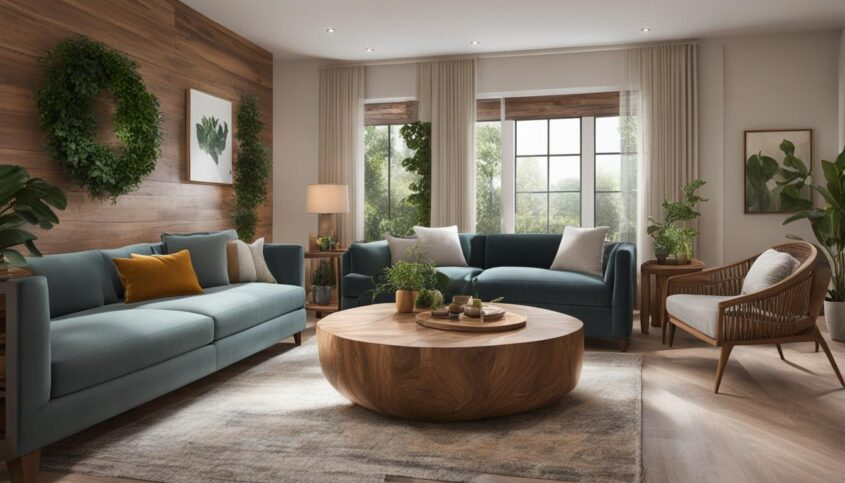
- Step 3 (Biophilic Spatial Integration): Introduce high-leaf-density foliage such as fiddle-leaf figs or snake plants, and replace synthetic decor items with tactile natural elements like unsealed white oak, honed soapstone, and raw linen to satisfy innate biophilic urges.
- Step 4 (Visual Contrast and Focal Point Optimization): Evaluate your room’s contrast ratio. Avoid monotonous beige-on-beige or stark sterile white boxes; instead, anchor rooms with medium-contrast focal points, such as a dark charcoal accent wall paired with warm wood tones, to prevent visual fatigue.
- Step 5 (Ergonomic Layout and Flow Calibration): Reconfigure furniture groupings away from perimeter-only arrangements toward conversational clusters that face focal points of nature or art, ensuring clear, unobstructed movement pathways of at least 36 inches throughout the home.
Common Pitfalls and Field-Tested Workarounds in Evidence-Based Design
- Pitfall 1 (Over-reliance on Monochromatic Minimalism): Designing a home entirely in flat, low-contrast neutrals to achieve a clean look often causes sensory deprivation. The human visual system requires moderate contrast and varied textures to maintain neurological engagement. Workaround: Introduce subtle visual complexity through textural layering—pairing smooth Venetian plaster walls with rough-hewn reclaimed timber and nubby bouclé textiles—rather than adding chaotic color accents.
- Pitfall 2 (Ignoring Acoustic Physics for Aesthetic Minimalism): Stripping rooms of carpets and drapes in favor of exposed concrete and minimalist glass partitions creates severe acoustic bounce. High decibel reflection levels elevate baseline stress hormones invisibly. Workaround: Install discreet, fabric-wrapped acoustic wall panels behind artwork or use heavy, floor-to-ceiling Belgian linen curtains that absorb sound waves while elevating visual warmth.
- Pitfall 3 (Treating Lighting as a Single-Layer System): Relying exclusively on glaring overhead ceiling cans flattens spatial depth and triggers headaches. Workaround: Adopt the three-layer lighting rule in every room: ambient illumination for general navigation, task lighting for focused work, and accent lighting to highlight architectural features or natural elements.
- Pitfall 4 (Relying on Fake Biophilia): Plastic plants and synthetic botanical prints offer zero biological benefits and can sometimes emit volatile organic compounds (VOCs). Workaround: Invest in hardy, low-light-tolerant living botanicals like ZZ plants or cast-iron plants, which actively clean indoor air via rhizospheric microbial action.
- Pitfall 5 (Static Furniture Layouts that Ignore Human Kinetics): Pushing all seating against the walls forces unnatural body angles during conversation and creates an uninviting central void. Workaround: Pull seating inward to create intimate floating conversational pods positioned to maximize views of natural light sources and exterior views.
The Broader Economic and Wellness Implications of Evidence-Based Interiors
The evolution of interior design toward a science-backed model reflects a much broader cultural shift: the home is no longer just a status symbol or an aesthetic showcase; it is a primary wellness intervention tool. Healthcare costs driven by chronic stress, poor sleep hygiene, and indoor environmental pollutants continue to rise globally. Architects and interior designers are increasingly recognizing that the built environment is a determinant of public health. Investing in evidence-based interior strategies directly influences long-term physiological resilience, cognitive productivity, and emotional well-being.
Economically, this shift redefines how homeowners calculate the value of their renovations. Traditional cosmetic updates offer transient visual satisfaction that quickly fades as trends evolve. In contrast, interventions rooted in neuroaesthetics and building biology provide enduring functional returns. Improved indoor air quality achieved through proper material selection reduces respiratory inflammation. Optimized acoustic dampening lowers domestic conflict by reducing sensory-induced irritability. These tangible quality-of-life upgrades make evidence-based design a high-yield investment in personal capital.
Furthermore, sustainability is deeply woven into this methodology. Evidence-based design heavily favors authentic, durable, and non-toxic materials over synthetic, fast-furniture trends destined for landfills. Choosing natural stone, untreated solid woods, organic cottons, and zero-VOC finishes protects both personal health and planetary ecosystems. When a home is designed to harmonize with human neurobiology and ecological realities, it ceases to be a resource-heavy burden and becomes an enduring, self-sustaining ecosystem of comfort.
Actionable Recommendations and Key Takeaways for Homeowners
Transforming your living space this season requires moving away from impulsive aesthetic consumption toward intentional, science-backed curation. Begin by taking a holistic inventory of your home through sensory lenses: how does the space sound during peak hours? How does the light quality shift from morning to night? Are your tactile interactions with surfaces grounding or jarring? Answering these questions honestly provides an immediate roadmap for targeted improvements that yield maximum psychological and physiological dividends.
Prioritize interventions that alter your daily biological interactions first. Upgrading your lighting controls and addressing acoustic reverberation should take precedence over decorative accessories or minor cosmetic painting. Once your foundational sensory environment is balanced, focus on enriching your space with biophilic elements that ground your nervous system. Remember that true interior luxury is not defined by how expensive a material looks, but by how restorative it feels to inhabit day after day.
Ultimately, your home should act as an external exoskeleton that supports your cognitive performance, emotional stability, and physical recovery. By grounding your design decisions in the proven realities of human neurobiology, acoustics, and circadian science, you create a resilient domestic environment. Embrace these strategies this season, and watch your living space evolve from a mere backdrop into an active partner in your daily health and happiness.
As we look toward the future of residential design, the boundary between medicine, psychology, and architecture continues to dissolve. We are entering an era where the spaces we inhabit are understood for what they truly are: powerful pharmacological agents for the human mind and body. The days of choosing between a home that looks stunning and a home that feels restorative are officially behind us. Science now proves that true beauty in architecture and interior design is fundamentally synonymous with biological health.
Taking the first step toward an evidence-based home does not require an intimidating renovation budget or an army of consultants. It simply requires paying closer attention to your body’s subtle signals when you enter a room. Notice where your shoulders drop, where your breathing deepens, and where your mind finally quiets down. By intentionally replicating and cultivating those specific triggers throughout your living spaces, you construct an enduring refuge from the noise of the modern world. Your home is waiting to heal you; you only need to design it to do so.