You know that feeling when you walk into a room & the light just hits you right? It’s not just about seeing your food. It’s about the mood. The vibe. In 2026, we’ve finally moved past the era of boring, functional overhead lights. The dining table has become the stage, and the lighting? It’s the star performer.
Gone are the days when a chandelier was just something hanging there to keep you from bumping into things in the dark. Now, it’s art. It’s sculpture. It’s a conversation starter before anyone even sits down. If you’ve been feeling like your dining space lacks soul, you’re not alone. But the fix isn’t a new tablecloth. It’s looking up.
This year, the trend is unmistakable. We are treating light fixtures as standalone pieces of art that define the entire room. It’s bold. It’s beautiful. And honestly? It’s a little bit messy in the best way possible. Let’s dive into how these sculptural trends are changing the way we eat, talk, and connect.
The Shift from Function to Hanging Art
Remember when lighting was an afterthought? You picked a fixture because it matched the faucet or fit the budget. Those days are over. In 2026, designers & homeowners alike are treating dining lights as the primary focal point. It’s not just illumination; it’s installation art.
Think of it this way. If your dining room was a gallery, the table would be the pedestal, and the light fixture would be the masterpiece. We’re seeing a huge surge in fixtures that look like they belong in a museum. Twisted metal, blown glass that looks like frozen smoke, and abstract forms that challenge what a "light" should look like. It’s about making a statement. A loud one.
This shift changes everything. When the light is the hero, the rest of the room can breathe. You don’t need busy wallpaper or expensive artwork on the walls. The ceiling does the heavy lifting. It elevates even the simplest IKEA table setting into something chic & intentional. It’s low effort for high impact, which is exactly what we all want after a long week.
Organic Shapes and Natural Materials
Nature is having a major moment, & it’s not just in the garden. Inside our homes, we’re craving connection to the earth. This year, sculptural lighting is leaning hard into organic shapes. Think irregular curves, asymmetrical lines, and forms that mimic things found in nature—like branches, stones, or water droplets.
Materials matter too. We’re moving away from cold, polished chrome & towards warmth. Rattan, wood, stone, & textured ceramics are being woven into lighting designs. Imagine a chandelier made of intertwined driftwood branches with hidden LED strips. Or a pendant that looks like a cluster of river stones. These textures add depth & warmth that flat surfaces just can’t match.
It’s comforting, really. There’s something primal about gathering under light that feels handmade & natural. It softens the harsh edges of modern architecture. Plus, these materials age beautifully. They develop a patina. They tell a story. Unlike a shiny metal fixture that shows every fingerprint, a wooden or stone element feels lived-in from day one. It makes the space feel grounded.
Bold Statements and Conversation Pieces
Let’s be honest. Safe is boring. In 2026, the biggest trend is bravery. Designers are pushing boundaries with oversized, unconventional shapes that demand attention. We’re talking about fixtures that are almost too big for the room. And that’s the point.
These aren’t subtle lights. They’re conversation pieces. Guests walk in & immediately ask, "Where did you get that?" It breaks the ice. It sets the tone for a lively dinner. Whether it’s a massive ring of matte black metal or a cascading spiral of colored glass, the goal is to provoke a reaction. It’s about personality.
Don’t be afraid to mix styles either. A ultra-modern sculptural light can look incredible in a traditional farmhouse dining room. The contrast creates tension & interest. It shows you didn’t just buy a "set." You curated a space. This year, if your light fixture doesn’t make you do a double-take, it’s probably not doing its job. Go big or go home, right? Well, maybe not go home. But definitely go big.
Smart Technology Meets Sculptural Design
Here’s the thing about sculptural lights. They’re beautiful, but they can be tricky. Too bright & they glare. Too dim & you can’t see your steak. That’s where smart technology steps in. In 2026, the best sculptural fixtures are also the smartest. But you’d never know it by looking at them.
The tech is hidden. Seamless. You can adjust the color temperature from cool white for homework nights to warm amber for romantic dinners. All from your phone or a voice command. Some fixtures even sync with your music or circadian rhythm, changing subtly throughout the evening. It’s magic, basically.
This integration allows for versatility. A single sculptural piece can serve multiple moods. Need focus? Brighten it up. Want to relax? Dim it down & shift to a warmer tone. It transforms the dining area from a multi-purpose workspace during the day to an intimate sanctuary at night. The sculpture remains the same, but the atmosphere shifts entirely. It’s the best of both worlds: art & utility.
Layering Light for Depth and Drama
One common mistake people make is relying on a single source of light. Even a stunning sculptural chandelier needs support. This year, the trend is about layering. It’s not just about the main event; it’s about the supporting cast.
Think about adding wall sconces with similar sculptural elements. Or using floor lamps in the corner to wash the walls with light. This creates depth. It eliminates shadows that make a room feel flat. When you layer light, you create pockets of intimacy. It makes the room feel larger & more dynamic.
The key is cohesion. The secondary lights shouldn’t compete with the main fixture. They should complement it. Maybe they share the same material, like brass or wood. Or maybe they echo the shape. It’s about creating a visual rhythm. When done right, the whole room feels illuminated from within, rather than just lit from above. It’s a subtle difference, but you can feel it.
Practical Tips for Choosing Your Fixture
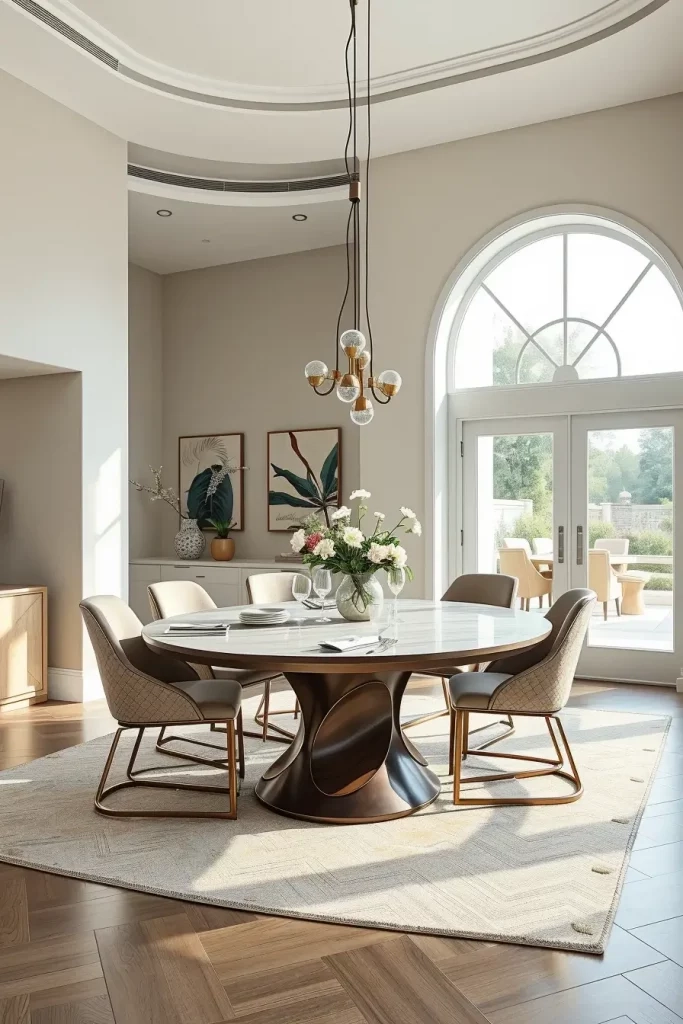
So, how do you actually pick one of these bad boys? It can be overwhelming. First, measure your space. But don’t just measure the table. Measure the room. A general rule is that the diameter of your fixture should be about half the width of your dining table. But in 2026, we’re breaking rules. If you have high ceilings, go bigger.
Height matters too. Hang the bottom of the fixture about 30 to 36 inches above the table. This ensures it doesn’t block views across the table but still feels intimate. If you have a vaulted ceiling, you might need a longer drop. Play with it. Use painter’s tape to mark the spot before you drill.
Finally, consider the bulb. With sculptural designs, the bulb is often visible. Don’t skimp here. Choose LEDs with a high CRI (Color Rendering Index) so your food looks appetizing. Warm white (2700K-3000K) is usually best for dining. It makes skin tones look better & creates a cozy vibe. And please, avoid the blue-ish daylight bulbs. They kill the mood faster than anything else.
At the end of the day, lighting is emotional. It shapes how we feel in our homes. The sculptural trends of 2026 aren’t just about aesthetics. They’re about creating spaces that nurture connection. When you gather under a piece of art, it feels special. It feels intentional.
We’ve spent years optimizing our lives for efficiency. But the dining table? That’s where we slow down. That’s where we connect. Giving that space the attention it deserves with a stunning light fixture is an act of care. It says, "This moment matters."
So, don’t be afraid to experiment. Mix materials. Go bold. Add some smarts. Let your dining room reflect who you are. Because when the light is right, everything else falls into place. The food tastes better. The conversations flow easier. And the memories stick. Isn’t that what it’s all about?