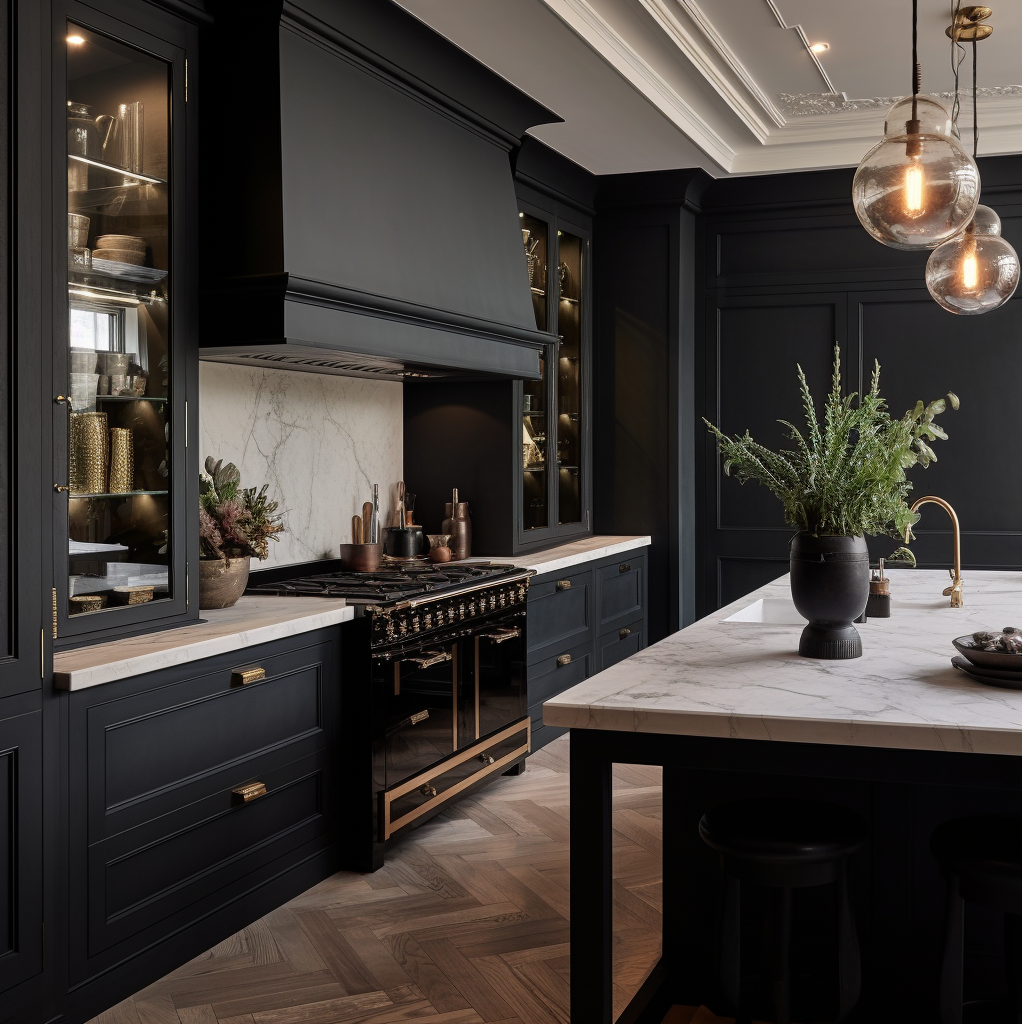
There’s something undeniably magnetic about walking into a room wrapped in shadow. It feels intimate. Secretive, even. For years, we were told that kitchens had to be bright, white, and airy to feel clean. But that rule? It’s officially broken. In 2026, the black kitchen isn’t just a trend; it’s a statement of confidence. It’s for the person who cooks at midnight and wants the space to feel like a lounge, not a laboratory.
But let’s be real for a second. Going dark is scary. You’re probably worried it’ll feel like a cave. Or maybe you’re afraid it’ll show every single crumb and fingerprint (spoiler alert: it might, but we can fix that). The difference between a chic, editorial-worthy space and a gloomy box comes down to intention. It’s not just about painting cabinets black and hoping for the best. It’s about layering. It’s about texture. And mostly, it’s about light. If you get those three things right, you won’t just have a kitchen. You’ll have a sanctuary.
Choosing the Right Finish and Material Foundation
The first thing you need to decide isn’t the shade of black. It’s the finish. This is where most people trip up. A high-gloss black cabinet reflects light like a mirror, which can actually make a small urban apartment feel bigger and more open. It’s sleek, modern, and very 2020s-modern. But if you hate seeing smudges, run away. Gloss shows everything. Every touch, every splash. It’s high maintenance, no matter what the salesperson tells you.
On the other hand, matte finishes are having a massive moment right now. They absorb light, giving the surface a velvety, soft look that feels incredibly refined. It’s subtle. It doesn’t shout. For a timeless vibe, matte is usually the safer bet because it hides imperfections better and feels warmer to the touch. There’s also satin, which sits somewhere in the middle. It has a slight sheen but isn’t as reflective as gloss. Think about your lifestyle. Do you have kids? Pets? A busy household? Matte or satin might save your sanity.
Don’t forget the material itself. Black laminate is affordable and durable, but it can sometimes look a bit flat. Black wood veneer offers natural grain patterns that add depth and character, making each cabinet door unique. If you’re splurging, painted hardwood allows for custom colors and repairs over time. The key here is consistency. If you choose a matte wood veneer for the lowers, stick with that language throughout. Mixing too many different black textures can look chaotic rather than curated. Keep it simple. Let the material speak for itself.
Mastering Light to Banish the Cave Effect
Lighting is non-negotiable. You cannot skimp here. In a white kitchen, you can get away with mediocre lighting because the walls bounce light around. In a black kitchen, the surfaces absorb light. If you don’t plan your lighting carefully, you’ll end up working in the dark. Literally. Start with layered lighting. You need ambient light (general overhead), task light (under cabinets), and accent light (inside glass fronts or above islands).
Under-cabinet lighting is your best friend. Install LED strips that are bright enough to actually chop vegetables by. Warm white bulbs (around 2700K to 3000K) are crucial. Avoid cool, blue-toned lights, which can make black surfaces look sterile and cold. You want the space to feel inviting, not like an operating room. Consider adding puck lights inside glass-front upper cabinets. When you turn them on at night, the kitchen glows softly, highlighting your dishware and creating a beautiful focal point.
Don’t ignore natural light either. If you have windows, keep the treatments minimal. Sheer curtains or bare windows allow daylight to wash over the dark surfaces, revealing the nuances of the black paint or stain. Mirrors can also help. A mirrored backsplash or metallic accents can bounce light around the room, breaking up the solidity of the black. It’s about creating contrast. Without light hitting the dark surfaces, you lose all the dimension. So, think of lighting as part of the architecture, not an afterthought.
Balancing Contrast with Countertops and Backsplashes
A monochrome black kitchen can look stunning, but it can also feel heavy if there’s no break in the visual field. This is where countertops and backsplashes come in. You have two main paths: go full dark for a moody, seamless look, or introduce contrast to lighten the mood. Both work, but they create very different vibes. For a timeless elegance that feels grounded, consider a black countertop with subtle veining, like black marble or quartzite. It adds movement without introducing a new color.
If you want to brighten things up, white or light gray stone is a classic choice. Think Carrara marble or a crisp white quartz. The stark contrast between black cabinets and a white counter is iconic. It’s bold. It’s graphic. It never really goes out of style. However, be mindful of the maintenance. White stone can stain, and black cabinets show dust. It’s a trade-off. Another option is wood. A warm walnut or oak countertop introduces organic warmth that softens the severity of the black. It feels rustic yet modern, especially popular in 2026 designs that lean into biophilic elements.
The backsplash is another opportunity to play with texture. Instead of a standard subway tile, try a textured zellige tile in a dark charcoal or even a metallic finish. The irregularities in handmade tiles catch the light differently, adding sparkle and interest. If your countertops are busy, keep the backsplash simple. If your counters are solid black, a patterned or colorful backsplash can be a fun surprise. Just remember, the goal is balance. You don’t want the eye to get stuck in one place. Guide it through the space with varying tones and textures.
Selecting Hardware and Metallic Accents
Hardware is the jewelry of the kitchen. In a black kitchen, it stands out more than anywhere else. This is your chance to define the style. Brass and gold tones are still incredibly popular in 2026 because they add warmth and luxury against the cool darkness of the black. Brushed brass feels vintage and sophisticated, while polished gold is more glamorous. Silver tones like chrome or nickel offer a cooler, more industrial or minimalist look. They recede a bit more than brass, letting the black take center stage.
Size matters too. Large, substantial pulls make a bold statement and are easier to grip with messy hands. Small knobs are delicate and traditional. For a modern look, consider integrated handles or edge pulls that create a sleek, handle-less appearance. This minimizes visual clutter and emphasizes the clean lines of the cabinetry. But if you do choose visible hardware, make sure it’s consistent. Don’t mix metals unless you’re very experienced. Stick to one finish for all cabinets, faucets, and light fixtures to create a cohesive flow.
Don’t forget the faucet. It’s a functional piece, but it’s also a sculptural element. A matte black faucet can blend in seamlessly, creating a monolithic look. A brushed gold faucet becomes a focal point. Think about how you use the sink. Do you need a pull-down sprayer? A high arc? Make sure the style matches the rest of the hardware. Small details like switch plates and outlet covers should also match your chosen metal finish. It’s these tiny touches that pull the whole design together and make it feel intentional rather than accidental.
Integrating Flooring and Wall Colors for Depth
The floor anchors the room. In a black kitchen, you have to be careful not to create a "black hole" effect where the cabinets, walls, and floor all merge into one dark mass. Unless that’s exactly what you’re going for (and it can look amazing in large, well-lit spaces), you probably want some separation. Light wood flooring is a beautiful contrast to black cabinets. It warms up the space and adds a natural element that feels welcoming. Oak, ash, or maple in a natural or lightly stained finish works wonders.
Tile is another great option. Large-format tiles in a neutral gray, beige, or even a terracotta tone can ground the space without competing with the cabinets. Patterned cement tiles can add personality, but keep the pattern subtle if the rest of the kitchen is bold. Avoid dark black floors unless you have plenty of natural light and high ceilings. It can make the room feel smaller and closed in. If you do choose a dark floor, use a rug to break it up and add texture underfoot.
Wall colors are often overlooked. You don’t have to paint the walls black too. In fact, keeping the walls a light neutral—like warm white, soft gray, or even a pale sage green—can help reflect light and keep the airiness in the room. This creates a frame for the black cabinets, making them pop. If you love the idea of dark walls, consider painting only one accent wall or using wallpaper with a subtle texture. The goal is to create depth. You want the eye to travel from the light walls to the dark cabinets to the textured floor. It’s a journey, not a static image.
Once the hard elements are in place, it’s time for the soul of the kitchen. This is where you make it yours. Start with decluttering. Black surfaces show clutter more than white ones. Keep countertops clear except for a few curated items. A wooden cutting board, a ceramic vase with fresh greens, or a stack of beautiful cookbooks can add life without adding chaos. Greenery is essential in a black kitchen. Plants bring color and vitality to the dark backdrop. Herbs on the windowsill, a large fiddle leaf fig in the corner, or trailing pothos on open shelves soften the edges.
Textiles are another way to add warmth. A runner rug in a natural fiber like jute or wool adds texture and comfort. Towels in linen or cotton in neutral or earthy tones can hang casually, adding a lived-in feel. Avoid overly matchy-matchy decor. Let things look collected over time. Mix materials: wood, stone, metal, glass, fabric. The variety keeps the eye interested. Lighting dimmers are a must-have final touch. Being able to lower the lights in the evening transforms the kitchen from a workspace to a gathering spot. It changes the mood entirely.
Finally, live with it. Don’t expect it to look like a magazine spread every day. A black kitchen is forgiving in its own way. It hides stains on the floor better than white tile. It conceals shadows in the corners. Embrace the imperfections. The fingerprints on the fridge tell a story of meals shared. The worn spot on the counter shows where you chop veggies every night. Timeless elegance isn’t about perfection. It’s about creating a space that feels good to be in, day after day. And if you’ve followed these steps, you’ve built a foundation that will age gracefully, staying stylish long after the trends of 2026 have faded.