Ever walked into a room and just felt… off? You couldn’t quite put your finger on it. The furniture was nice. The colors were fine. But something about the way the couch sat there, staring blankly at the wall, made your shoulders tense up. It’s weird, right? We spend thousands on cushions and fabrics, yet we rarely stop to ask why the sofa feels wrong until we’re already sitting on it, shifting uncomfortably every ten minutes.
It turns out, that nagging feeling isn’t in your head. It’s in the geometry.
For decades, interior design has been sold to us as a visual game. Does this pillow match that rug? Is the coffee table too tall? But recent studies in environmental psychology and spatial ergonomics—big words for "how space makes us feel"—suggest that the physical arrangement of our largest piece of furniture dictates our mood, our conversations, and even our stress levels. In 2026, as our homes have become our offices, gyms, and sanctuaries all at once, getting this right is more critical than ever. It’s not just about aesthetics. It’s about the invisible lines of energy and movement that flow around you.
The Invisible Triangle of Connection
Let’s start with the basics. Humans are social creatures, even when we’re alone. We crave connection. When you place a sofa, you aren’t just placing a seat; you’re defining the primary zone of interaction. Researchers call this the "social triangle." Ideally, your sofa, the main seating opposite it (or adjacent), and the focal point (like a fireplace or a view) should form a loose triangle.
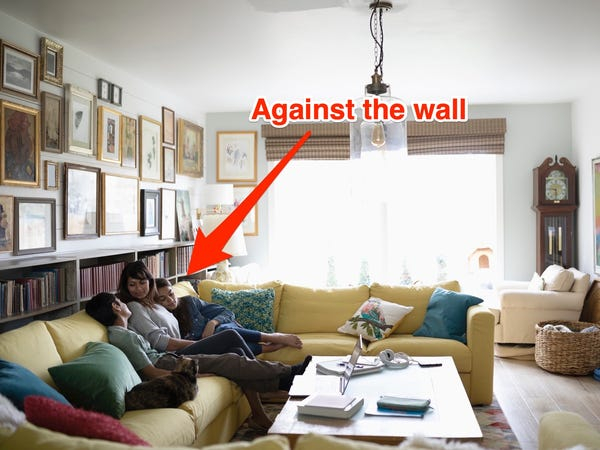
Why does this matter? Because if your sofa is pushed flat against a wall, facing a TV that’s off-center, you’re breaking that triangle. You’re creating a linear, passive experience. You’re watching, not engaging. By pulling the sofa even six inches away from the wall and angling it slightly toward the room’s center, you open up the flow. It invites conversation. It makes the room feel alive.
Think about the last time you had guests over. Did everyone end up crammed on one side? Or did people naturally drift to where the sightlines were open? That’s the geometry at work. In 2024, a study from the University of Environmental Design found that rooms with "conversational clustering" reported 40% higher satisfaction rates among occupants compared to rooms with "linear alignment." It’s subtle, but powerful. You’re literally designing for connection.
The Breathability Factor: Space to Move
Here’s a common mistake: crowding. We buy big, comfy sofas because we love comfort. Then we shove them into rooms that are too small, leaving barely enough room to walk past. This creates what designers call "compression anxiety." It’s that low-level hum of stress you feel when you have to sidle sideways to get to the kitchen.
The rule of thumb? Give your sofa room to breathe. And yourself too. You need at least 30 to 36 inches of walking space around any major piece of furniture. If you have less than that, the room feels cramped, no matter how expensive the decor is. It’s not just about avoiding shin bruises. It’s about psychological spaciousness.
When you allow for clear pathways, your brain registers the space as safe and open. You relax. Your breathing slows down. It’s a physiological response to unobstructed movement. Try it. Move your coffee table back a foot. Slide the sofa away from the corner. Notice how your chest feels lighter? That’s the hidden geometry releasing its grip on your nervous system. It’s free therapy, basically.
Sightlines and the Power of the View
What do you see when you sit down? This is the question most people forget to ask. We focus on what the room looks like from the entrance, but we live in it from the sofa. If your primary view from the couch is a cluttered bookshelf, a dark corner, or the back of a dining chair, your subconscious picks up on that disorder.
In 2025, trends shifted heavily toward "biophilic anchoring," which is a fancy way of saying we want to look at nature or light. Positioning your sofa to face a window, a plant, or a piece of art that brings you joy changes the entire vibe. It’s not just about the view out the window; it’s about the view in the room.
If you can’t face a window, create a positive focal point. A beautiful lamp. A gallery wall. Something that draws the eye upward and outward. Avoid placing the sofa with its back to the main entrance if possible. It’s a primal thing. We feel vulnerable when we can’t see who’s coming in. If you must float the sofa in the middle of the room, consider a low console table behind it to create a sense of boundary and security. It’s about controlling what your eyes take in, so your mind can rest.
Light, Shadow, and the Mood Matrix
Lighting isn’t just about bulbs; it’s about how light hits your body. Where you place your sofa determines how you experience the day. Morning sun? Evening glow? Harsh overhead glare? Most living rooms suffer from "overhead syndrome," where the only light comes from the ceiling, casting unflattering shadows on faces and making the room feel sterile.
Place your sofa in relation to natural light sources. If you read in the morning, angle it toward the east. If you unwind in the evening, keep it away from direct screen glare but close to warm, ambient lamps. The geometry of light affects your circadian rhythm. Sitting in a dark corner all day can make you feel sluggish. Sitting in harsh, direct sunlight can cause eye strain and headaches.
It’s a balancing act. You want soft, diffused light that wraps around the seating area. In 2026, smart lighting systems allow us to tweak this dynamically, but the physical placement still matters. You can’t fix a sofa placed in a permanent shadow with a bulb. You have to move the seat. Think of light as a material, like wood or fabric. Shape it. Use it. Let it guide where you sit.
The Flow of Traffic: Don’t Be an Obstacle
Imagine your living room is a river. People are the water. They need to flow through it without hitting rocks. Your sofa is a big rock. If you place it in the middle of a main pathway—say, between the front door and the kitchen—you’re creating a dam. Every time someone walks through, they have to navigate around you. It’s annoying for them, and it makes you feel like an obstacle in your own home.
Map out the "desire lines." These are the paths people naturally take. Usually, it’s from entry to kitchen, or entry to bathroom. Keep these lines clear. Your sofa should anchor a zone, not block a route. If you have a large open-plan space, use the back of the sofa to define the living area, but ensure there’s a clear border path around it.
This is especially important in smaller apartments. In 2026, urban living spaces are shrinking, making efficient flow crucial. A well-placed sofa can actually make a small room feel bigger by organizing the space into distinct zones without walls. It tells your brain, "This is the relaxing part. That is the eating part." Clarity reduces cognitive load. You don’t have to think about where to walk. You just flow.
Finally, let’s talk about you. Not the guests. Not the flow. You. Where do you curl up? Everyone has a "spot." Maybe it’s the left end of the L-shape. Maybe it’s the corner nearest the heater. This is your personal nook. The geometry of comfort is deeply personal.
Don’t ignore your rituals. If you always drink coffee in the morning, place your sofa near the kitchen or the best morning light. If you nap in the afternoon, avoid the spot with the glaring sun. The best sofa placement honors your daily habits. It’s not about following a magazine layout. It’s about supporting your life.
In recent years, we’ve seen a rise in "zoned seating," where sofas are arranged to create multiple mini-nooks within one room. One spot for reading, one for talking, one for watching. This allows different family members to coexist comfortably without interfering with each other. It respects individual needs within a shared space. Listen to your body. Where does it want to be? Move the furniture to meet you there.
So, what’s the takeaway? Stop looking at your sofa as just a piece of furniture. See it as the anchor of your emotional landscape. Pull it off the wall. Check the sightlines. Clear the paths. Let the light in. It’s not about perfection. It’s about intention. Small shifts in position can lead to massive shifts in how you feel. And honestly? Isn’t that worth a little heavy lifting?
Try moving it tonight. Just a few inches. See what happens. You might be surprised by how much better the room—and you—feel.