The rain beat a relentless rhythm against the single, grime-streaked sash window of my 280-square-foot walk-up in Queens. It was 4:15 PM on a Tuesday in November, and the room had already slipped into an oppressive, ink-blue twilight. I sat at my makeshift desk—a salvaged IKEA table that doubled as a dining counter and kitchen prep station—staring at a laptop screen that cast a sickly, blue-tinted glare across my face. My eyes burned. My shoulders were hitched up to my ears. Above me, a single, contractor-grade "boob light" hummed with a low, aggressive frequency, spraying flat, unfiltered glare across every white-painted drywall surface. It didn’t illuminate the room; it interrogated it.
That apartment was a masterclass in spatial claustrophobia, and like thousands of urban renters, I initially tried to solve my discomfort by throwing wattage at the problem. I swapped the builder-grade bulb for a higher-lumen LED, blinding myself with clinical brightness that made the cramped quarters feel less like a cozy home and more like an open-plan surgical ward. I didn’t understand that volume of light was rarely the issue. The real enemy was distribution, color temperature chaos, and an absolute failure to respect how light interacts with restricted boundaries.
Over the next decade, through five different micro-apartments, endless spatial experiments, and late nights studying architectural lighting design and human circadian biology, my perspective shifted entirely. I stopped treating light as an afterthought—a utility meant simply to chase away the dark—and began treating it as a primary building material. In a small footprint, light does the heavy lifting that walls normally would. It carves out zones, tricks the human eye into perceiving vastness, shields our mental health from the relentless gray of winter, and turns a cramped box into an intentional, breathing sanctuary.
The journey from a bludgeoned renter squinting under a single ceiling fixture to an intentional lighting designer of tiny spaces taught me that illumination is not about aesthetics alone; it is a profound psychological framework. When floor space is capped at three hundred square feet, your lighting schema is the single most powerful architectural tool at your disposal. It dictates your mood, regulates your sleep architecture, and dictates whether you feel trapped inside a concrete box or anchored within an expansive, fluid environment.
The Tyranny of the Central Fixture and Why Scale Matters
The foundational sin of almost every small rental apartment is the ubiquitous flush-mount ceiling light. Builders love them because they are cheap, easy to install, and cast a broad, indiscriminate wash of photons across a room. Humans should despise them for the exact same reasons. When light originates solely from a single point directly above your head, it flattens the room, eradicates shadows, and eliminates the visual depth cues our eyes rely on to comprehend space. In a spacious loft with twenty-foot ceilings, a central chandelier can act as a stunning centerpiece. In a low-ceilinged studio where your bed, kitchen, and workspace occupy the same twelve-by-fifteen-foot grid, a central dome light is a spatial flattening machine.
To understand why this fails, we have to look at how the human eye perceives brightness and dimension. We do not measure light linearly; we measure it through contrast and gradients. When a room is lit uniformly from above, everything receives the same visual weight. The corners—crucial boundaries that trick the brain into sensing room depth—fade into murky gray shadows because the harsh center steals all the attention. This phenomenon is known as luminance contrast deficiency, and it triggers a subtle, ambient stress response in the central nervous system. Your brain instinctively registers the space as smaller and more enclosed than it actually is, because the visual boundaries are entirely obscured by a harsh, centralized glare.
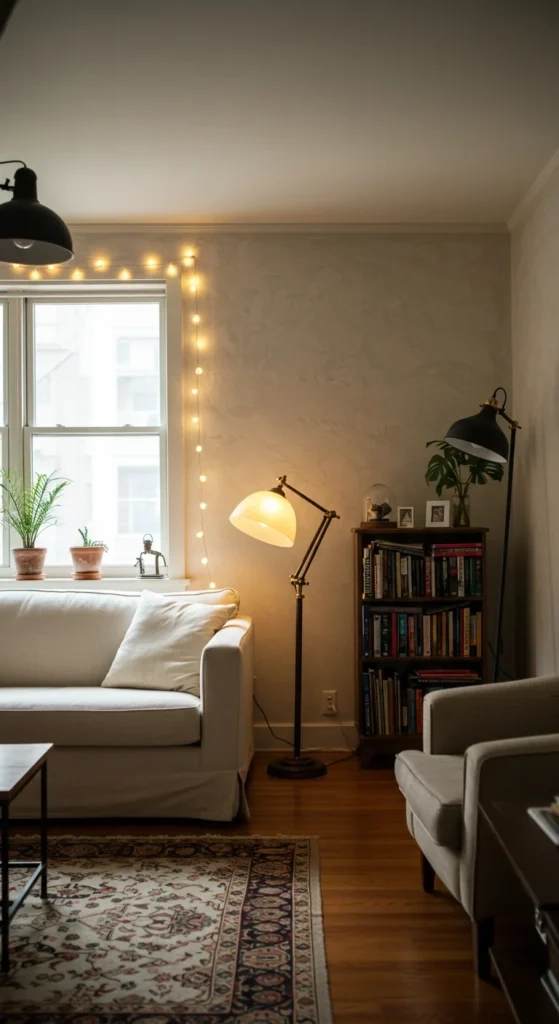
Dismantling this tyranny requires abandoning the reliance on overhead illumination entirely after sunset. Instead, the focus shifts downward to what lighting designers call the human scale. By dropping light sources closer to the floor and eye level, you immediately alter the psychological geometry of the room. A lamp sitting on a low sideboard or a shaded floor light aimed upward creates pools of illumination that respect human proportions. Suddenly, the ceiling recedes into shadow, taking the oppressive weight of the room off your shoulders. The edges of the space soften, and the perimeter expands, tricking the brain into feeling enveloped by the room rather than cornered by it.
Transitioning away from the central fixture also forces a reckoning with fixture scale. In a cramped studio, oversized furniture gets all the blame for overcrowding, but oversized or poorly proportioned light fixtures are equally guilty. A massive, heavy drum pendant hanging in the middle of a tiny living zone chops up the ceiling plane and makes the room feel choked. Conversely, a delicate, low-profile arc lamp or a series of slender, vertically oriented wall sconces can draw the eye along architectural lines, making the ceiling feel higher and the room feel wider. Scale is relative, and in tight quarters, your lighting elements must be slender, purposeful, and disciplined.
The Chemistry of Color Temperature and Circadian Biology
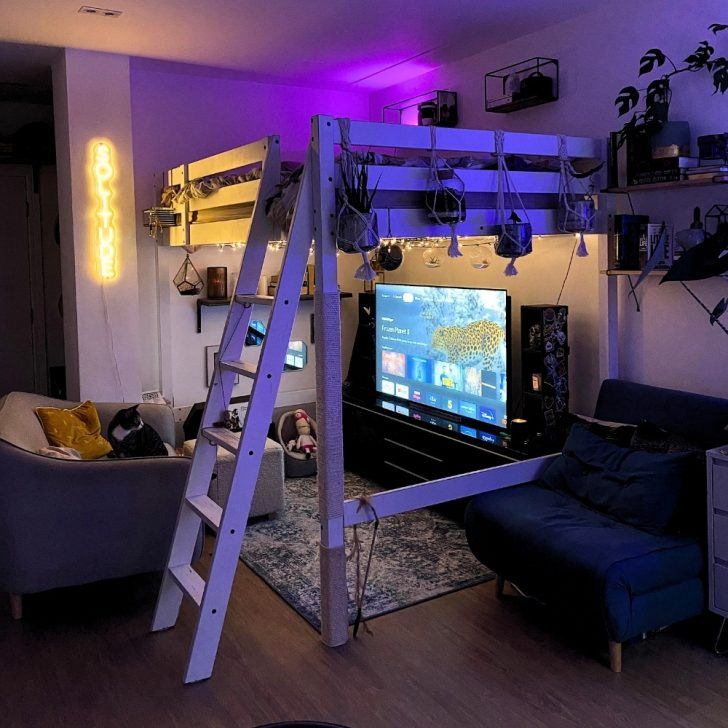
Early in my studio apartment days, I bought bulk packs of cheap LED bulbs labeled simply as "Daylight." I thought I was being smart by picking the brightest, cleanest-looking option on the shelf. Within a week, my studio felt like a 24-hour convenience store. The light was harsh, cold, and glaringly blue, stripping away any sense of warmth or intimacy. I couldn’t understand why I felt wired and exhausted all at once, tossing and turning for hours after crawling into my loft bed just feet away from my desk. The answer lay in Kelvin temperatures and our evolutionary biology.
Light is not just something we see with our eyes; it is a biological signal that drives our endocrine system. Measured on the Kelvin (K) scale, color temperature dictates the spectral output of a light source. High Kelvin numbers (5000K and above) mimic the harsh, blue-rich light of a high-noon summer sky, signaling to the suprachiasmatic nucleus in the brain that it is time to suppress melatonin and stay alert. Low Kelvin numbers (2700K and below) mimic the warm, red-shifted glow of firelight and sunset, telling the body to wind down, repair, and prepare for restorative sleep. In a studio apartment where your bedroom, office, and living room are the exact same piece of floor, failing to manage color temperature is a recipe for chronic fatigue and insomnia.
[2700K - Warm White]  --> Evening / Wind-Down / Relaxation Zone
[3500K - Neutral White] --> Daytime / General Task / Living Zone
[5000K+ - Daylight]    --> Morning / High Focus / Workspace Zone
Mastering a studio requires dynamic color temperature management tailored to the time of day and the specific zone of activity. During morning focus hours, a crisp 4000K to 5000K task light over the desk stimulates cognitive performance. But as evening approaches, keeping that same light active sabotages your circadian rhythm. Modern smart lighting systems have revolutionized this process, allowing bulbs to shift automatically from a crisp, alert daytime white to an amber, golden glow as the sun sets outside. If smart bulbs aren’t in the budget, physical zoning works just as well: use dedicated warm-toned (2400K-2700K) lamps for relaxing areas, and reserve cooler bulbs strictly for functional work zones.
Material interaction adds another layer of complexity. Color temperature does not exist in a vacuum; it bounces off every surface it touches. A warm 2700K bulb hitting a cool gray wall will look muddy and sickly, while that same bulb reflecting off natural oak, linen, or warm terracotta will blossom into a rich, glowing wash. Conversely, cold daylight LEDs bouncing off white drywall create a sterile, clinical environment that drains the life out of small spaces. Understanding the undertones of your apartment’s walls, floors, and furnishings is essential before screwing in a single bulb. Light is a dialogue between the source and the surface, and matching your Kelvin choices to your material palette is non-negotiable.
Layering Light: The Three-Tier Methodology for Micro-Spaces
When you cannot expand your square footage, you must expand your lighting layers. Professional interior designers rely on a three-tier system—ambient, task, and accent lighting—to create rich, dimensional spaces. In a studio apartment, this methodology transforms from a luxury design trend into an absolute survival mechanism. Without all three layers operating in harmony, a small room inevitably feels flat, sterile, and unlivable after dark.
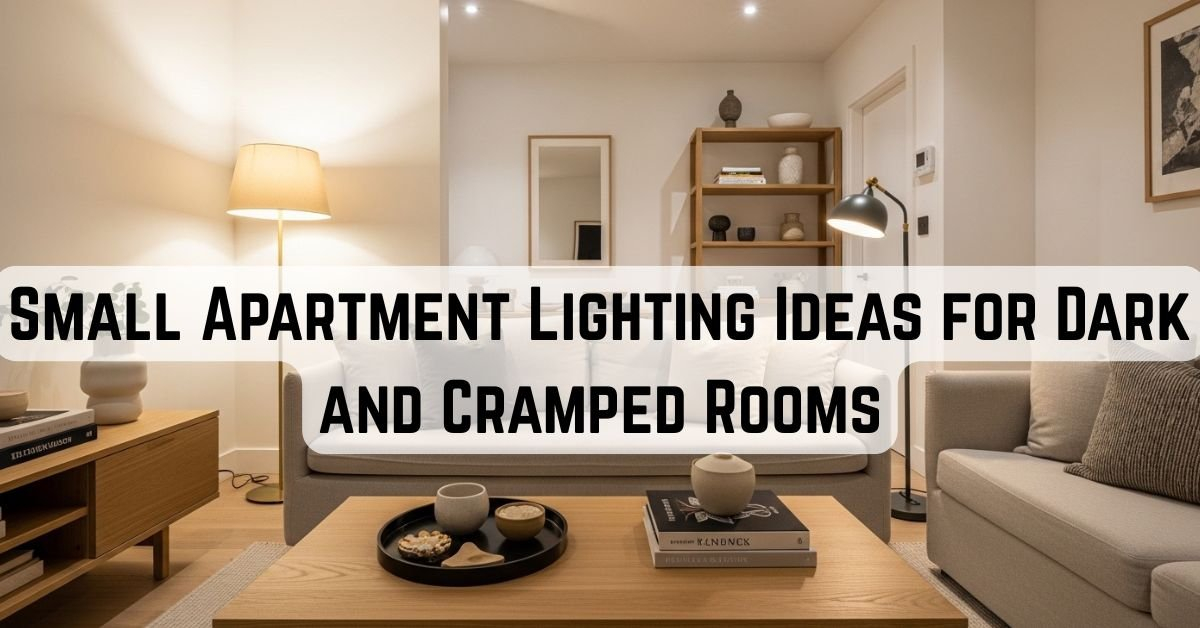
Ambient lighting provides the baseline illumination that allows you to navigate the space safely without tripping over a yoga mat or a rogue suitcase. However, in a studio, this baseline should never come from a glaring central ceiling light. Instead, bounce ambient light off walls and ceilings using torchiere floor lamps with opaque shades, or wall sconces that cast a soft wash upward. This indirect technique diffuses the lumens, creating an even, glowing envelope that makes the room feel expansive because the light source itself is hidden from direct view.
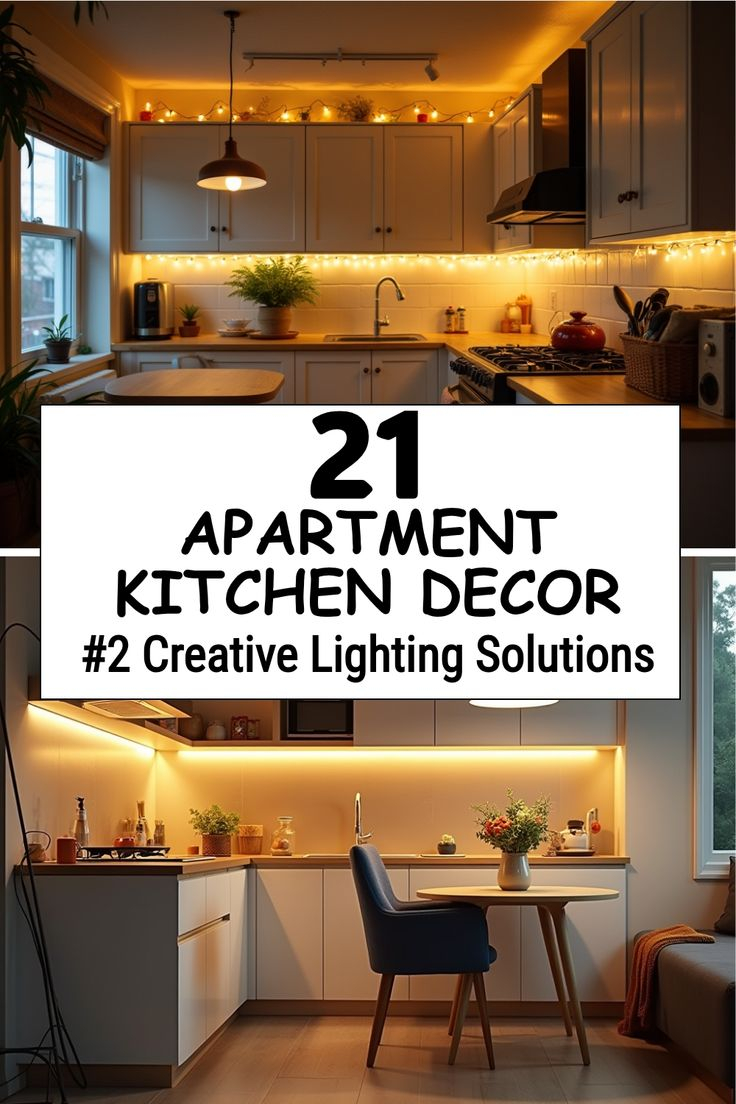
Task lighting steps in where ambient lighting fails. It is focused, directional illumination designed for specific activities: chopping vegetables on a cramped kitchen counter, reading a book in an armchair, or typing out an invoice at your desk. In tight spaces, multifunctional furniture demands multifunctional task lighting. An adjustable swing-arm wall lamp mounted above your bed can double as a reading light at night and pivot outward to illuminate your desk during the day. Under-cabinet LED strip lights in a tiny kitchenette are not just aesthetic upgrades; they eliminate the shadow cast by your own body as you work over the cutting board, making a hazardous workspace safe and functional.
+-----------------------------------------------------------------+
|                   THE STUDIO LIGHTING MATRIX                    |
+---------------------+---------------------+---------------------+
| Ambient Layer       | Task Layer          | Accent Layer        |
+---------------------+---------------------+---------------------+
| Indirect floor wash | Under-cabinet strips| Picture lights      |
| Uplighter torchiere | Swing-arm desk lamps| Shelf LED ribbons   |
| Perimeter sconces   | Reading spotlights  | Toe-kick markers    |
+---------------------+---------------------+---------------------+
Accent lighting is the secret weapon of the small-space designer. It serves no direct utilitarian purpose other than to create visual interest, drama, and depth. By tucking a warm LED ribbon behind a floating media console, highlighting a piece of art on the wall, or placing a small uplight behind a houseplant in the corner, you create layers of depth that push the boundaries of the room outward. These pockets of brightness draw the eye away from the confining walls and toward curated focal points. The human brain perceives a room as larger when it encounters multiple distinct pools of light rather than a single, uniform wash, because it reads those variations as distance and volume.
Step-by-Step Spatial Lighting Audit and Implementation
Transforming a poorly lit studio requires a systematic, clinical approach. You cannot simply buy a handful of aesthetic lamps from a catalog and hope for the best. You must diagnose your space, audit your activities, and deploy light with architectural precision.
- Step 1 (The Twilight Audit): Turn off all your lights at dusk and walk into your studio with a notebook. Sit in your primary zones—the bed, the desk, the seating area, and the kitchen—and note where shadows strain your eyes, where glare blinds you, and which corners disappear into total darkness.
- Step 2 (Banish the Central Fixture): Unscrew the bulb from your overhead ceiling fixture or install a heavy-duty dimmer switch if removal isn’t an option. Vow to keep that switch off past 5:00 PM, forcing your living spaces to rely entirely on human-scale floor, table, and wall lighting.
- Step 3 (Establish Task Zones): Identify every functional activity you perform in the space and assign a dedicated, adjustable task light to each one. Ensure these lights feature directional shades or flexible arms so photons hit your work surface directly without spilling into your eyes or across the bed.
- Step 4 (Layer Perimeter Illumination): Place at least two indirect light sources—such as torchiere lamps bouncing light off the ceiling or uplights tucked behind furniture—to wash the perimeter walls. This pushes the visual boundaries outward and eliminates the cave-like feeling of dark corners.
- Step 5 (Calibrate Color Temperatures): Audit every single bulb in your apartment. Swap out any cold blue bulbs in living and sleeping zones for warm 2400K-2700K options, reserving crisp 3500K-4000K output strictly for the workspace and kitchen prep areas to support circadian health.
Common Pitfalls and Field-Tested Workarounds
Even with the best intentions, small-space lighting is fraught with traps that can easily derail your efforts. Recognizing these pitfalls before you spend money on fixtures saves both frustration and capital.
- Pitfall 1 (Over-lumenating Small Rooms): Cramming too many high-lumen bulbs into a tiny space creates a blinding, high-contrast trap that causes eye fatigue. Workaround: Stick to a total output of roughly 20 to 30 lumens per square foot of floor space for living areas, and distribute those lumens across multiple dimmable low-wattage sources rather than one massive blast.
- Pitfall 2 (Ignoring Surface Finishes): Placing warm lights against cool, matte gray walls, or throwing cold daylight onto warm wood tones, creates a visually discordant and unappealing space. Workaround: Match your bulb’s Kelvin rating to your room’s dominant undertones: warm woods and earth tones demand 2400K-2700K warmth, while crisp modern concrete and stark whites can handle clean 3500K neutrals.
- Pitfall 3 (Exposed Glare and Direct Line-of-Sight Bulbs): Hanging low pendant lights or placing table lamps where the bare bulb is directly visible from your eye level creates blinding discomfort. Workaround: Ensure every fixture features an opaque shade, a diffuser, or an internal reflector that hides the raw diode from your direct line of sight.
- Pitfall 4 (The Cord Clutter Catastrophe): Running extension cords across the floor of a tiny studio to power scattered lamps creates a hazardous, visually cluttered mess. Workaround: Utilize battery-operated rechargeable accent lamps, adhesive cable channels, and multi-outlet surge protectors mounted to the undersides of furniture to keep floor space completely free of tangled wires.
- Pitfall 5 (Static Lighting Schemes): Treating lighting as a set-it-and-forget-it installation that remains unchanged from morning coffee to midnight streaming. Workaround: Invest in smart plugs, wireless dimmers, or multi-stage touch lamps that allow you to transition the room’s energy effortlessly as the hours tick by.
The Psychology of Refuge and Prospect in Micro-Architecture
Environmental psychologists often speak of the "prospect-refuge theory," which posits that human beings thrive in spaces that offer both an unobstructed view of their surroundings (prospect) and a safe, enclosed area to retreat into (refuge). In a studio apartment, achieving this balance can feel impossible because you can see your entire domain from almost any angle. You are constantly exposed to your chores, your unwashed dishes, and your work desk, even when you are trying to relax in bed.
Clever lighting design is the ultimate tool for manufacturing prospect and refuge inside a single open room. By dimming the overhead and perimeter lights in your living zone while keeping a soft, focused pool of light active over your reading chair, you create a psychological bubble of refuge. The rest of the room recedes into friendly shadow, effectively making the messy kitchen and the work desk disappear. You no longer live in a single cramped room; you live within a shifting landscape of illuminated islands that you can summon or dismiss at will.
This control over your visual environment directly influences your sense of agency. When you live in tight quarters, a lack of physical privacy and spatial variety can breed a distinct form of psychological claustrophobia. Being able to change the mood, temperature, and intensity of your environment with the tap of a switch restores a profound sense of ownership over your home. Light becomes your boundary marker, your spatial architect, and your emotional thermostat, proving that square footage is merely a physical metric, while proper illumination is an expansive state of mind.
Actionable Recommendations and Strategic Frameworks
To synthesize these insights into an immediate, high-impact blueprint for your own space, focus on actionable rules that govern fixture selection, placement, and daily maintenance.
- Rule of Three Sources: Never rely on a single light source in any micro-zone. Every distinct area—whether it is your bed nook, desk, or sofa—should have access to at least three distinct points of illumination that can be mixed and matched.
- Invest in Dimmers: If you take away only one technical upgrade, make it dimmability. Being able to dial down the intensity of your lights by even thirty percent instantly strips away clinical harshness and introduces a sense of architectural luxury.
- Embrace Low-Level Anchors: Place light sources low to the ground—floor-level uplights, baseboard wash strips, or low table lamps—to pull the visual weight of the room downward and make ceilings feel taller.
- Prioritize Opaque and Diffused Shades: Ensure your lampshades are made of materials that diffuse light evenly—such as linen, frosted glass, or lined silk—rather than clear or translucent plastics that expose harsh point sources of glare.
- Audit Seasonally: Recognize that your lighting needs change radically between the blinding sun of summer and the long, dark shadows of winter. Adjust your bulb temperatures and layer intensities as the seasons turn to support your mental and physical equilibrium.
The years I spent studying, tweaking, and cursing the lighting in my various cramped studio apartments taught me a lesson that extends far beyond interior design. We spend an immense amount of energy worrying about the physical dimensions of our lives—the square footage, the furniture layouts, the storage hacks—while ignoring the invisible elements that truly shape our daily experience. Space is fundamentally defined not by its walls, but by how light moves within it.
When you learn to respect light as a dynamic, living medium, the physical constraints of a micro-apartment melt away. That tiny rental in Queens didn’t suddenly get bigger, but once I replaced the harsh overhead glare with layered, warm, intentional illumination, it stopped feeling like a prison sentence and started feeling like home. You do not need a sprawling loft or a sprawling budget to live expansively. You simply need to turn off the overhead glare, drop your light to human scale, and let the shadows do their quiet, necessary work.