The front door swings open, and a wave of cool evening air slips inside. Right away, your eyes don’t land on a towering pile of untied sneakers, nor do they catch the sad, tangled web of stray charging cables resting on the floor. Instead, they glide across a warm brass sconce casting a gentle, amber glow over a textured ceramic vessel filled with sculptural branches. It feels quiet. It feels composed. It feels expensive. Yet, the total cost required to pull off this sensory transformation barely scratches the price of a modest weekend dinner out.
Most people assume that looking expensive requires an interior designer’s retainer or a shopping spree at high-end furniture showrooms. The reality of domestic styling is far more forgiving. High-end design is rarely about the raw price tag attached to a physical object; rather, it is a masterclass in editing, proportion, visual weight, and lighting. When you walk into a luxury hotel or a custom-built estate, your brain registers luxury not because every single item cost a fortune, but because the space possesses undeniable breathing room, intentional focal points, and a cohesive material story.
Your entryway acts as the psychological handshake of your entire home. It takes less than seven seconds for a guest—or for you, returning home exhausted after a grueling ten-hour workday—to register the emotional tone set by this transitional threshold. If that threshold is choked with clutter, poorly lit, and visually chaotic, your nervous system responds accordingly, absorbing micro-doses of low-level stress the moment you cross the threshold. Conversely, executing smart, high-impact design shifts on a shoestring budget rewrites that initial narrative. By shifting your focus from purchasing expensive furniture to manipulating scale, texture, light, and architectural illusion, you can completely overhaul your entryway without draining your savings account.
Decoding the Anatomy of Foyer Luxury on a Shoestring Budget
Achieving an upscale aesthetic without a luxury budget starts with understanding how the human eye processes visual value. When we look at a space, our brains hunt for cues of craftsmanship and intentionality. Mass-produced items often betray themselves through uniform textures, harsh plastic finishes, or improper scaling relative to the room’s dimensions. Luxury, on the other hand, celebrates variation, tactile warmth, and negative space. To trick the eye into seeing a high-end foyer, you must manipulate the fundamental structural psychology of the room before adding a single decorative object.
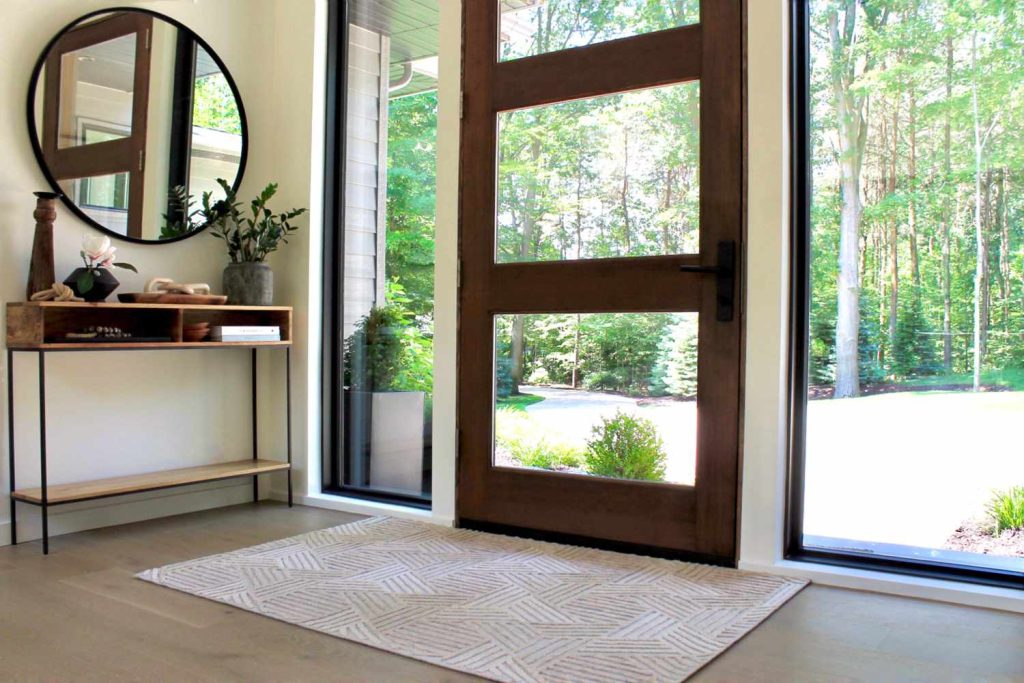
Scale and proportion represent the ultimate architectural smoke and mirrors. A common mistake in budget entryways is filling narrow hallways with undersized furniture—such as a tiny, spindly accent table that looks lost against a massive blank wall. High-end design relies on deliberate, oversized statements. Swapping a tiny decorative mirror for a massive, floor-to-ceiling or generously proportioned wall mirror instantly doubles the perceived volume of a cramped hallway while reflecting natural light deeper into the core of the home. Similarly, anchoring a narrow entry with a runner that spans nearly the entire width of the walkway creates an optical illusion of grand architecture, drawing the gaze forward and establishing an immediate sense of arrival.
Material honesty plays an equally vital role in upgrading your entry’s perceived value. You do not need to install Carrara marble slabs or custom millwork to achieve quiet luxury. Instead, leverage tactile finishes that mimic high-end materials through smart styling and budget-friendly DIY modifications. Swapping standard builder-grade flush-mount dome lights for a vintage brass pendant found at a flea market, or replacing hollow-core closet doors with simple wooden trim boards to create a custom shaker-panel look, introduces immediate architectural gravitas. When surfaces feature organic variations—such as raw travertine bowls, brushed brass hardware, or heavy linen upholstery—the eye registers substance and quality, completely bypassing the actual manufacturing cost.
The Psychology of Negative Space and Relentless Editing
The fastest, entirely free way to make a budget entryway look expensive is to remove at least fifty percent of what is currently sitting in it. Modern luxury is fundamentally minimalist in its execution; it values what is absent just as much as what is present. When an entryway becomes a dumping ground for mail, umbrellas, dog leashes, and seasonal footwear, the visual noise overwhelms the architecture. No amount of expensive decor can salvage a space that is drowning in visual clutter.
Editing an entryway requires brutal honesty about how your household actually operates versus how you wish it operated. If your family drops their keys the second they walk through the door, a designated catch-all is mandatory, but it must be enclosed or visually curated. Swap out an open plastic bin for a heavy, lidded stone box or a vintage brass bowl. This simple swap hides the chaotic jumble of keys and loose change behind an opaque, beautiful surface, transforming an eyesore into a styled vignette.
Furthermore, vertical real estate must be managed with absolute discipline. Resist the temptation to crowd every square inch of wall space with frames, hooks, and hanging plants. Leaving large stretches of drywall completely bare is a hallmark of sophisticated interior design; it allows the eye to rest and emphasizes the height of the ceilings. If you utilize hooks for coats and bags, limit them to a sleek, minimalist rail, and ensure that only everyday-use items occupy those spots. Everything else belongs behind closed closet doors or in hidden storage bins tucked away from the immediate line of sight.
Executing High-Impact Visual Upgrades Through Strategic Layering
Once the clutter has been purged and the spatial proportions have been addressed, the next phase involves layering textures and lighting to build visual depth. A high-end entryway feels collected over time rather than purchased in a single afternoon from a big-box catalog. This accumulated look is achieved by combining hard and soft elements: pairing a cold, architectural surface like a metal or wood console table with organic warmth, such as a braided jute rug, a ceramic lamp, or a cascading pothos plant.
Lighting is arguably the most potent tool in the budget stylist’s arsenal, yet it is chronically overlooked. Standard overhead dome lighting—often referred to by designers as the "builder’s special"—casts a harsh, unflattering downward glare that flattens textures and creates aggressive shadows. To instantly elevate the atmosphere, eliminate overhead glare entirely in favor of layered ambient and task lighting. Place a small, stylish lamp on your entryway console table equipped with a warm-toned LED bulb (around 2400K to 2700K). The upward and outward glow from a table lamp softens wall textures, highlights art pieces, and creates an immediate sense of intimate hospitality.
Wall treatments offer another avenue for dramatic transformation at a minimal cost. If paint is your primary medium, skip the safe, builder-beige tones and lean into moody, cocooning shades like deep charcoal, rich olive, or warm greige with strong undertones. Darker colors in small, windowless entryways do not make the space feel cramped; instead, they blur the room’s boundaries, creating a moody, intimate jewel-box effect that feels intensely high-end. Alternatively, applying board-and-batten or picture-frame molding using inexpensive MDF strips and a brad nailer adds permanent architectural character that elevates plain drywall into custom millwork.
Step-by-Step Practical Implementation Guide for Your Entryway Makeover
- Step 1 (The Complete De-Construction and Purge): Empty the entryway entirely. Remove every piece of furniture, wall hanging, rug, and accessory. Clean the baseboards, dust the light fixtures, and assess the raw space with fresh eyes to understand its true dimensions and lighting conditions.
- Step 2 (The Lighting Intervention): Replace any harsh overhead builder fixtures with an affordable pendant, flush-mount with character, or simply remove the bulb and rely entirely on a chic table lamp placed on your entryway surface to establish an immediate atmospheric glow.
- Step 3 (Grounding the Foundation): Lay down a patterned runner or a richly textured natural fiber rug (such as wool or heavy jute) that covers a significant portion of the walkway. Ensure the rug is large enough that it doesn’t look like a floating postage stamp on the floor.
- Step 4 (Anchoring with Furniture and Mirrors): Position a appropriately scaled console table or floating shelf against the primary wall. Hang a large, statement mirror roughly 6 to 8 inches above the table surface to bounce light and expand the visual boundaries of the foyer.
- Step 5 (Curating Final Styling Vignettes): Style the console using the rule of threes: combine an organic element (fresh eucalyptus or sculptural branches in a ceramic vase), a functional element (a heavy tray for keys), and a height-varying decorative object (a stack of vintage coffee table books).
Common Pitfalls and Field-Tested Workarounds for Budget Entryway Design
- Pitfall 1 (Undersized Rugs): Placing a tiny doormat-sized rug in the middle of a large entryway floor immediately truncates the space and looks cheap. Practitioner Workaround: Invest in a proper runner that spans the length of the entryway, leaving an equal margin of exposed flooring on all sides to anchor the room correctly.
- Pitfall 2 (Over-Accessorizing Flat Surfaces): Crowding a console table with a dozen tiny trinkets, picture frames, and nik-naks creates visual chaos rather than curated elegance. Practitioner Workaround: Edit your tabletop down to three or four substantial items of varying heights and textures, and store the rest away.
- Pitfall 3 (Ignoring Cord Management): Allowing ugly plastic lamp cords to dangle visibly down the wall or floor instantly ruins the illusion of a custom, high-end space. Practitioner Workaround: Use paintable cord cover channels matched to your wall color, or invest in a rechargeable, battery-operated cordless table lamp for a completely seamless look.
- Pitfall 4 (Hanging Art and Mirrors Too High): Mounting mirrors or artwork at eye level for a tall person leaves massive awkward gaps above console tables and breaks vertical proportion. Practitioner Workaround: Hang statement mirrors and large art pieces so the bottom edge rests just 4 to 6 inches above the top of your console table, creating a cohesive visual unit.
- Pitfall 5 (Using Glossy, Cheap Plastic Finishes): Buying flat-pack furniture with shiny, faux-wood laminate finishes that clearly broadcast their budget origins. Practitioner Workaround: Upcycle budget thrift store finds with a coat of matte spray paint, limewash, or contact paper featuring realistic marble or wood grain textures to fool the eye.
The Broader Impact of Intentional Threshold Design on Daily Living
Creating an intentional, high-end entryway on a budget transcends mere aesthetics; it acts as a psychological buffer between the frantic energy of the outside world and the sanctuary of your private life. When your home greets you with a curated, clutter-free, and beautifully lit threshold, your brain processes an immediate neurological sigh of relief. The transition from public stress to private peace becomes tangible, altering your mood and energy levels the second you step inside.
Furthermore, investing thought rather than money into your living spaces fosters a deeper sense of personal resourcefulness and pride. In an era dominated by hyper-consumption and fast home decor trends, curating a sophisticated entryway through strategic editing, DIY architectural flourishes, and thrifted treasures proves that genuine style is an act of creativity. It shifts your relationship with your home from one of passive consumption to active curation.
As interior design trends continue to move toward sustainable, character-rich, and personalized spaces, the sterile showroom look is rapidly declining in favor of homes that tell a authentic story. Your entryway is the prologue of that story. By refusing to let a modest budget limit your ambition, you demonstrate that elegance is universally accessible to anyone willing to look past price tags and focus on the timeless fundamentals of design.
Actionable Recommendations and Key Takeaways for Immediate Execution
- Audit Your Lighting: Swap out cold, overhead bulbs for warm 2400K-2700K LEDs, and introduce a secondary table lamp to eliminate harsh shadows and establish an inviting glow.
- Embrace Negative Space: Clear out half of your current entryway items, storing away seasonal clutter and daily mail to let the architectural lines of the room breathe.
- Scale Up Your Focal Points: Ditch tiny decorative accents in favor of oversized mirrors, substantial vessels, and bold runners that create an optical illusion of expansive architecture.
- Leverage Organic Textures: Mix hard metal or wood surfaces with soft, natural elements like heavy linen, jute, dried botanicals, and raw ceramics to build visual depth and tactile richness.
- Prioritize Function Through Concealment: Invest in lidded boxes, closed baskets, or stylish trays to hide everyday clutter while keeping essentials within arm’s reach.
The transformation of a budget entryway does not require a contractor’s crew or an inheritance; it requires a sharp eye, a willingness to edit, and an appreciation for how small details compound into stunning visual results. When you open your front door tomorrow, look at the space not for what it currently lacks, but for what it has the potential to become through simple, deliberate shifts.
By prioritizing lighting over square footage, negative space over cluttered convenience, and texture over cost, you reclaim the narrative of your home’s first impression. Take that first step today—clear the clutter, adjust your lighting, and watch how a remarkably modest budget can yield an entryway that feels undeniably luxurious.