For years, we played it safe. We walked into showrooms, pointed at the crisp, glossy white rectangle, and said, "Just give me ten boxes of that." It was easy. It was clean. It felt like the right choice because everyone else was doing it. But let’s be honest for a second—was it ever really you? Or was it just the path of least resistance? In 2026, that era of sterile perfection is officially over. The bathroom is no longer just a utility room you rush through in the morning; it’s becoming a sanctuary, a place where design gets personal, expressive, and frankly, a lot more fun.
If you’ve been scrolling through design feeds lately, you’ve probably noticed a shift. The endless sea of white brick-layout tiles is receding, making way for something with a bit more… soul. Designers and homeowners alike are tired of the predictable. They’re craving texture. They want color that doesn’t apologize. They’re looking for patterns that tell a story. This isn’t about following a fleeting fad; it’s about reclaiming the space where you start and end your day. It’s about choosing materials that feel alive under your fingertips and visuals that wake up your senses. So, if you’re standing in front of a blank wall wondering what to do, take a deep breath. You have permission to be bold.
Why White Subway Tile Is Losing Its Crown
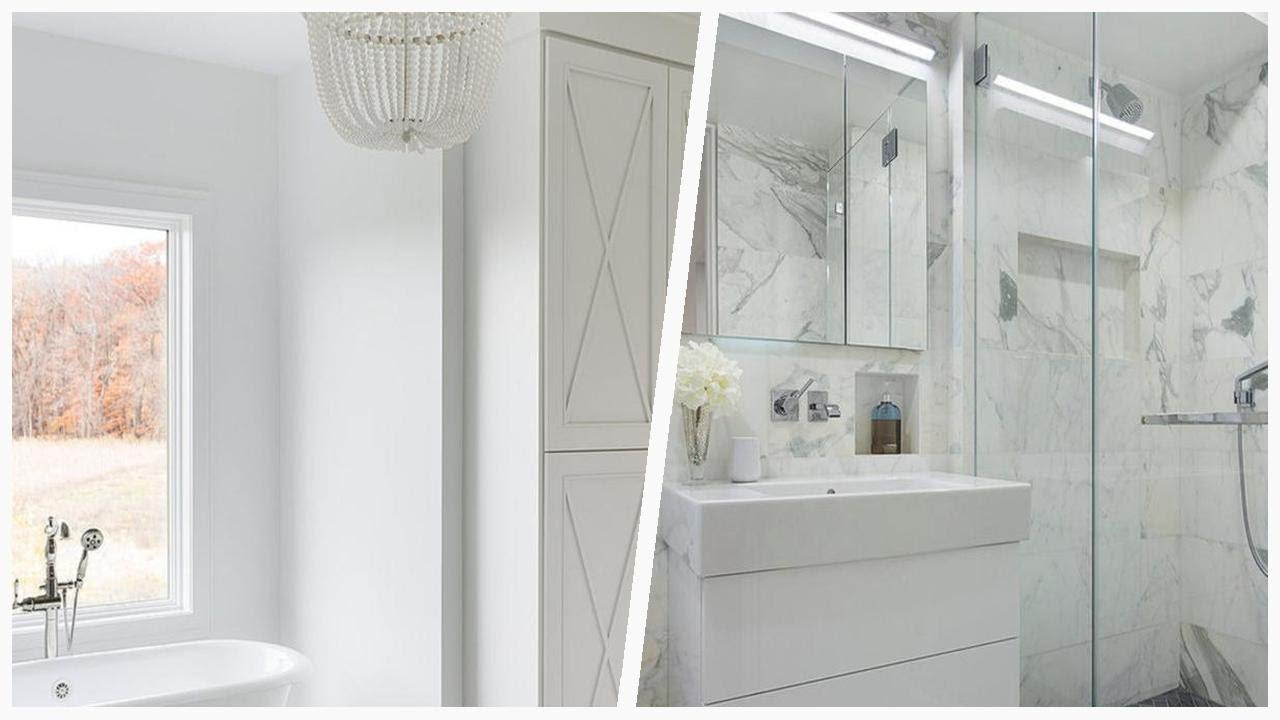
Let’s address the elephant in the room. Did subway tile go out of style? Not exactly. But its dominance? Absolutely. For a long time, white subway tile was the builder-grade block of the vertical world. It was the default setting. It felt safe, clean, and easy to pair with anything. But in 2026, kitchens and baths are moving away from these flat, predictable surfaces. People are choosing backsplashes and shower walls with texture, pattern, scale, and a stronger material presence. It’s not that subway tile is dead; it’s that we’ve outgrown the basic version of it.
The shift is driven by a desire for authenticity. We’re seeing a move away from sterile perfection toward materials that have character. Think of it this way: a plain white wall is like a blank sheet of paper. It’s fine, but it doesn’t say much. A hand-painted motif, a monolithic stone slab, or a high-energy geometric pattern? That’s a conversation starter. Designers are calling this evolution a move toward "poetic" surfaces. The backsplash is no longer just a splash guard; it’s a focal point. It’s an art piece. And when you’re spending thousands on a renovation, don’t you want your money to go toward something that makes you feel something?
This doesn’t mean you have to banish rectangular tiles entirely. Far from it. The trend is about breaking the rules of how we use them. Instead of the standard running bond (that classic brick look), we’re seeing herringbone, vertical stacks, and even mixed layouts. The shape might be familiar, but the execution is fresh. It’s flexible and design-forward. If you love the simplicity of a rectangle, try it in a deep, moody green or a textured terracotta. Suddenly, it’s not just "subway tile" anymore. It’s a statement.
Embracing Earth Tones and Rich Colors
One of the biggest surprises in the 2026 landscape is the love affair with earth tones. We’re talking rich terracottas, warm ochres, deep olives, and sandy beiges. These aren’t the dull, muddy colors of the past. They’re vibrant, grounded, and incredibly soothing. There’s a reason for this. After years of stark whites and cool grays, people are craving warmth. They want their bathrooms to feel like a hug. Earthy colors provide that emotional comfort. They connect us to nature, which is exactly what a relaxing bath should do.
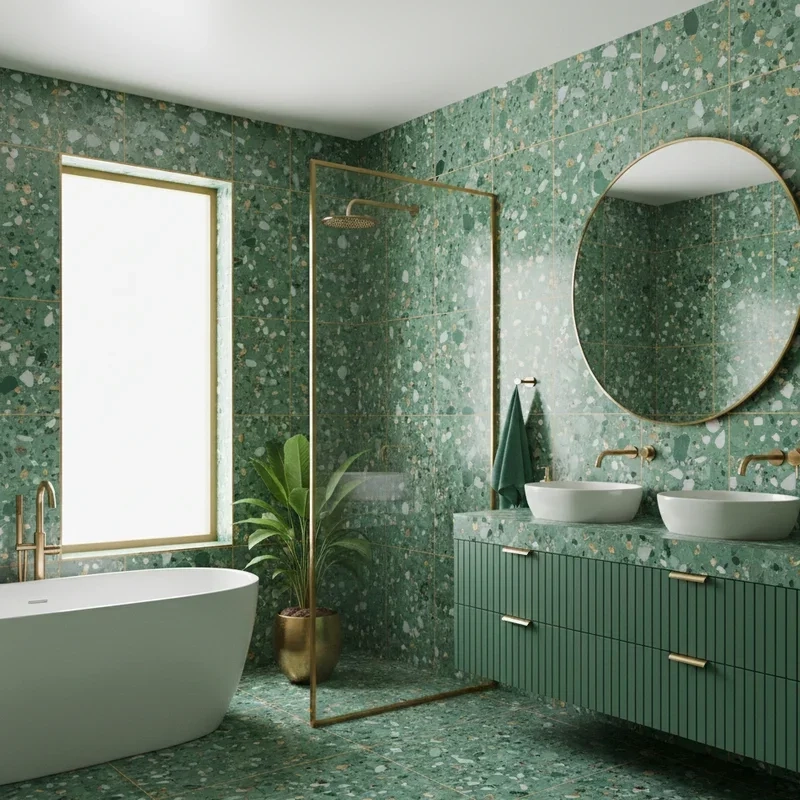
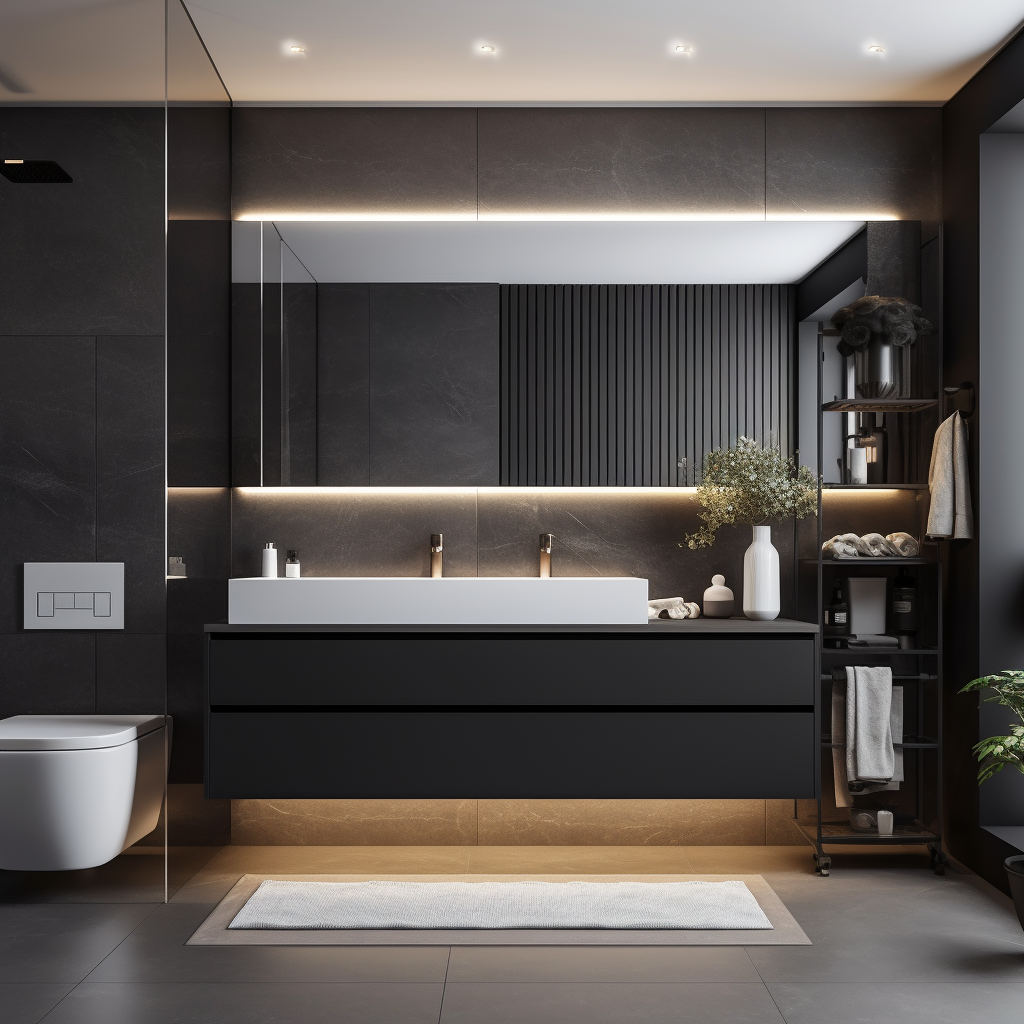
But it’s not just about neutrals. Bold colors are having a major moment too. Imagine walking into a shower tiled in a luxurious, deep emerald green. Or a powder room wrapped in a daring cobalt blue. These colors used to be considered "risky." Now, they’re seen as sophisticated. The key is confidence. You don’t need to paint every wall. Sometimes, a single accent wall in a bold hue is enough to transform the entire room. It creates depth. It adds drama. And contrary to popular belief, dark colors can actually make a small space feel larger by blurring the boundaries of the room.
Let’s talk about green for a second. It’s arguably the star of 2026. From soft sage to intense forest green, it works in almost every style. It pairs beautifully with natural wood, brass fixtures, and stone countertops. It’s versatile but distinct. If you’re nervous about going full-color, start with the lower half of the wall. Tile up to waist height in a rich tone and leave the top painted in a complementary neutral. It’s a manageable way to test the waters. And if you hate it? Well, paint is cheaper than tile. But you won’t hate it. You’ll probably wonder why you didn’t do it sooner.
The Rise of Sculptural Textures
Flat is boring. That’s the simple truth driving the texture trend. In 2026, tiles are no longer just visual; they’re tactile. We’re seeing sculptural textures that catch the light and create shadows throughout the day. Think of waves, ridges, flutes, and organic irregularities. These aren’t just patterns printed on the surface; they’re physical dimensions built into the material. When light hits a textured tile, it changes. Morning light might highlight the peaks, while evening lamps cast long, dramatic shadows in the valleys. It makes the wall feel alive.
Why does this matter? Because bathrooms are sensory experiences. You touch the walls. You feel the steam. You hear the water. A textured surface adds another layer to that experience. It breaks up the monotony of a large, flat expanse. It adds interest without needing loud colors. If you prefer a minimalist palette, texture is your best friend. A all-white bathroom with highly textured, three-dimensional tiles feels luxurious and complex, not clinical. It’s the difference between a plain cotton t-shirt and a finely knitted sweater. Both are white, but one has far more substance.
Materials play a huge role here too. Zellige tiles, with their handmade imperfections and slight variations in thickness, are still going strong. But we’re also seeing new innovations in ceramic and porcelain that mimic the roughness of stone or the fluidity of clay. These materials have "soul," as some experts put it. They don’t look machine-perfect. They look human. And in a world dominated by screens and synthetic experiences, that human touch is incredibly valuable. It grounds the space. It makes it feel real.
Pattern Splicing and Geometric Plays
Remember when mixing patterns was considered a design sin? Those days are gone. In 2026, pattern splicing is not just accepted; it’s celebrated. This technique involves combining different tile patterns or shapes within the same space. Maybe you use a large-format marble-look tile on the floor and a small, intricate mosaic on the shower niche. Or perhaps you splice a checkerboard pattern into a field of solid color. It’s about creating visual rhythm. It keeps the eye moving. It prevents the room from feeling static.
Checkerboards are having a massive resurgence, but not in the black-and-white diner style of the 90s. Today’s checkerboards are softer, more contemporary. Think cream and charcoal, or sage and white. They’re often scaled differently too—larger tiles for a modern look, smaller ones for a vintage vibe. And they’re not just for floors. A checkerboard shower wall is a bold, graphic choice that pays off big time. It adds energy. It adds personality. It shows that you didn’t just pick the first thing you saw.
Geometric patterns are also stepping out of the background. Hexagons, diamonds, and arabesques are being used in unexpected ways. Instead of covering the whole floor, they’re used as borders, insets, or feature walls. This "less is more" approach allows you to enjoy the beauty of the pattern without overwhelming the space. It’s a great way to introduce complexity in a controlled manner. If you’re worried about resale value, stick to geometric patterns in neutral tones. They’re timeless enough to appeal to future buyers but unique enough to satisfy your current desire for style.
Contemporary Checkerboards and Modern Classics
Let’s dive deeper into the checkerboard trend because it’s such a perfect example of how old ideas are getting new life. The contemporary checkerboard is sophisticated. It’s playful but mature. It works in farmhouse bathrooms, modern minimalist spaces, and even industrial lofts. The secret is in the color selection and the scale. High-contrast combinations like black and white are striking, but low-contrast pairs like beige and cream are subtle and elegant. They add structure without shouting.
And it’s not just about squares. We’re seeing diagonal layouts, offset grids, and even mixed-size checks. These variations keep the pattern from feeling too rigid. They add a sense of movement. In a small bathroom, a diagonal checkerboard can actually make the space feel wider. It draws the eye outward. It’s a simple trick with a big impact. Plus, checkerboards are incredibly forgiving. If a tile is slightly off-center, it blends into the pattern. Unlike a straight grid, where every misalignment is obvious, the checkered layout hides minor imperfections.
This trend also pairs beautifully with other 2026 favorites. Imagine a checkerboard floor in warm terracotta and cream, paired with textured olive-green walls. Or a black-and-white checkered shower floor anchoring a room with sleek, vertical subway tiles in a soft gray. The possibilities are endless. The key is balance. If you go bold on the floor, keep the walls simpler. If you do a patterned wall, let the floor be a solid foundation. It’s about creating harmony, not chaos. And honestly, isn’t that what we all want in our homes? A little excitement, but mostly peace.
Okay, so you’re inspired. You want to ditch the safe white tile. But you’re also terrified of making a mistake. What if you pick a color you hate in six months? What if the pattern looks chaotic? These are valid fears. Renovations are expensive. But there are ways to mitigate the risk. First, start small. You don’t have to tile the entire bathroom in a neon orange. Try a accent wall. Try the shower niche. Try the floor only. These smaller surfaces allow you to experiment with bold choices without committing the whole room.
Second, consider the lighting. Colors look different in natural light versus artificial light. Always get samples. Hold them up in the morning, at noon, and at night. See how they change. A dark blue might look navy in the day but nearly black at night. A textured tile might look subtle in bright light but dramatic in shadow. Understanding how light interacts with your choices is crucial. It prevents surprises. And if you can, live with the samples for a few days. Let them grow on you. If you still love them after a week, you’re ready.
Finally, think about longevity. Trends come and go, but quality lasts. Invest in good materials. Choose colors and patterns that resonate with you personally, not just what’s popular on Instagram. If you love it, it will never go out of style for you. And remember, tile is permanent, but accessories aren’t. You can change your towels, your rug, your art. Let those elements carry some of the trendiness, while your tile remains a timeless foundation. It’s about finding the sweet spot between bold and enduring. You’ve got this.
So, where does this leave us? The era of the default white subway tile is fading, not because it’s bad, but because we’re ready for more. We’re ready for bathrooms that reflect our personalities, our tastes, and our desire for comfort. Whether you choose rich earth tones, sculptural textures, or playful patterns, the goal is the same: to create a space that feels like yours. Don’t be afraid to step off the beaten path. The view is much better from there. Your bathroom should be a retreat, a place of joy, and a reflection of your unique spirit. Go ahead. Be bold.