Ever look around your sitting room and feel a wave of anxiety, even though you literally just picked up all the stray shoes and coffee mugs? It is a incredibly frustrating sensation. You spend your weekend scrubbing and organizing, yet the space still feels suffocating and crowded.
You are definitely not alone in this. In 2026, as our homes continue to serve as offices, gyms, and sanctuaries, maximizing visual peace has become more vital than ever. The truth is, the culprit usually isn’t actual mess. Instead, it is a series of silent, accidental layout choices that trick your brain into thinking the area is overflowing.
Hanging Your Art All Wrong
We all love personalizing our walls, but pushing your frames too high or using the wrong scale is a major trap. When pictures are floating up near the ceiling, it breaks the natural sightline and makes the walls feel chopped up. It forces the eyes to dart around awkwardly, which creates instant mental tension.
Instead, think of your walls like a gallery. Grouping smaller items together rather than scattering them across the room helps the eye rest. A good rule of thumb is to keep the center of your artwork at about eye level, which instantly grounds the entire room.
Pushing All the Furniture Against the Walls
It seems logical, right? If you push the sofa, chairs, and bookshelves right up against the drywall, you think you are opening up the middle floor. But this layout actually creates a strange, cold void in the center while making the perimeter look totally jammed and stuffed.
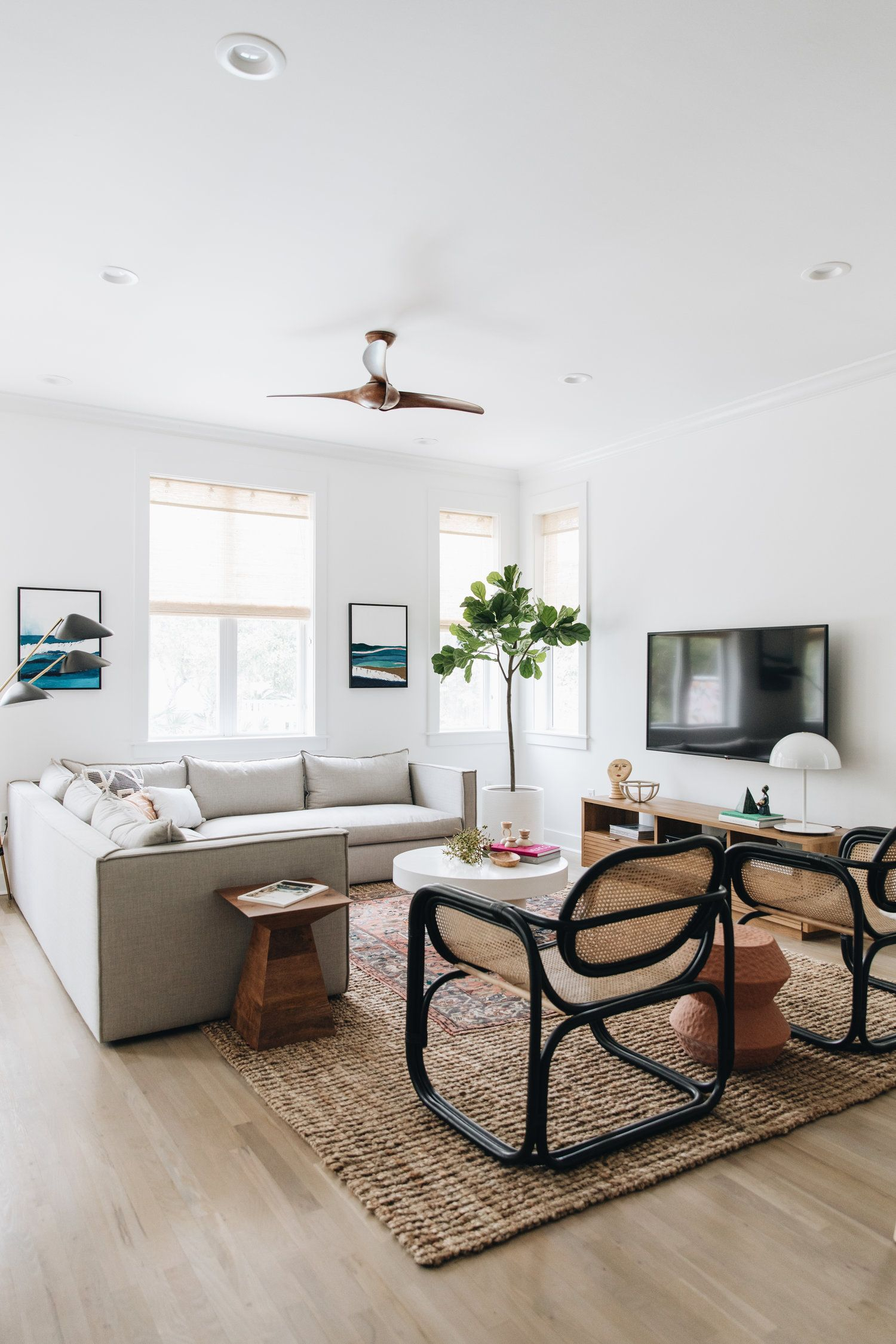
Interior designers call the fix "floating" your furniture. Even pulling your couch just a few inches away from the wall creates breathing room. It lets light and air circulate, making the layout feel intentional and breezy rather than crowded.
The Area Rug is Way Too Small
Buying a rug that is too tiny is probably the most frequent stumble people make. When you have a postage-stamp rug sitting under a coffee table, it visually shrinks the floor plan. It sections off the room into tiny fragments, making the overall environment look fractured and cluttered.
Ideally, you want an area rug large enough that at least the front legs of all your seating pieces sit comfortably on top of it. This binds the furniture together as a cohesive zone, creating an illusion of expansive, continuous space.
Too Many Tiny Knick-Knacks Everywhere
It is easy to accumulate little mementos over the years. A tiny vase here, a small candle there, and a couple of souvenir statues on the mantel. But a mountain of little decorations creates what experts call "visual noise." Your brain tries to process every single object individually, leading to sensory fatigue.
Try replacing clusters of small items with fewer, more substantial statements. One large, gorgeous ceramic bowl on a table does the work of ten tiny trinkets without any of the chaotic energy. It gives the room a sophisticated, curated vibe.
Exposed Cables and Cord Chaos
Let’s be real, our entertainment centers are tech magnets in 2026. With streaming boxes, gaming consoles, and smart chargers, the wires accumulate fast. Seeing a tangled web of black cords dropping down behind the television console instantly screams disorganization, no matter how clean the tabletop is.
Taming the wire beast is a game-changer for your peace of mind. Use simple zip ties, cord covers, or decorative boxes to tuck them completely out of view. When the floor and baseboards are clear of wire tangles, the room immediately feels lighter.
Open shelving looks beautiful in magazines, but maintaining it in real life is a full-time job. Filling every single shelf with books, baskets, and decor leaves no empty space for the eyes to rest. If everything you own is constantly on display, the room will always feel like it is bursting at the seams.
The secret weapon here is balancing open displays with closed cabinetry. Hide the board games, extra blankets, and remote controls behind solid doors. Leaving some shelves completely empty or minimally styled gives the room the breathing room it desperately needs.
Fixing a crowded living room doesn’t mean you need to embark on a massive, expensive renovation. Often, it is just about shifting what you already own to create a better flow. By tweaking the scale of your rugs, managing your cords, and giving your furniture a little space to breathe, you can completely transform the energy of your home.
Take a look around your space tonight with fresh eyes. Pick just one of these areas to adjust—perhaps moving that