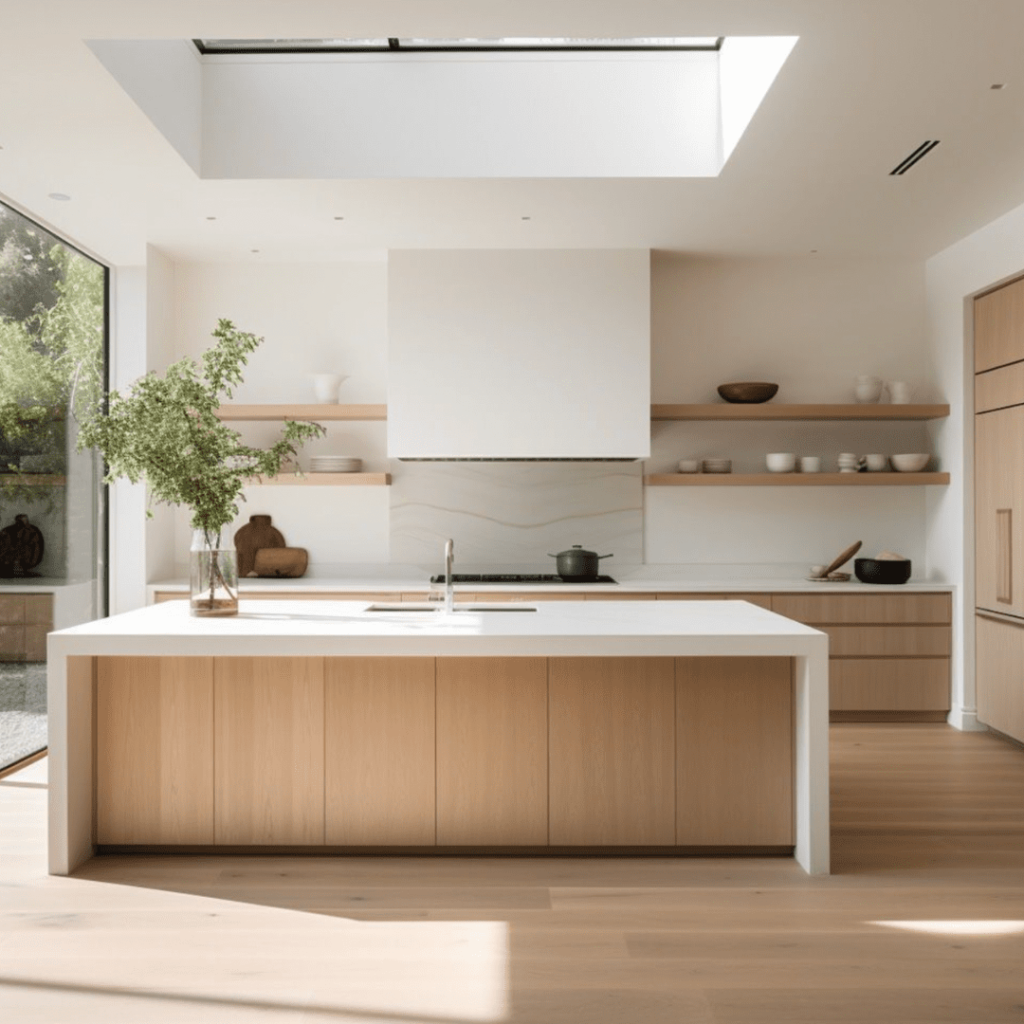
You know that feeling when you walk into a kitchen that just… breathes? It’s not necessarily empty. It’s not sterile like a hospital ward. But there’s a sense of order. A quiet hum of functionality. Now, contrast that with the other extreme: the kitchen that feels like a workshop for a master craftsman. Every spice has a label. Every knife is sharpened to a razor edge. Every gadget has its specific drawer. Both are beautiful. Both are valid. But most of us? We’re stuck somewhere in the messy middle, trying to figure out if we should be throwing things away or buying better organizers.
In 2026, the conversation around our homes has shifted. We aren’t just asking "how do I clean this?" anymore. We’re asking "how does this space make me feel?" The kitchen is the heart of the home, sure, but it’s also the engine room. It’s where the chaos of daily life often collides with our desire for peace. Some people find serenity by stripping everything back to the bare essentials. Others find their zen in the meticulous care of high-quality tools and detailed processes. Neither is wrong. But mixing them up without intention? That’s where the stress lives.
This isn’t about choosing a side. It’s about understanding what your brain needs to function at its best during meal prep. Do you need fewer decisions? Or do you need more ritual? Let’s dig into how you can curate a daily routine that honors both the freedom of less and the satisfaction of detail, without burning out.
The Psychology of Clutter vs. The Joy of Tools
Why do we keep that avocado slicer? You know the one. It’s plastic, it’s awkward to clean, and you’ve used it twice since 2024. We hold onto things because we think they might save time later. But here’s the truth: visual clutter creates mental noise. When your counters are covered in appliances you rarely use, your brain has to process all that information every time you walk in. It’s exhausting. Minimalism in the kitchen isn’t about deprivation. It’s about removing the friction between you and the act of cooking.
On the flip side, there’s a deep psychological reward in using a tool that works perfectly. There’s a reason chefs obsess over their knives. It’s not just about sharpness; it’s about respect for the ingredient. Loving detail means choosing quality over quantity. It means having one cast-iron skillet that you’ve seasoned for years instead of five non-stick pans that are peeling. This approach shifts the focus from "having stuff" to "using stuff." It turns cooking from a chore into a craft.
The key is recognizing which items bring you joy and which ones bring you guilt. If you look at your stand mixer and feel inspired to bake, keep it. If you look at it and feel bad because you haven’t used it in six months, let it go. In 2026, we’re seeing a move towards "intentional ownership." It’s not about how little you can own, but about how much value each item adds to your daily life. Ask yourself: does this tool make my routine smoother, or does it just take up space?
Designing Your Flow: The Layout Matters More Than You Think
You can have the most minimalist kitchen in the world, but if your trash can is on the opposite side of the room from your prep station, you’re going to be frustrated. Flow is everything. It’s the invisible architecture of your routine. Think about your most common tasks. Where do you chop? Where do you cook? Where do you plate? The distance between these zones should be minimal. In many modern homes, the "work triangle" (sink, stove, fridge) is still relevant, but in 2026, we’re talking more about the "prep zone."
For those who love detail, organizing this flow is an art form. You might have a specific spot for your cutting boards, arranged by size. You might have a dedicated drawer for utensils, separated by dividers so nothing touches. This level of organization reduces decision fatigue. You don’t have to hunt for the spatula. It’s there. It’s waiting. This creates a rhythm. Cooking becomes a dance rather than a scavenger hunt.
But for the minimalists, flow is about clearing the decks. Literally. Clear counters mean you have space to work. If you love to cook big meals, you need surface area. That means storing appliances in cabinets or pantries when they’re not in use. It means keeping only the salt, pepper, and oil on the counter. Both approaches aim for the same result: efficiency. One achieves it through precise placement, the other through reduction. Try moving your most-used items to the most accessible spots. See how it changes your energy.
The Morning Ritual: Setting the Tone for the Day
How you start your morning in the kitchen sets the tone for the rest of your day. For many, this is the first interaction with their home after waking up. A chaotic sink full of dishes from the night before can spike cortisol levels before you’ve even had coffee. Living with less here means doing a quick "reset" before bed. Five minutes to load the dishwasher, wipe the counters, and put away the stray ingredients. It’s a small act, but it buys you peace in the morning.
Those who love detail might approach the morning with a different kind of ritual. Maybe it’s grinding fresh coffee beans. Maybe it’s arranging fruit in a specific bowl. These small acts of care aren’t about efficiency; they’re about mindfulness. They anchor you in the present moment. In 2026, we’re seeing more people embrace "slow mornings" even on weekdays. It’s not about spending an hour cooking; it’s about taking ten seconds to appreciate the steam rising from your mug.
You don’t have to choose between speed and slowness. You can have a streamlined cleanup routine (less) that allows you time for a mindful coffee preparation (detail). The goal is to remove the obstacles that prevent you from enjoying that first cup. If you’re rushing because you can’t find a clean spoon, that’s a design failure. Fix the system. Make the easy choice the default choice.
Meal Prep: Efficiency vs. The Craft of Cooking
Meal prep is where the tension between less and detail often peaks. The minimalist approach to meal prep is about batch cooking simple, versatile ingredients. Roast a tray of veggies. Cook a pot of grains. Grill some chicken. Mix and match throughout the week. It’s efficient. It reduces waste. It keeps the kitchen clean because you’re only using a few pots and pans. This is ideal for busy weeks when survival is the goal.
But sometimes, cooking is about more than fuel. Sometimes, it’s about the love of detail. Chopping herbs finely. Making a sauce from scratch. Plating the food with care. This takes time. It takes effort. And that’s okay. You don’t have to meal prep every single meal. Maybe you simplify lunches (less) so you can enjoy a detailed dinner (detail). This balance prevents burnout. If you try to make every meal a masterpiece, you’ll exhaust yourself. If you treat every meal as mere fuel, you’ll lose the joy.
In 2026, flexible meal planning is trending. Instead of rigid schedules, people are keeping a "pantry roster" of go-to meals. Some are quick and simple. Some are elaborate projects. Knowing which is which helps you plan your energy. Don’t schedule a three-hour stew on a Tuesday night when you have a deadline. Save it for Saturday. Use the weekdays for the "less" approach and the weekends for the "detail" approach.
Cleaning Up: The Art of the Reset
Cleaning is the part everyone hates. But it doesn’t have to be a burden. For the minimalist, cleaning is easier because there’s less to clean. Fewer gadgets mean fewer nooks and crannies for grease to hide. Wiping down a clear counter takes thirty seconds. Washing three pots is faster than washing ten. The philosophy here is "clean as you go." Because you have fewer items in play, it’s easier to maintain order during the cooking process.
For the detail-oriented cook, cleaning can be part of the ritual. Polishing the copper pan. Oiling the wooden boards. Sharpening the knives. This isn’t just maintenance; it’s care. It extends the life of your tools. It makes the next cooking session more enjoyable. The key is to not let this become a chore that feels overwhelming. Break it down. Do one small thing after each meal. Wipe the stove. Clean the sink. It adds up.
The mistake many people make is letting the cleaning pile up until it becomes a mountain. Whether you prefer less or detail, consistency is key. A five-minute nightly reset is better than a five-hour weekend deep clean. In 2026, we’re seeing a rise in "maintenance mindset" products—tools that are easy to clean and durable. Invest in things that don’t fight you. Dishwasher-safe cast iron? Yes, please. Self-sharpening knives? Maybe not, but good steel holds an edge longer. Choose tools that respect your time.
So, where do you fall? Are you a minimalist or a detail-lover? The answer is probably both. And that’s the beauty of it. You don’t have to fit into a box. Your kitchen routine should be a reflection of your life right now. Maybe this year, you’re busy with work and kids, so you lean towards "less." You simplify. You declutter. You make things easy. Next year, maybe you have more time. You want to learn to bake sourdough. You buy a scale. You get a proofing basket. You lean into "detail."
Listen to your stress levels. If your kitchen feels chaotic, subtract. Remove items. Clear surfaces. Simplify your menu. If your kitchen feels sterile or boring, add. Add a plant. Add a beautiful bowl. Add a new recipe that requires chopping. Adjust as needed. There is no perfect kitchen. There is only the kitchen that works for you today.
Remember, the goal isn’t to have a magazine-worthy kitchen. It’s to have a kitchen that supports your life. One that makes you feel calm when you walk in. One that makes cooking feel less like a task and more like a part of your day. Whether that comes from having less clutter or loving the details of your craft, the outcome is the same: a sense of ease.
In the end, it’s about intention. Be intentional about what you keep. Be intentional about how you cook. Be intentional about how you clean. When you stop running on autopilot and start making choices that align with your values, the kitchen stops being a source of stress. It becomes a sanctuary. And honestly? We could all use a bit more sanctuary in our daily lives. So take a breath. Look at your counter. What’s one thing you can remove? Or one thing you can cherish? Start there.