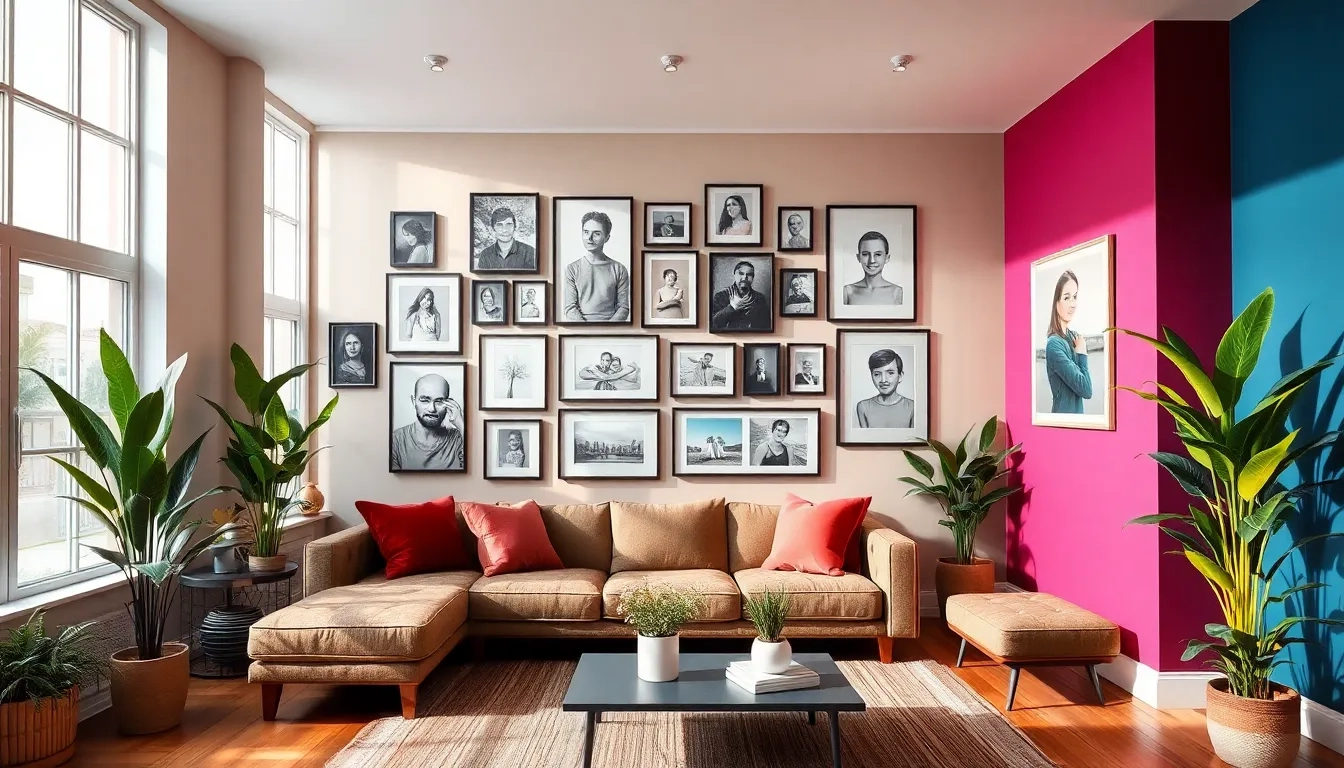
Ever walked into your living room and felt like something was… off? Not broken, just stale. Like the air had stopped moving. It’s a funny thing how spaces can lose their spark without us even noticing. We get so used to seeing the same four walls every day that they basically become invisible. You sit there, scrolling through your phone or watching TV, and suddenly you realize you’re craving a change. But here’s the kicker: you don’t need a renovation budget. You don’t even need to buy a single new thing. In fact, the best updates often come from looking at what you already have with fresh eyes.
It’s 2026, and while trends come and go faster than ever, the desire for a home that feels personal and curated isn’t going anywhere. People are tired of fast furniture and disposable decor. There is a quiet revolution happening where we are learning to love our stuff again. Not by buying more, but by using what’s already sitting in our closets, spare rooms, or gathering dust on high shelves. This article isn’t about expensive hacks. It’s about creativity. It’s about taking that vase you never use, those frames hiding in the garage, or that scarf you love but never wear, and letting them do some heavy lifting on your walls.
Let’s be honest, staring at a blank or cluttered wall can drain your energy. But flipping the script is easier than you think. By shifting perspective and getting a little playful, you can transform your living space into something that feels new, exciting, and distinctly you. All without swiping a credit card. Ready to dig in? Let’s look at how to make magic with what you’ve got.
The Great Migration: Shop Your Other Rooms
The first step to a wall refresh is realizing that your home is a ecosystem, not a series of isolated boxes. That beautiful ceramic plate hanging in your kitchen? It might look stunning in a gallery wall in the living room. The abstract print collecting dust in the guest bedroom hallway? It could be the focal point your sofa has been begging for. Designers call this "shopping your home," and it is arguably the most powerful tool in your decorating arsenal. Start by walking through every room in your house with a critical eye. Look for items that feel out of place or underutilized.
Take inventory of your art, mirrors, baskets, and even functional items like wooden cutting boards or vintage trays. Often, we pigeonhole objects into specific rooms. A mirror stays in the bathroom because that’s where it came from. A rug stays in the bedroom because it matches the bedspread. Break those rules. Move that large floor mirror from the bedroom to lean against the living room wall. Instantly, you’ve added depth, light, and a sense of spaciousness. Swap out the small framed photos on your mantel for larger, bolder pieces from the dining room. The goal is to create surprise. When you move an object to a new context, it stops being background noise and starts becoming a statement.
Don’t forget the vertical space in closets or storage areas. Do you have a collection of hats? A stack of vintage suitcases? These aren’t just storage; they are textural elements. Hanging a few wide-brimmed hats in a cluster can create a whimsical, organic wall sculpture. Stacking suitcases on a floating shelf adds height and nostalgia. The key is to look at function second and form first. If it has an interesting shape, color, or texture, it belongs on your wall. This process also helps clear clutter elsewhere, making the whole house feel lighter. It’s a win-win situation that costs absolutely nothing but a bit of elbow grease.
Framing the Unframed: Textiles and Soft Goods
We often think of wall decor as rigid things: canvas, paper, wood. But soft goods offer a warmth and texture that hard surfaces just can’t match. Think about the textiles you already own. Do you have a scarf with a vibrant pattern that you rarely wear? A quilt from your grandmother that’s too precious to use on a bed but too beautiful to hide? A tapestry or a large piece of fabric from a past trip? These items are prime candidates for wall art. In 2026, the line between fashion, fabric, and interior design is blurrier than ever, making this approach feel current and chic.
You don’t need to sew anything to make this work. For lighter fabrics like scarves or silk squares, simple command strips or decorative pins can hold them in place. Create a grid of four matching scarves for a pop of color, or drape a larger piece over a curtain rod mounted slightly away from the wall to let it fold naturally. For heavier items like quilts or rugs, consider using a tension rod inside a deep frame (if you have one lying around) or simply draping them over a existing shelf or ladder. A small Persian rug hung on the wall adds incredible acoustic dampening and visual richness. It turns a flat surface into a cozy nook.
Even clothing can play a role. Have a jacket with amazing embroidery on the back? Frame it. Literally. Take off the buttons if they bulge too much, smooth it out, and pin it inside a large, empty frame you might have stored away. It becomes a unique piece of folk art. This method is particularly great for renters who can’t paint or drill holes, as many textile hangs can be managed with non-damaging adhesives. Plus, textiles absorb sound, making your living room feel quieter and more intimate. It’s a sensory upgrade that engages both sight and touch, making the space feel more lived-in and comfortable.
The Power of the Rearrange: Gallery Walls Done Right
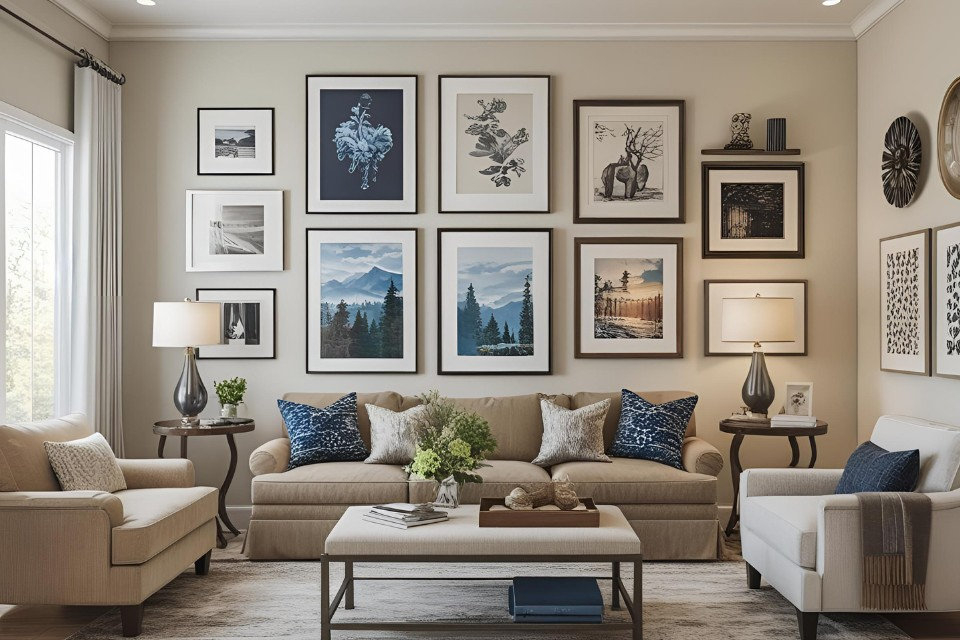
Most of us have a gallery wall, or at least a cluster of frames, somewhere in our homes. But when was the last time you really looked at it? Chances are, it’s become invisible to you. The secret to refreshing your walls isn’t always adding new things; it’s reorganizing what’s already there. Take everything down. Yes, everything. Lay it all out on the floor. This is scary, I know. But it’s necessary. Once you see all your frames, prints, and objects together, you can start to see new connections. Maybe three small black-and-white photos look better together than spread apart. Maybe that large colorful print needs to be the anchor, with smaller frames orbiting it.
Experiment with layouts on the floor before you put a single nail back in the wall. Try a symmetrical grid for a clean, modern look. Or go for an organic, cloud-like cluster for something more relaxed. Mix media. Don’t just hang pictures. Include a small mirror, a decorative plate, or even a child’s drawing in a nice frame. The variety keeps the eye moving. In 2026, perfection is out; personality is in. A gallery wall should tell a story, not just fill space. If you have empty frames, fill them with pages from old books, sheet music, or even wallpaper samples you’ve saved. Paper is free, and it adds pattern without commitment.
Pay attention to spacing. A common mistake is hanging items too high or too far apart. Keep the center of your arrangement at eye level (about 57-60 inches from the floor). Keep the spacing between frames consistent, usually 2-3 inches, to create cohesion. If you have a large blank wall, you might not have enough art to fill it traditionally. That’s okay. Use negative space. Hang one large piece slightly off-center. Or create a "salon style" hang that covers a huge area with many small items. The act of rearranging forces you to curate. You might find that half the stuff doesn’t belong anymore. Put it in storage. The edit is just as important as the display.
Functional Decor: When Tools Become Art
Who says your living room walls have to be purely decorative? In recent years, the trend of "functional art" has gained serious traction. This means using everyday objects as wall decor. Do you play guitar? Hang it. A guitar on the wall is a sculptural masterpiece that also hints at your hobbies. Do you have a collection of beautiful wooden spoons, ladles, or rolling pins? Arrange them in a fan shape or a linear row. Kitchenware has lovely organic shapes and warm wood tones that complement almost any living room palette. It’s unexpected, conversational, and deeply personal.
Look at your hobby supplies. Skis, snowboards, surfboards, or even bicycles can be mounted on walls. If you don’t have sports gear, think about tools. Vintage hand tools like hammers, saws, or wrenches have an industrial chic vibe. Clean them up and arrange them neatly. Book lovers can install floating shelves (if they have them stored away) or even stack books horizontally on existing ledges, but why stop there? Create a "library wall" by leaning large art books against the wall on a mantel or console, but also consider framing beautiful book covers or pages. If you have a nice hardcover with a striking jacket, remove it and frame the cover itself. It’s literary pop art.
Plants are another functional decor element that often gets overlooked as wall art. Instead of just putting pots on tables, use wall-mounted planters. If you don’t have specific planters, repurpose mugs, tin cans, or even old teapots. Mount them on small shelves or hang them with macramé hangers you might have made years ago. Greenery brings life and color to vertical spaces. Trailing plants like pothos or ivy create natural curtains of leaves that soften hard walls. This approach blurs the line between nature and interior design, making your living room feel like a sanctuary. It’s about utility meeting beauty, proving that the things you use every day can also be the things you admire.
Lighting as Sculpture: Changing the Mood
Lighting is often treated as an afterthought, but it is one of the most transformative elements for your walls. You don’t need new fixtures to change how your walls feel; you just need to change how you use the light you have. Most living rooms have overhead lighting that casts harsh, flat shadows. This makes walls look two-dimensional and boring. Try turning off the big light. Use floor lamps, table lamps, or even string lights to wash the walls with softer, angled light. Light grazing across a textured wall highlights every bump and groove, adding depth and drama.
If you have picture lights, use them. If you don’t, consider repurposing clip-on lights or small spotlights from other rooms. Aim them at your artwork or architectural features. A well-lit corner can become a focal point. You can also use candles. Grouping pillar candles of varying heights on a shelf or mantel creates a flickering, dynamic light source that dances on the walls above. It’s romantic, calming, and completely free if you already have the candles. In 2026, ambiance is valued over brightness. People want spaces that feel cozy and inviting, not like operating rooms.
Don’t forget about reflection. Mirrors are essentially light amplifiers. If you have a dark corner, placing a mirror there bounces whatever light is available around the room, making the space feel larger and brighter. But beyond function, mirrors break up solid wall space. A collection of small, mismatched mirrors can create a dazzling, fragmented effect that catches the eye. Clean them well! A dirty mirror looks neglected; a clean one looks intentional. Play with the placement. Lean a large mirror against the wall instead of hanging it. It creates a casual, effortless vibe that feels very contemporary. Lighting and reflection are free tools that change the perception of your walls without touching a drop of paint.
Sometimes, the best way to refresh a wall is to take things away. We accumulate so much stuff over the years that our walls become noisy. Visual clutter causes mental clutter. If your living room feels chaotic, try a radical edit. Take down everything. Leave the walls bare for a few days. It will feel strange, maybe even empty. But sit with it. Notice how the light hits the space. Notice the architecture. Then, slowly, bring back only the items you truly love. Not the ones you feel obligated to keep, but the ones that spark joy or interest.
This process of subtraction is powerful. It allows the remaining pieces to breathe. A single large painting has more impact when it’s not competing with five small ones. A lone sconce is more dramatic when it’s not surrounded by knick-knacks. In 2026, minimalism isn’t about having nothing; it’s about having only what matters. By clearing the decks, you rediscover the value of your favorite objects. You might find that a piece you thought was mediocre is actually quite striking when given its own space. This approach also makes cleaning easier and reduces stress. A calm wall leads to a calm mind.
Consider the balance of the room. If one wall is heavily decorated, leave the opposite wall sparse. This creates visual rhythm. Your eye needs places to rest. If you have a busy patterned sofa, keep the walls behind it simple. If your walls are plain, you can afford more decor. It’s all about equilibrium. Don’t be afraid of white space. It’s not wasted space; it’s active space that frames your choices. By editing ruthlessly, you curate a space that feels intentional and sophisticated. And the best part? It costs nothing. In fact, it might even help you declutter other parts of your home by giving you permission to let go.
Refreshing your living room walls doesn’t require a contractor, a designer, or a credit card. It requires curiosity. It requires looking at your home not as a static museum, but as a living, breathing playground. By shopping your other rooms, repurposing textiles, rearranging your art, embracing functional decor, playing with light, and editing with intention, you can create a space that feels entirely new. These changes are low-risk and high-reward. They allow you to experiment without fear. So, stand up. Walk around your house. Look at that vase. Look at that scarf. Look at that empty corner. What story do you want your walls to tell today? The answer is probably already sitting in your living room, waiting for you to notice it.