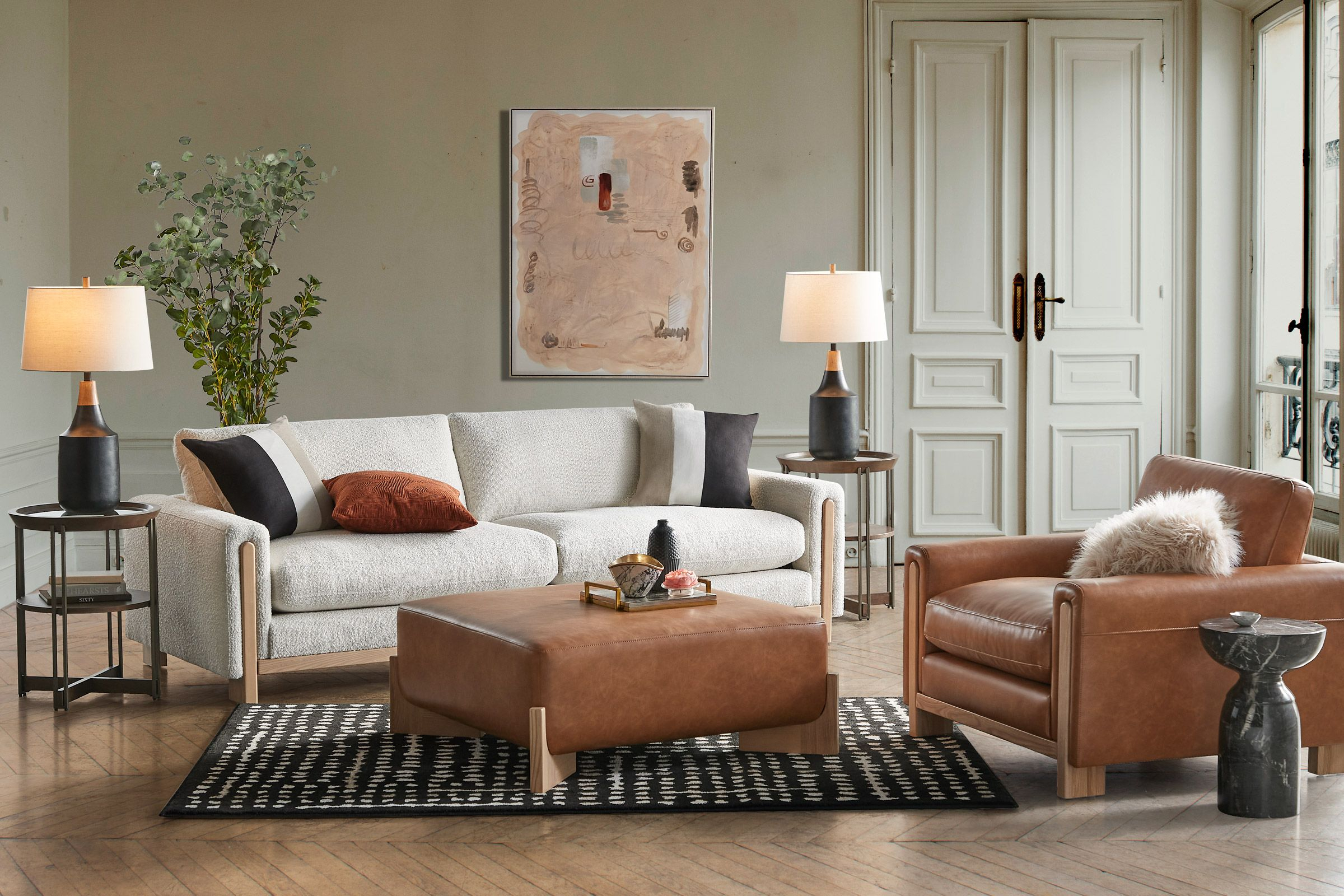
Let’s be honest. Most minimalist advice feels like it was written for people who don’t own socks. Or kids. Or hobbies. You scroll through your feed, seeing these pristine white boxes with a single succulent on a floating shelf, and you think, "That’s nice, but where do I put my vacuum?" It’s frustrating. Especially now, in 2026, when so many of us are still navigating compact urban apartments or downsized homes that need to pull double, sometimes triple, duty.
The truth is, minimalism isn’t about having less for the sake of aesthetics. It’s about making room for what matters. And in a small space, that distinction is everything. If you’ve ever felt like your home is both cluttered and empty at the same time—sparse yet suffocating—you’re not alone. The problem usually isn’t the square footage. It’s the approach. This year, the trend is shifting away from cold, sterile emptiness toward something much more human. We’re talking about warmth. Function. And a little bit of mess, because let’s face it, life happens.
So, how do we make this work? How do we create a sanctuary that doesn’t feel like a museum exhibit? It starts with letting go of the "perfect" image and embracing the practical reality of living in a small footprint. It’s about smart choices, not just fewer choices. Let’s dive into what actually works right now.
The Shift to Warm Minimalism
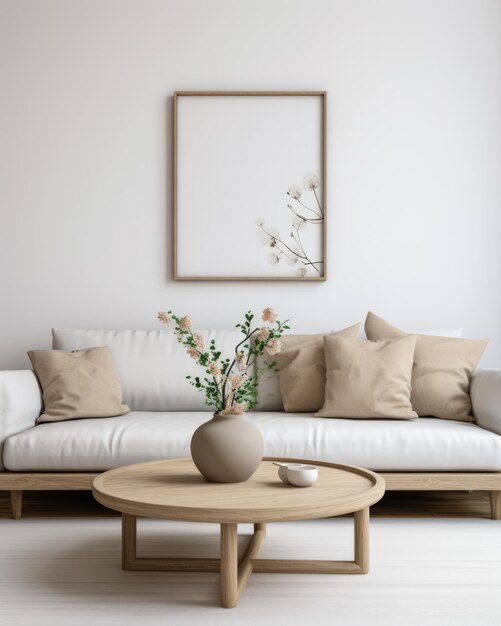
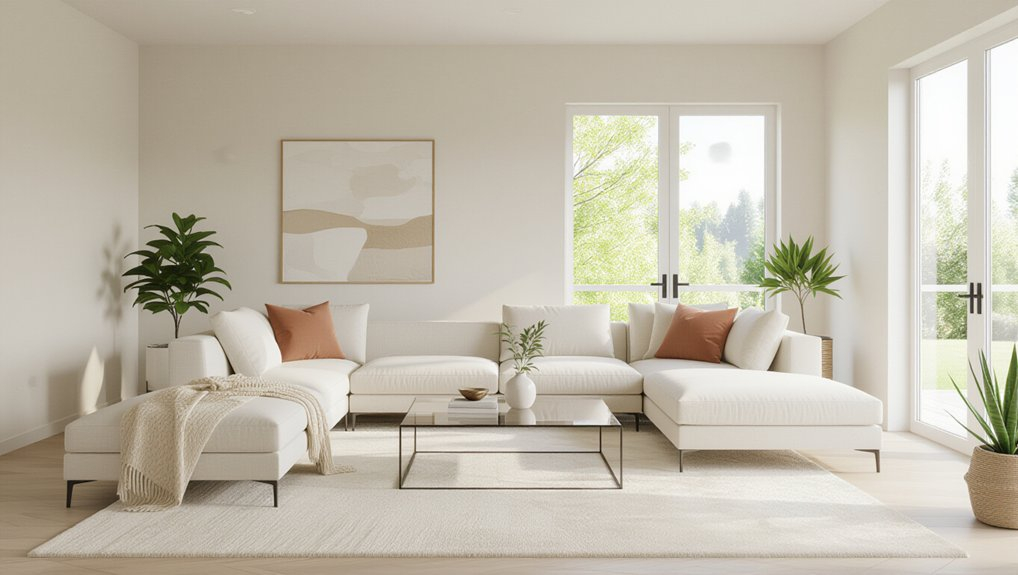
Remember when minimalism meant stark white walls and chrome furniture? Yeah, me too. It looked great in photos but felt like living in a dentist’s office waiting room. In 2026, that’s officially out. The new wave is what designers are calling "Warm Minimalism." It’s the cozy version of less. Think earthy neutrals, natural textures, and objects that have a story.
This shift isn’t just about looks; it’s about feeling. A small space can easily feel cold if it’s too bare. By introducing materials like wood, linen, clay, and wool, you add visual weight and comfort without adding clutter. It’s the difference between a room that feels empty and a room that feels calm. Market research shows that customers are increasingly drawn to these softer, more inviting minimalist styles because they reflect a desire for peace in a chaotic world.
Practically, this means swapping out that glossy plastic coffee table for one with a matte wood finish. It means choosing curtains that pool slightly on the floor rather than hanging stiffly. It’s about layering. You might have fewer items, but the ones you keep have depth. A chunky knit throw over a simple sofa. A ceramic vase with imperfect glazing. These details make a small apartment feel like a home, not a staging unit.
Intentional Zoning Over Open Plans
For years, the holy grail of small-space living was the "open concept." Knock down every wall! Let the light flow! But here’s the thing: open spaces can feel chaotic if they aren’t zoned properly. In 2026, the focus is on using space with more intention. Instead of just clearing out furniture, we’re defining areas. You see clear zoning that allows even compact rooms to feel organized and easy to use.
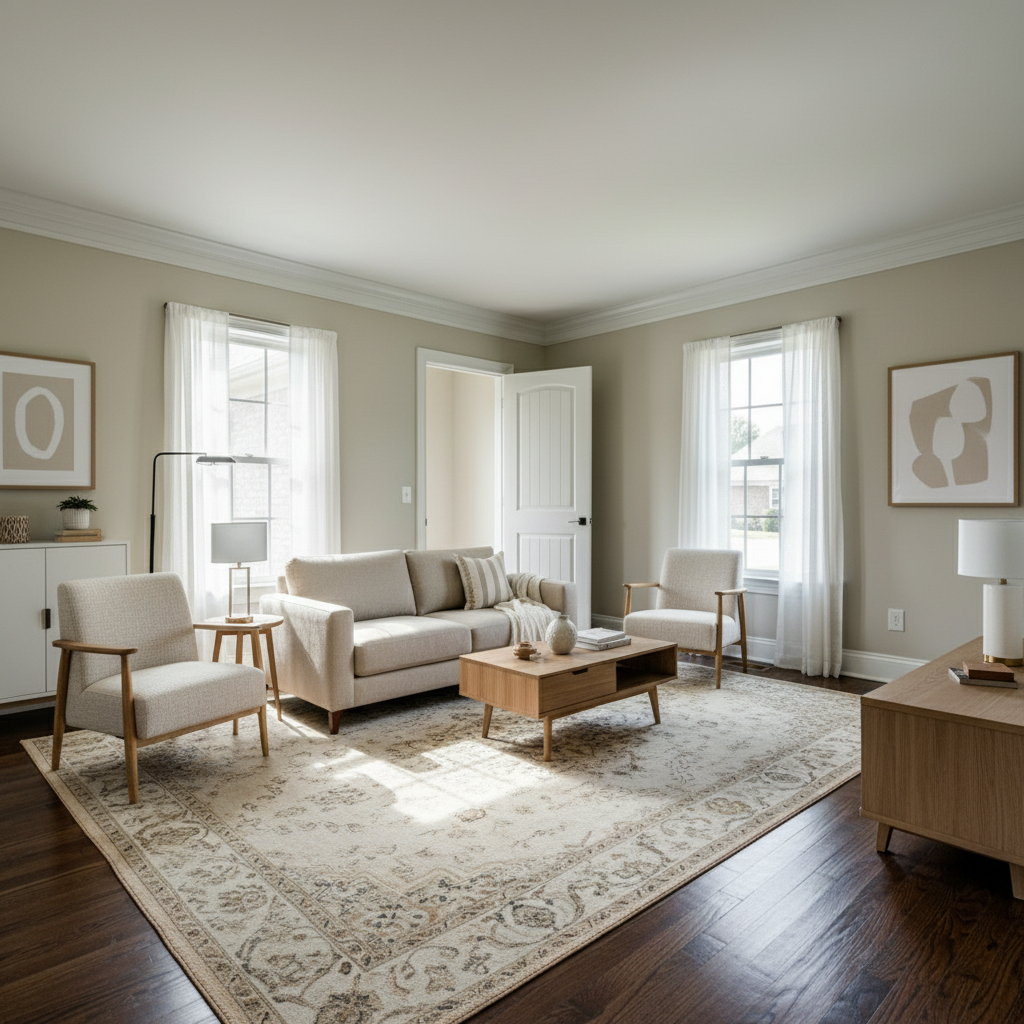
How do you do this without building walls? Furniture placement and lighting. A rug can define a living area. A pendant light hanging low over a dining table creates a ceiling for that specific zone. Bookshelves placed perpendicular to a wall can act as a subtle divider between a workspace and a sleeping area. It’s about creating psychological boundaries. When you enter your "work zone," your brain knows it’s time to focus. When you step onto the rug in your "chill zone," you can decompress.
This approach also helps with movement. In a tiny studio, clutter often accumulates in the "in-between" spaces—the pathways. By clearly defining where activities happen, you keep those pathways clear. It makes the whole space feel bigger because your eye can travel unobstructed from one defined zone to the next. It’s less about hiding things and more about giving everything a proper address.
Vertical Storage That Doesn’t Look Like a Warehouse
If you live in a small space, you know the struggle of horizontal surface area. There’s never enough. So, you look up. Vertical storage is the obvious answer, but it’s often executed poorly. Floor-to-ceiling shelves can feel overwhelming, like you’re living in a warehouse aisle. The trick in 2026 is integration. Storage shouldn’t scream "LOOK AT ME, I’M STORAGE." It should whisper.
Built-ins are king here, but if you’re renting, you can mimic this effect. Use tall, slender bookcases that match your wall color. Paint them the same shade as the background, and they visually recede. Keep the bottom half closed (for the ugly stuff like cables and bills) and the top half open (for books and decor). This balances visual weight. Heavy at the bottom, light at the top. It keeps the room from feeling top-heavy or cramped.
Another pro tip? Use the space above doors and windows. It’s often overlooked. A simple shelf above a doorframe can hold bins for seasonal items. Just keep it tidy. The goal is to maximize capacity without maximizing visual noise. And remember, not every inch needs to be filled. Leaving some vertical space empty gives the eye a place to rest. It’s a balance between utility and breathability.
Multi-Functional Furniture That Isn’t Clunky
We’ve all seen those awkward sofa-beds that require a PhD in engineering to unfold. They’re heavy, ugly, and usually uncomfortable as both a seat and a bed. Thankfuly, furniture design has caught up. In 2026, multi-functional pieces are sleek, compact, and actually pleasant to use. The key is choosing items that serve a purpose without looking like they’re trying too hard.
Think about a nesting coffee table set. When you have guests, you pull them apart for extra surface space. When you’re alone, you tuck them together to open up the floor. Or consider a desk that folds flat against the wall when not in use. Modern mechanisms are quiet and smooth. No more banging hinges waking up your partner.
But here’s the real secret: don’t overbuy multi-functional gear. You don’t need a table that turns into a bike rack. Stick to the basics. A bed with drawers underneath is infinitely more useful than a bed that converts into a dining table (which, let’s be real, nobody wants). Focus on flexibility. Chairs that can be moved easily. Lightweight side tables. Pieces that can adapt to your day, not just your floor plan.
Lighting as a Spatial Tool
Lighting is probably the most underestimated tool in small-space design. Bad lighting can make a generous room feel like a cave. Good lighting can make a closet feel airy. In minimalist spaces, where you have fewer objects to catch the eye, light becomes the main event. It shapes the mood. It defines the zones. It changes the perceived size of the room.
Layering is essential. Never rely on a single overhead light. It casts harsh shadows and makes the ceiling feel lower. Instead, mix ambient, task, and accent lighting. Use floor lamps to wash light up a corner, making it feel wider. Use under-cabinet lights in the kitchen to brighten countertops without glaring. Use small, warm-toned bulbs in bedside sconces for a cozy glow.
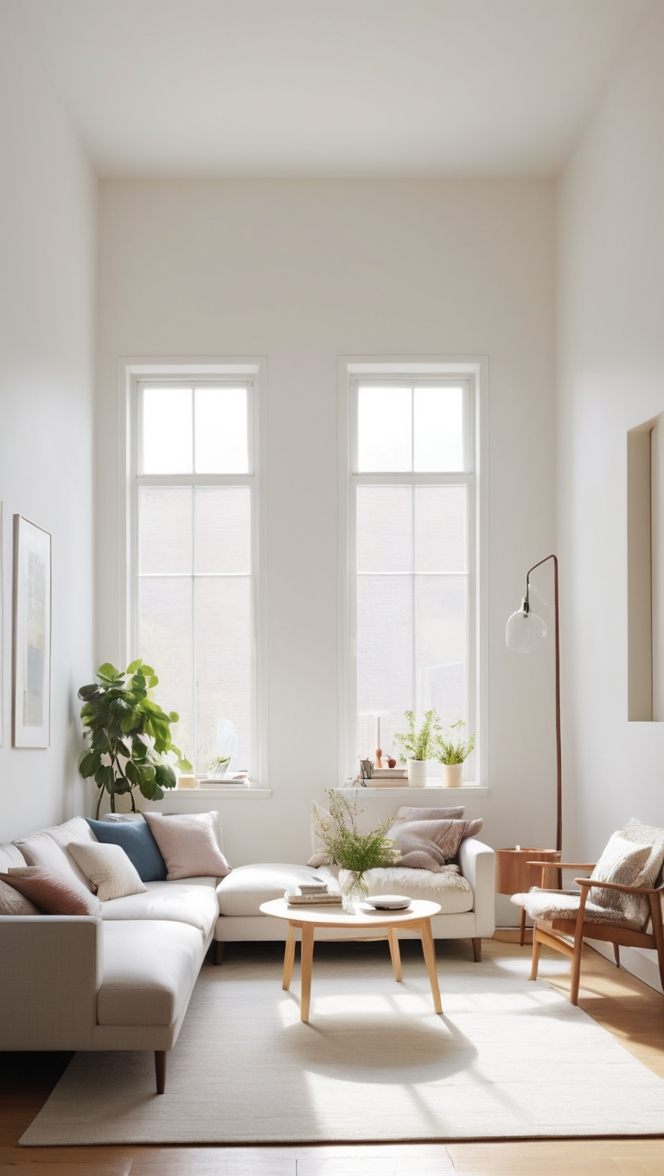
In 2026, there’s also a big push for natural light maximization. Keep window treatments sheer or minimal. Avoid heavy drapes that block light during the day. If you have a dark corner, don’t fight it with bright white lights. Embrace it with a moody lamp and a dark paint color. Sometimes, acknowledging the shadows makes the light feel more precious. It’s about contrast. A well-lit nook in a dimmer room feels like a retreat.
Finally, let’s talk about the mindset. Minimalism in a small space isn’t just a design choice; it’s a mental practice. It’s about deciding what "enough" looks like for you. This is harder than it sounds. We’re bombarded with ads telling us we need the latest gadget, the coziest throw, the trendiest decor. But in a small home, every item has a cost. Not just financial, but spatial.
Ask yourself: Does this item earn its rent? If it sits on your shelf for six months untouched, it’s taking up valuable real estate. That doesn’t mean you have to be ruthless. It means you have to be intentional. Keep the things that spark joy, sure, but also keep the things that solve problems. A good pair of scissors. A comfortable chair. A reliable lamp.
This mindset shift reduces decision fatigue. When you have fewer choices, you spend less time managing your stuff and more time living your life. It creates a sense of control in a world that often feels out of control. And honestly? That’s the biggest benefit of all. A calm space leads to a calm mind. It’s not about perfection. It’s about peace.
So, where do you start? Pick one corner. Just one. Clear it out. Add one thing that you truly love. See how it feels. Then move to the next. It’s a journey, not a makeover. And in 2026, the goal isn’t to have the smallest apartment on the block. It’s to have the most livable one.