Ever walked into a room that looked perfect on paper but felt like a hospital waiting room? You know the one. Everything matches. The walls are beige, the sofa is cream, the rug is off-white. It’s clean. It’s tidy. And it is absolutely freezing. Not temperature-wise, necessarily, but emotionally. It lacks soul. It feels stiff. Like you’re afraid to sit down because you might wrinkle the perfection.
We’ve all been there. The allure of a neutral palette is strong. It promises calm. It promises timelessness. But without the right touch, it delivers sterility. The trick isn’t adding more color. It’s not about painting an accent wall in bright blue or throwing neon pillows on the couch. The secret lies in something you can feel before you even see it. Texture.
In 2026, the trend isn’t just about minimalism. It’s about "soft living." People are craving homes that hug them back. A neutral home shouldn’t feel like a showroom. It should feel like a deep breath. By mastering the art of layering textures, you can keep that serene, monochromatic look while injecting enough warmth to make guests want to stay for hours. It’s about turning a space from flat to fascinating, using nothing but touch and tone.
Start With Your Temperature
Before you buy a single throw pillow, you need to know what kind of neutral you’re dealing with. This is where most people mess up. They mix warm and cool tones without thinking, and the result is a muddy, confused room. Neutrals have temperatures, just like weather. Warm neutrals include creams, sands, camels, and soft taupes. They feel sunny. They feel relaxed. Cool neutrals are stones, greiges, crisp whites, and soft grays. They feel architectural. They feel refined.
If you lean toward warm neutrals, you’re already halfway to a cozy vibe. But if you prefer the sleek look of cool grays, you have to work harder to add warmth through texture. Mixing them without intention is the fastest way to flatten a space. Decide on your base. Is this room a sunny breakfast nook? Go warm. Is it a modern home office? Maybe cool works better. But stick to one dominant temperature.
Once you’ve picked your lane, think about the undertones. A cream with yellow undertones will feel different than a cream with pink undertones. In 2026, designers are moving away from stark, bright whites and toward "dirty" whites—whites with a hint of gray or beige. These softer bases provide a better canvas for layering. They don’t compete with your textures; they support them. Think of your wall color as the silence between notes in a song. It needs to be there, but it shouldn’t be loud.
The Rule of Three: Rough, Smooth, and Soft
Here is a simple formula that never fails. Every surface in your room should offer a different tactile experience. If everything is smooth, it’s boring. If everything is rough, it’s exhausting. You need balance. Designers often call this the rule of three: coarse, medium, and smooth. When these three finishes work together, the room feels complete. It feels curated, not accidental.
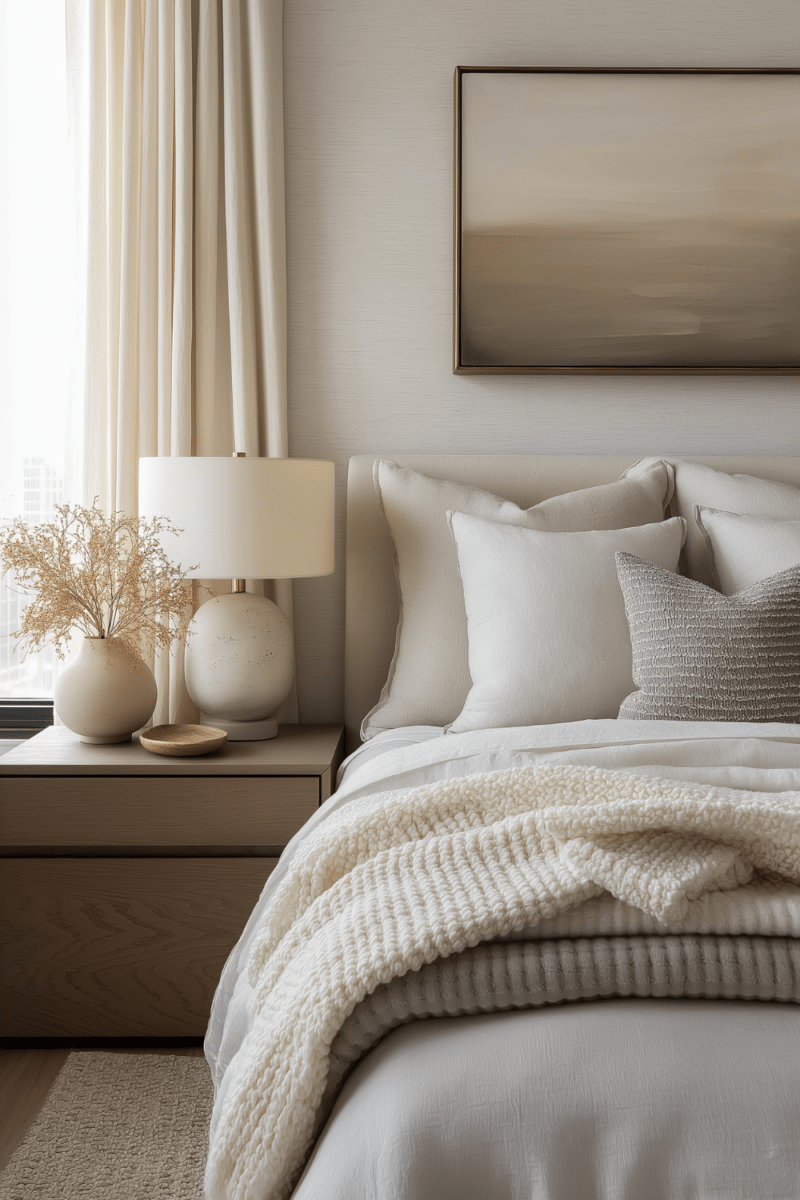
Start with the coarse. This is your anchor. Think natural wood with visible grain, raw linen, jute rugs, or exposed brick. These materials have history. They have imperfections. A chunky knit blanket draped over a chair adds instant weight. A sisal rug underfoot grounds the space. These rougher textures catch the light differently, creating shadows and depth that flat paint never could. They tell the eye that there is substance here.
Then, bring in the smooth. This provides relief for the eyes. Leather, polished stone, glass, or silk. A sleek marble coffee table against a nubby wool rug creates a conversation between materials. The smoothness reflects light, keeping the room from feeling too heavy. Finally, add the soft. This is the comfort layer. Velvet cushions, faux fur throws, or high-pile carpets. This is what makes people want to kick off their shoes. It’s the emotional warmth. When you combine a rough jute rug, a smooth leather ottoman, and a soft velvet pillow, you’ve created a symphony of touch.
Natural Materials Are Non-Negotiable
You can’t fake nature. Well, you can, but it rarely feels as good. In 2026, there is a huge push back against synthetic overload. People want to connect with the earth, even indoors. Natural materials age beautifully. They develop patina. A plastic vase stays plastic forever. A wooden bowl gets richer with every touch. This aging process is what makes a home feel lived-in. It’s the opposite of cold.
Wood is the easiest way to warm up a neutral room. It doesn’t matter if it’s oak, walnut, or pine. The grain adds visual noise that breaks up large blocks of solid color. Don’t be afraid to mix wood tones, either. The old rule of matching all your woods is dead. A dark walnut floor with lighter oak furniture looks intentional and layered. Just make sure they share a similar undertone (warm or cool) to keep it cohesive.
Stone and clay are also powerhouses. A terracotta pot, a limestone side table, or a ceramic lamp base adds weight and solidity. These materials are cool to the touch, which sounds counterintuitive for warming a room, but their visual weight balances out airy fabrics. Greenery plays a role here too. Plants are texture. A fiddle leaf fig adds a glossy, organic shape that softens hard corners. Pairing warm wood tones with greenery transforms minimal spaces into inviting retreats. It’s biology. We are wired to feel calm around natural elements.
Lighting Changes Everything
Texture is invisible without light. You can have the most beautiful chunky knit throw in the world, but if your room is lit by a single, harsh overhead bulb, it’s going to look flat. Lighting is the brush that paints your textures. In 2026, layered lighting is more important than ever. You need ambient light, task light, and accent light. But more importantly, you need warm light.
Avoid cool white bulbs (4000K-5000K) in living spaces. They strip the warmth out of beige and cream, making them look gray and sickly. Stick to 2700K or even 2400K for a golden, candle-like glow. This warm light enhances the richness of wood grains and the softness of fabrics. It makes shadows softer, which makes the room feel safer and cozier.
Use lamps to highlight specific textures. Place a table lamp next to a woven basket. The light will catch the weave, creating tiny shadows that give the object dimension. Use wall sconces to graze a textured wallpaper or a stone feature wall. This technique, called "wall washing," exaggerates the texture, turning a plain wall into a piece of art. Dimmers are your best friend. Being able to lower the lights in the evening signals to your brain that it’s time to relax. It changes the mood instantly.
The Power of Imperfection
Perfection is cold. Handmade is warm. In a neutral home, where color isn’t doing the heavy lifting, irregularity becomes your design feature. Look for items that show the hand of the maker. A ceramic mug with a slightly uneven glaze. A rug with subtle variations in dye. A wooden tray with knots. These imperfections break the monotony. They give the eye something to linger on.
This concept is often linked to wabi-sabi, the Japanese aesthetic of finding beauty in imperfection. It’s not about being messy. It’s about being real. A perfectly symmetrical room feels staged. A room with asymmetrical balance feels alive. Try pairing a sleek, modern sofa with a rustic, hand-hewn coffee table. The contrast creates tension, and tension is interesting. It keeps the space from feeling sleepy.
Textiles play a big role here too. Linen is a favorite for 2026 interiors because it wrinkles. It’s never perfectly smooth. That crumpled look adds casual elegance. Cotton gauze curtains that billow in the breeze add movement. Movement is texture in motion. Don’t iron everything to death. Let the fabrics breathe. Let them look like they’ve been touched. This approach takes the pressure off. You don’t have to worry about keeping everything pristine. The beauty is in the ease.
Knowing the theory is great, but how do you actually do it? Let’s break it down by space. In the living room, start with the rug. It’s the biggest surface area. Layer a smaller, patterned or textured rug over a larger natural fiber one. This adds instant depth. Then, look at your seating. If you have a leather sofa, add wool or velvet pillows. If you have a fabric sofa, add a leather lumbar pillow. Contrast is key. Don’t forget the throw. Drape it casually over the arm, not folded perfectly.
In the bedroom, texture is about comfort. This is where you go all out on softness. High-thread-count cotton sheets are a must, but layer them with a chunky knit coverlet or a faux fur throw at the foot of the bed. Mix materials for your pillows. Silk against linen feels luxurious. A headboard upholstered in bouclé or cane adds vertical texture behind you. Since you spend so much time here, the tactile experience matters more than anywhere else.
For the kitchen and dining areas, think about hard surfaces. If you have sleek cabinets, add a wooden countertop or open shelving with textured ceramics. A runner rug in the kitchen adds warmth underfoot, which is nice when you’re standing for long periods. On the dining table, use placemats made of rattan or woven grass. Add a centerpiece of dried branches or fresh eucalyptus. These small touches break up the hard lines of appliances and countertops. Even a bathroom can benefit. A teak bath mat, a wicker basket for towels, and fluffy cotton robes turn a sterile space into a spa.
So, where does this leave us? A neutral home doesn’t have to be a cold, empty box. It can be the warmest place on earth. It just requires a shift in perspective. Stop thinking about color. Start thinking about touch. Start thinking about light. Start thinking about nature. When you layer textures with intention, you create a space that has depth. It has personality. It has heart.
The goal isn’t to fill every inch with stuff. It’s to choose pieces that speak to each other. A rough basket next to a smooth lamp. A soft rug under a hard table. These combinations create a rhythm. They guide the eye and soothe the soul. In a world that is often loud and chaotic, coming home to a space that feels grounded and warm is a luxury. It’s a necessity.
Don’t be afraid to experiment. Move things around. Feel the fabrics. See how the light hits them at different times of day. Your home should evolve with you. It should reflect the life you live inside it. So go ahead. Throw that blanket on the chair. Put that wooden bowl on the shelf. Let the light dim. Make it warm. Make it yours. After all, a home isn’t just a place you see. It’s a place you feel.