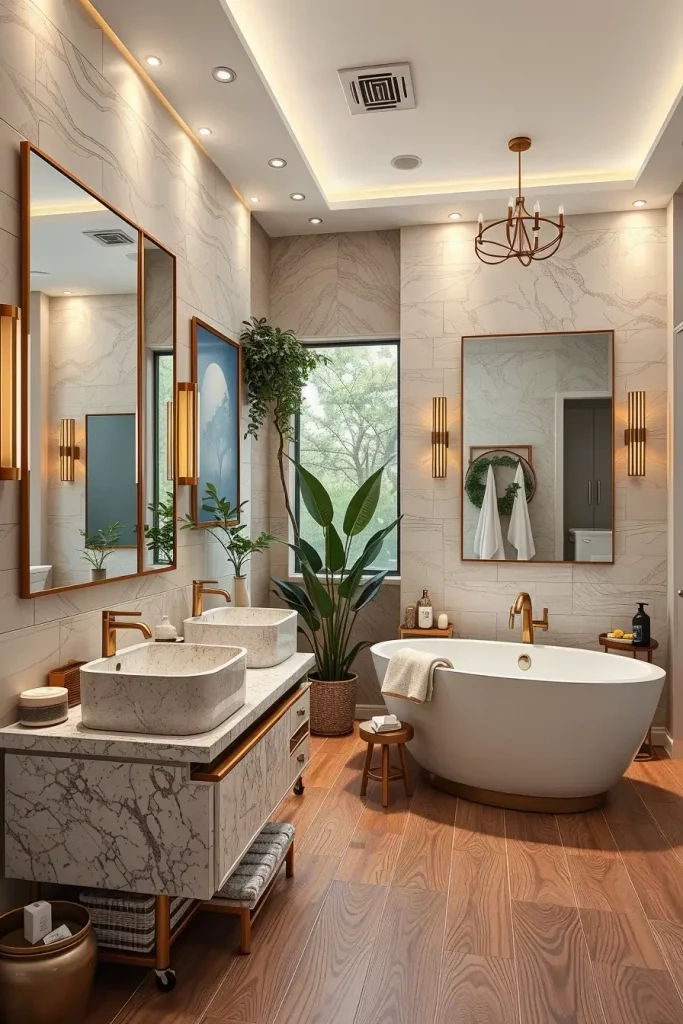
You walk into a showroom. You see two bathrooms. They both look clean. They both look expensive. But one feels like a museum piece from the 1950s, crisp and unchanging. The other feels like it was designed yesterday, maybe even tomorrow. Which one do you want to wake up in? It’s a question that trips up so many homeowners. We throw around words like "modern" and "contemporary" like they mean the same thing. They don’t. Not even close. And picking the wrong one can leave you feeling disconnected from your own space.
Think about your morning routine. Are you rushing? Do you need calm? Or do you want a splash of creativity to kickstart your day? The style of your bathroom isn’t just about tiles and taps. It’s about how the space makes you feel. In 2026, the lines are blurrier than ever, but the core differences remain. One is a specific historical period frozen in time. The other is a moving target, always chasing what’s new. Let’s dig into which one actually fits your life, not just your Pinterest board.
The Core Difference: Timeless Precision vs. Now Trending
Here is the thing that confuses everyone. Modern design is not the same as current design. Modern refers to a specific movement. Think mid-century. Think 1920s to 1970s. It’s about function. It’s about stripping away the unnecessary. If you choose a modern bathroom, you are choosing a look that has already been defined. It’s structured. It’s precise. It relies on natural materials like teak, stone, and leather. The colors are usually earthy or neutral. Whites, beiges, and warm woods dominate. It feels grounded.
Contemporary, on the other hand, is slippery. It means "of the moment." What is contemporary today might be dated in five years. In 2026, contemporary design is embracing bold curves, mixed metals, and experimental textures. It’s less about a strict rulebook and more about what feels fresh right now. While modern design says "less is more," contemporary design often says "less is boring." It allows for more personality. You might see a vibrant accent wall or a faucet that looks like a sculpture. It’s for people who view their bathroom as a place of inspiration, not just utility.
So, if you love consistency and history, modern is your friend. It won’t change. It’s a classic. But if you get bored easily and love seeing what’s new, contemporary offers that flexibility. It evolves. A modern bathroom from 1960 still looks modern today. A contemporary bathroom from 1960 looks… well, old. That’s the trade-off. One is an anchor. The other is a sail.
Materials and Textures: Warmth Against Innovation
When you touch the surfaces in a modern bathroom, you feel nature. Wood is huge here. Not fake wood. Real, sealed teak or walnut. Stone is another big player. Marble, slate, or granite with natural veining. The goal is to bring the outdoors in, but in a controlled way. You might see concrete floors, but they are polished smooth. The textures are tactile but understated. You don’t want your eyes to dart around. You want them to rest. It’s calming. It’s safe.
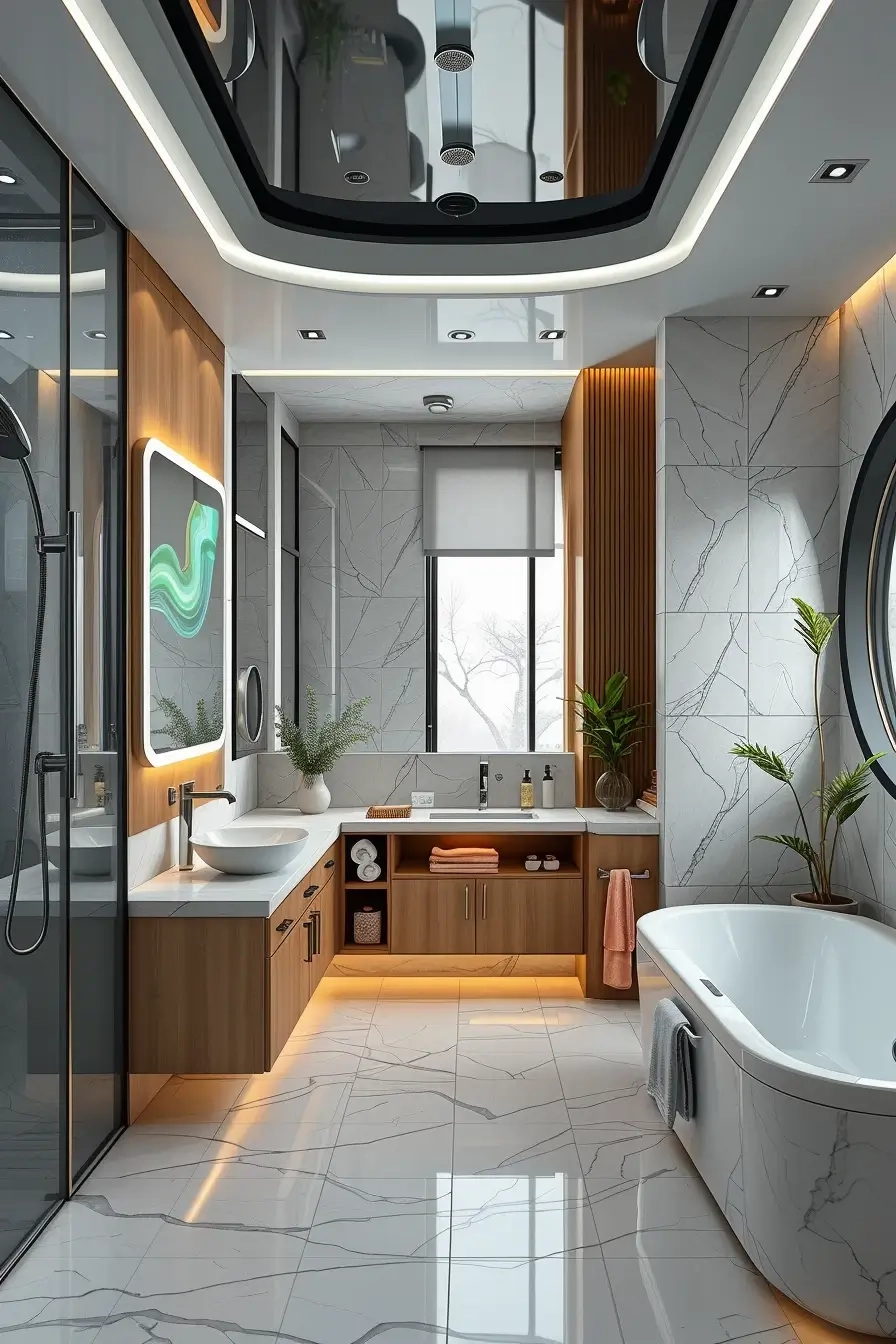
Contemporary spaces play with fire. They mix materials that don’t traditionally go together. Think glass paired with brushed gold. Or high-gloss lacquer next to rough-hewn stone. In 2026, we are seeing a lot of recycled composites and smart surfaces in contemporary designs. These materials react to light or change color. It’s tech-forward. The texture might be sleek and cold, or it might be surprisingly soft with integrated lighting. It’s about surprise. You might find a vanity made of a material you can’t quite identify. That’s the point. It sparks curiosity.
Let’s talk about maintenance too. Modern materials, being natural, often need care. Wood needs oiling. Stone needs sealing. It’s a ritual. Contemporary materials are often engineered for ease. They resist stains. They handle humidity better. If you hate cleaning, a contemporary setup with solid surface counters and large-format porcelain tiles might save your sanity. But if you enjoy the upkeep, the patina of natural modern materials adds character over time. It’s a lifestyle choice, really. Do you want a pet or a robot?
Color Palettes: Earth Tones Versus Bold Statements
Walk into a true modern bathroom, and you will likely see a palette inspired by the earth. Creams. Tans. Soft grays. Maybe a deep olive green or a burnt orange as a tiny accent. The colors are muted. They recede. They create a backdrop for living. This is intentional. The design wants you to focus on the form of the objects, not the color. It’s serene. It’s spa-like in a very organic way. You won’t find neon here. You won’t find high-contrast black and white unless it’s very subtle.
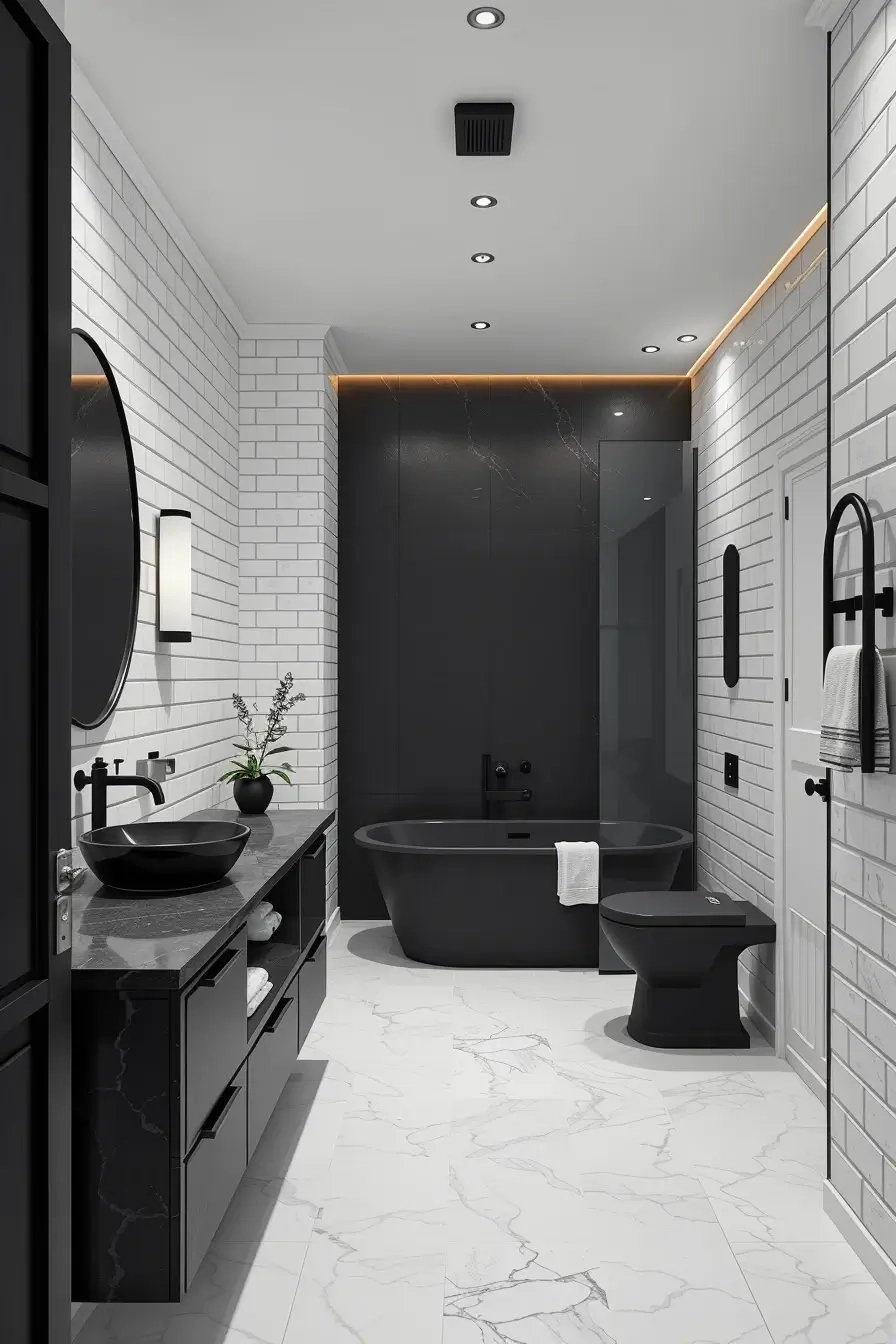
Contemporary design? It loves drama. Black is a major player in 2026 contemporary baths. Not just as an accent, but as a dominant force. Black walls. Black fixtures. Black sinks. Then, it contrasts this with stark white or metallic pops. But it doesn’t stop there. Contemporary styles are embracing jewel tones. Emerald green vanities. Sapphire blue tiles. It’s bold. It’s confident. It says, "Look at me." If you use your bathroom to get ready for a night out, this energy might fuel you. It’s fashionable. It’s Instagram-ready.
However, trends fade. That emerald green might feel tired in three years. The earth tones of modern design are forever. They don’t clash with changing towel colors or artwork. This is why some people stick to modern for the big stuff—tiles, tubs—and use contemporary touches for the small stuff—mirrors, lights. It’s a hybrid approach. But if you have to pick one lane, ask yourself: Do I want my bathroom to whisper or shout? Modern whispers. Contemporary shouts, but politely.
Fixtures and Forms: Geometry Meets Fluidity
Look at the shapes. Modern design loves straight lines. Rectangles. Squares. Clean angles. A modern bathtub is often a rectangular soaking tub. A modern vanity is a box floating on the wall. The faucets are geometric. Even the handles are linear. It’s architectural. It feels stable. There is a sense of order. Everything has its place. The symmetry is pleasing to the eye. It reduces visual noise. For someone with a chaotic job, this order can be therapeutic. It brings balance.
Contemporary forms are softer. They curve. They flow. In 2026, we are seeing oval freestanding tubs that look like river stones. Vanities with rounded edges. Faucets that arc like swan necks. The lines are not rigid. They are organic, but in a manufactured way. It’s fluid. It feels dynamic. A contemporary mirror might be an irregular shape, not a perfect circle or square. It breaks the grid. This lack of strict geometry makes the space feel more alive. Less static.
Functionally, both styles prioritize ease of use. But modern design hides the mechanics. The plumbing is concealed. The storage is seamless. Contemporary design might expose some elements as art. An exposed pipe painted copper. A visible drain that looks like a jewelry piece. It’s experimental. It challenges the idea that utility must be hidden. If you appreciate engineering as art, contemporary might appeal to you. If you prefer things to just work invisibly, modern is the way to go. It’s about whether you want to see the bones or just the skin.
Layout and Space: Open Minimalism vs. Curated Zones
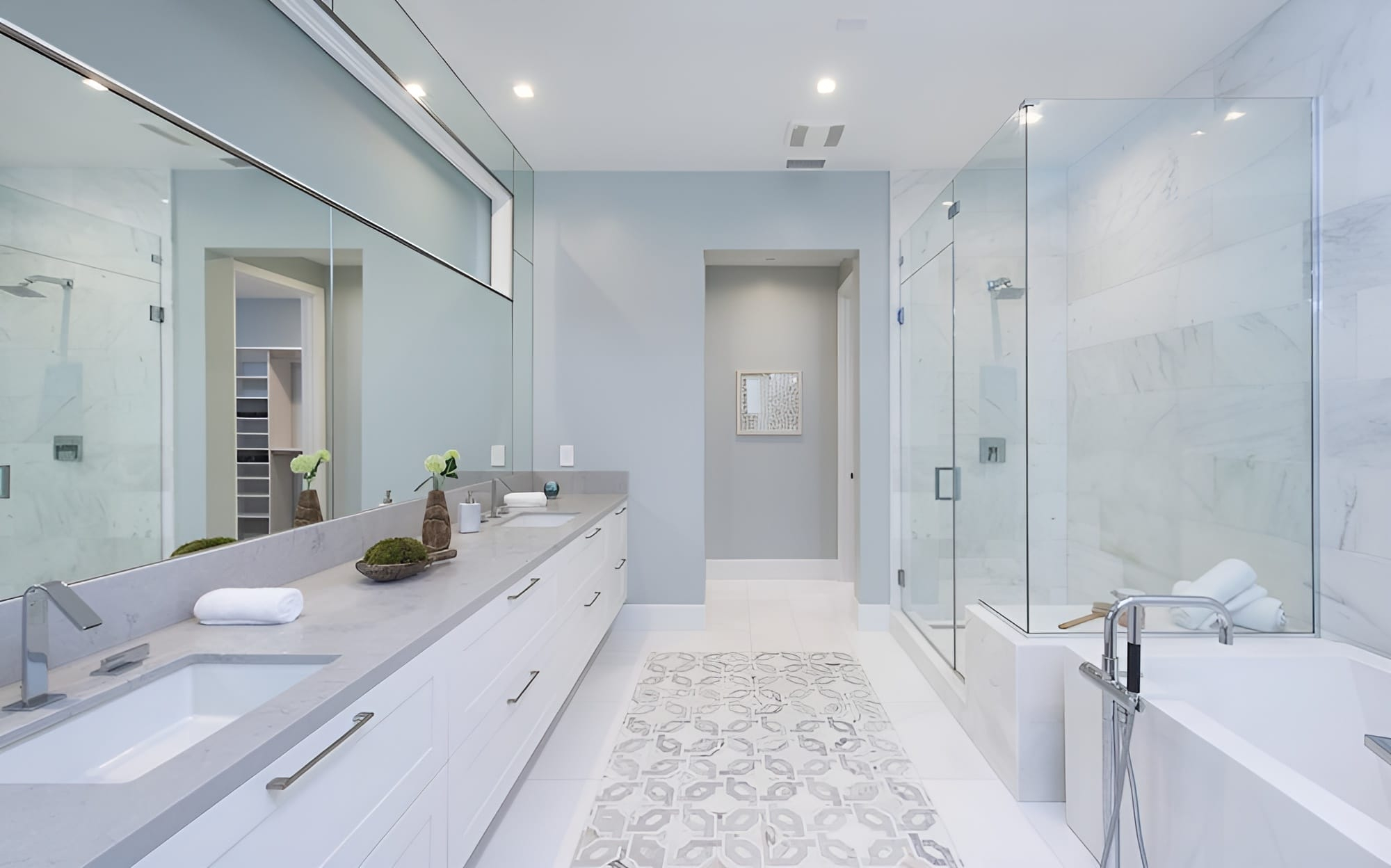
Modern bathrooms thrive on open space. They remove barriers. Glass shower walls are standard, but they are frameless and invisible. The goal is to make the room feel larger than it is. Clutter is the enemy. Storage is built-in and hidden. You won’t see bottles on the counter. Everything is tucked away. This creates a sense of airiness. It’s breathable. For small bathrooms, this is a lifesaver. It prevents the space from feeling cramped. It’s efficient.
Contemporary layouts are more about zones. They might use partial walls or changes in floor level to define areas. A bathing zone. A grooming zone. A relaxation zone. It’s less about total openness and more about curated experiences. Lighting plays a huge role here. Contemporary designs use light to carve out spaces. LED strips under vanities. Spotlights on art. It creates mood. It’s theatrical. The layout supports the drama of the design. It invites you to linger.
In 2026, sustainability is shaping both layouts. Modern designs use space efficiently to reduce material waste. Contemporary designs integrate smart tech that saves water and energy. But the feel is different. A modern layout feels like a sanctuary from the world. A contemporary layout feels like a stage for your life. One is a retreat. The other is a showcase. Think about how you use the room. Do you rush in and out? Or do you take long baths with candles? The layout should support that rhythm.
So, how do you decide? Don’t just look at pictures. Look at your life. Are you a minimalist? Do you hate clutter? Do you value tradition and craftsmanship? Go modern. It’s timeless. It holds its value. It appeals to a wide range of buyers if you sell. It’s safe. It’s elegant. It never goes out of style because it’s already a classic. It’s like a little black dress. You can wear it anywhere, anytime.
Are you a trendsetter? Do you love technology? Do you want your home to reflect the current cultural moment? Go contemporary. It’s exciting. It’s personal. It allows you to express your unique taste. It’s risky, yes. Trends change. But that’s part of the fun. You can update it easier. Swap a light fixture. Paint a wall. Change the hardware. It’s flexible. It’s like fast fashion, but for your home. Well, hopefully higher quality than fast fashion.
Consider your resale value too. In 2026, buyers are looking for move-in ready homes. Modern appeals to the broadest audience. It’s neutral. Contemporary can polarize. Some buyers might love your bold choices. Others might see them as a project. If you plan to stay for ten years, do what makes you happy. If you might move in three, lean towards modern. Or keep the contemporary elements removable. Mirrors, lights, and accessories are easy to swap. Tiles and tubs are not.
Ultimately, your bathroom is your private space. It’s where you start and end your day. It should feel like you. Whether that’s the quiet confidence of modern design or the vibrant energy of contemporary style, the right choice is the one that makes you sigh with relief when you walk in. Don’t overthink it. Trust your gut. Touch the materials. Imagine the light. And remember, there are no rules. Only preferences. So, which one is it going to be? The anchor or the sail?