The afternoon sun cuts through standard-issue white vinyl blinds, landing squarely on a swath of beige wall that feels less like a home and more like a holding cell. For millions of urban dwellers and apartment leaseholders, this scene is all too familiar. You slide your key into the lock of a newly rented box, step inside, and are greeted by the unmistakable acoustic echo of empty drywall and the visual monotony of builder-grade finishes. It is a space designed for no one in particular, which means it feels like home to no one at all.
Yet, step inside the apartment of someone who has mastered the art of the lease, and the narrative changes entirely. Their rooms do not betray the temporary nature of their occupancy. Instead, they hum with the quiet confidence of a curated sanctuary. Rich textiles soften the corners, ambient pools of light banish the harsh glare of overhead dome fixtures, and walls that legally cannot see a single nail hole nevertheless display gallery-worthy collections. This is not a matter of luck or a bottomless budget. It is the result of a deliberate design toolkit—a repertoire of non-destructive strategies honed by renters who refuse to live in neutral suspension while waiting for a mortgage.
The modern rental landscape has undergone a seismic shift. With homeownership rates fluctuating and urban mobility at an all-time high, renting is no longer viewed merely as a transient pitstop on the road to "real" life. It is the primary life stage for a vast demographic of creators, professionals, and families. Consequently, the psychology of renting has evolved. We no longer accept that temporary housing must look temporary. We demand spaces that offer psychological safety, sensory comfort, and a direct reflection of our identities. The challenge lies in navigating the restrictive architecture of lease agreements—where painting, drilling, and permanent alterations are financial landmines—while still achieving a deeply personal, soul-warming aesthetic.
The Psychological Architecture of Temporary Sanctuaries
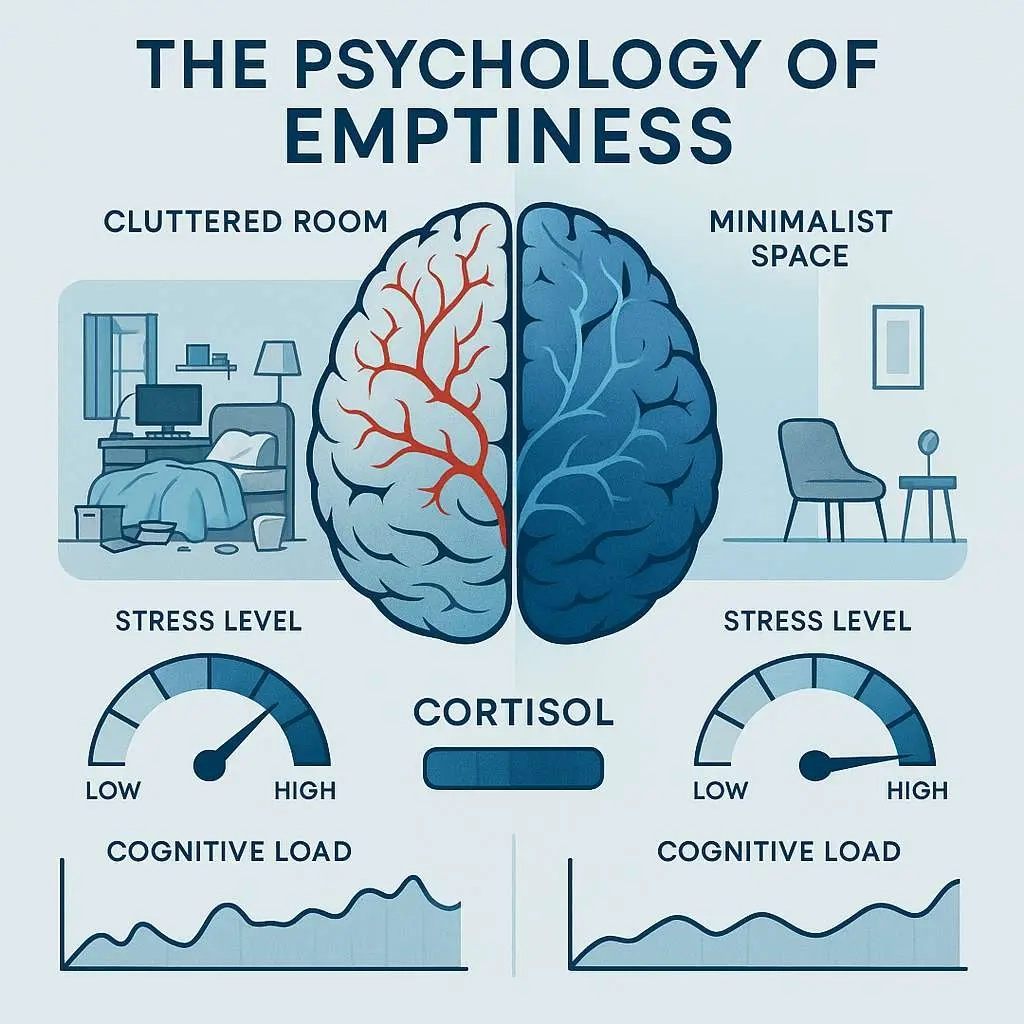
Transforming a plain room begins long before the first piece of furniture is positioned; it starts with an honest assessment of how physical space dictates mental well-being. A sterile room is psychologically draining. Clinical environmental psychology confirms that cold, unadorned surfaces—such as bright white walls, synthetic loop-pile carpets, and metal doorframes—trigger low-level vigilance, making it difficult for the human nervous system to fully downshift. When a room lacks visual landmarks, personal history, and tactile warmth, the brain registers the environment as unfamiliar and institutional. Experienced renters intuitively understand that countering this clinical chill requires introducing layers of sensory feedback that signal safety to the brain.
This psychological reclamation relies heavily on what design theorists call "softening the envelope." The envelope of a standard rental consists of hard planes: plasterboard walls, glass windows, laminate floors, and popcorn ceilings. To make the space livable, these hard surfaces must be visually and physically cushioned without violating the security deposit. Renters achieve this by targeting the vertical planes first. Introducing tall bookshelves, large-scale leaning mirrors, or tension-rod fabric panels breaks up the uninterrupted expanse of white paint. These elements act as psychological boundary markers, tricking the brain into perceiving a room as intentionally designed rather than accidentally vacant.
Furthermore, reclaiming a space demands an assertion of personal narrative. When you cannot paint the walls or rip up ugly flooring, you must draw the eye toward elements that you can control. This means curating focal points that command attention away from the room’s structural flaws. A vintage-style Turkish rug with faded reds and deep indigos can completely neutralize the visual offense of beige wall-to-wall carpeting. Similarly, replacing harsh, cool-toned daylight bulbs with warm 2200K to 2700K amber lighting instantly alters the emotional temperature of the room. By shifting the sensory inputs—how a room looks under warm light, how it sounds when textiles dampen the echo, and how it feels beneath bare feet—the temporary rental ceases to be a landlord’s property and becomes a deeply personal refuge.
Mastering the Science of Non-Destructive Surface Transformations
The primary technical hurdle for any renter is the wall. Landlords protect their assets with strict security deposit clauses, charging exorbitant fees for drywall patching and painting mishaps. However, the modern marketplace offers a suite of heavy-duty, engineered hanging and surface-treatment products that render the traditional hammer and nail obsolete. Experienced renters treat these products with the same precision that a master builder applies to structural framing. They know that hanging a heavy gallery wall without leaving a trace is entirely possible, provided one understands weight tolerances, shear stress, and surface preparation mechanics.
When mounting art or mirrors, standard adhesive strips often fail because renters underestimate the impact of humidity and temperature fluctuations on wall adhesives. The secret weapon of the seasoned renter is the heavy-duty hook paired with interlocking fasteners rated for twice the object’s actual weight. Cleaning the drywall surface with isopropyl alcohol to remove invisible construction dust before application ensures maximum chemical bonding. For items too heavy for adhesive strips—such as large timber shelves or oversized art—renters utilize micro-nail hanging systems. These leave holes no wider than a hypodermic needle, which can be effortlessly camouflaged with a dab of white toothpaste or spackle upon move-out, sparing the deposit entirely.
Beyond art, the surfaces themselves often require radical rehabilitation. Dated laminate countertops, scarred kitchen backsplashes, and institutional bathroom tiles are the bane of rental living. Here, high-grade vinyl contact papers and peel-and-stick tile membranes come into play. Unlike the cheap contact paper of the past, modern architectural films mimic the tactile grain of white oak, the honed texture of Carrara marble, or the artisanal irregularity of Moroccan zellige tile. Applied with a heat gun and a felt squeegee to eliminate air bubbles, these films completely rewrite the visual vocabulary of a kitchen or bathroom. They peel away cleanly months or years later, leaving the original, uninspiring surfaces completely unscathed.
A Field-Tested Blueprint for Layering a Plain Room
Achieving a warm, collected aesthetic in a blank-slate room requires a methodical sequence of additions. Throwing furniture into a room haphazardly only creates clutter; layering with intention creates a haven. Follow this sequential blueprint to build warmth from the ground up:
- Step 1 (Grounding the Floor): Anchor the empty room by laying down a foundational rug that is large enough for the primary furniture legs to rest upon it, using a non-slip rubber pad underneath to add plushness and prevent shifting.
- Step 2 (Bending the Light): Eliminate the central overhead "boob light" entirely by placing three distinct sources of warm ambient and task lighting at different heights around the room: a floor lamp, a table lamp, and a wall sconce.
- Step 3 (Softening the Vertical Planes): Hang curtains high and wide using heavy-duty spring tension rods or adhesive brackets, letting floor-length linen or velvet drapery pool slightly on the floor to visually expand the windows.
- Step 4 (Introducing Tactile Textures): Layer seating and bedding with varied textile weights—combining chunky wool knits, raw linen, worn leather, and woven cotton throws to break up synthetic room finishes.
- Step 5 (Curating the Personal Narrative): Populate tabletops and vertical display ledges with a mix of vintage ceramic vessels, books with their dust jackets removed, and framed personal photography that grounds the space in your unique history.
Navigating Advanced Design Hurdles and Renter Pitfalls
Even with the best intentions, renters frequently fall into traps that undermine their efforts to create a warm haven. One of the most common missteps is buying furniture scaled exclusively for the current boxy room. A sofa or dining table purchased for a compact apartment often looks stunted or awkward when moved, or conversely, overwhelms a small rental with visual mass. Experienced renters solve this by investing in modular pieces—such as nesting tables, sectional sofas with reversible Chaises, and low-profile seating—that can be reconfigured to fit the eccentric architectural layouts typical of rental stock.
Another frequent pitfall is relying on a single light source or choosing bulbs with an improper Kelvin rating. Renters often buy "Daylight" bulbs, thinking they make a room brighter, when in reality they cast an aggressive blue-white glow reminiscent of a corporate office or a hospital ward. The workaround is strict adherence to warm-dim technology and layered lighting. Every lamp in the room should utilize bulbs emitting between 2400K and 2700K, mimicking the golden hour sun or traditional incandescent firelight. Furthermore, utilizing smart plugs allows renters to automate their lighting levels, creating soft evening transitions that signal the brain it is time to unwind.
Scale and proportion represent the third major stumbling block. Renters often scatter dozens of tiny knick-knacks across every available surface, creating visual noise that makes a plain room feel chaotic rather than cozy. The practitioner’s workaround is the rule of grouping and negative space. Instead of ten small frames scattered randomly across a wall, group them into a cohesive, tight-knit gallery block with uniform spacing. Leave large swathes of wall space blank to let the eye rest. Embracing negative space is what separates a cluttered, temporary crash pad from a sophisticated, intentional interior.
The Economic and Environmental Logic of Portable Design
Investing time and money into a rental property can sometimes feel like a paradox. Why spend hundreds of dollars on custom window treatments or vintage rugs for a space you might vacate in twelve months? Seasoned renters view this calculus differently. They recognize that design is not a sunk cost tied to square footage; it is an investment in personal well-being that travels with you. When every piece of furniture, lighting fixture, and textile is chosen with portability in mind, your home becomes a modular kit of parts. Your favorite velvet curtains fit the windows of the next apartment; your statement floor lamp easily slides into the moving truck.
This modular approach carries profound environmental and financial benefits. Instead of buying cheap, flat-pack furniture destined for the landfill after a single lease term, experienced renters hunt for vintage, solid-wood case goods and durable, timeless textiles. These pieces hold their resale value and age gracefully through multiple relocations. By curating a "portable collection," renters sidestep the vicious cycle of disposable decorating. They build a cohesive design vocabulary over years, allowing their personal aesthetic to mature from one address to the next without starting from scratch every time a lease expires.
Moreover, the psychological return on investment is immeasurable. The modern world is characterized by volatility and uncertainty; job changes, lease renewals, and economic shifts mean our external circumstances are rarely static. Within this landscape, coming home to a space that feels deeply warm, protective, and unmistakably yours acts as a vital anchor. The effort poured into hanging that heavy art piece, sourcing that vintage rug, or rigging that battery-operated wall sconce pays dividends every single evening when you close the front door and leave the noise of the outside world behind.
Crafting a Timeless Sanctuary Within Lease Constraints
Creating a warm personal haven in a rental ultimately requires a shift in mindset. You stop viewing your apartment as a temporary imposition dictated by a landlord’s rules and start seeing it as a creative constraint—a design challenge that forces ingenuity. When you cannot rely on paint rollers or sledgehammers, you lean into the power of textiles, lighting, and spatial arrangement. You discover that a well-placed vintage kilim rug does more to transform a room than a fresh coat of builder-beige paint ever could. You learn that the warm amber glow of a thrifted brass desk lamp can completely obliterate the sterile glare of a popcorn ceiling.
This lifestyle fosters a refined sense of editing. Because space in rentals is often at a premium, every item that crosses the threshold must earn its keep. It must be useful, beautiful, or deeply sentimental. This selective curation prevents rooms from feeling overstuffed and ensures that every corner breathes. Over time, these thoughtful additions accumulate layers of memory. The fringe of the throw blanket where the cat sleeps, the slight patina on the brass candlestick holder, the collection of paperback spines lining a tension-rod bookshelf—all of these details weave together to tell a distinct story.
Ultimately, the transformation of a plain room is an act of self-respect. It is a declaration that your comfort, your aesthetic pleasure, and your peace of mind do not depend on holding a deed to the property. You do not need to wait for a mortgage to live beautifully. By mastering the non-destructive tools of the modern renter and approaching your space with patience and imagination, you can turn any box of white drywall into a rich, tactile sanctuary that welcomes you home every single day.
As you stand back to survey your newly transformed rental, notice the subtle shifts in the air. The harsh acoustic ping of the empty room has dissolved into the muted hush of wool rugs and heavy linen drapery. The clinical glare of overhead lighting has given way to warm pools of amber illumination that cast long, comforting shadows across the walls. Nothing here is permanent in the eyes of the landlord, yet everything feels entirely permanent in terms of comfort and personal identity.
The journey of turning a plain room into a personal haven is ongoing. As seasons shift, so too will your space—a heavy wool throw giving way to a lightweight cotton gauze in the summer; a cluster of dried botanicals swapping places with fresh spring branches. Lean into this fluidity. Let your rental evolve alongside you, serving as a reliable backdrop for the chapters of your life currently being written. With the right strategies in hand, your temporary address will always feel like a true, authentic home.