The hallway light is still buzzing, your laptop battery is flashing red at three percent, and the ambient temperature of your living room somehow feels both stuffy and freezing. You close the front door, drop your keys on the console, and feel an immediate, familiar weight settle across your shoulders. Your home is supposed to be the great equalizer, the final boundary line against a relentless outside world. Yet, when you look around, you do not see a refuge. You see a series of unfinished projects, mail piles, and micro-clutter conspiring against your nervous system.
We have all tried to fix this by purchasing a cartload of aesthetic storage bins or attempting a full-room overhaul over a single exhausted weekend. That approach inevitably crashes into a wall of fatigue. The truth of modern domestic life is that you cannot white-knuckle your way to peace through massive, exhausting room transformations. When square footage is at a premium and time is scarce, trying to redesign your entire home triggers decision paralysis rather than relief.
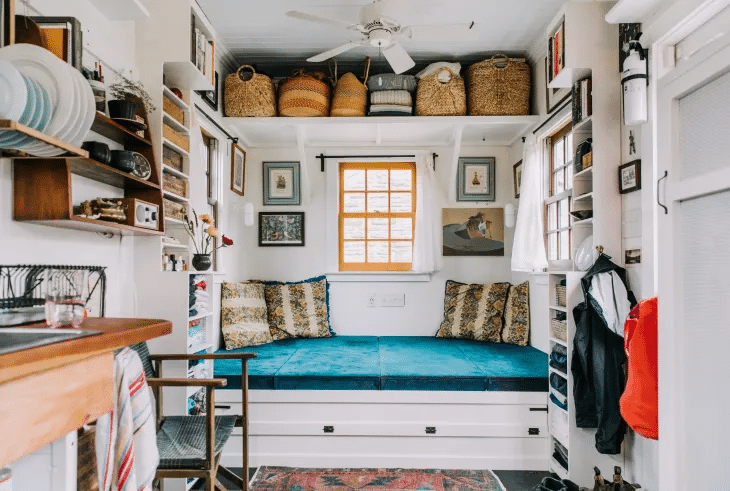
Enter the micro-sanctuary—the definitive home design movement shaping domestic spaces. Instead of fighting for a dedicated room you simply do not have, this approach scales the concept of a retreat down to its bare, restorative essentials. You do not need a sprawling master suite or a spare guest bedroom. You need a corner, a single shelf, an unclaimed windowsill, or the boundary of a reading chair where sensory chaos is deliberately filtered out.
Historically, humans have always carved out sacred niches within communal spaces. From the traditional Japanese tokonoma alcove to the quiet writing desks of mid-century creatives, the psychology of shelter relies on boundedness. Your brain does not measure safety by acreage; it measures safety by sensory predictability. When your eyes land on a surface that is clear, texturally warm, and free of demands, your amygdala stops firing stress signals. The heart rate slows. The breath deepens. Building this zone from scratch is not an exercise in interior styling; it is an exercise in biological de-escalation.
The Neurobiology of Small-Space Refuges and Environmental Calming
Physical environments directly dictate neurochemical output. When you inhabit a room cluttered with visual noise—open-ended task lists, stray charging cables, half-read manuscripts—your visual cortex works overtime to process every single item. This creates cognitive friction, a low-grade mental hum that keeps cortisol levels elevated long after the workday has ended. Designing a compact sanctuary acts as a hard reset for this cognitive loop by imposing strict spatial boundaries on visual stimulus.
Spatial confinement actually works to your advantage. Vast, open-plan rooms can feel exposed and psychologically ungrounded, whereas a well-defined micro-space wraps around you like a heavy blanket. Environmental psychologists refer to this as prospect-refuge theory: humans inherently thrive when they have a protected vantage point behind them and a clear, manageable view ahead. A small corner facing a wall with a warm lamp and a tactile surface provides the ultimate psychological refuge, eliminating the hyper-vigilance induced by wide-open or chaotic rooms.
Material choice plays an equally vital role in calming the nervous system. Synthetic finishes, high-gloss plastics, and harsh blue-spectrum lighting trigger alertness. Conversely, matte ceramics, unvarnished wood grains, raw linen, and 2700K ambient illumination signal to the brain that it is safe to downshift. When you build your sanctuary from scratch, every material must pass a single sensory test: does it soothe the fingertips and quiet the eyes, or does it demand attention?
Sizing your expectations is the first step toward reclaiming your sanity. If you attempt to fix an entire apartment at once, you invite overwhelm. By focusing strictly on a three-by-three-foot perimeter, you narrow your cognitive load to a manageable project scope. You are not renovating a house; you are curating a micro-climate of peace. This shift in scale transforms home design from a chore into a restorative ritual.
Mapping Your Domestic Landscape for the Ideal Micro-Refuge
Finding the right spot requires ruthless observation of your daily movement patterns. Walk through your home during its highest-traffic hours and note where you naturally gravitate when you feel overwhelmed. Is it the narrow patch of light beside the living room bookshelf? Is it the dead corner of the bedroom where an awkward armchair currently collects laundry? Or is it a sliver of the kitchen counter that receives morning sun?
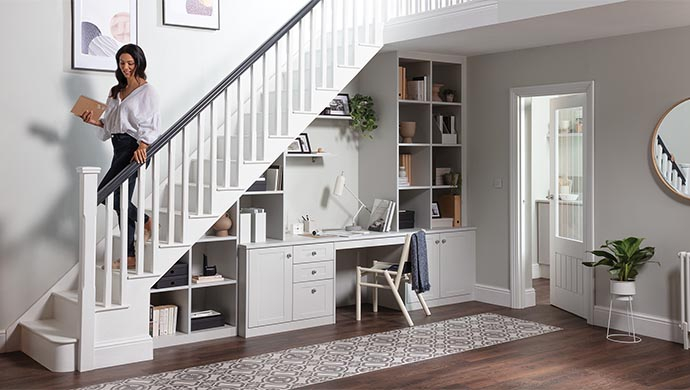
Do not force a sanctuary into a space just because it looks good on a floor plan. If a corner is a natural bottleneck for foot traffic, your nervous system will never truly relax there because you will constantly anticipate being interrupted or jostled. Look for "dead zones"—those neglected architectural leftovers behind doors, under stairwells, or beside structural pillars. These overlooked pockets often make the most intimate, cocoon-like retreats because they are fundamentally detached from active household pathways.
Lighting acts as the primary anchor for your zone. A spot bathed in harsh overhead ceiling fixtures is instantly disqualified. You want a micro-refuge that can be isolated from the general illumination of the house. Check for proximity to a wall outlet so you can place a low-wattage table lamp, or ensure natural daylight filters softly through a window without creating eye-straining glare.
Once you identify the location, establish a hard perimeter. Mark the boundaries with a physical anchor, such as a woven jute rug, a sheepskin throw draped over a seat, or even a simple change in wall color or texture. This invisible boundary tells everyone in your household—and more importantly, tells your own brain—that the space inside this perimeter operates under entirely different rules than the rest of the dwelling.
The Five-Step Blueprint for Constructing Your Sanctuary From Scratch
Building a functional, restorative micro-sanctuary without spiraling into overwhelm requires a linear, distraction-free methodology. Follow this sequence precisely to avoid the trap of buying unnecessary decor or over-complicating the layout.
- Step 1 (The Total Clear-Out): Strip the chosen zone down to absolute zero. Remove every single item, shelf ornament, and stray object currently occupying the space. Wipe down the baseboards and surfaces until you are left with a blank spatial slate.
- Step 2 (The Sensory Foundation): Establish your tactile and acoustic base before adding any furniture. Lay down a soft rug to dampen room sound and insulate your feet, and adjust the lighting by removing harsh bulbs in favor of a warm, dimmable source under 3000K.
- Step 3 (The Single Anchor Piece): Introduce one—and only one—primary piece of functional furniture. This could be a comfortable reading chair, a minimalist wooden floor cushion, or a wall-mounted floating desk. Ensure it fits the physical scale of the corner without crowding the walking path.
- Step 4 (The Curated Touch-Points): Add no more than three intentional objects to the space. These should engage multiple senses: a ceramic mug for warm tea, a journal with smooth paper stock, or a small, living houseplant like a pothos or snake plant that requires minimal care.
- Step 5 (The Boundary Ritual): Establish a firm behavioral rule for the zone. No screens, no work laptops, and no administrative mail are ever allowed inside the sanctuary perimeter. This turns the physical space into a conditioned psychological trigger for rest.
Avoiding Common Overwhelm Traps and Spatial Pitfalls
Even with the best intentions, home design projects frequently derail when old habits creep back in. Recognizing these common traps allows you to sidestep frustration and maintain your new refuge effortlessly.
- Pitfall 1 (Attempting a Whole-Room Makeover): Trying to transform an entire living room or bedroom at once guarantees burnout. The practitioner workaround is to strictly limit your project boundary to a single micro-corner, ignoring the rest of the room until the sanctuary is fully operational.
- Pitfall 2 (Over-Accessorizing with Knick-Knacks): Filling every shelf and surface with decor creates visual clutter disguised as "styling." The practitioner workaround is the strict one-in, one-out rule; if you add a new item to your sanctuary shelf, an existing item must be permanently removed.
- Pitfall 3 (Prioritizing Aesthetics Over Ergonomics): Buying a gorgeous mid-century chair that hurts your back after ten minutes defeats the entire purpose of a refuge. The practitioner workaround is to test-sit or test-use every element for comfort before committing it to your sacred zone.
- Pitfall 4 (Allowing Utility Creep): Slowly letting the sanctuary become a drop zone for laundry, phone chargers, and bills. The practitioner workaround is to institute a daily two-minute reset at the end of the evening, clearing out any foreign objects that drifted into the space during the day.
- Pitfall 5 (Ignoring Lighting Realities): Relying on natural light alone or keeping harsh overheads turned on. The practitioner workaround is to invest in a dedicated, warm-toned task lamp or floor lamp that operates independently of the room’s main lighting grid.
The Long-Term Resilience of Micro-Architecture
Designing a compact sanctuary is ultimately an act of reclaiming agency within your own four walls. In an era where domestic spaces are forced to double as offices, gyms, digital command centers, and entertainment hubs, the average home suffers from acute spatial schizophrenia. Rooms no longer have distinct identities; instead, they blur into multi-purpose zones that keep our nervous systems in a constant state of low-grade task-switching.
By intentionally carving out a dedicated micro-sanctuary, you push back against this functional erosion. You are declaring that not every square inch of your home needs to justify its existence through productivity. This spatial carving has profound long-term impacts on mental endurance. When you know there is a physical spot in your home that demands nothing from you, your baseline anxiety drops. You stop viewing your living space as a never-ending list of chores and start viewing it as a reliable container for your well-being.
Moreover, this approach is exceptionally resilient against economic and lifestyle shifts. Because a micro-sanctuary requires minimal square footage and practically zero structural renovation, it moves with you. Whether you relocate to a smaller apartment, transition to a shared living arrangement, or reconfigure a family home, the core formula remains identical: clear a corner, soften the light, anchor the senses, and protect the boundary.
This scalability makes the micro-sanctuary a masterclass in sustainable interior design. You are not buying into seasonal micro-trends or flat-pack furniture fads that end up in landfills two years later. You are investing in a personal ritual space built from enduring materials and mindful habits, ensuring your home remains a true refuge for decades to come.
Core Takeaways for Building Your At-Home Refuge
Transforming your relationship with your living space does not require an interior design degree, a massive budget, or a complete weekend demolition derby. True domestic peace is found in the margins, the corners, and the intentional curation of small environments.
- Embrace Micro-Scale Design: Stop waiting for a larger home or a spare room; focus entirely on carving out a three-by-three-foot micro-zone that acts as an emotional buffer against daily chaos.
- Prioritize Sensory Calming: Replace harsh overhead glare with warm, low-wattage lamps and surround yourself with tactile, natural materials like wood, linen, and unglazed ceramics that soothe the nervous system.
- Enforce Absolute Boundaries: Protect your sanctuary from digital creep, work laptops, and household clutter by instituting strict rules about what is allowed inside your perimeter.
- Maintain Through Daily Rituals: Keep your refuge pristine by practicing a two-minute evening reset, ensuring that your space remains a ready haven whenever you need to decompress.
The next time you turn your key in the lock and feel that familiar wave of evening tension wash over you, remember that peace is not a distant luxury reserved for weekend getaways or expensive spa retreats. It is waiting for you in the neglected corner of your bedroom, beside the bookshelf in the hallway, or in that quiet slice of morning light by the window.
You do not need to fix your entire life, remodel your kitchen, or declutter your whole house to find calm. You only need to claim a tiny patch of ground, strip away the noise, and give your nervous system permission to finally exhale. Step away from the overwhelming urge to renovate the world, and start with just one corner. Your sanctuary is already there, waiting for you to notice it.