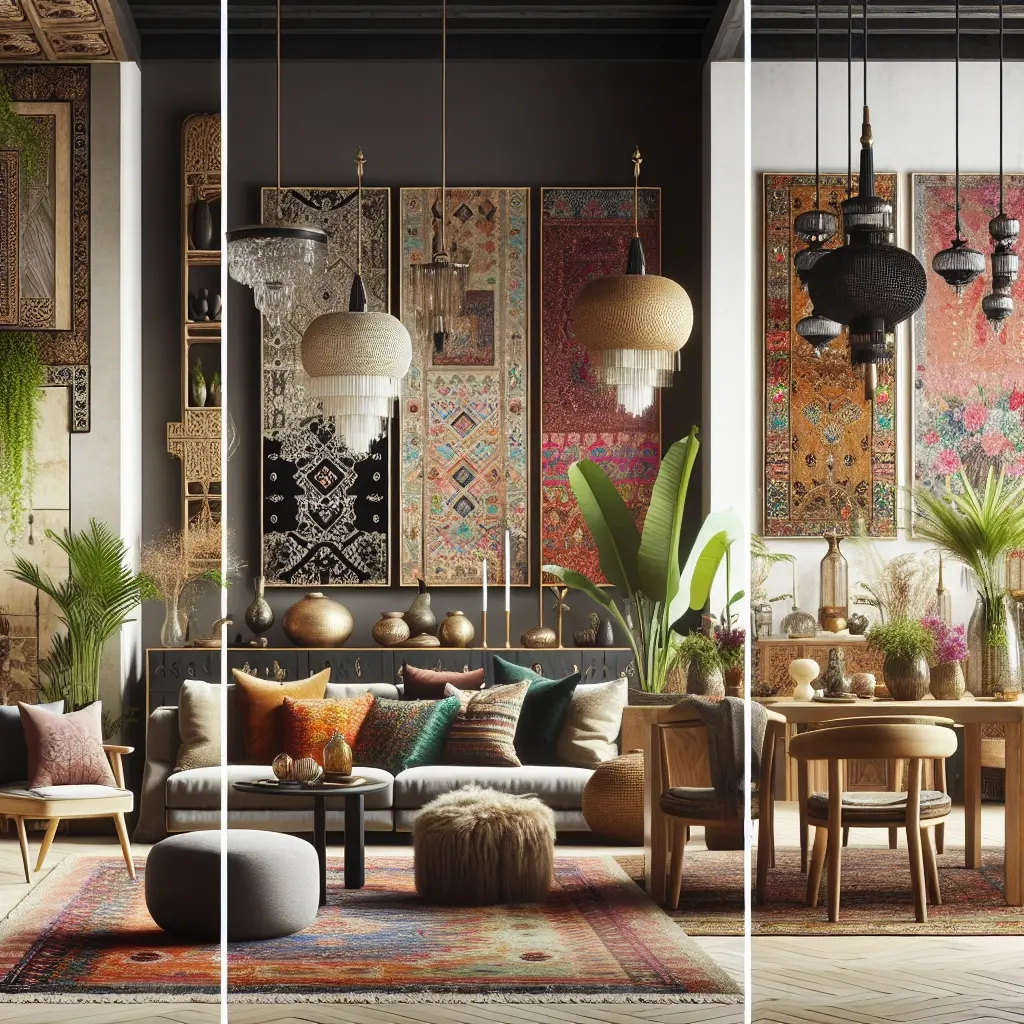
The afternoon sun cuts through a row of sheer linen curtains, casting long, fractured shadows across a thick, hand-knotted jute rug. In the corner, a massive fiddle-leaf fig unfurls a glossy green paddle, its base nestled inside a weathered terracotta pot that bears the calcium rings of a hundred past waterings. This is not the sterile, clinical perfection of a furniture catalog. This room breathes. It smells faintly of damp potting soil, sun-warmed cedar, and aged wool.
Achieving this specific brand of effortless warmth requires an understanding of physical tension. A truly lived-in boho living room is built on a delicate friction between hard and soft, rough and smooth, rigid structure and chaotic, organic growth. Most people fail at this style because they treat decor as a shopping list rather than an evolving ecosystem. They buy a trendy rattan chair, toss a macrame wall hanging over the sofa, and drop a snake plant in the corner, wondering why the room still feels flat, sterile, and cold.
The bohemian design philosophy traces its lineage back to nineteenth-century French artists, wandering Romani travelers, and later, the counterculture movements of the 1960s and 70s. It was always meant to be an accumulation of life—souvenirs, textiles, plants, and books gathered over decades. In 2026, the modern iteration of boho design has evolved past cheap synthetic polyester tapestries and mass-produced flatpack wicker. Today’s practitioners focus on genuine tactility, biophilic design principles, and raw, artisanal materials that age gracefully over time. If your space doesn’t look like someone actually lives, reads, naps, and tends to living things within its walls, you haven’t hit the mark yet.
The Anatomy of Tactile Accumulation in Bohemian Spaces
Textiles form the literal and figurative foundation of any serious bohemian interior. If boho had a structural skeleton, it would be woven entirely from natural fibers like hemp, jute, unbleached cotton, raw wool, and distressed leather. When you walk into a room, your eyes register color first, but your nervous system immediately responds to texture. A room lacking texture triggers subconscious sensory deprivation, which is why minimalist white boxes often feel jarring to inhabit long-term.
To build a genuinely rich tactile environment, you must layer from the floor up. Begin with a heavy, grounding floor covering—preferably a flat-weave jute or sisal rug that provides rough friction underfoot. Overlap this with a vintage or distressed wool rug, perhaps a faded Turkish or Moroccan kilim, tilted at a slight angle to break up rigid room geometry. This intentional imperfection tells the brain that the space is organic, used, and welcoming. Furniture upholstery should follow the same rule of contrast. Pair a smooth, distressed caramel leather sofa with heavily textured bouclé armchairs, hand-loomed lumbar pillows, and a chunky knit throw blanket draped lazily over the arm.
Walls and vertical planes demand the same dimensional layering. Skip flat framed posters behind heavy glass unless they are vintage botanical prints. Instead, introduce macro-scale woven wall hangings, antique Suzani textiles pinned directly to drywall, or woven seagrass baskets mounted in asymmetric clusters. Every surface should invite the human hand to touch it. When your materials are genuinely tactile, light behaves differently in the room, catching the raised loops of a Berber pillow and casting soft, intricate shadows across a raw plaster wall.
Biophilic Integration and the Botanical Layer
Plants are not mere accessories in a bohemian living room; they are living architectural elements that dictate the verticality, rhythm, and breath of the space. The biggest mistake amateur decorators make is treating plants like picture frames—placing one in each corner and calling it a day. A true boho jungle requires vertical stratification, utilizing high anchor points, mid-level furniture surfaces, and floor-level groupings to mimic the understory of a tropical forest.
Start with your canopy layer. Suspended macrame plant hangers or forged iron hooks holding trailing varieties like Epipremnum aureum (pothos), Philodendron hederaceum, or Senecio rowleyanus (string of pearls) draw the eye upward and soften harsh ceiling lines. These hanging specimens should cascade down windowsills or float above reading chairs, creating intimate pockets of green privacy. For the mid-tier layer, utilize vintage wooden plant stands, stacked rustic crates, and open rattan shelving units to host mid-sized specimens like monsteras, rubber plants (Ficus elastica), and prayer plants (Maranta leuconeura).
At the floor level, anchor heavy focal points using oversized terracotta urns, ceramic vessels with reactive glazes, or woven seagrass baskets. Pair tall, architectural plants like the Sansevieria trifasciata (snake plant) or a soaring Strelitzia nicolai (bird of paradise) with sprawling, bushy understory plants. This contrast in leaf shape—combining the broad, split leaves of a monstera with the needle-like fronds of a parlor palm—adds immense visual depth. Crucially, allow your plants to look slightly untamed. Let vines wander across a bookshelf, permit a dried frond to remain on a fern, and embrace the natural leaning tendencies of sun-seeking stems.
The 3D Layering Blueprint for Furniture and Foliage
Successfully merging furniture, textiles, and plants without descending into visual chaos requires a disciplined spatial methodology. You cannot simply throw everything into a room and hope it works out. Professional designers rely on a three-zone vertical layering technique to distribute weight evenly across the eye line.
- Step 1 (Grounding the Base): Lay down your large foundational textiles and anchor furniture pieces. Position your heavy, oversized planters directly on the floor or on low rolling plant caddies, clustering them in odd numbers (usually threes) near light sources to create natural visual anchors.
- Step 2 (Mid-Level Interlock): Intersperse medium-sized decor and potted plants across table surfaces, media consoles, and open shelving. Nestle small trailing plants on top of stackable books or beside ceramic vessels so that foliage physically touches and overlaps hard wooden or metal edges.
- Step 3 (Vertical Suspension): Install ceiling hooks or wall brackets to introduce hanging baskets and mounted wall planters. Ensure these vertical elements hang at varying heights to prevent a static, grid-like appearance across the room.
- Step 4 (Textile Interplay): Layer soft goods diagonally across furniture frames. Drape a heavyweight blanket across the back of the sofa, toss two contrasting patterned pillows in front of a solid bolster, and let a floor cushion sit casually against the coffee table leg.
- Step 5 (Editing and Breathability): Step back five feet and assess the density. Remove one or two small, competing knick-knacks to give your eye a resting place, ensuring the room feels abundant and lived-in rather than claustrophobic or cluttered.
Common Pitfalls and Field-Tested Workarounds
Even the most enthusiastic decorators stumble into predictable traps when attempting the layered boho aesthetic. Recognizing these traps before you drill holes or buy impulse decor items will save you time, money, and visual fatigue.
- Pitfall 1 (The Catalog Match Trap): Buying an entire matched set of boho furniture and decor from a single big-box retailer makes your living room look like a generic hotel lobby. Workaround: Force a rule where at least 60% of your room must consist of vintage, thrifted, or hand-crafted items acquired over time from estate sales, flea markets, or travels.
- Pitfall 2 (Visual Clutter and Noise): Throwing every pattern, color, and texture you own into a single space creates sensory overload rather than cozy warmth. Workaround: Establish a single cohesive color anchor—such as terracotta, olive green, or warm ochre—and repeat that specific hue across different materials like pottery, rug threads, and throw pillow fabrics.
- Pitfall 3 (Ignoring Plant Lighting Realities): Buying high-light tropical plants like fiddle-leaf figs and placing them in a dark North-facing corner, leading to rapid leaf drop and plant death. Workaround: Match your plant species to your exact window exposure, or install full-spectrum LED grow bulbs disguised in chic brass pendant fixtures above dark corners.
- Pitfall 4 (The Floating Rug Syndrome): Using a rug that is too small for the seating area, making the room feel disjointed and choppy. Workaround: Ensure all primary furniture legs (or at least the front legs of your sofa and armchairs) sit comfortably on top of your largest foundational rug layer.
- Pitfall 5 (Sterile Planter Monotony): Planting everything in identical nursery plastic pots or matching white ceramic containers, which ruins the organic, collected boho vibe. Workaround: Mix up your vessels by sourcing aged terracotta, distressed metal buckets, woven baskets lined with plastic saucers, and handmade ceramic pots with unique imperfections.
The Long-Term Ecology of a Living, Breathing Room
A boho living room is never truly finished; it is an organic, breathing organism that shifts across seasons and years. This dynamic nature is precisely what separates it from rigid minimalist or industrial aesthetics. As your plants grow, shed, and propagate, the geometry of your living space subtly alters. A pothos vine that barely cleared the top shelf two years ago now cascades down to graze the floor, demanding a shift in your furniture layout or the addition of a new hanging trellis.
This impermanence teaches a healthier relationship with our domestic spaces. We stop viewing scuffs on a reclaimed wood coffee table as damage and start seeing them as patina. We accept that terracotta pots will develop white mineral blooms and that wool rugs will occasionally shed fibers. By prioritizing natural, biodegradable materials like jute, clay, cotton, and living flora, your living room possesses a low environmental impact paired with high emotional resonance. It becomes a personal museum of your life, capturing memories through the objects you have curated and the living things you have successfully kept alive.
Furthermore, integrating abundant plant life fundamentally alters the indoor microclimate. Houseplants actively transpire moisture and filter volatile organic compounds (VOCs) from synthetic building materials, carpets, and paints. Your boho living room doesn’t just look warm and inviting—it physically feels better to inhabit. The air is fresher, the acoustics are softened by layers of fabric and foliage, and the psychological comfort of biophilic design lowers baseline stress levels the moment you step across the threshold.
Practical Frameworks for Sustaining Your Sanctuary
To maintain the delicate balance of a heavily layered boho space without letting it slip into disarray, adopt a seasonal rhythm of curation and plant care. Treat your living room like a living garden that requires regular pruning, dusting, and rebalancing.
Dedicate one afternoon every change of season to audit your space. Rotate your potted plants a quarter turn to ensure even light distribution and prevent asymmetrical growth. Shake out your layered rugs outdoors, launder your cushion covers, and clear dust from delicate macrame knots and woven wall hangings using a soft-bristled brush or a handheld vacuum on low suction.
Embrace the Japanese philosophy of wabi-sabi—finding beauty in imperfection, asymmetry, and impermanence. If a ceramic pot chips, repair it with gold kintsugi or leave it raw. If a favorite houseplant drops a few lower leaves, propagate the stem cuttings in a glass jar on your windowsill and re-plant them back into the mother pot to create a fuller, bushier base. By actively participating in the maintenance of your space, you cement the feeling that the room is deeply, authentically lived-in.
Creating a genuinely lived-in boho living room is an act of patience, curation, and deep personal expression. It asks you to resist the urge for instant perfection and instead embrace the messy, beautiful process of accumulating texture, color, and life over time. When you combine the tactile warmth of raw, natural fibers with the untamed energy of thriving indoor greenery, your home transforms from a mere shelter into a restorative sanctuary.
Take a hard look at your living space today. Where is it too flat? Where is it too sterile? Choose one corner to start your transformation. Hang a trailing vine, layer a vintage rug over your flooring, and bring in a weathered clay pot. Allow your home to grow, breathe, and evolve right along with you.