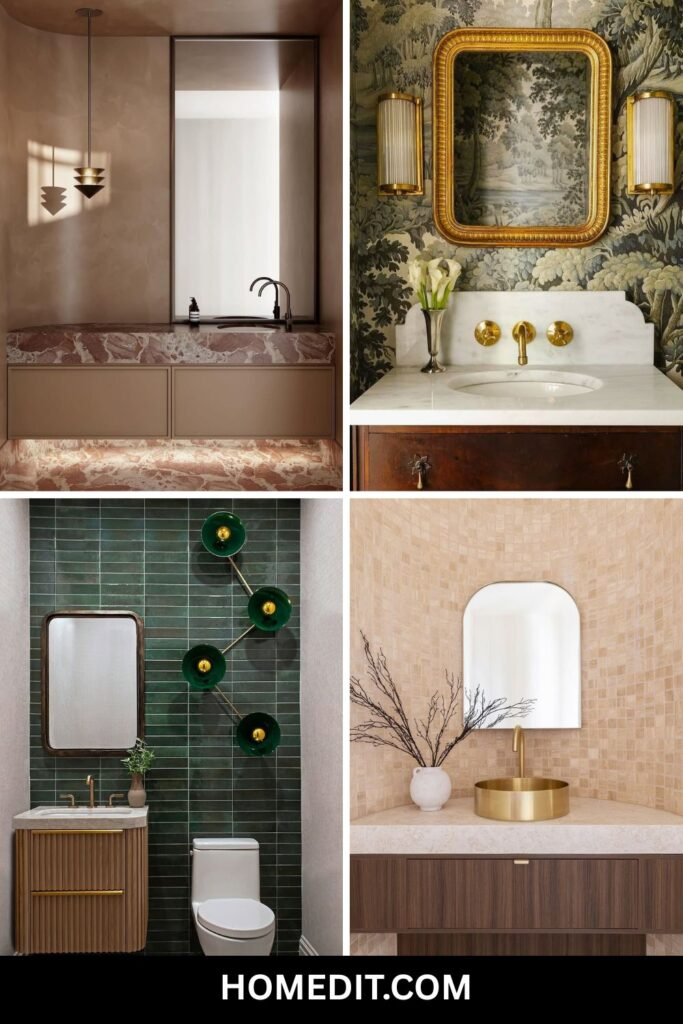
You know that feeling when you step into a bathroom and immediately feel like the walls are closing in? It’s not just in your head. Small spaces have a way of amplifying every cluttered corner and dark shadow. But here is the good news. You don’t need to knock down walls or move plumbing to fix it. In fact, the secret to unlocking a sense of spaciousness often lies in something as simple as the tiles on your floor and walls.
It sounds almost too easy, right? Just change the tile? But in 2026, tile technology and design trends have evolved in ways that genuinely trick the eye. We aren’t just talking about picking a light color. We are talking about strategic patterns, grout matching, and large-format slabs that dissolve boundaries. I’ve seen people transform cramped powder rooms into airy retreats simply by swapping out busy, small-scale mosaics for sleek, continuous surfaces. It’s about working with light and line, not against them.
Let’s be honest. Most of us are stuck with the bathroom footprint we were given. Maybe it’s a vintage apartment with a shoebox-sized bath, or a modern condo where every inch counts. Trying to make these spaces feel bigger used to mean white paint and hoping for the best. Today, it means being smart about material choices. The right tile can reflect light, blur corners, and lead the eye outward. That is how you get that elusive thirty percent boost in perceived space. And the best part? It doesn’t require a contractor’s budget. Just a little bit of knowledge and a clear vision.
The Magic of Large-Format Tiles
When we talk about making a space look bigger, continuity is king. Small tiles mean lots of grout lines. And grout lines, no matter how thin, create visual noise. They chop up the surface of your floor and walls into a grid. Your eye stops at every line, which makes the room feel busy and confined. This is why large-format tiles have become the go-to solution for tiny bathrooms in 2026. Think twelve-by-twenty-four inches, or even larger porcelain slabs that run from floor to ceiling.
By using fewer tiles, you reduce the number of interruptions in the visual field. The eye travels smoothly across the surface without hitting a speed bump. It creates a seamless look that mimics the effect of a single, solid surface. If you can manage it, using the same large-format tile on both the floor and the walls takes this effect to the next level. It blurs the boundary between where the floor ends and the wall begins. Suddenly, the room feels less like a box and more like a continuous volume.
But there is a practical side to this too. Large tiles are easier to clean because there is less grout to scrub. In a small bathroom, where moisture builds up quickly, this is a huge win. Just remember that installing large formats requires a very flat subfloor. If your floor is uneven, the tiles might lip or crack. So, while the visual payoff is high, make sure your installer knows what they are doing. It’s an investment in precision that pays off in the illusion of space.
Grout Color Matching Secrets
Here is a detail that most people overlook until it’s too late. Grout color matters. A lot. If you choose a bright white tile and pair it with dark gray grout, you are essentially drawing a grid over your entire bathroom. That contrast highlights the individual tiles and shrinks the space. It’s a bold look, sure, but it’s not the right look if your goal is expansion. To make a tiny bathroom feel thirty percent larger, you want the grout to disappear.
The trick is to match the grout color as closely as possible to the tile color. If you have a soft beige stone-look tile, pick a beige grout. If you have a cool gray porcelain, go with a matching gray. When the grout blends in, the seams vanish. The surface looks like one uninterrupted sheet of material. This monolithic effect is incredibly powerful in small spaces. It reduces visual clutter and allows the eye to rest.
In 2026, epoxy grouts have made this easier than ever. They come in a wider range of colors and are more resistant to staining and mildew. This means you can keep that seamless look clean for years. Don’t be afraid to ask your supplier for samples. Hold the grout swatch next to the tile in the actual lighting of your bathroom. Lighting changes everything. What looks like a match in the store might look totally different under your vanity lights. Take the time to get it right. It’s the difference between a chopped-up floor and a flowing expanse.
Vertical Lines and Height Illusions
Most small bathrooms suffer from low ceilings or just a general lack of vertical presence. We tend to focus on the floor plan, but looking up is just as important. You can manipulate the perceived height of your room by using vertical tile layouts. One of the most effective trends this year is stacking rectangular tiles vertically, often called a vertical stack bond or a vertical subway layout.
When you lay tiles vertically, you draw the eye upward. This creates an illusion of higher ceilings. And when ceilings feel higher, the whole room feels airier. It’s a simple geometric trick. Horizontal lines widen a space, but vertical lines lift it. In a narrow powder room, this can be a game changer. Try using long, skinny tiles—like three-by-twelve inches or even longer planks—and install them straight up from floor to ceiling.
You don’t have to do every wall. Sometimes, just one accent wall behind the vanity or in the shower niche is enough to create the effect. Pair this with a light color, and you amplify the sense of openness. Another option is using fluted or textured tiles with vertical grooves. These catch the light in a way that emphasizes height. Just be careful not to overdo it. If every surface is shouting for attention, the effect gets lost. Pick one focal point to carry the vertical theme, and let the other surfaces remain calm and neutral.
Light Reflection and Glossy Finishes
Light is the best friend of a small space. The more light you can bounce around, the larger the room will feel. This is where tile finish plays a critical role. Matte tiles are trendy and sophisticated, but they absorb light. Glossy or semi-gloss tiles reflect it. In a tiny bathroom with limited natural light, a glossy finish can act like a mirror, doubling the visual impact of every light fixture and window.
Think about using high-gloss ceramic or porcelain on the walls. The reflection creates depth. It makes the walls feel like they are further away than they actually are. This is especially effective in shower areas. A glossy white or pale blue tile in the shower stall can make that enclosed space feel open and bright. Just be mindful of safety on the floor. Glossy floor tiles can be slippery when wet. For the floor, stick to a matte or textured finish for traction, but keep the walls shiny.
There is also a middle ground. Satin or lappato finishes offer a soft sheen without the high glare of a full gloss. They reflect enough light to help with the spaciousness factor but are subtler. In 2026, manufacturers are also producing tiles with microscopic textures that diffuse light evenly, reducing harsh shadows. Shadows make corners feel deep and cramped. By keeping the light distribution even, you flatten those dark corners and open up the room. It’s all about managing how light interacts with your surfaces.
Strategic Color Palettes for Depth
Color psychology is real, and it applies heavily to interior design. Cool tones recede, while warm tones advance. This means that blues, greens, and soft grays tend to push walls away visually, making a room feel larger. Warm colors like reds, oranges, and heavy browns can make a small space feel cozy, but also claustrophobic. If your goal is to add thirty percent to your perceived square footage, lean into the cool end of the spectrum.
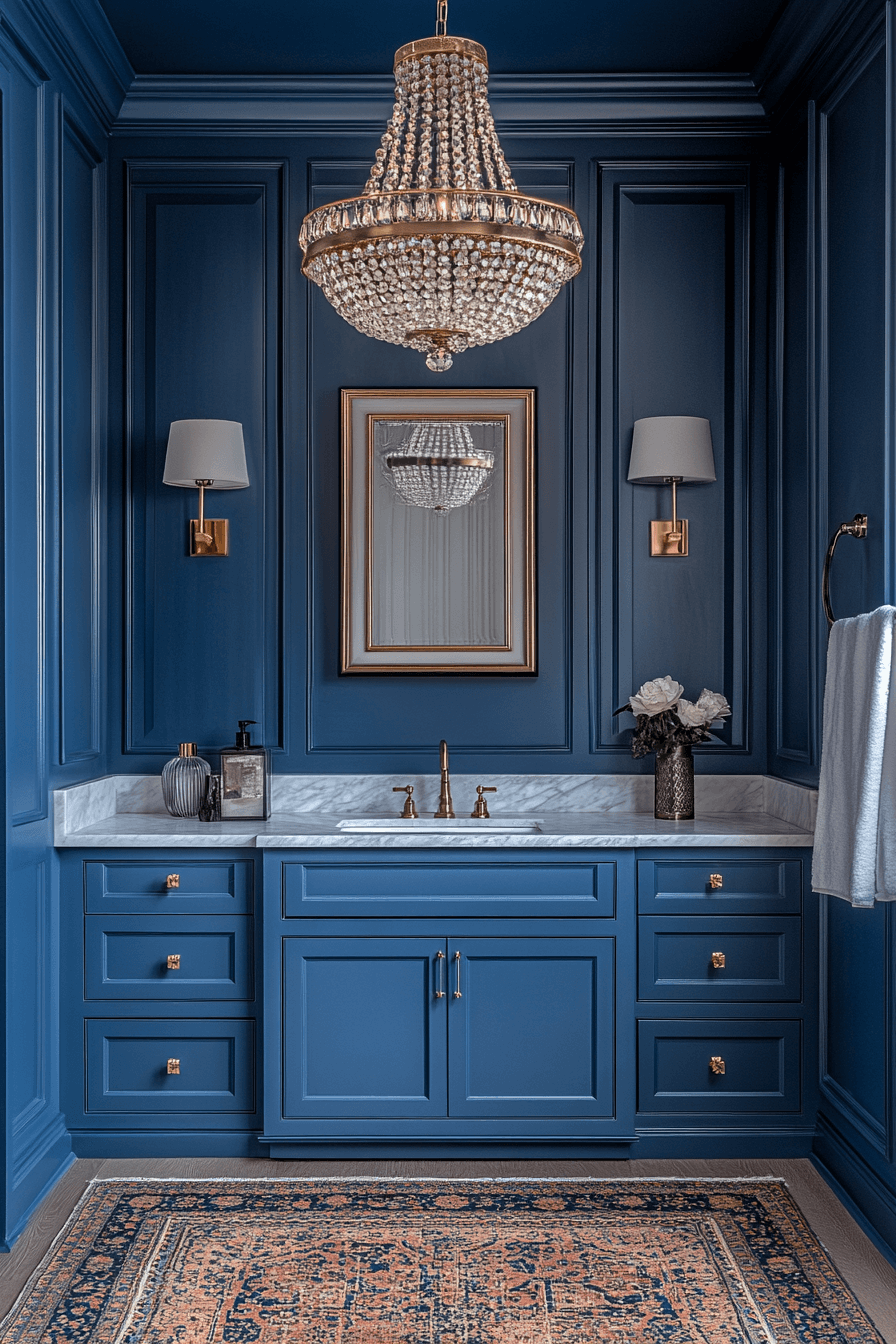
But this doesn’t mean you are stuck with sterile white. White is safe, but it can feel clinical. In 2026, we are seeing a rise in "greige" (gray-beige) tones and soft, misty blues. These colors have enough warmth to feel inviting but enough coolness to keep the space feeling open. Another powerful strategy is monochromatic layering. Use different shades of the same color family. For example, a pale blue floor with slightly darker blue walls. The subtle variation adds interest without breaking the visual continuity.
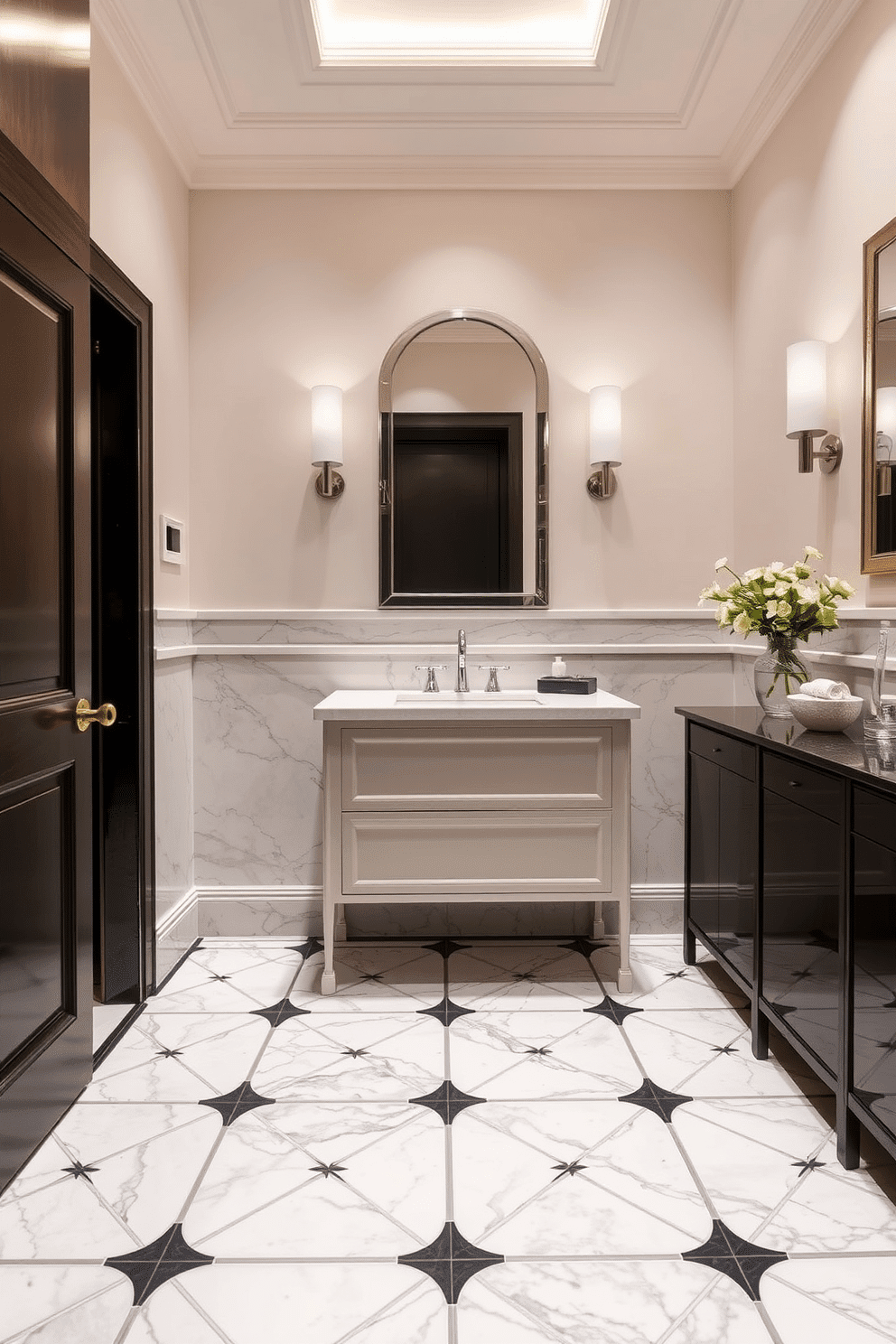
Avoid high-contrast patterns. Busy floral prints or bold geometric shapes break up the space and make it feel smaller. If you love pattern, keep it minimal. A subtle marble veining or a faint concrete texture works well because it adds depth without chaos. The key is to keep the eye moving smoothly. High contrast stops the eye. Low contrast lets it flow. And when the eye flows, the space feels expansive. Test your colors in the actual space. Paint a sample board or hold up tile samples at different times of day. Natural light and artificial light will change how the color reads.
The final piece of the puzzle is flow. A small bathroom feels biggest when it doesn’t feel segmented. Avoid using different tiles for the floor and the shower floor if you can help it. Instead, use the same tile throughout. If you need a slope for drainage in the shower, use a linear drain that allows the tile to run continuously into the wet area. This eliminates the visual break of a traditional shower curb or a different mosaic pan.
Speaking of curbs, consider a curbless shower design. Even if you can’t do a fully zero-entry shower due to plumbing constraints, lowering the threshold helps. It connects the shower space to the rest of the bathroom floor. This physical connection translates to a visual connection. The eye sees one continuous plane. This is a major trend in 2026 renovations for small spaces. It’s not just about accessibility; it’s about spatial perception.
Also, think about the transition from the bathroom to the hallway. If possible, continue the same flooring material out into the adjacent space. This borrows square footage from the hallway visually. Even if you can’t do the exact same tile, using a similar color and tone helps. The goal is to avoid hard stops. Every time the eye hits a boundary, the space feels contained. By softening those boundaries with continuous materials and colors, you expand the perceived limits of the room. It’s a holistic approach. You aren’t just tiling a bathroom; you are curating an experience of space.
So, there you have it. Making a tiny bathroom feel thirty percent larger isn’t about magic. It’s about understanding how light, line, and color interact with our perception. By choosing large-format tiles, matching your grout, leveraging vertical lines, reflecting light with glossy finishes, picking cool calming colors, and ensuring seamless transitions, you can transform a cramped closet into a serene sanctuary.
It takes a bit of planning. You have to think about the details before you buy. But the payoff is huge. Imagine stepping into your bathroom and taking a deep breath because it feels open and calm. That is the power of good design. It doesn’t just look better; it feels better. And in a world that is often chaotic and crowded, having a small space that feels expansive is a luxury worth pursuing.
Don’t be afraid to experiment. Visit showrooms. Touch the tiles. Look at them in different lights. Trust your instincts. If a combination feels busy or closed-in, it probably is. Keep it simple. Keep it continuous. And let the tiles do the heavy lifting. Your small bathroom has potential. You just need to unlock it with the right choices.