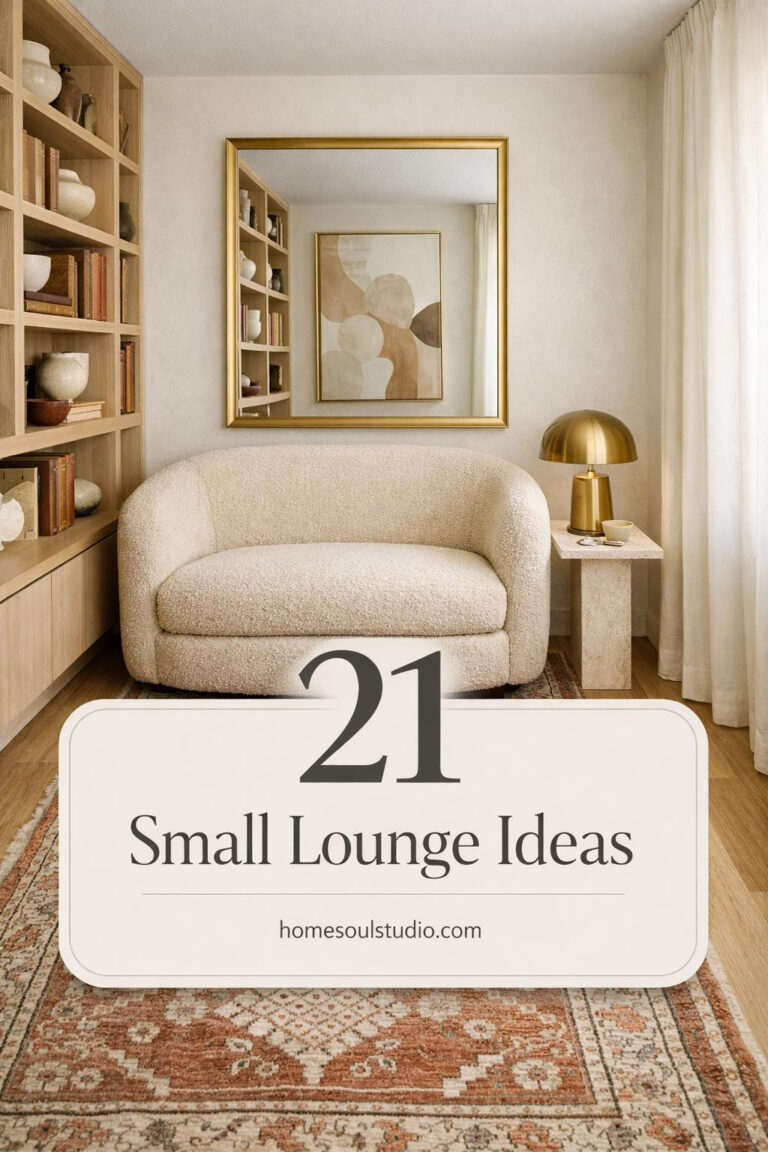
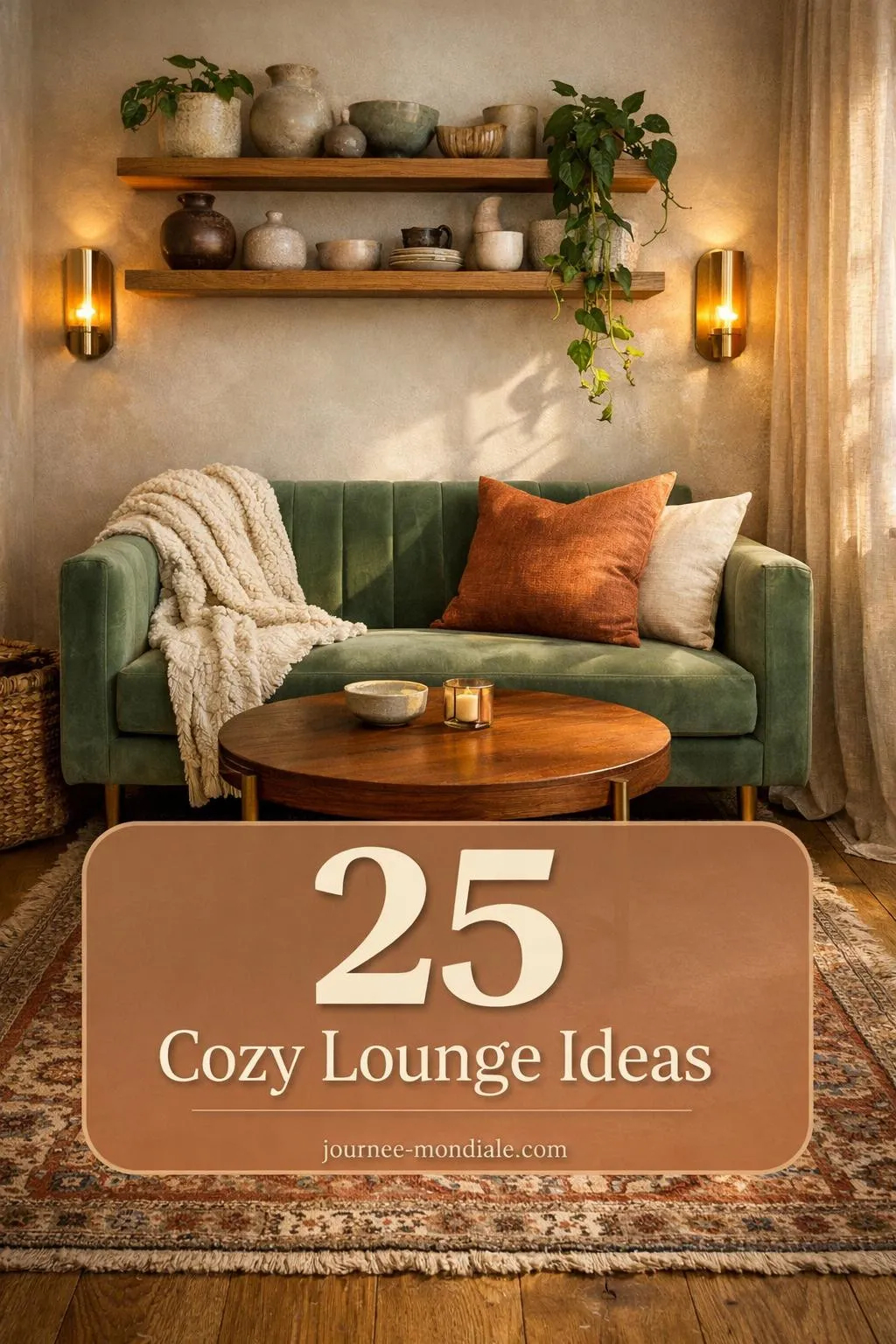
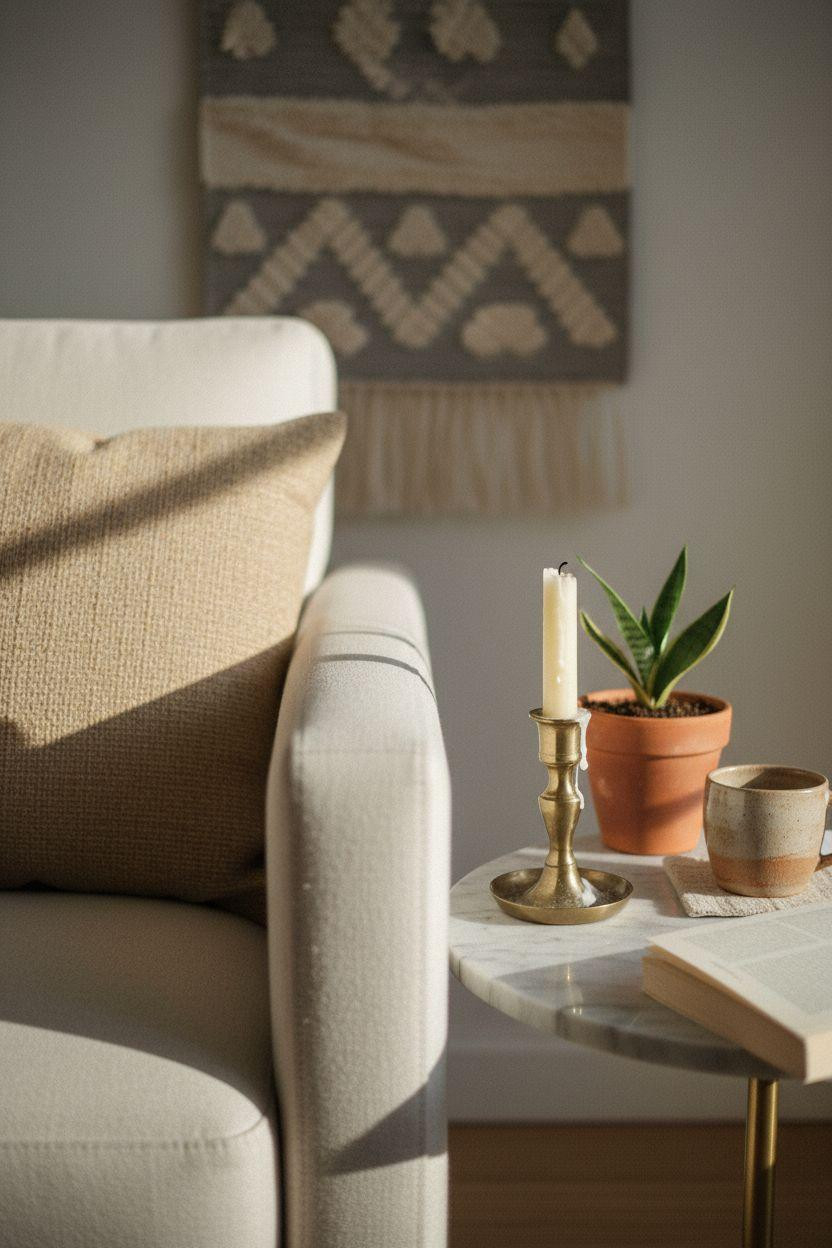
The winter draft rattles the single-pane sash window, but inside, your hand sinks into an impossibly dense, looped wool cushion resting against a slipcovered linen sofa. You aren’t swimming in a sprawling, double-height industrial loft with infinite square footage. Instead, you are sitting in a modest, 14-by-12-foot urban living room that feels remarkably expansive, rich, and deeply intentional. For years, interior design advice for compact spaces relied on a tired script: paint everything blinding white, keep furniture spindly and low-profile, and banish heavy textiles lest they suffocate the room. That rulebook is obsolete.
We have entered an era where physical comfort and tactile engagement reign supreme. Homeowners are pushing back against the sterile, screen-smoothed minimalism of the past decade. The challenge of the modern modest living room is not how to make it look larger through optical illusions, but how to make it feel profoundly dimensional through smart editing. When you lack square footage, you must generate architectural and sensory weight vertically and texturally. You achieve this not by accumulating more stuff, but by curating a precise dialogue between raw, touchable fabrics and uncompromising design statement pieces.
Interior design has undergone a quiet reckoning over the past few seasons. The pendulum has swung decisively away from flat polyester blends and matchy-matchy showroom suites toward authentic materiality—raw silks, heavy weight cotton-velvets, untreated burl wood, patinated brass, and nubby bouclé. In a compact footprint, however, throwing random textured items together leads straight to visual claustrophobia. A heavy velvet armchair paired with a shag rug and a distressed leather ottoman can easily transform a modest room into a suffocating antique shop.
The 2026 design philosophy demands precision. It requires understanding the physics of light reflection, the contrast of tactile weights, and the psychological impact of negative space. When you learn how to balance a high-impact focal point with layers of breathable, high-texture fabrics, even the most modest apartment lounge transforms into a tactile sanctuary. It is an exercise in editing, scale, and sensory curation that proves small rooms can carry immense visual sophistication.
The Anatomy of Micro-Spaces: Why Tactile Layering Matters More in Modest Rooms
When floor space is restricted, the eye hungers for information. In a massive room, architectural quirks, vaulted ceilings, and sweeping sightlines carry the visual weight. In a modest living room, your walls are closer, your sightlines are shorter, and every surface is constantly within arm’s reach. If those surfaces are uniform—painted drywall, a flat-woven synthetic rug, a smooth leather sofa—the room immediately feels flat, uninspired, and surprisingly smaller because the eye registers no depth. Tactile layering acts as a physical substitute for architectural volume, creating micro-shadows and catch-points for light that visually push walls outward.
Consider the microscopic landscape of a heavy wool bouclé yarn compared to a flat cotton print. Bouclé features loops that trap light and cast tiny, shifting shadows across the fabric face. Multiply this effect across a sofa, a set of drapery panels, and an accent throw, and you introduce hundreds of dynamic planes within a confined space. This shadow-play tricks the brain into perceiving depth where physical inches are lacking. Furthermore, our sense of touch is deeply tied to our sense of safety and grounding. Entering a modest living room wrapped in rich, honest textures instantly lowers cortisol levels in a way that sleek minimalism never could.
Achieving this balance requires an understanding of tactile contrast. You cannot simply pile heavy items on top of one another. The secret lies in pairing high-density, matte surfaces with crisp, light-diffusing counterparts. For instance, a heavy, raw-edge linen curtain panel softens the harsh perimeter of a small window, while a dense, short-pile wool rug grounds the floating furniture arrangement without swallowing the floor plane. The goal is to make the room feel curated over decades rather than assembled in an afternoon, even if every piece was carefully selected for its exact footprint.
Material honesty has become the ultimate luxury metric. Synthetic, petroleum-based fabrics that mimic textures are increasingly replaced by organic fibers that age with grace—sisal, jute, unbleached linen, heavy-weight cotton canvas, and recycled wool. In a modest living room, these materials do double duty. They provide the necessary sensory richness while remaining breathable, preventing the room from feeling stuffy. By prioritizing organic tactility, you establish a baseline of quality that elevates every other element in the space, proving that modest dimensions do not necessitate compromised standards.
The Statement Piece Paradox: Selecting Bold Anchors Without Overwhelming the Room
The most common panic inducing moment when designing a modest living room occurs when sourcing a statement piece. Homeowners fall in love with an oversized, sculptural travertine coffee table or a high-backed, velvet-upholstered wing chair, only to realize once it is delivered that it swallows half the room whole. A statement piece in a compact environment must earn its keep. It cannot just look striking in isolation; it must possess a specific silhouette—often characterized by negative space, tapered legs, or reflective surfaces—that allows light and air to pass around and through it.
Think of a statement piece as the soloist in a chamber orchestra. If the soloist plays too loudly, the nuance of the other instruments is lost. In interior design terms, a massive, monolithic black leather sectional acts as a sonic boom in a 12-by-12 space, completely drowning out any subtle fabric layering you attempt around it. Instead, look for statement pieces with sculptural integrity and visual lightness. A lounge chair constructed from bent beechwood with a woven cane backrest makes a massive stylistic statement, yet its transparent structure allows the textured wall color or patterned rug behind it to remain visible.
Scale must be calculated with absolute rigor. Measure your walking paths; you need a minimum of 30 inches of clearance around primary furniture routes to keep a modest room functioning smoothly. When selecting a statement coffee table, opt for round or organic contours rather than rigid rectangles. Sharp corners in a tight space create visual friction and physical bruises, whereas a curved travertine or solid oak pebble table invites fluid movement. The material of the statement piece should also contrast intelligently with your tactile layers. If your seating is wrapped in ultra-soft, matte bouclé, anchor the center of the room with a statement piece featuring a hard, polished, or high-sheen finish, such as brushed brass or cast glass.
Positioning is equally critical. Never tuck your primary statement piece into a dark corner where its unique lines are obscured by shadows. It needs to be the first thing your eye encounters when entering the room, framed by carefully chosen textile layers. For example, place your sculptural accent chair at a slight angle to the main sofa, draped simply with a heavyweight, fringe-edge alpaca throw. This creates a focal triangulation that draws the viewer’s gaze through the space, making the modest room feel expansive as the eye travels from the soft fabric layer to the hard architectural statement form.
The Masterclass in Textile Layering: Step-by-Step Practical Implementation
Transforming a modest living room from flat to dimensional requires a methodical approach to layering fabrics. Follow this field-tested framework to curate your space with surgical precision.
- Step 1 (Audit and Establish the Base): Strip the room down to its bare architectural shell. Assess natural light angles and floor material. Lay down a foundational, high-texture neutral rug—such as a thick, looped wool flatweave or a heavy jute blend—that extends at least six inches beneath the front legs of your primary seating to anchor the room.
- Step 2 (Select Your Primary Upholstery Anchor): Choose your main sofa or seating piece in a mid-tone, high-durability tactile fabric like textured chenille, heavy cotton-linen blend, or performance bouclé. Avoid pure stark white or light-absorbing pitch black; opt for oatmeal, weathered stone, or warm clay to maximize light reflection without showing every speck of dust.
- Step 3 (Introduce the Statement Counterbalance): Bring in your singular architectural statement piece—such as a vintage chrome-framed lounge chair or an organic wood-slab side table. Position it to break up symmetry, ensuring its silhouette features open negative space that maintains visual airflow through the modest footprint.
- Step 4 (Layer Secondary Soft Furnishings with Varied Weights): Build contrast using cushions and throws. Pair a stiff, raw-silk lumbar pillow against a soft, brushed-cotton cushion. Drape a heavy, long-haired shearling or structured alpaca throw casually over the arm of your statement chair to bridge the gap between hard forms and soft surfaces.
- Step 5 (Frame the Perimeter with Vertical Textiles): Hang floor-to-ceiling drapery panels made from unlined, heavy-weight Belgian linen. Mount the curtain rod six inches above the window frame to elongate the wall height, allowing the fabric to puddle slightly or graze the floor, drawing the eye upward and visually expanding the modest ceiling height.
Navigating the Trapdoors: Common Pitfalls and Field-Tested Workarounds
Even experienced designers occasionally miscalculate the delicate chemistry of small-space styling. Recognizing these common missteps will save you from a cluttered, chaotic result.
- Pitfall 1 (Textural Monotony): Layering too many items of the exact same tactile family (e.g., bouclé sofa, bouclé pillows, bouclé rug) results in a flat, muddy visual experience. Workaround: Strictly adhere to the rule of three tactile weights: pair one smooth/reflective surface, one matte/raw organic weave, and one plush/dense pile within every localized grouping.
- Pitfall 2 (Overscaling Statement Furniture): Falling in love with an oversized, heavy-armed armchair that completely blocks light flow and walking paths. Workaround: Prioritize silhouette transparency. Choose statement seating with exposed legs, open-back cane construction, or low-profile arms that keep the center of gravity low and sightlines clear.
- Pitfall 3 (Ignoring Seasonal Light Shifts): Using heavy, light-absorbing dark velvets exclusively, which can make a modest room feel like a gloomy cave during overcast winter months or scorching summer afternoons. Workaround: Keep your heavy anchor textiles neutral, and swap out lightweight linen or raw silk accent pillow covers twice a year to modulate how light bounces through the space.
- Pitfall 4 (Cluttering Horizontal Surfaces): Over-accessorizing small coffee tables and sideboards with endless decorative objects alongside your statement pieces. Workaround: Adopt a strict subtractive editing policy. If a statement coffee table has a stunning burl wood grain, let it remain bare except for a single, heavy ceramic vessel or art book.
- Pitfall 5 (Neglecting Acoustic Softening): Relying solely on visual fabrics while ignoring how hard surfaces bounce sound, creating a sterile, echoing environment in compact rooms. Workaround: Integrate acoustic-friendly textiles in unexpected ways, such as hanging a heavy, vintage textile wall hanging or using thick, lined Roman shades to absorb ambient noise and enrich the room’s sensory depth.
The Broader Horizon: Sustainability, Longevity, and the Psychology of Home
Designing a modest living room in 2026 demands a shift away from fast-furniture cycles toward items built for lifelong utility. When square footage is limited, every single object you bring inside exerts a profound psychological influence on your daily life. A room layered with authentic, biodegradable textiles and timeless statement pieces promotes mental clarity and emotional grounding. Synthetic fibers treated with chemical stain repellents off-gas volatile organic compounds into tight indoor air volumes; choosing organic wool, raw linen, and untreated hardwoods is not merely an aesthetic choice, but a vital health decision for compact living environments.
Furthermore, investing in artisanal statement pieces and heritage-grade fabrics supports circular economies. A vintage travertine table or a hand-knotted wool rug holds its intrinsic value far better than flat-pack particle board alternatives. As we navigate an increasingly digitized world, our homes function as tactile anchors. Touching rough-hewn stone, sinking into dense, unbleached cotton, and tracing the grain of patinated wood reminds us of the physical reality of the world outside our screens. This sensory connection is particularly vital in urban apartments and modest homes where direct access to nature may be limited.
The economics of smart layering also favor long-term curation over rapid consumption. By investing in a high-quality, neutral upholstered base and pairing it with a striking statement chair and interchangeable, high-texture soft goods, you can entirely reinvent the mood of your living room with minimal expense and waste. You simply swap out a throw, change a lumbar pillow, or reposition your statement lighting. This agility proves that modest spaces are not limitations to be overcome with clever tricks, but liberating canvases that encourage disciplined taste, mindful consumption, and deeply personal sanctuary creation.
Actionable Frameworks for Lasting Impact
To consolidate these principles into a practical blueprint for your home, apply these high-impact guidelines as you evaluate your living room layout:
- The 60-30-10 Tactile Ratio: Allocate 60 percent of your soft furnishings to a primary, subtle texture (like mid-weight linen or cotton canvas), 30 percent to a secondary, high-impact tactile contrast (like bouclé or heavy wool), and 10 percent to a luxurious, high-gloss or raw-edge statement finish (like brass, stone, or burl wood).
- Vertical Sightline Optimization: Always draw the eye upward in modest rooms by hanging drapery high and wide, utilizing tall, slender statement shelving, and avoiding low, bulky furniture that chops the room in half horizontally.
- The Negative Space Mandate: Ensure every statement piece is surrounded by breathing room. If an accent chair touches a bookshelf or crowds a coffee table, the room immediately reads as cramped rather than curated.
- Haptic Quality Checks: Before purchasing any fabric for a modest room, run your hands across it. If it feels scratchy, overly synthetic, or lifeless under your fingertips, it will feel twice as harsh in a compact space where you interact with it constantly.
Mastering the modest living room is an exercise in intentional curation. By refusing to let physical square footage dictate your design ambition, you open up a world of rich materiality, bold sculptural statements, and profound sensory comfort. The magic does not lie in owning more furniture or expanding your walls; it lies in the exquisite tension between a razor-sharp statement silhouette and the comforting, tactile embrace of honest, organic fabrics.
As you look at your own living space today, ask yourself what it is trying to tell you. Does it need a breath of negative space, a jolt of structural contrast, or the grounding weight of a hand-woven textile? Trust your instincts, honor the physical realities of your room, and build a sanctuary that feels entirely, unapologetically yours.