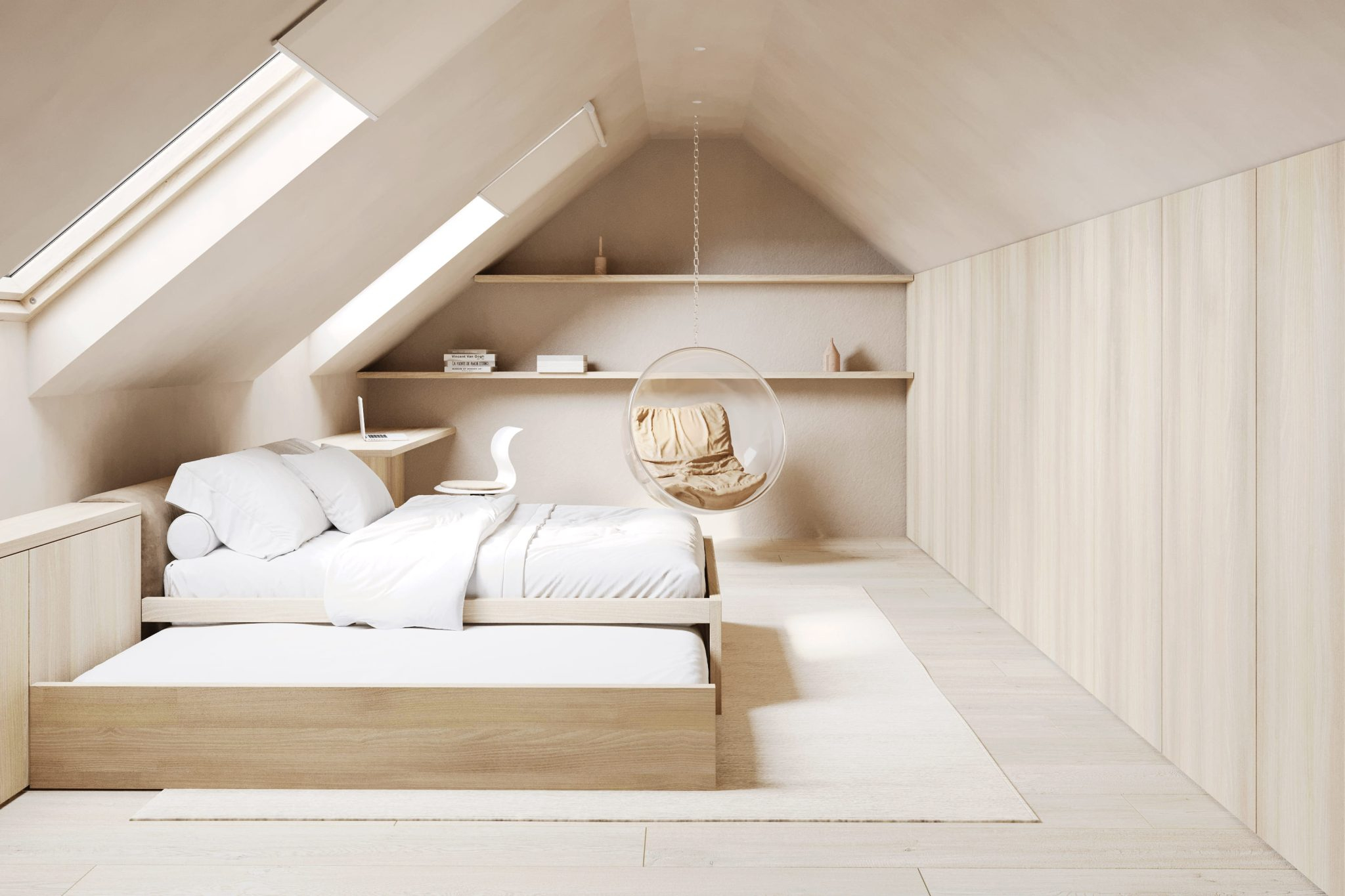
The alarm goes off at 6:30 AM, yet you feel like you have been running a marathon through thick mud. You slept eight hours—or at least you spent eight hours lying horizontal in the dark. Your mattress cost more than a used car, your blackout curtains swallow the morning sun, and your thermostat is dialed to a precise, sleep-optimized 65 degrees Fahrenheit. Still, you wake up foggy, neck stiff, and carrying a low-grade exhaustion that no amount of specialty coffee can cure. You blame your stress levels, your screen time, or aging. You rarely look at the massive oak dresser or the bed frame pressed tightly against the heating vent.
Most people treat the bedroom like a storage locker for a mattress, squeezing pieces into corners based entirely on where the cable outlet sits or how the room looks in an interior design catalog. We obsess over thread counts, weighted blankets, and white noise generators, completely ignoring the silent architectural physics of the room itself. Interior designers and sleep researchers note that a room’s physical geometry exerts a profound psychological pull on the human nervous system. When furniture blocks natural pathways, angles your bed into vulnerable alignments, or turns your sleeping sanctuary into an obstacle course, your brain knows. Even in deep slumber, a part of your mind remains on guard.
Understanding the mechanics of sleep requires looking beyond biology and examining environmental psychology. For hundreds of thousands of years, human survival depended on spatial awareness during vulnerability. When you close your eyes at night, your brain does not erase millions of years of evolutionary programming. It evaluates your physical safety based on sightlines, exits, and physical barriers. If your furniture arrangement forces your body into a compromised position, your autonomic nervous system responds by keeping cortisol levels elevated. You are not just tossing and turning because of bad habits; your room’s layout is quietly sabotaging your right to deep, restorative rest.
The Evolutionary Neurobiology of the Bedroom Layout
The human brain processes environmental threats through the amygdala, an almond-shaped structure that remains active even when the neocortex rests. When you position a bed so that your back faces the entryway or place the headboard directly beneath a high-traffic window, you trigger an ancient vulnerability response. Anthropologists refer to this as the lack of a "command position." In home design, the command position means your bed has a solid wall behind it and a clear, uninhibited line of sight to the door, without being directly in line with it. Without this visual security, your nervous system lingers in a low-grade fight-or-flight state throughout the night.
This hyper-vigilant state disrupts sleep architecture, specifically robbing you of stage three slow-wave sleep and rapid eye movement phases. While you might remain unconscious for seven or eight hours, your brain experiences micro-arousals—split-second spikes in heart rate and brain activity—triggered by spatial discomfort. You do not wake up fully, so you do not remember these disruptions, but they prevent your body from completing cellular repair and memory consolidation. Over weeks and months, this chronic, low-level architectural stress contributes to daytime fatigue, brain fog, and elevated systemic inflammation.
Furthermore, modern bedrooms often function as multi-use spaces, which complicates this neurobiological response. We cram home offices, laundry folding stations, and entertainment centers into the same four walls where we attempt to rest. When your eyes land on a pile of unfolded clothes or an open laptop immediately upon waking—or even right before closing your eyes—your brain associates the sleep sanctuary with cognitive labor and anxiety. The physical boundaries of furniture dictate mental boundaries. If your nightstand is buried under bills and work papers, your subconscious interprets the entire room as an extension of your workplace, making it nearly impossible to detach.
How Spatial Friction and Clutter Constrict Restorative Sleep
Physical friction within a bedroom creates a psychological weight that directly impacts sleep latency—the length of time it takes to transition from wakefulness to deep slumber. If your bedroom layout is so cramped that you have to sidestep a heavy armchair to reach the bathroom in the dark, your brain registers that spatial constriction as a continuous hazard. Designers call this physical congestion, and its effects on sleep are measurable. Rooms choked with oversized furniture pieces create an oppressive atmosphere, effectively shrinking the perceived volume of the space and inducing claustrophobic stress responses.
Airflow is another casualty of poor furniture placement. We often push massive wardrobes, heavy bookcases, or upholstered headboards directly against air vents, radiators, or exterior walls prone to condensation. This blocks optimal HVAC circulation and traps stale air, leading to elevated carbon dioxide levels inside the bedroom by 3:00 AM. High CO2 concentration is a proven sleep thief, directly causing morning headaches, shallow breathing, and restless tossing. When furniture impedes the natural convective currents of air within a room, it creates micro-climates of stale, warm air that disrupt thermoregulation—the body’s core mechanism for initiating deep sleep.
Lighting interaction with furniture placement forms a third pillar of layout-induced sleep disruption. Placing a bed directly opposite a street-facing window or perpendicular to an unshaded glass pane means any exterior light source—car headlights, security bulbs, or moonlight—hits your eyelids directly during micro-movements. Even with blackout curtains, gaps created by poorly placed curtain rods or protruding furniture frames can allow stray photons to penetrate the room. The human retina contains specialized photosensitive ganglion cells that detect light even through closed eyelids, signaling the suprachiasmatic nucleus to halt melatonin production prematurely.
Optimizing Your Sleep Sanctuary Through Intentional Layout Design
Transforming your bedroom from a sleep hostile environment into a sanctuary requires a methodical, step-by-step spatial reconfiguration. By approaching furniture placement with ergonomics and neurobiology in mind, you can eliminate subconscious stressors and dramatically improve your sleep efficiency.
- Step 1 (Identify the Command Wall): Locate the solid wall farthest from the bedroom door that still allows a direct, unobstructed diagonal line of sight to the entryway. Position your bed headboard flush against this solid wall, ensuring you can see anyone entering the room without being directly exposed in the direct line of fire.
- Step 2 (Clear the Periphery and Pathways): Establish a minimum clearance of 24 to 30 inches around both sides of the bed and all primary walking paths. Remove oversized dressers, exercise equipment, or storage bins that force you to navigate obstacle courses in low light.
- Step 3 (Relocate Work and Electronics): Move desks, monitors, and filing cabinets out of the bedroom entirely. If space makes this impossible, place a heavy folding screen or acoustic partition between your sleeping zone and your workspace, and ensure all LED indicator lights are out of your line of sight from the mattress.
- Step 4 (Optimize Airflow and Thermoregulation): Pull all heavy furniture at least four to six inches away from heating vents, baseboard radiators, and exterior walls. This allows uninhibited air circulation, prevents humidity pockets, and keeps ambient bedroom temperatures stable between 60 and 67 degrees Fahrenheit.
- Step 5 (Neutralize Light Interference): Adjust your bed and nightstand positions so that lamps and exterior windows do not project direct glare onto your pillow. Use low-kelvin (under 2700K) warm bulbs on bedside lamps and ensure blackout window treatments extend at least three inches past the window frame on all sides.
Common Layout Mistakes and Proven Practitioner Workarounds
Even with the best intentions, homeowners often fall into classic interior design traps that sacrifice sleep health for aesthetic trends. Recognizing these pitfalls allows you to implement field-tested workarounds that restore tranquility to your sleeping quarters.
- Pitfall 1 (The Floating Bed in the Middle of the Room): Placing a bed dead-center with zero wall contact or backing makes the sleeper feel exposed and vulnerable to unseen movement behind them. Workaround: If room dimensions demand a non-traditional placement, anchor the bed with a substantial, solid wood or upholstered headboard and place a low-profile console table or bench at the foot of the bed to create a visual boundary and sense of containment.
- Pitfall 2 (Mirror Alignment Facing the Mattress): Hanging full-length mirrors or mirrored wardrobe doors directly opposite or beside the bed creates phantom movement reflections in the dark, startling the brain during semi-conscious awakenings. Workaround: Relocate mirrors to dressing areas outside the line of sight from the pillows, or drape decorative textile runners over them at night.
- Pitfall 3 (Over-Furnishing Small Bedrooms): Cramming a king-sized bed, two large nightstands, a heavy armoire, and a reading chair into a 10×10 foot room suffocates the space and spikes ambient anxiety. Workaround: Scale down to floating wall-mounted shelves in place of bulky nightstands, use under-bed storage drawers instead of extra dressers, and embrace negative space to let the room breathe.
- Pitfall 4 (Headboard Against a Shared Plumbing or Street Wall): Placing your head against a wall that backs up to a bathroom pipe or a busy urban street exposes you to continuous, low-frequency acoustic vibrations that trigger micro-arousals. Workaround: Install acoustic wall panels behind your headboard, add a thick sound-dampening wool rug to the adjacent floor, or shift the bed to an interior partition wall.
- Pitfall 5 (The TV-Centric Bedroom Focal Point): Angling the bed to face a wall-mounted television turns the sleeping zone into a media room, cementing screen addiction and disrupting circadian rhythms through residual blue light and subconscious anticipation. Workaround: Remove televisions from bedrooms entirely, or enclose them inside a cabinet with doors that remain firmly shut and locked after sundown.
The Broader Economic and Health Impact of Restorative Architecture
The consequences of poor bedroom design extend far beyond feeling groggy during a Tuesday morning team meeting. Chronic sleep deprivation driven by environmental stressors carries severe economic and physiological tolls, costing billions in lost productivity, healthcare expenditures, and workplace errors. When your bedroom layout actively works against your biology, you compromise your immune function, increase your risk of metabolic dysfunction, and elevate cardiovascular strain. Sleep is not a passive state of luxury; it is the vital biological foundation upon which all physical and cognitive resilience is built.
From a macroeconomic perspective, sleep-deprived workers suffer from diminished problem-solving capabilities, slower reaction times, and heightened emotional reactivity. By addressing the physical architecture of where we sleep, we unlock a low-cost, high-impact intervention for public health. Unlike expensive pharmaceutical sleep aids or luxury mattress replacements that cost small fortunes, rearranging existing furniture requires zero financial investment—only spatial awareness and a willingness to break free from conventional interior styling rules that prioritize Instagram aesthetics over human biology.
Sustainable bedroom design also ties into minimalist living philosophies and environmental psychology. A clutter-free, intentionally zoned bedroom reduces cognitive load, lowers evening cortisol production, and fosters a psychological sense of safety that translates into sustained emotional well-being. When your home supports your biology rather than fighting it, rest transforms from a nightly struggle into an effortless, restorative retreat. The modern home should act as a buffer against the chaotic stimulus of the outside world, and that buffering capability begins with the exact angle and placement of your bed.
Practical Frameworks for Long-Term Sleep Sanctuary Maintenance
Maintaining an optimized bedroom layout is not a one-time weekend project; it requires ongoing spatial hygiene as seasons change and lifestyle needs evolve. Establishing a routine audit of your sleep environment ensures that clutter does not creep back in and that your bedroom remains dedicated strictly to rest and recovery.
- Quarterly Spatial Audits: Evaluate your bedroom layout every three months. Check whether seasonal clothing storage has pushed boxes into walking paths or if winter blackout layers need adjustment for summer morning sun angles.
- Strict One-In, One-Out Rule for Furniture: Never add a new piece of furniture, chair, or storage unit to the bedroom without removing an existing item. Guard the volumetric breathing room of your sleeping quarters fiercely.
- Acoustic and Thermal Checkups: Periodically test your room’s sound levels and airflow. Ensure that furniture has not drifted back against air vents or radiators, and use white noise or soundproofing if external neighborhood noise profiles shift.
- Bedding and Sightline Integrity: Keep bedside surfaces clear of paperwork, electronics, and clutter every single night before sleep. The visual ritual of clearing the nightstand signals to your brain that the day is finished.
Your bedroom is the most intimate architectural space you will ever inhabit. It is where your physical armor comes off, where your nervous system lowers its defenses, and where your body performs its most critical restorative work. Treating this space as a mere afterthought—stuffing furniture into corners without regard for sightlines, airflow, or psychological safety—is a silent saboteur that chips away at your health night after night.
Take a hard look at your bedroom tonight. Notice where your back faces when you lie down. Feel the spatial friction of navigating around that oversized dresser in the dark. Listen to the hum of blocked airflow or the glare of a stray streetlamp. By shifting your bed into the command position, clearing your pathways, and removing the cognitive clutter of the waking world, you reclaim your right to deep, uninterrupted sleep. Rest is not a luxury to be earned through exhaustion; it is a biological necessity that begins with the very room you build around yourself.