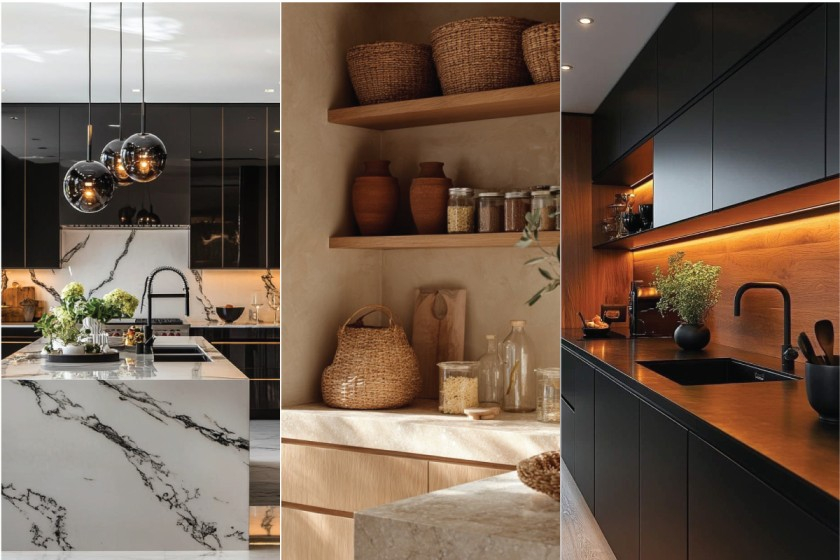
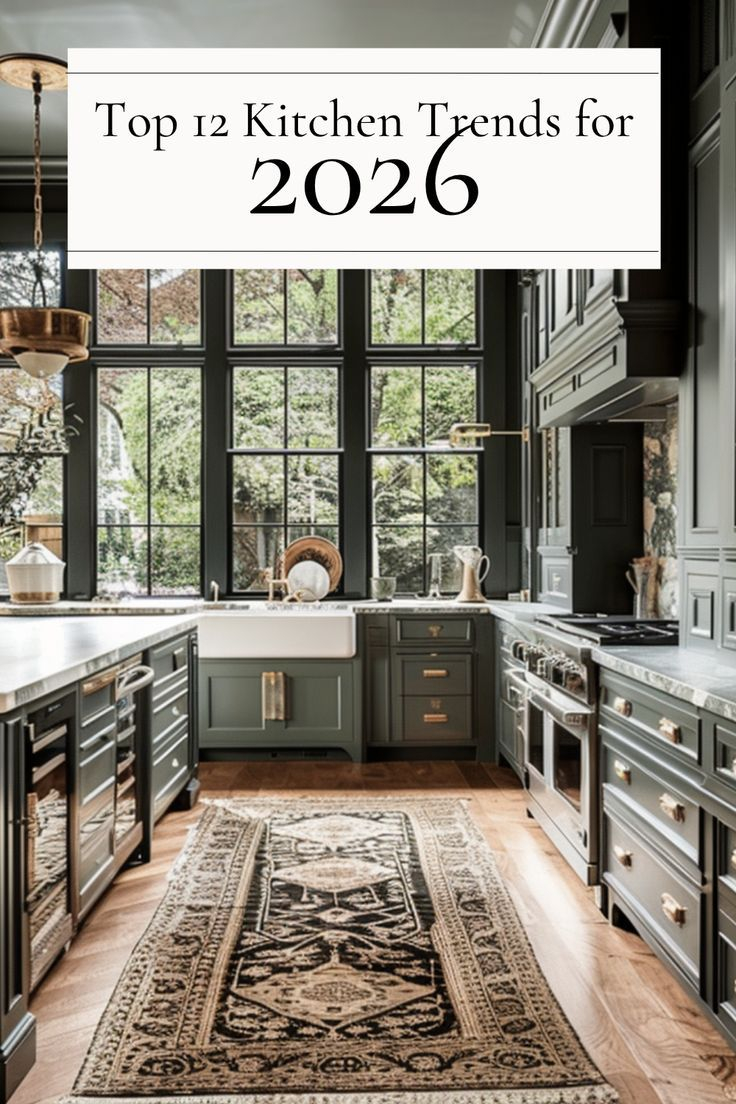
Step into a newly renovated high-end kitchen, and the tactile shift is immediate. Gone are the blinding, high-gloss white laminates and overly polished polyester sheens that once defined contemporary design. Instead, your hand brushes against a surface that absorbs light rather than reflecting it—a velvety, tactile plane of matte black. This finish feels dense, grounded, and intensely deliberate. It halts the eye not with glare, but with a quiet, absorbing weight that completely transforms how a domestic workspace looks and feels.
Kitchens have evolved from hidden utility zones into the emotional epicenters of the modern home. As open-plan architecture blurs the boundary between living room and culinary workspace, the aesthetic demands placed on cabinetry have risen exponentially. Homeowners no longer want generic storage boxes that simply fade into the drywall. They want architecture furniture—pieces with gravity and presence. Matte black cabinetry has emerged as the definitive answer to this demand, bridging the gap between industrial edge and residential warmth.
The shift toward dark cabinetry represents a broader rebellion against sterile minimalism. For decades, safety reigned supreme in kitchen design. All-white layouts promised cleanliness and resale value, but they often ended up looking clinical, demanding constant maintenance to hide every speck of dust or water droplet. Matte black turns that script upside down. It introduces high-stakes contrast, anchors soaring ceilings, and provides a sophisticated backdrop that elevates everything placed against it—from artisanal ceramics to organic wood bowls and veined natural stone.
The Material Revolution Behind Low-Sheen Dark Surfaces
The dominance of matte black cabinetry in contemporary interior architecture is not merely a passing stylistic whim; it is deeply rooted in significant advancements in material science. Traditional dark painted cabinets were notoriously fragile, prone to showing every fingerprint, grease smudge, and microscopic scratch under kitchen spotlights. Early attempts at flat black finishes often relied on cheap lacquers that quickly chalked, faded, or polished up into shiny grease-traps wherever palms repeatedly touched the pulls.
Today’s market utilizes sophisticated engineering breakthroughs, most notably thermally fused laminates (TFL), acrylic resins with anti-fingerprint nanotechnology, and specialized powder-coated MDF boards. These modern surfaces possess ultra-low light reflectance values (LRV), meaning they diffuse incoming photons rather than bouncing them back at the viewer. This creates the signature velvety depth that characterizes high-end installations. Furthermore, manufacturers now treat these surfaces with electron-beam curing processes, creating a cross-linked polymer shield that actively repels oils and resists micro-scratching.
Underpinning this technical evolution is a psychological shift in how homeowners perceive domestic labor and luxury. High-gloss finishes demand an obsessive, white-glove cleaning routine to maintain their mirror-like perfection. Conversely, advanced matte finishes diffuse reflections, effectively masking the minor imperfections of everyday cooking. When paired with durable substrate materials like moisture-resistant moisture-core engineered wood or extruded aluminum frames, matte black surfaces deliver long-term structural integrity alongside their striking visual appeal.
Architectural Contrast and the Balance of Light in Modern Spaces
Integrating black cabinetry into a room requires a nuanced understanding of spatial physics and lighting design. A common hesitation among renovators is the fear that dark tones will shrink a room, turning an airy cooking zone into a cavernous, unwelcoming cave. However, experienced designers know that matte black actually enhances spatial depth when balanced with appropriate counterpoints. Because the matte finish absorbs light, it creates clean silhouettes that define the perimeter of a room without harsh visual noise.
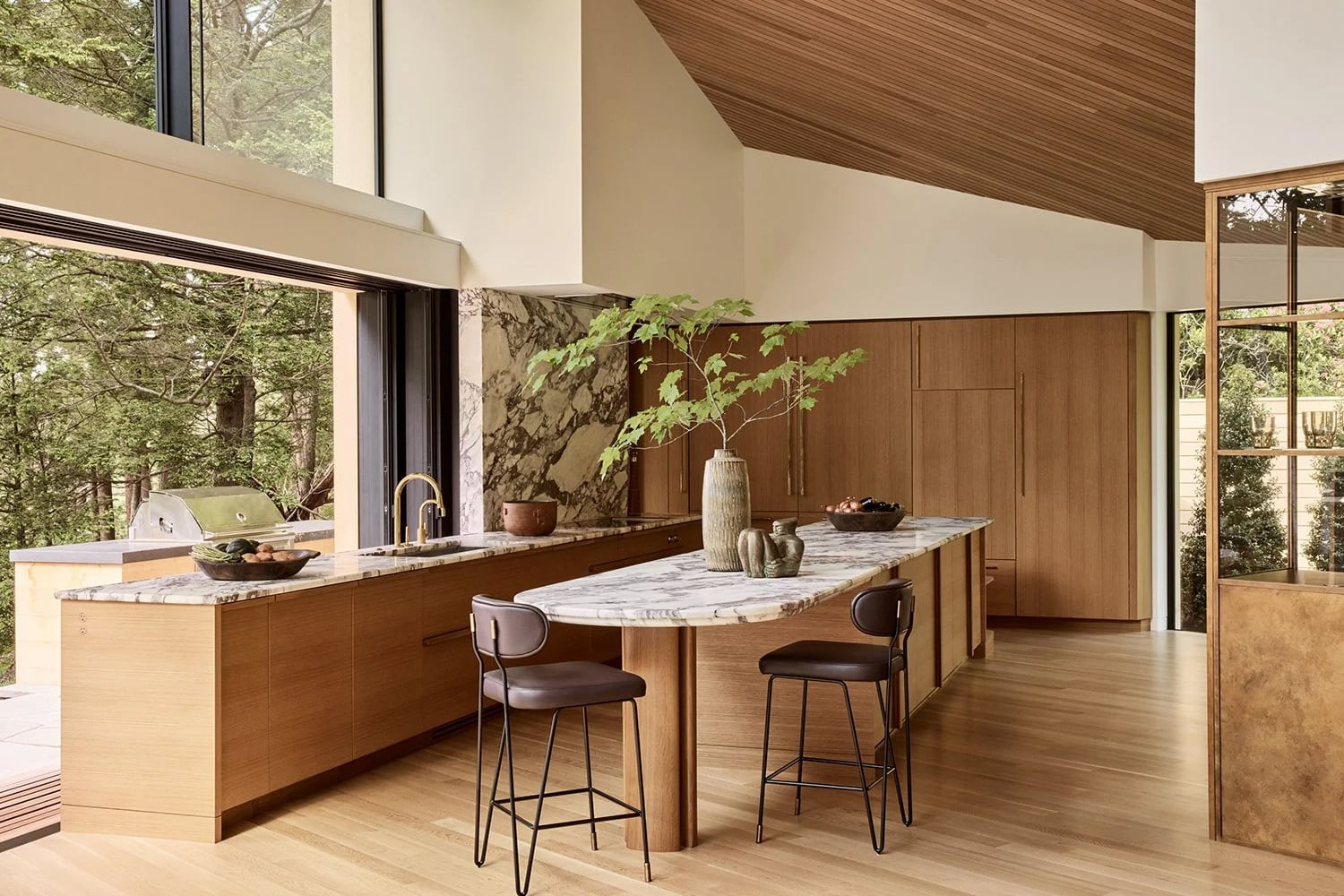
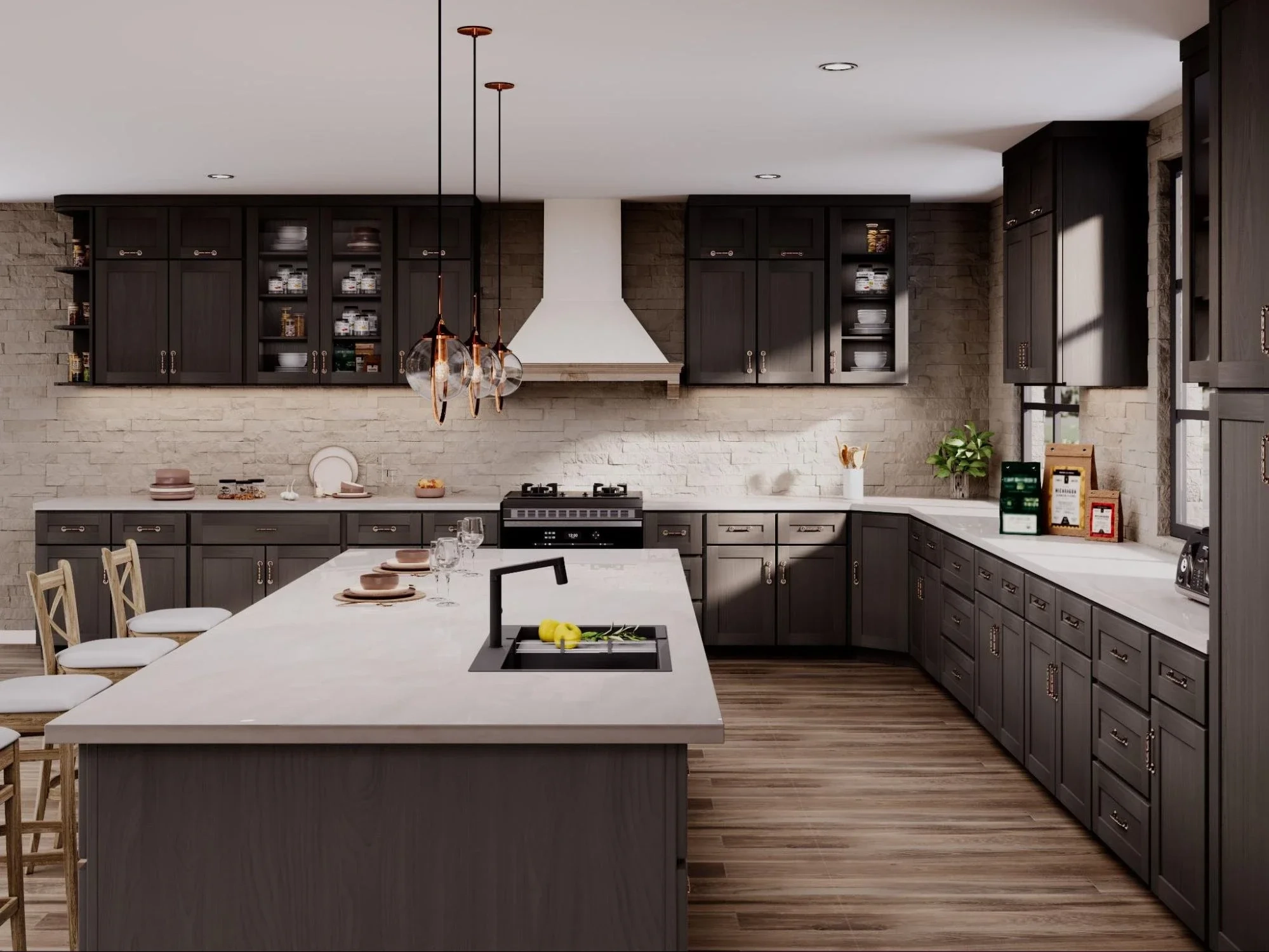
Achieving this balance relies on the strategic deployment of contrasting elements and layered illumination. Pairing floor-to-ceiling matte black base cabinets with floating white oak shelves or surging quartzite countertops featuring dramatic gray veining immediately reintroduces vertical brightness. The dark lower cabinets ground the room, acting as a heavy architectural anchor, while lighter upper elements or perimeter walls keep the sightlines open. This creates a sophisticated two-tone layout that feels dynamic rather than oppressive.
Lighting plays a make-or-break role in this visual equation. Standard overhead recessed cans will simply flatten a dark surface, casting dull shadows and erasing the subtle texture of the finish. Successful modern kitchens utilize a three-tier lighting plan: ambient architectural fixtures, concealed under-cabinet LED tape lights with high color rendering indices (CRI above 95), and statement-making pendants in warm metals like brushed brass or antique bronze. These light sources bounce off metallic hardware and surrounding stone, cutting through the absorbing quality of the matte black to create a warm, inviting glow.
Implementing Matte Black Cabinetry: A Step-by-Step Design Framework
Executing a successful kitchen renovation featuring matte black cabinets requires a methodical approach from layout conception to final hardware selection. Every decision must account for how light, texture, and daily use intersect within the footprint of the room.
- Step 1 (Spatial Assessment and Layout Planning): Evaluate the natural light exposure of your kitchen space. South-facing rooms with abundant sunlight can easily support full perimeter black layouts, while north-facing or compact galley kitchens benefit immensely from utilizing matte black exclusively on base cabinets or as an accent island while keeping perimeter walls light.
- Step 2 (Substrate and Finish Specification): Source cabinetry finished with anti-fingerprint nanotechnology or high-grade thermofoil rather than standard flat-paint lacquer. Ensure the core material is moisture-resistant engineered wood or marine-grade plywood to prevent warping and edge-lifting around high-moisture zones like dishwashers and sinks.
- Step 3 (Hardware and Metal Pairing): Select complementary hardware finishes that soften or sharpen the starkness of black. Warm brushed brass, unlacquered copper, or matte black-on-black hardware provide tactile contrast and tie in existing plumbing fixtures or pendant light frames.
- Step 4 (Countertop and Backsplash Integration): Choose surfacing materials that provide strong visual relief and texture. Natural quartzites, honed marbles with heavy mineral veining, or continuous porcelain slabs with subtle movement prevent the kitchen from feeling visually heavy or monolithic.
- Step 5 (Appliance Integration and Panel Matching): Decide whether to expose stainless steel appliances for an industrial edge or utilize panel-ready dishwashers and refrigerators disguised behind matching matte black cabinet doors to maintain a seamless, uninterrupted architectural horizon.
Navigating Common Design Pitfalls and Practical Workarounds
Even the most well-funded kitchen projects can fall short of expectations if certain classic mistakes are overlooked during the planning phase. Working with dark finishes demands an awareness of specific architectural traps that do not apply to traditional wood tones or standard white paint.
- Pitfall 1 (Ignoring the Impact of Direct Sunlight): Intense, direct UV rays hitting matte black surfaces over prolonged periods can cause uneven fading or thermal stress on lower-quality laminates. Workaround: Install UV-blocking window films or automated solar shades on large south- or west-facing windows to protect the cabinet finish and maintain interior climate control.
- Pitfall 2 (Over-reliance on Monolithic Color Schemes): Using black cabinets, dark flooring, and dark stone all at once results in a light-starved, claustrophobic environment with zero visual breathing room. Workaround: Introduce organic warmth through white oak or walnut flooring, open wood shelving, or a contrasting limestone tile backsplash to break up the darkness.
- Pitfall 3 (Selecting Cheap, High-Gloss Hardware): Standard polished chrome or shiny nickel pulls clash awkwardly with velvety matte black surfaces, looking cheap and distracting. Workaround: Stick to tactile, organic metal finishes like living brass, gunmetal, or matte black knurled hardware that adds grip and textural depth.
- Pitfall 4 (Neglecting Edge Banding Quality): Low-cost cabinets often feature poorly adhered edge banding that chips away, revealing white or light brown substrate underneath the black surface. Workaround: Specify laser-edge banding or PUR (polyurethane reactive) glued edges, which create an invisible, waterproof seam that withstands heavy kitchen impacts.
- Pitfall 5 (Inadequate Task Lighting): Dark cabinets absorb ambient light, leaving prep zones shadowed and difficult to work in safely. Workaround: Mandate continuous under-cabinet LED channel lighting and internal drawer illumination to ensure functional clarity during food preparation.
The Long-Term Economic and Aesthetic Viability of Dark Finishes
When homeowners invest thousands of dollars into a kitchen overhaul, longevity is always a primary concern. Trends come and go, and no one wants an expensive renovation that feels dated within five years. While all-white kitchens dominated the previous decade, they have increasingly risked looking generic, prompting a demand for personalized spaces with genuine character. Matte black occupies a rare design tier: it is bold enough to feel cutting-edge, yet rooted in classic, high-contrast tailoring that transcends seasonal fads.
From an economic perspective, kitchens featuring high-end, custom-tailored dark cabinetry consistently command strong interest in the luxury real estate market. Buyers associate matte black with bespoke craftsmanship, high-end European design imports, and meticulous attention to detail. Unlike trendy pastel colors or ultra-specific wood stains tied to bygone eras, black acts as a neutral canvas. It accommodates shifting interior decor styles—transitioning effortlessly from industrial chic to Japandi minimalism or transitional warmth simply by swapping out bar stools, rugs, and tabletop accessories.
Moreover, the durability of modern anti-fingerprint finishes ensures that this aesthetic investment does not degrade into a maintenance nightmare. As manufacturing technologies continue to refine surface treatments, the resilience of dark cabinetry matches or exceeds that of traditional painted wood. This long-term structural and visual stability guarantees that the kitchen remains a functional masterpiece for decades, resisting the wear and tear of active family life while retaining its dramatic, high-end allure.
Strategic Frameworks for Crafting a Cohesive Black-Cabinet Kitchen
Transforming a conceptual design into a living space requires adhering to structural styling rules that ensure the kitchen feels balanced, intentional, and deeply personal.
- Framework Principle 1 (The 60-30-10 Rule): Dedicate roughly 60 percent of the visual field to mid-tone or light elements (walls, floors, counters), 30 percent to the matte black cabinetry grounding the space, and 10 percent to metallic or organic accent materials (hardware, lighting, barstools).
- Framework Principle 2 (Texture Layering over Color Variety): Since the primary cabinet color is uniform and neutral, compensate for the lack of chromatic variety by maximizing tactile diversity—pair smooth matte doors with rough-hewn stone, woven cane cabinet inserts, or hand-glazed ceramic backsplashes.
- Framework Principle 3 (Zoning via Contrast): Use matte black specifically to define functional zones, such as wrapping a coffee station, a baking center, or the main island in black while keeping perimeter cabinetry in a lighter wood grain to create custom furniture-like hierarchy.
Implementing these principles prevents the kitchen from feeling sterile or overwhelming. It transforms the dark finish from a risky design gamble into the defining anchor of a sophisticated, human-centric living space.
The widespread adoption of matte black cabinetry reflects a profound shift in residential design values. We are moving away from the superficial perfection of plasticized white boxes toward spaces that demand to be touched, experienced, and lived in. The kitchen is no longer just a functional engine room where meals are assembled in clinical isolation; it is a dramatic, grounding sanctuary that sets the tone for the entire home.
Choosing matte black requires confidence, a willingness to embrace contrast, and an appreciation for meticulous craftsmanship. By selecting advanced anti-fingerprint surfaces, balancing lighting meticulously, and pairing dark tones with warm natural textures, you create a space that defies fleeting trends. This is design with staying power—a fearless architectural statement that proves true elegance lies in the mastery of light, shadow, and touch.