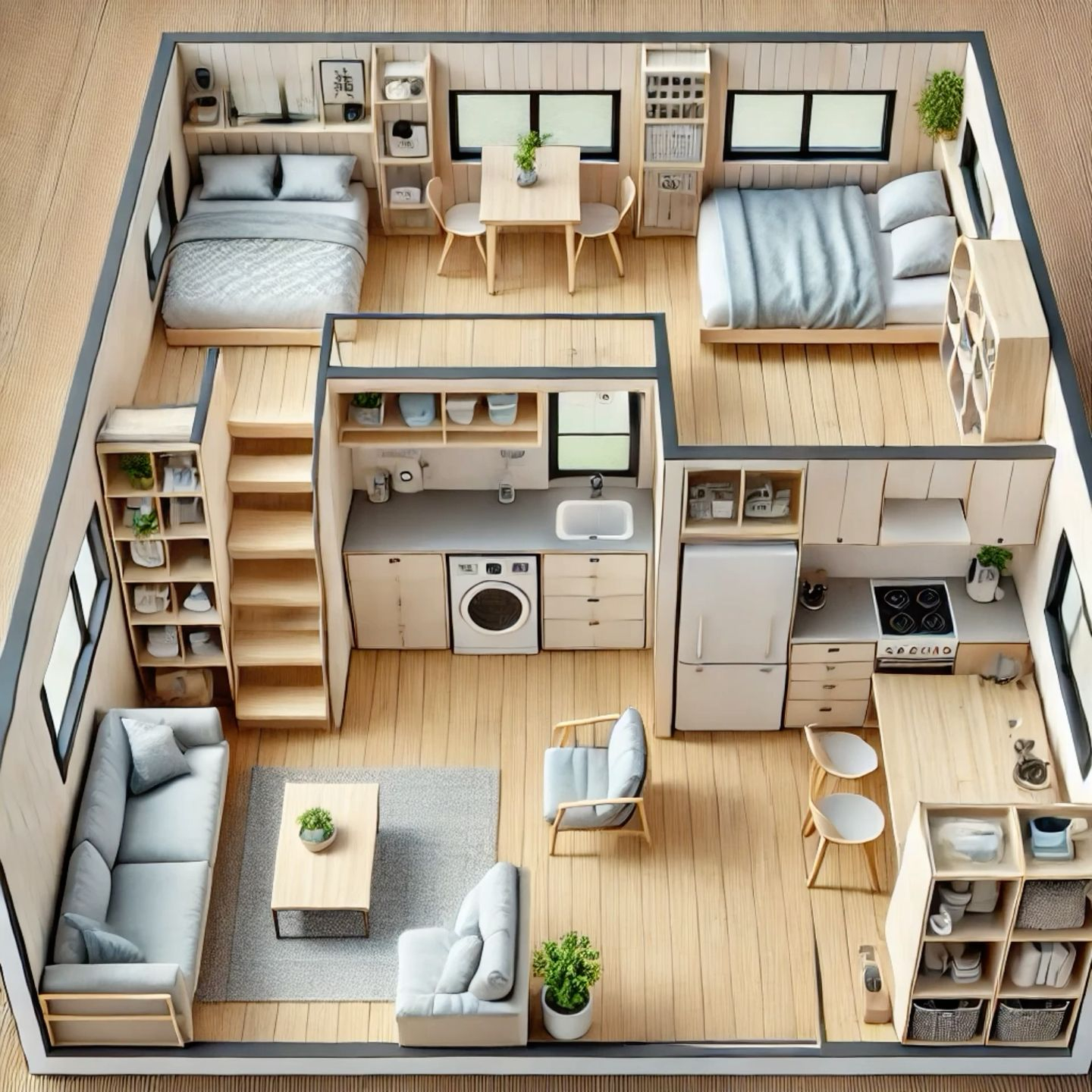
There is a specific kind of panic that sets in when you look at a floor plan and realize your bed might have to double as your dining table. For years, the story of renting in the city has been one of compromise. You pay a premium for a zip code, and in return, you get a box where you can touch both walls if you stretch your arms out.
But lately, something has shifted. Walk into a studio apartment today and you might not see a cramped bedroom at all. Instead, you might find a sleek living room that morphs into a sleeping oasis with a simple pull, or a bookshelf that splits in half to reveal a hidden home office. Everyday renters are no longer just accepting small square footage; they are actively rewriting the rules of how a home should function.
The Death of Fixed Rooms
For decades, we lived by rigid architectural labels. A bedroom was for sleeping, a living room was for lounging, and a kitchen was for cooking. But let’s be honest, who actually lives like that anymore. In 2026, our spaces need to be as fluid as our daily schedules. Renters are leading this charge because they don’t have the luxury of dedicated spare rooms.
The rise of hybrid work and skyrocketing urban rents means a single room now has to wear five different hats. People are realizing that walls are static, but our lives aren’t. By abandoning the idea that a room can only do one thing, renters are unlocking space they didn’t even know they had. It’s a complete mindset shift from "what can fit here" to "what can this space become."
Enter the Modular Revolution
So, how does this actually work in real life without major renovations. The secret lies in modular furniture. Unlike the heavy, clunky particle-board dressers of the past, today’s modular systems are lightweight, customizable, and designed to move with you. We are talking about blocks that snap together to form a couch, a bed frame, or storage cubbies depending on how you arrange them.
Take the example of Sarah, a graphic designer renting a 350-square-foot studio in downtown Chicago. Instead of buying a traditional sofa, she invested in a modular seating system. On weeknights, it’s a cozy couch for streaming her favorite shows. On weekends, she rearranges the blocks into a bench and two chairs to host a dinner party for her friends. It’s about making the furniture conform to your life, not the other way around.
The Power of Moving Walls
One of the coolest developments recently is the rise of freestanding, non-permanent room dividers that double as storage. Traditional renters used to hang a curtain or put up a flimsy folding screen to separate their bed from the rest of the room. Today, they are using heavy-duty, modular shelving units that mimic actual walls but can be disassembled in an hour when the lease is up.
These clever setups allow people to create distinct "zones" within a single open space. You can have a distinct workspace that you literally close off or hide when the clock strikes five. Psychologically, this is huge. Being able to hide your desk means you can actually turn off your brain and relax, which is incredibly tough when your computer is staring at you from the corner of your bedroom.
Multi-Functional Furniture That Earns Its Keep
If an item in a small apartment only does one thing, it’s taking up too much real estate. Renters are getting incredibly picky about what they bring through the door. Coffee tables that lift up and extend into full-sized dining tables are becoming standard issue. Bed frames with built-in hydraulic lifts that reveal a massive closet underneath are saving people from renting external storage units.
The beauty of these designs is that they don’t look like cheap space-savers anymore. Designers have finally figured out how to blend high-end aesthetics with extreme utility. You can find stunning oak tables that fold down to just a few inches wide, hanging elegantly on the wall like a piece of art until you need to feed six people.
The Financial Logic of Flexible Layouts
Let’s talk numbers for a second because, at the end of the day, this trend is heavily driven by economics. Renting a one-bedroom apartment in a major city can cost hundreds of dollars more per month than a studio. By using modular layouts to turn a studio into a pseudo one-bedroom, savvy renters are saving thousands of dollars a year.
Think of it as hacking your rent. Instead of paying a landlord for extra square footage, you make a one-time investment in smart furniture that you get to keep. When you look at it through that lens, spending a bit more on a high-quality modular couch or a Murphy bed isn’t an extravagance—it’s a financial strategy that pays for itself in just a few months.
If you are looking to revitalize your own cramped quarters, start small and don’t rush into buying a whole system at once. Begin by identifying your biggest pain point. Is your desk taking over your living space. Look for a wall-mounted drop-leaf desk that folds flat when you’re done working.
- Prioritize weight and assembly: Choose items that use interlocking mechanisms rather than dozens of screws. Your future self will thank you during move-out day.
- Look for hidden storage: Every couch, ottoman, and bed frame should have a hollow center for storing seasonal clothes or extra linens.
- Go vertical: When you run out of floor space, start utilizing the walls all the way up to the ceiling.
Ultimately, the modular movement is proving that a fulfilling home life doesn’t depend on how many square feet you have on your lease. It’s all about how creatively you use what you’ve got. By embracing flexibility and smart design, everyday renters are turning tiny boxes into beautiful, highly functional sanctuaries.
You don’t need a massive house to live large. With a few smart choices and a bit of imagination, even the smallest studio can feel like a palace. It turns out, the secret to a great home isn’t the size of the footprint—it’s the adaptability of the mind inside it.