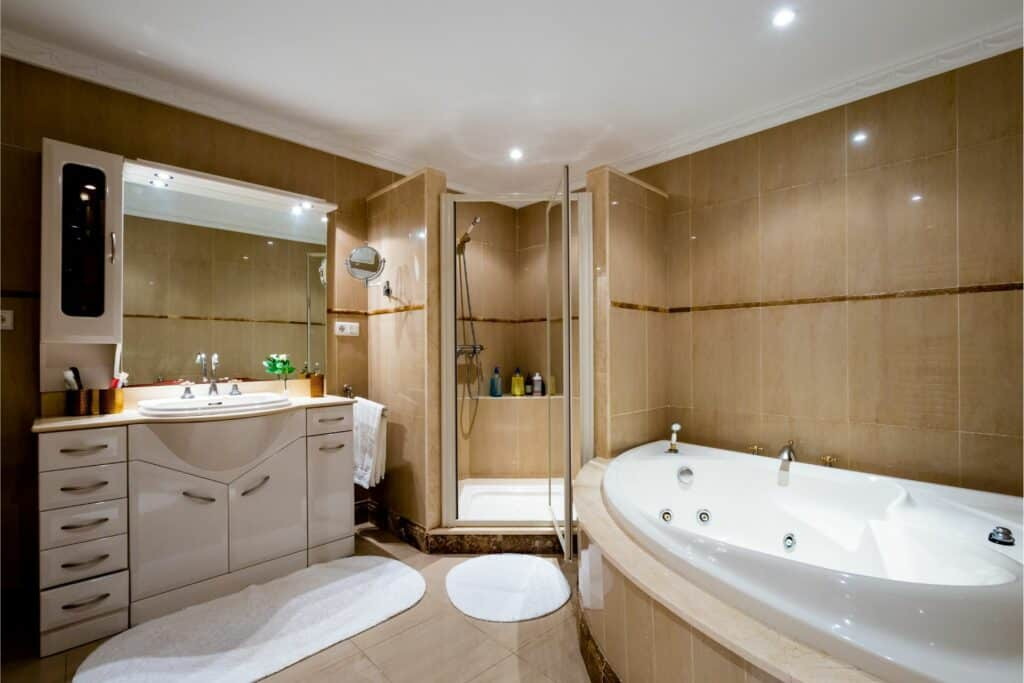
You walk in, expecting calm. You’ve spent a fortune on marble, heated floors, and fixtures that cost more than your first car. But instead of exhaling, you feel… tight. Anxious, even. Maybe the light is too harsh, or you’re constantly bumping your hip against the vanity. It’s weird, right? A room designed for relaxation is actually raising your blood pressure.
This isn’t just bad luck. It’s bad design. And it happens all the time. In 2026, we see more "luxury" bathrooms that look great in photos but fail miserably in real life. They are sterile, confusing, or just plain uncomfortable. The problem isn’t usually the budget. It’s the choices. We get caught up in trends and forget how humans actually use these spaces. Let’s fix that. Here are the seven traps turning your retreat into a regret.
The Lighting Lie: When Bright Isn’t Better
Lighting is the biggest mood killer in a bathroom. Most people think "more light equals better." So they install bright, cool-white LEDs everywhere. The result? A space that feels like a hospital operating room. It’s harsh. It highlights every flaw in your skin and makes the room feel cold and uninviting. You don’t want to linger here. You want to escape.
The fix is layering. You need ambient light for general visibility, task light for shaving or makeup, and accent light for mood. Skip the single overhead fixture. Use sconces at eye level beside the mirror to eliminate shadows on your face. Choose warm bulbs (2700K to 3000K) to mimic natural sunlight. Add dimmers. Always. Being able to lower the lights for a evening soak changes everything. It turns a utility room into a spa.
Also, watch out for shadow zones. If your vanity lights are only above the mirror, your face will be in shadow when you lean in. Side lighting is key. And don’t forget the shower. A small, waterproof niche light can make the space feel larger and safer. It’s those little details that stop the stress before it starts.
The Layout Labyrinth: Ignoring Human Flow
A beautiful tile job means nothing if you can’t move. One of the most common mistakes is cramming too much into a small footprint. Designers call this "clearance error." You need space to open doors, pull out drawers, and step out of the tub without hitting your elbow on the wall. If you’re constantly contorting your body, the room is failing you.
Check the swing of your door. Does it hit the toilet? Does it block access to the sink? If so, switch to a pocket door or an outward-swinging door. Look at the "triangle of movement" between the toilet, sink, and shower. Are paths clear? In 2026, we’re seeing a shift toward "soft zoning"—using half-walls or glass partitions instead of full walls to keep sightlines open. This makes even tiny bathrooms feel airy.
Don’t forget the towel bars. Placing them behind the door or too close to the shower spray is a classic frustration. You reach for a dry towel and get a wet sleeve instead. Annoying. Plan these spots early. Think about where you stand when you’re wet. Where do you naturally reach? Design for that motion, not just for the look of the empty room.
The Material Maze: Too Much Noise
Luxury often gets confused with "more." More patterns, more textures, more colors. But a bathroom is a small box. When you cover every surface in a different busy tile, your eyes don’t know where to rest. It creates visual noise. This subconscious clutter raises anxiety levels. You enter the room and feel overwhelmed before you’ve even turned on the water.
Stick to a cohesive palette. Pick one or two main materials and let them breathe. If you love patterned floor tiles, keep the walls simple. If you want a dramatic stone feature wall, use neutral tones elsewhere. Consistency creates calm. In recent years, designers have moved away from "matchy-matchy" sets toward curated mixes, but there’s a fine line. A mix should feel intentional, not chaotic.
Also, consider maintenance. High-gloss surfaces show every water spot. Dark tiles show every speck of dust and soap scum. If you’re spending your weekend scrubbing grout lines, the design is working against you. Choose materials that age well and hide minor messes. A matte finish often looks more sophisticated and is far easier to live with than a high-shine alternative. Real luxury is ease, not just aesthetics.
The Storage Illusion: Open Shelving Overload
Open shelving looks stunning in magazines. Bottles of artisanal soap, fluffy rolled towels, a small plant. It’s airy and chic. But in real life? It’s a dust magnet and a clutter trap. Unless you are meticulously organized every single day, open shelves become a source of visual stress. Seeing a half-empty shampoo bottle or a messy pile of cotton balls triggers a low-level "to-do" signal in your brain.
Closed storage is your friend. Cabinets hide the mess. They allow the eye to rest on clean lines and beautiful surfaces. If you love the look of open shelves, limit them. One small shelf for decorative items is enough. Keep the daily essentials—toiletries, cleaning supplies, extra toilet paper—behind closed doors. This keeps the visual field clear and calming.
Think about what you actually need within arm’s reach. Do you really need twenty products visible? Probably not. Edit your stash. Store backups elsewhere. The goal is a serene environment, not a retail display. When everything has a hidden home, the room feels larger and quieter. It’s a mental relief as much as a physical one.
The Tech Trap: Complexity Without Purpose
Smart bathrooms are huge in 2026. Toilets that play music, mirrors with news feeds, showers controlled by apps. It sounds futuristic. But is it helpful? Often, it’s just complicated. If you need a manual to take a shower, something has gone wrong. Technology should simplify life, not add friction. Glitchy sensors, dead batteries, and confusing interfaces turn a simple routine into a tech-support nightmare.
Be selective. Choose tech that solves a real problem. Heated floors? Yes. That’s pure comfort. A smart mirror that defogs automatically? Great. But a voice-activated faucet that doesn’t always hear you? Frustrating. Stick to reliable, intuitive features. Avoid gadgets that require constant updates or Wi-Fi connections to function basic tasks.
Also, consider privacy. Do you really want a camera or microphone in your bathroom? Many people are pushing back against invasive smart tech in private spaces. Keep it analog where it counts. A simple, well-made lever handle often feels more luxurious and reliable than a touch-screen panel that smudges easily. Comfort comes from predictability, not novelty.
We talk about light and layout, but sound is equally important. Bathrooms are hard, reflective surfaces. Tile, glass, stone. They bounce sound around, creating echoes. A dripping tap sounds like a drumbeat. The exhaust fan hums like a jet engine. These noises prevent true relaxation. You can’t unwind if the room feels loud and hollow.
Soften the space. Use rugs or bath mats to absorb sound. Choose a quiet, high-quality exhaust fan—look for low sone ratings. If you have a large bathroom, consider acoustic panels disguised as art or ceiling treatments that dampen noise. Even small touches help. A wooden stool, a fabric shower curtain instead of plastic, or a woven basket can break up sound waves.
Think about the outside noise too. Is the window facing a busy street? Double-glazing can make a huge difference. The goal is silence. Or at least, controlled sound. When you step into the bathroom, the world should fade away. If you can hear the traffic or the neighbors, the sanctuary is broken. Fix the acoustics, and you’ll feel the tension drop instantly.
So, there you have it. Seven traps. Lighting, layout, materials, storage, tech, and sound. They seem small individually, but together, they define how a room feels. Luxury isn’t just about the price tag. It’s about how the space supports you. It’s about removing friction. Removing stress.
Take a look at your own bathroom. What’s bothering you? Is the light too bright? Is the clutter visible? Start there. You don’t need a full remodel to fix these issues. Sometimes, changing a bulb, adding a cabinet door, or hiding a gadget is enough. The goal is a space that breathes. A space that lets you breathe.
In 2026, we’re finally moving past the idea that bathrooms are just functional boxes. They are personal retreats. They deserve thought. They deserve care. Avoid these traps, and you’ll find that your bathroom becomes what it was always meant to be: a place of peace. And honestly, isn’t that what we’re all looking for?