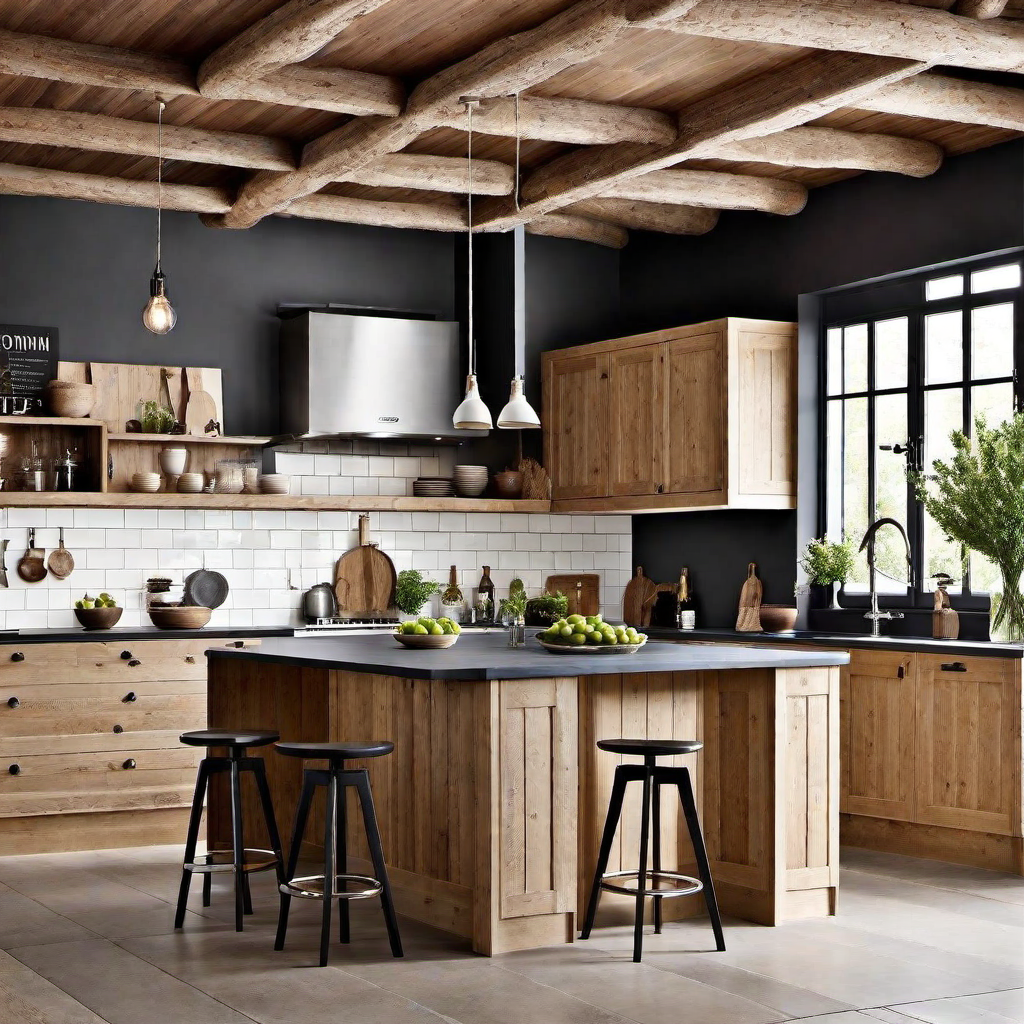
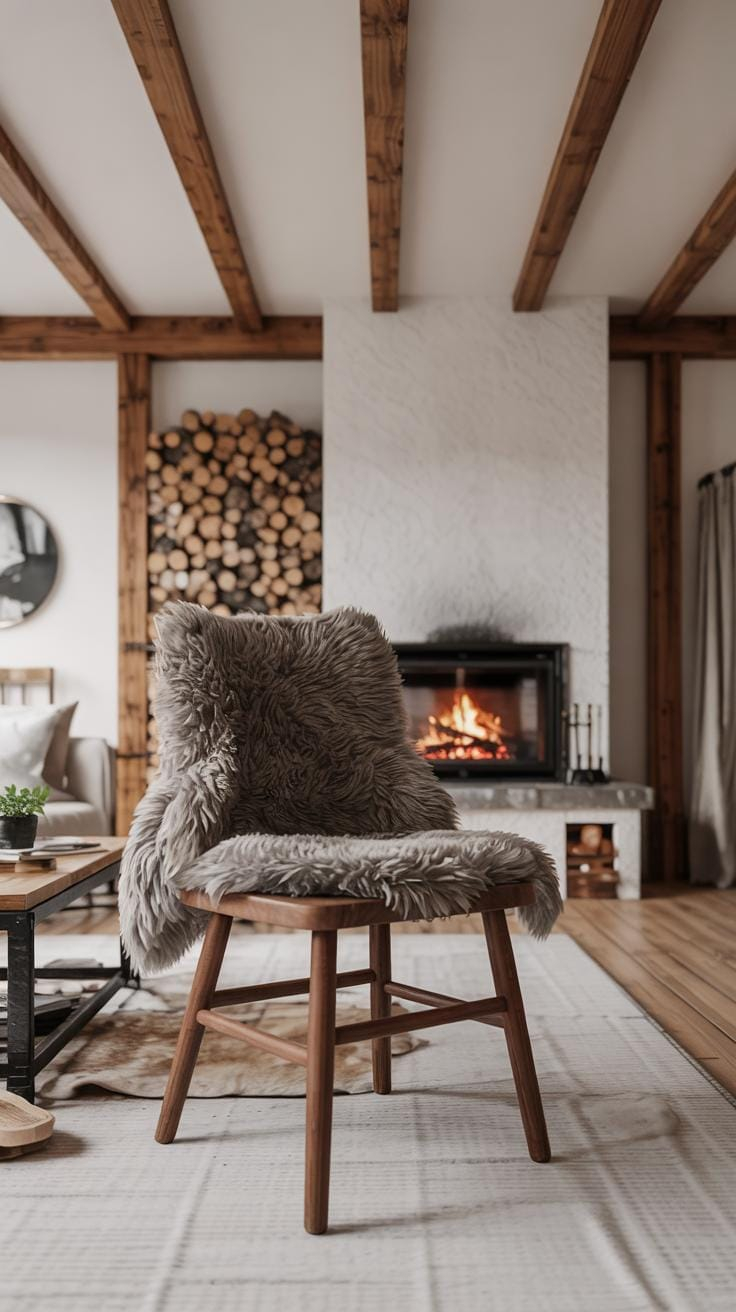
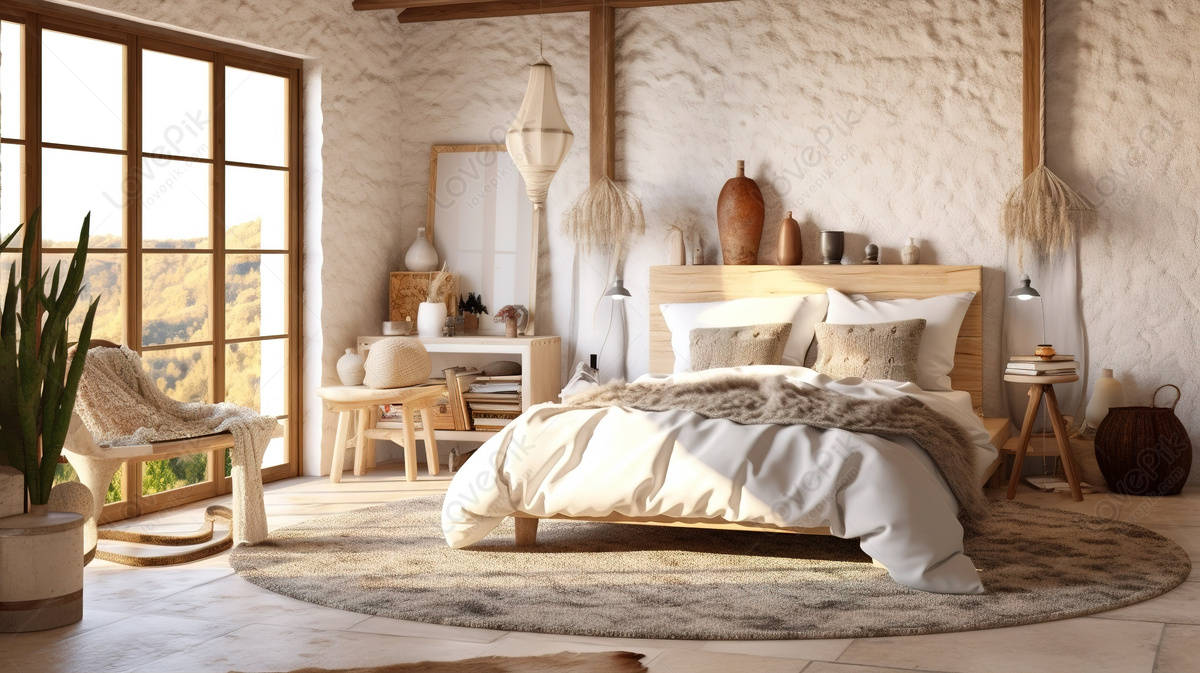
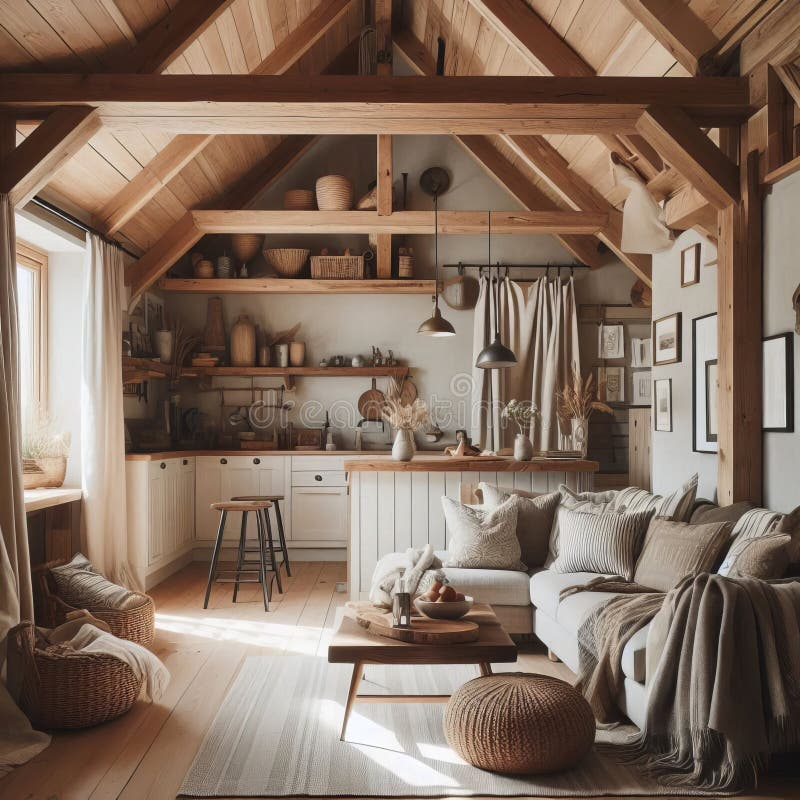
The morning light filtering through an unfurled linen curtain does not merely illuminate a room; it exposes its structural honesty. In many contemporary homes, this light hits surfaces that feel either sterile or overwhelmingly cluttered—stuck in a perpetual tug-of-war between cold, mass-produced minimalism and the chaotic noise of over-accumulation. You notice the sharp edges of synthetic veneers, the synthetic sheen of fast-furniture laminates, and an overarching lack of tactile soul. Yet, stepping into a space where disciplined Nordic design meets the intentional weight of hand-carved wood, raw clay, and woven wool changes the physiological response entirely. Your shoulders drop. Your breathing slows. You are witnessing the delicate equilibrium of functional restraint meeting human warmth.
For decades, the global appetite for Scandinavian interior design has anchored itself on the pillars of simplicity, functionality, and an unyielding reverence for natural light. From the stark white walls of 1920s functionalism to the mid-century organic modernism of Finn Juhl and Hans Wegner, the Nordic template was built to maximize brightness during long, dark winters. But as mass manufacturing flooded the market with flat-pack uniformity, the clean-lined aesthetic risked losing its heartbeat. The antidote to this clinical crispness is not abandoning Nordic principles, but grounding them. By injecting the raw, imperfect, and deeply personal footprint of handcrafted elements into clean spatial geometries, you create interiors that breathe, age with dignity, and tell a story unique to the hands that shaped them.
This design philosophy moves far beyond passing aesthetic fads. It is an intentional curation of material honesty, spatial psychology, and cultural heritage. Whether you are overhauling a suburban split-level or refining an urban apartment, understanding how to balance the crisp, democratic lines of Northern European design with the irregular poetry of artisan craft requires a masterclass in tension and release. Let us dismantle how to build a sanctuary that honors the clarity of the Scandinavian ethos while celebrating the irreplaceable warmth of human touch.
The Architectural Anatomy of Northern Light and Spatial Clarity
Nordic design is fundamentally an architectural response to geography and climate. When daylight is a precious commodity for half the year, every surface becomes an optical instrument designed to bounce, diffuse, and maximize illumination. This requires a strict adherence to a restrained color palette—chalky whites, pale birch, muted stone grays, and oatmeals that absorb the soft northern glow rather than rejecting it. However, absolute minimalism without textural friction quickly deteriorates into visual sterility. The secret to mastering spatial clarity lies in understanding that empty space is not a void to be filled, but an active design element that gives objects permission to breathe.
To achieve this foundational balance, your architectural canvas must prioritize clean lines, concealed storage, and unhindered sightlines. Clutter is the enemy of calm in the Nordic tradition. Yet, sterile perfection is equally disruptive. The integration of structural wood—specifically quartersawn white oak, ash, or scots pine with matte soap-finishes—establishes an organic baseline. Unlike glossy polyurethane, soap-treated wood retains a velvety, tactile matte finish that invites human contact. When you run your hand along a soap-washed dining table, you feel the grain rather than a chemical barrier. This sets the stage for handcrafted interventions, ensuring that when you introduce a heavy, wheel-thrown ceramic vessel or an undulating forged-iron wall sconce, the object feels anchored rather than out of place.
Furthermore, multi-functional furniture serves as the backbone of this spatial clarity. Pieces must earn their footprint. Think of daybeds with integrated ash storage drawers or drop-leaf tables that transition from intimate morning coffee spots to communal dining hubs. By keeping the large foundational pieces streamlined and visually light—often elevated on tapered legs to let light pass underneath—you create an expansive floor plan. This intentional restraint clears the visual noise, ensuring that when hand-spun wool rugs or asymmetrical artisanal lighting fixtures are introduced, they command attention without overwhelming the room’s serene architectural envelope.
The Materiality Dialectic: Where Industrial Precision Meets Artisan Imperfection
The true magic of merging Nordic design with handcrafted elements happens in the friction between precision and imperfection. Nordic furniture design relies heavily on standardized industrial precision, CNC-milled joinery, and mathematical symmetry. Handcrafted elements, by contrast, celebrate the wobbles, tool marks, and organic variations inherent in working with raw materials like clay, molten glass, plant-based fibers, and unsealed metals. Bringing these two opposing forces together requires an intuitive understanding of contrast. If every item in a room is handmade and wildly organic, the space becomes visually chaotic. If every item is sleek and machine-made, it feels like a corporate showroom.
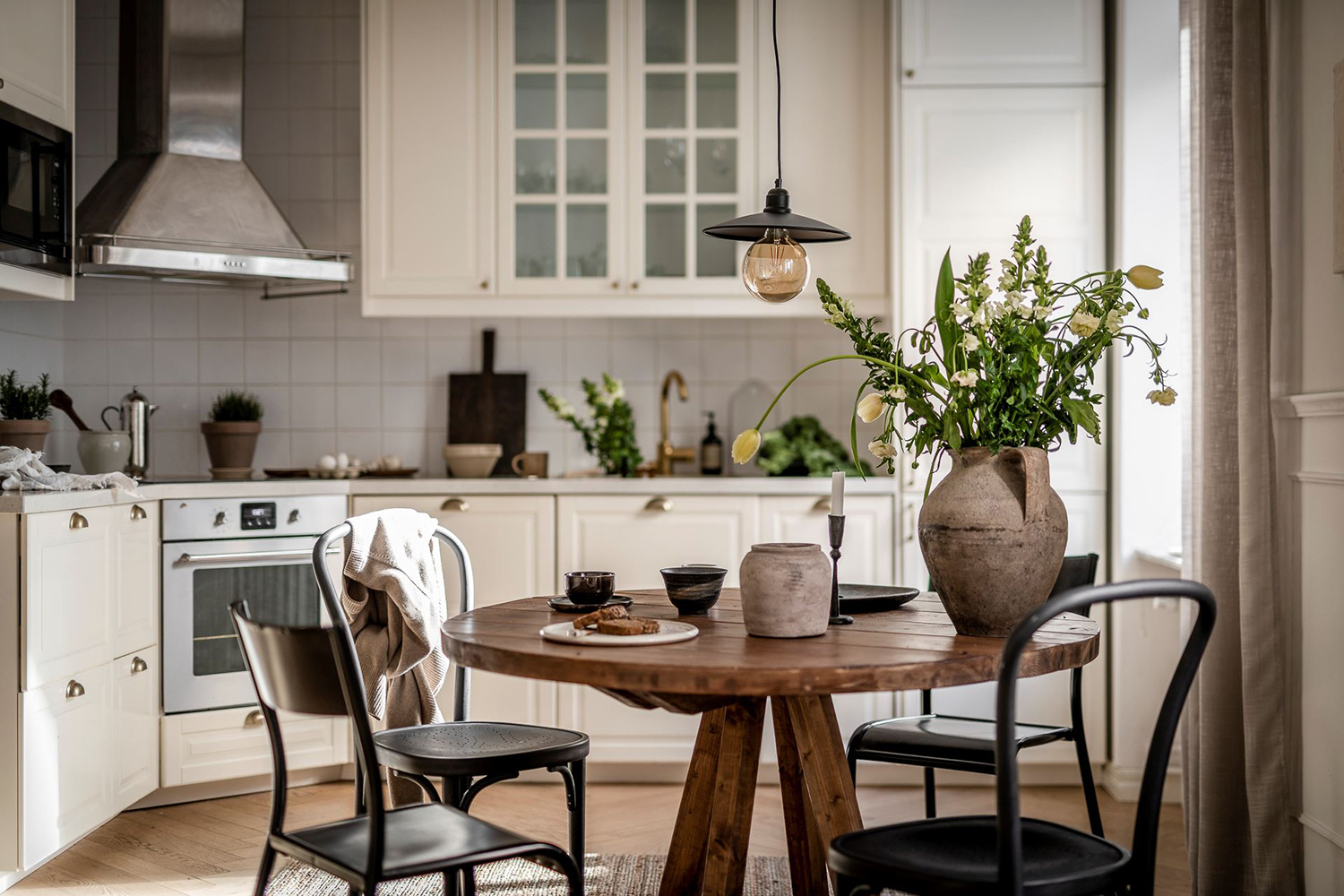
Consider the dining room as a micro-laboratory for this material dialogue. Imagine a Danish-inspired, mass-produced round dining table crafted from smooth, pale ash wood with clean, conical legs. On its own, it is functional and understated. Now, suspend directly above it a pendant light blown by hand from recycled glass, complete with minor internal air bubbles that refract light into dancing patterns across the ceiling. Surround the table with Windsor-style chairs that exhibit subtle hand-carved seat indentations and varying grain patterns. Finally, center the table with an unglazed, hand-coiled terracotta bowl. Suddenly, the machine-milled precision of the table acts as a silent gallery pedestal, elevating the raw, earthy vulnerability of the handcrafted pieces.
This materiality dialectic extends to textiles and wall treatments as well. Crisp, stark white drywall can feel freezing; softening it with lime wash or tadelakt plaster introduces a subtle, cloud-like movement and a velvety matte texture that catches low-angled winter sun differently throughout the day. Ground this airy perimeter with heavy, hand-knotted wool rugs from independent fiber artists rather than synthetic, factory-loomed carpets. The heavy lanolin content in raw wool adds a faint, comforting organic scent to the room while offering acoustic dampening that softens the hard echoes typical of minimalist floor plans. Every material choice must either reflect light or absorb sound, striking a functional balance that feels as good as it looks.
A Step-by-Step Methodology for Curating Your Hybrid Space
Transforming a home through the lens of Nordic-artisanal fusion requires a systematic approach. You cannot simply buy a collection of mismatched artisan items and scatter them across a minimalist room; curation demands restraint, scale awareness, and intentional placement. Follow this proven five-step framework to transition your living spaces from disjointed to harmoniously balanced.
- Step 1 (Establish the Architectural Envelope): Strip back visual noise by painting walls in high-LRV (Light Reflectance Value) mineral paints—think chalky off-whites, warm bone, or muted sage. Clear out heavy window treatments and replace them with sheer Belgian linen drapes that filter light rather than blocking it, setting a luminous, calm baseline.
- Step 2 (Select Anchor Furniture with Clean Lines): Invest in core, high-traffic furniture pieces characterized by classic Scandinavian silhouettes—slender profiles, exposed natural wood grain, and multi-functional capability. Prioritize sofas with neutral wool-blend upholstery and wooden frames that keep floor space visually open.
- Step 3 (Introduce Macro-Textural Handcrafted Contrast): Layer in large-scale handcrafted elements that challenge the sleekness of your furniture. Introduce a hand-hewn oak coffee table with visible chainsaw marks, or hang a monumental woven fiber tapestry on a primary wall to anchor the room’s acoustics and visual weight.
- Step 4 (Curate Functional Artisanal Objects): Transition from decorative trinkets to functional art. Replace mass-produced kitchenware and dinnerware with wheel-thrown ceramics, hand-forged steel hardware on cabinetry, and hand-carved wooden spoons resting openly on open shelving. Let utility meet beauty.
- Step 5 (Layer Organic Lighting and Ambient Softness): Layer your lighting scheme away from harsh overhead fixtures. Combine dimmable architectural recessed lighting with artisan-made ceramic table lamps, hand-dipped beeswax taper candles in cast-iron holders, and floor cushions upholstered in coarse, undyed hemp.
Navigating Common Pitfalls and Practitioner Workarounds
Even experienced designers stumble when attempting to merge stark minimalism with rustic craft. The most frequent trap is sliding into stylistic pastiche—accidentally turning a modern home into a cluttered ethnographic museum or an overly rustic alpine cabin. Maintaining the airy, uncluttered integrity of the Nordic philosophy while honoring the density of handcrafted objects demands strict adherence to spatial discipline.
- Pitfall 1 (Visual Clutter and Over-Accessorizing): Stacking dozens of small handmade objects across every available flat surface destroys the minimalist calm. Workaround: Apply the rule of negative space. For every handcrafted ceramic object or wooden sculpture you display, leave at least two surfaces completely bare to let the eye rest.
- Pitfall 2 (Clashing Wood Tones): Mixing too many competing wood species (such as golden honey pine, reddish cherry, and dark walnut) creates visual chaos against pale Scandinavian backgrounds. Workaround: Stick to a maximum of two harmonizing wood families within a single sightline—typically pairing pale ash or birch with a contrasting charred or dark-stained oak accent piece.
- Pitfall 3 (Ignoring Scale and Proportion): Placing delicate, tiny artisan trinkets in a large, open-concept room makes the space feel fragmented and cheap. Workaround: Scale up your handcrafted elements. Opt for oversized, statement-making artisan pieces—such as a massive, floor-standing terracotta urn or a wide-format woven wall hanging—to match the architectural scale of modern rooms.
- Pitfall 4 (Sacrificing Ergonomic Function for Aesthetics): Choosing a stunning, hand-carved wooden chair that causes severe back pain violates the core Scandinavian principle that form must always serve human well-being. Workaround: Prioritize ergonomic comfort for primary seating, reserving purely sculptural, handcrafted seating for accent spots or occasional reading nooks.
- Pitfall 5 (Sterile, Single-Source Lighting): Relying on bright white, high-kelvin LED ceiling bulbs that wash out the subtle warmth of handmade ceramics and natural wood grains. Workaround: Cap your bulb temperatures at 2700K (warm white) and distribute light across multiple low-level sources, highlighting the textures of hand-woven textiles and uneven clay surfaces.
The Philosophical and Sustainable Shift Toward Slow Interior Architecture
Beyond the visual and spatial benefits, merging Nordic design with handcrafted elements represents a profound shift away from disposable consumerism and toward slow interior architecture. Traditional Scandinavian design has long championed the concept of lagom—not too little, not too much, just enough—alongside a fierce commitment to environmental sustainability. Mass production, when divorced from ethical oversight, relies on synthetic off-gassing materials, deforestation, and carbon-heavy global shipping cycles. Conversely, investing in local artisans or certified fair-trade craftspeople preserves ancestral techniques while drastically reducing a home’s ecological footprint.
This approach transforms your home from a static product catalog into a living archive. When you purchase a dining chair crafted by a local woodworker using locally fallen timber, or a wool blanket woven by an independent textile artist utilizing heritage shearing methods, you are anchoring your living space in a tangible narrative. You know the provenance of the objects you live with. This emotional durability is the ultimate sustainability metric. Items imbued with human labor and unique character are rarely discarded during routine stylistic updates; instead, they are repaired, cherished, and passed down through generations.
Furthermore, this hybrid aesthetic aligns seamlessly with the psychological need for refuge in an increasingly hyper-digital world. Our nervous systems are bombarded daily by screen glare, algorithmic notifications, and frictionless digital interfaces. Stepping across your threshold into a room defined by the tactile grain of soap-washed oak, the irregular weight of handmade pottery, and the soft, diffused glow of linen-filtered daylight acts as a restorative grounding mechanism. Your home ceases to be a storage unit for goods and becomes a physical sanctuary that actively nurtures mental clarity, emotional equilibrium, and a deep, somatic connection to the natural world.
Actionable Recommendations for Cultivating Your Sanctuary
To translate these high-level principles into your day-to-day living environment, you must adopt a disciplined framework for acquisition and editing. Designing a harmonious home is not a weekend project completed with a single online shopping spree; it is an ongoing practice of curation, subtraction, and intentional alignment.
- Audit Your Existing Space: Walk through each room with a notebook and identify items that feel entirely plastic, mass-produced, or emotionally vacant. Commit to phasing these out gradually, replacing them one-for-one with items possessing genuine material honesty and handcrafted pedigree.
- Source Locally and Ethically: Forge relationships with regional makers, pottery guilds, and independent textile studios. Buying directly from craftspeople not only ensures higher structural integrity and bespoke sizing for your rooms, but it also infuses your living space with local cultural context.
- Embrace Patina and Aging: Allow your materials to live. Do not panic when a hot mug leaves a ring on your soap-treated wooden coffee table or when a linen sofa develops a relaxed slouch. In both Nordic and artisan traditions, aging is not damage—it is the accumulation of life and character.
- Prioritize Quality Over Quantity: Direct your interior design budget away from buying volume and toward investing in legacy anchor pieces. One masterfully crafted, hand-joinery dining table surrounded by four simple, sturdy chairs will always outlast a house full of flat-pack transient furniture.
The pursuit of a harmonious home is ultimately an exercise in mindfulness. By pairing the democratic clarity, spatial restraint, and light-maximizing genius of Nordic design with the soulful, tactile imperfections of handcrafted elements, you bridge the gap between industrial efficiency and human warmth. You no longer have to choose between a sterile, minimalist showcase and a cluttered, overwhelming antique shop.
Instead, you forge a middle path—a sanctuary where clean lines frame organic textures, where every object has a verified purpose or a human story, and where your physical environment actively works to calm your nervous system. As you begin adjusting your lighting, curating your surfaces, and investing in pieces shaped by human hands, remember that a truly harmonious home is never truly finished. It evolves slowly alongside you, breathing, shifting, and growing more beautiful with every passing season.