You clear the cups, stack the mail into a neat pile, and slide the stray remote controls back onto the lower shelf. For a fleeting thirty seconds, your living room coffee table looks pristine—almost worthy of an editorial spread in an architecture journal. Yet, by the next evening, it has quietly mutated back into a chaotic landing zone. A half-empty glass of water sits next to a laptop charger, three unread magazines, a rogue tube of hand lotion, and an empty snack wrapper. It feels like gravity itself conspires to deposit every loose item in the house onto that specific four-foot-by-two-foot horizontal plane.
This frustrating phenomenon happens in high-end penthouse apartments just as often as it does in suburban tract homes. Most people assume the problem is simply a lack of discipline or an excess of personal belongings. They purge the table, throw away old receipts, and vow to keep it clear. Within forty-eight hours, the clutter returns with a vengeance. The root cause is rarely laziness. Instead, it is a mismatch between how a piece of furniture functions in daily human life and how it has been visually constructed.
Living room tables occupy a strange psychological and physical purgatory in domestic architecture. They sit directly in the traffic flow of the home, acting as the primary gravitational pull for everything that leaves our hands between the front door and the sofa. When a space lacks designated landing zones, or when furniture proportions fight against the room’s natural circulation, flat surfaces absorb the collateral damage. Understanding this dynamic requires moving past superficial organizing tips and looking closely at scale, visual weight, negative space, and the psychology of everyday human habits.
The Invisible Architecture of Surface Tension and Gravity
Every horizontal surface in a home possesses a distinct carrying capacity that goes far beyond structural weight limits. It holds a psychological carrying capacity, a threshold where an empty space invites order while a crowded space invites more clutter. When a coffee table features a jumble of competing objects—none of which relate to one another in scale, texture, or purpose—the human eye perceives visual noise. This visual friction makes the entire room feel smaller, more chaotic, and fundamentally unsettled, even if the floor is spotless and the upholstery is neatly fluffed.
Interior designers approach a room with an acute awareness of focal points and visual momentum. A living room without a clear anchor point forces the eye to bounce erratically between the television screen, art prints, bookshelf corners, and a busy coffee table. When that table lacks a cohesive arrangement, it becomes the loudest object in the room. The mind registers every loose receipt, stray pen, and asymmetrical knick-knack as an unfinished task. This low-grade visual stress accumulates over time, transforming a place meant for relaxation into a subtle source of daily fatigue.
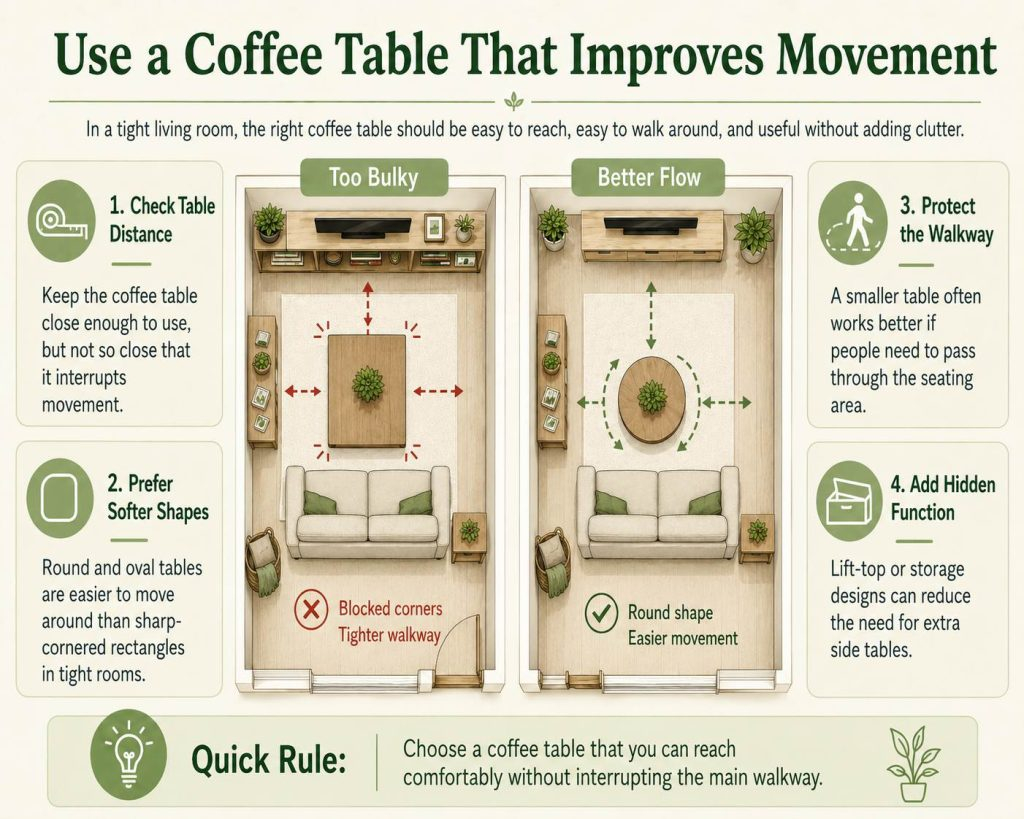
Beyond psychology, physical ergonomics dictate how tables collect mess. If a coffee table is positioned too far away from the sofa, people will stack items on the edge rather than reaching across the void. Conversely, if it is too close or too large for the surrounding seating group, it blocks normal movement patterns, forcing residents to balance drinks on arms of chairs or pile plates precariously on top of each other. The physical dimensions of the furniture must harmonize with the bodies moving around it. When the layout supports natural human motion, horizontal surfaces stop functioning as emergency dumpsters and start acting as intentional anchors.
How Proportions, Scale, and Visual Weight Create Spatial Harmony
The most common mistake homeowners make involves the fundamental scale of their furniture and decorative objects. A massive, heavy oak coffee table placed in front of a delicate, low-slung apartment sofa creates an immediate sense of disproportion. To compensate, people often try to cover the vast wooden expanse with dozens of small decorative items, thinking they are filling the void. This strategy backfires spectacularly. Instead of looking curated, the table resembles a miniature landscape of clutter where individual items lose their identity and merge into an amorphous blob of visual noise.
Scale operates on a principle of contrast and rhythm. Professional designers use the rule of thirds and asymmetrical balance to break up horizontal planes. If every object on a table stands at the exact same height—say, a collection of flat art books topped by a flat remote control caddy—the surface looks dead and stagnant. Conversely, if an arrangement features varied vertical elevations, such as a tall glass vase with long branches paired with a low, heavy stone bowl, the eye travels smoothly across the surface. This creates a sense of dynamism without introducing chaos.
Materiality also dictates visual weight. A glass-topped coffee table with a slender brass frame naturally reflects light and creates the illusion of more floor space, making it forgiving of minor clutter. A dark, solid-wood block table absorbs light, demanding absolute precision in how objects are placed upon it. When dark, heavy surfaces are cluttered with random everyday items, the room instantly feels cramped and heavy. Recognizing the inherent visual weight of your furniture allows you to choose decor that cooperates with the architecture rather than fighting against it.
The Professional Method for Styling and Maintaining a Clear Table
Fixing a chronic table clutter problem requires a systematic approach that borrows from retail merchandising and interior staging. Designers do not just place items randomly; they utilize functional zones and intentional negative space. Transforming a chaotic surface into a calm focal point involves a deliberate sequence of choices that permanently alters how you interact with the furniture.
- Step 1 (The Total Strip-Down): Remove every single object from the surface of the table. Wipe the wood, glass, or stone clean, and place all removed items on a separate surface so you can evaluate them individually without the optical illusion of the table itself.
- Step 2 (The Foundation Tray): Introduce a single low-profile tray, a shallow wooden bowl, or a large leather-bound book to act as an anchor. This physical boundary creates a designated corral for everyday necessities like TV remotes and coasters, stopping them from migrating across the entire tabletop.
- Step 3 (The Vertical Contrast): Select one tall, organic element to introduce height, such as a sculptural ceramic vase, a potted succulent, or a seasonal branch in water. This draws the eye upward and breaks up the monotony of flat horizontal lines.
- Step 4 (The Intellectual Layer): Add two to three coffee table books stacked flat. Choose titles with spines that complement your room’s color palette, turning reading material into a design feature rather than a stack of temporary reading material.
- Step 5 (The Strict Rule of Editing): Apply the subtraction principle. Remove at least one-third of the items you initially placed on the table. Leave generous zones of completely empty space, allowing the material of the table to breathe and speak for itself.
Common Pitfalls and Field-Tested Workarounds for Stubborn Clutter Zones
Even after a thorough styling session, old habits die hard. Within a week, mail starts accumulating again, and children or partners begin dropping keys and sunglasses on the newly cleared surface. Anticipating these human behaviors is essential for maintaining a tidy living room over the long haul.
- Pitfall 1 (The Mail and Paper Trap): Treating the coffee table as an inbox for incoming bills, school permission slips, and flyers. Workaround: Establish a strict "no loose paper" policy for the living room. Install a stylish wall-mounted basket or a dedicated desktop file organizer near the actual entryway or home office, treating the living room as a paper-free zone.
- Pitfall 2 (The Remote Control Menace): Allowing three different black plastic remotes to lie exposed across the center of the table. Workaround: Invest in a covered decorative box or a sleek leather pouch that sits neatly inside your foundational tray, keeping technology hidden from view until it is actively needed.
- Pitfall 3 (Over-Accessorizing with Knick-Knacks): Filling every square inch with small decorative trinkets collected from travels or gift shops. Workaround: Group small items inside a bowl or tray rather than scattering them individually, or rotate your collection seasonally so the surface never feels crowded.
- Pitfall 4 (Ignoring the Lighting Factor): Relying solely on a harsh overhead ceiling light that casts sharp shadows and exaggerates every speck of dust and stray object. Workaround: Turn off overhead fixtures and layer warm ambient lighting using floor lamps and table lamps with warm-toned bulbs (around 2700K), which softens the room and minimizes visual clutter.
- Pitfall 5 (Failing to Account for Daily Life): Designing a table purely for photographic perfection without leaving room for actual human needs, like setting down a coffee mug. Workaround: Always leave at least forty percent of the table’s total surface area completely empty and accessible for drinks, snacks, and resting hands.
The Intersection of Daily Habits, Psychology, and Long-Term Spatial Peace
Maintaining a calm living room environment is ultimately an exercise in behavioral design rather than strict housekeeping. When physical spaces are organized intuitively, they encourage clean habits without requiring constant mental exertion. If a household member has to walk past three different storage solutions to put away a pair of glasses, they will inevitably drop them on the nearest coffee table. Designing a functional room means closing the gap between where items are dropped and where they actually belong.
This perspective shifts the goal from achieving an unattainable, magazine-perfect home to creating a nurturing environment that supports well-being. A clutter-free table reduces cognitive load. When you walk into your living room after a long workday, your nervous system processes an ordered environment as a safe, restorative space. The absence of visual noise allows the mind to decompress, turning the living room back into a sanctuary rather than an extension of your daily to-do list.
Furthermore, interior design trends in recent years emphasize tactile warmth, organic materials, and intentional minimalism over sterile perfection. Homes are meant to be lived in, not museum-cured. The secret lies in designing surfaces that gracefully accommodate real life while maintaining a core structure of calm. By respecting scale, embracing negative space, and providing clever hidden storage nearby, you create a dynamic equilibrium that withstands the everyday hustle and bustle.
Practical Recommendations for Sustaining Your Clean Living Room Table
To ensure your living room table remains a design feature rather than a magnet for household debris, incorporate a few simple operational routines into your weekly schedule. These actionable steps require minimal effort but yield dramatic, long-lasting improvements to your home’s atmosphere.
- The Five-Minute Nightly Reset: Dedicate the last five minutes of your evening routine to clearing the living room. Return cups to the kitchen, fold stray blankets, and place items back into their designated trays.
- The One-In, One-Out Rule: If you purchase a new decorative object or book for your coffee table, intentionally remove an existing item. This prevents gradual accumulation and forces mindful curation.
- Proximity Storage Integration: Place a closed storage ottoman or a large basket with a lid within arm’s reach of the sofa. This provides an immediate, zero-effort hiding spot for extra throw blankets, pillows, and rogue items when unexpected guests arrive.
- Embrace Surface Rotation: Change out your table styling items every few months. Rotating books, candle scents, and botanical elements keeps the space feeling fresh and prevents you from becoming blind to creeping clutter.
The battle against living room clutter is rarely won through a single weekend of aggressive cleaning. It is won through a deeper understanding of how furniture scale, lighting, human habits, and visual weight interact within a shared space. When you stop fighting your natural tendencies and instead design systems that accommodate real human behavior, tidiness stops feeling like an exhausting chore.
Your living room table is more than just a piece of wood or glass sitting in front of your sofa. It is the emotional and functional center of your gathering space. By treating it with intention—balancing height, honoring negative space, and establishing functional boundaries—you reclaim control over your environment. Take a moment today to strip your table down to its essentials, introduce a thoughtful anchor, and watch how a few small structural shifts can completely transform the energy of your home.