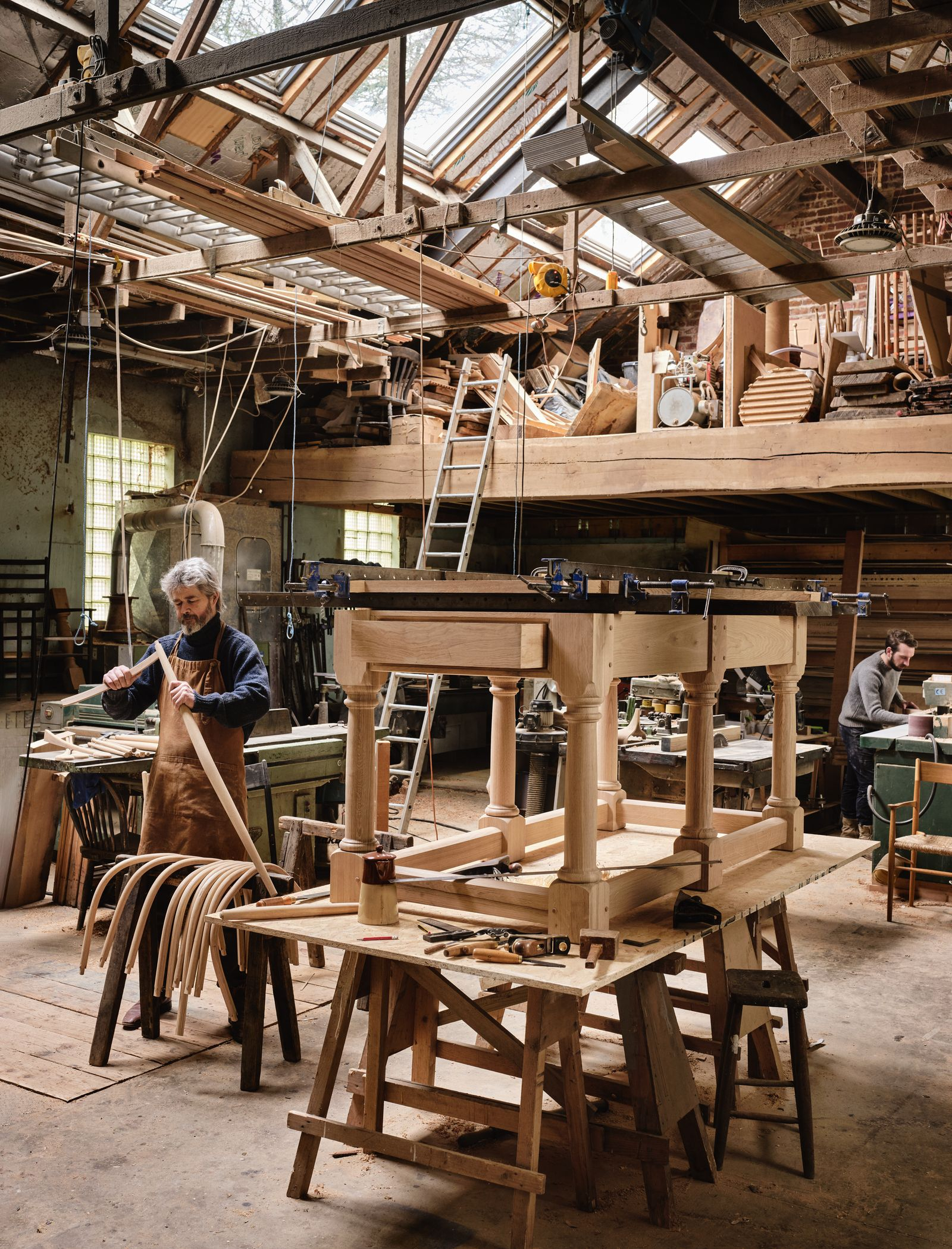
If you have ever stared at a sleek, custom oak dining table and wondered why it feels so fundamentally different from mass-produced flat-pack stuff, you aren’t alone. Most people think the secret lies in some magic finish or ultra-expensive tool. But ask anyone who has spent decades working with wood, and they’ll tell you something completely different.
Building furniture that lasts generations isn’t about speed or flawless machinery. It is about understanding how trees behave long after they’ve been cut down, and following a patient process. Here is what the true old-timers wish everyone understood before picking up a saw for the first time.
1. Wood Is Alive, Even When It Is Dead
The biggest mistake green woodworkers make is treating timber like plastic or metal. Wood breathes. It expands across its grain when summer humidity hits and shrinks back down when the winter heater kicks on. If you try to lock a wide wooden top down with rigid screws, the wood will eventually split itself apart. Master builders spend half their design time just figuring out how to let the pieces shift safely over time.
Before you cut a single board, you have to let your lumber acclimate to your shop environment. Buying kiln-dried wood from a local supplier is great, but bringing it straight into a climate-controlled room and cutting joinery that afternoon is a recipe for warped table tops. Give it a week or two to settle down.
Pro Tip: Always use z-fasteners or elongated screw slots when securing table tops to bases. This gives the wood room to move across its width without cracking.
2. Milling Is 80 Percent of the Final Quality
Everyone wants to jump straight to cutting fancy joints or applying shiny stains. But here is the boring truth: if your boards aren’t perfectly flat, square, and uniform, nothing else in your project will line up right. Professional furniture makers spend a huge chunk of their time milling timber.
The standard step-by-step milling sequence goes like this:
- Flatten one face on the jointer to eliminate twists and bows.
- Flatten one edge at a strict 90-degree angle to that first face.
- Run it through the planer to make the opposite face flat and parallel.
- Rip to width on the table saw, leaving a tiny bit extra for sanding.
- Crosscut to length using a reliable miter gauge or crosscut sled.
If you rush this phase, you’ll be fighting mysterious gaps and misaligned corners for the rest of the build. Taking your time here makes every later step feel almost effortless.
3. Joinery Selection Beats Raw Strength Every Time
It is easy to get caught up in the debate between traditional mortise-and-tenon joints, pocket screws, and modern loose-tenon dominoes. Beginners often think stronger is always better, but flexibility and surface area for glue are what actually keep furniture standing. A simple lap joint with plenty of long-grain contact often outlasts a fancy joint cut poorly.
+-------------------+-----------------------------------+--------------------------------+
| Joinery Type      | Best Used For                     | Skill Level Needed             |
+-------------------+-----------------------------------+--------------------------------+
| Mortise & Tenon   | Table legs, heavy aprons, frames  | Intermediate to Advanced       |
| Pocket Screws     | Quick face frames, hidden carcass | Beginner                       |
| Dovetails         | Drawer boxes, cabinet corners     | Intermediate to Advanced       |
| Dowels / Dominoes | Frame joinery, quick alignment    | Beginner to Intermediate       |
+-------------------+-----------------------------------+--------------------------------+
Pick joinery that fits the stress the piece will take day to day. A heavy dining chair needs deep tenons because people rock back on the rear legs, while a small side table can get away with simpler techniques.
4. Sharp Tools Fix Almost Everything
When a saw strays off its line or a chisel tear up the grain, woodworkers often blame their lack of skill. Nine times out of ten, the real culprit is a dull blade. Master craftsmen keep their edge tools insanely sharp—sharp enough to shave arm hair without pulling.
Working with dull steel forces you to use extra pressure, which leads to slippage and ugly tearout. A simple diamond sharpening stone and a honing guide will transform your work far more than buying a brand-new power tool ever could.
When your chisel glides through hardwood like cold butter, you realize control comes from sharp steel rather than raw muscle.
5. Dry Fitting Is Non-Negotiable
Never, ever apply glue without doing a complete dry run first. Glue up day is notoriously stressful because yellow PVA glue starts tacking up within ten minutes. If you discover a joint is too tight or you are missing a clamp while the glue is drying, panic sets in real fast.
Set up your entire project using all the clamps you think you need, plus two extra. Check for square across diagonals using a tape measure—if the diagonal measurements match, your cabinet frame is square. Once everything fits tightly without gaps, take it apart systematically, lay out your glue, and execute the final assembly calmly.
6. Finishing Is a Process, Not a Final Coat
A lot of beginners treat finishing as an afterthought—just slather on some polyurethane at the end and call it a day. But master craftspeople know that wood finishing starts with how you sand. Skipping grit levels, like jumping straight from 80-grit to 220-grit, leaves tiny swirl marks that stay hidden until you apply the topcoat.
Sand progressively through 100, 150, and 180 grit, wiping down the wood with mineral spirits between passes to highlight scratches. When applying film finishes like lacquer or varnish, multiple thin coats sanded lightly with 320-grit paper in between will always look better than one heavy, dripping coat.
Building fine furniture isn’t about working fast or never making mistakes; it is about knowing how to fix the little errors along the way without losing your temper. Master craftsmen aren’t people who never mess up a cut. They are simply people who have learned to pause, re-evaluate, and adapt when something goes wrong.
Take a deep breath, respect the wood’s natural movement, and remember that every mistake teaches you something your tools never could.