The late afternoon sun cuts across the living room floor, illuminating a chaotic stack of mail, half-read paperbacks, and random charging cables pooled at the base of a plain wooden bookcase. Every time your eyes drift toward that corner of the room, a subtle spike of tension hits your chest. You did not invite this chaos, yet it demands your attention. Multiply this silent psychological friction across every wall, every countertop, and every disorganized nook in your home, and you begin to understand the invisible tax that poorly managed environments levy on daily peace of mind.
Modern domestic life operates at a relentless pace, bombards our senses with digital stimulation, and leaves us starving for tactile, grounded physical environments. When you step through your front door after an exhausting day navigating public transit, endless notifications, and demanding schedules, your home needs to function as a decompression chamber. Yet, standard interior spaces frequently mirror the outside world’s noise rather than counteracting it. Unfiltered storage acts as a silent background stressor, keeping our brains in a perpetual state of low-grade vigilance.
Against this backdrop of sensory overload, shelving has undergone a quiet cultural evolution. It is no longer viewed merely as a pragmatic load-bearing box screwed into drywall to hold excess belongings. Instead, the art of curating and styling a shelf has emerged as a primary design intervention for safeguarding mental wellbeing. By transforming random catch-alls into intentional compositions of shape, negative space, and texture, homeowners are reclaiming control over their immediate atmospheres. Styling a shelf is essentially an exercise in cognitive editing—a physical manifestation of setting boundaries against the clutter of modern existence.
The Neurology of Visual Noise and How Intentional Shelving Restores Cognitive Equilibrium
Human evolution never prepared our visual cortex to process the dense array of disparate plastic objects, neon brand packaging, and misaligned items that characterize contemporary interiors. Every individual item resting on an open surface competes for our subconscious attention, firing micro-signals to the brain that demand classification. When surfaces are crowded with uncurated clutter, the brain’s working memory experiences constant interruptions. This phenomenon, widely documented in environmental psychology, explains why coming home to disarray makes relaxation nearly impossible.
When public health researchers analyze living environments, the correlation between disorganized spaces and elevated cortisol levels becomes starkly apparent. The physical clutter in a room acts as a continuous distractor, lowering our threshold for frustration and eroding our capacity for deep rest. Well-styled shelves intervene directly in this neurological loop by imposing geometry, rhythm, and predictability onto our surroundings. By establishing clear visual hierarchies—where groups of objects are balanced by deliberate swaths of negative space—shelving allows the eye to rest rather than race.
Consider the mechanical function of negative space within a shelf display. Empty air is not a waste of storage capacity; it is a visual exhale. When interior stylists leave gaps between sculptural objects or book collections, they are actively reducing the cognitive load required to scan the room. The brain recognizes the boundaries and pauses, interpreting the scene as safe, ordered, and complete. This subtle shift transforms a generic wall from a chaotic storage problem into an anchor of psychological grounding.
Decoding the Anatomy of Calm: Materiality, Proportion, and Organic Balance
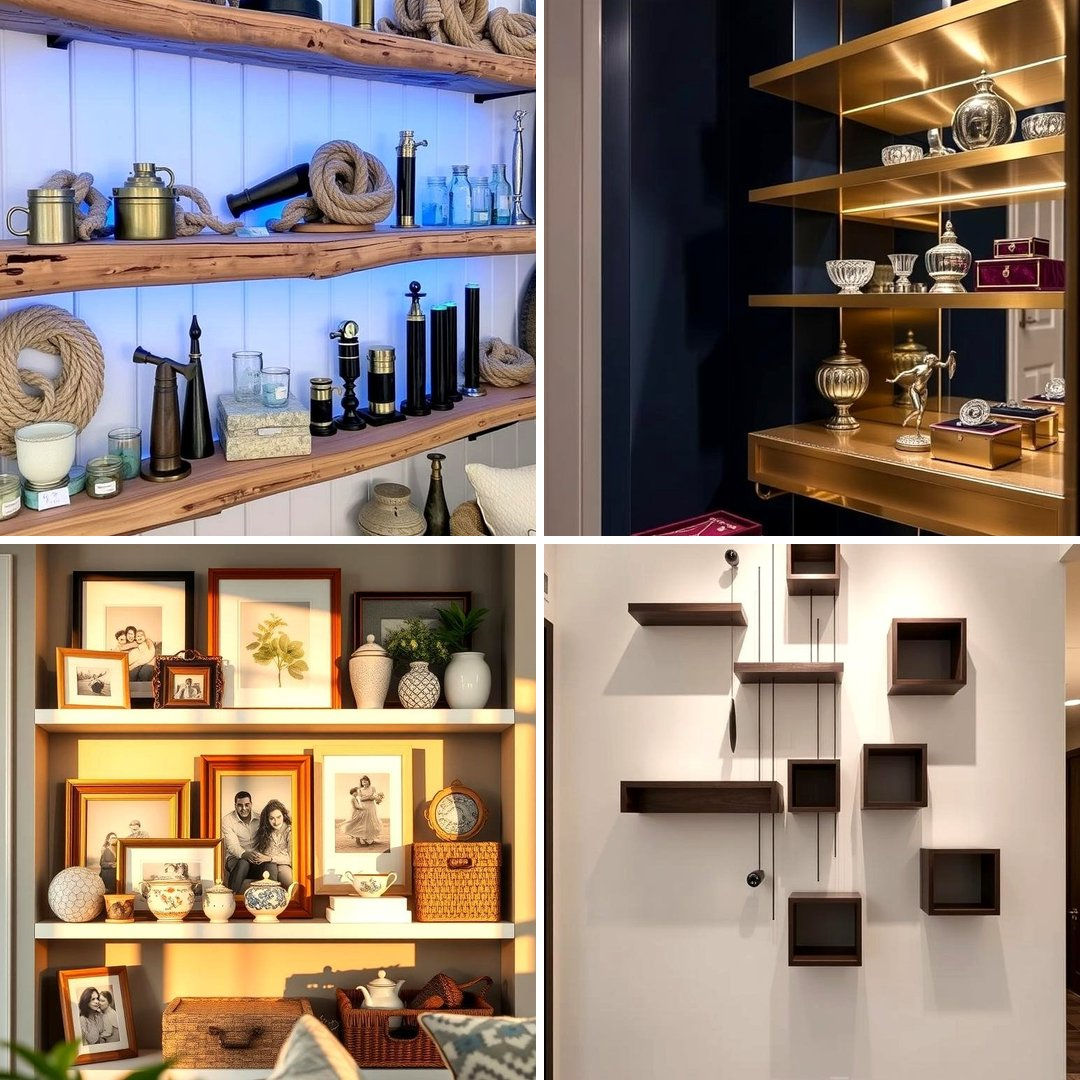
Achieving tranquility through shelving requires an acute sensitivity to the materials you choose to invite into your living space. Industrial brackets paired with raw steel might project a stark, uncompromising minimalism, but they can easily feel cold if they lack organic counterweights. Conversely, white oak, travertine, and hand-thrown ceramics introduce tactile warmth that invites the hand to touch and the nervous system to soften. The interplay between hard and soft surfaces dictates whether a shelving unit feels like a museum display or a living, breathing part of a home.
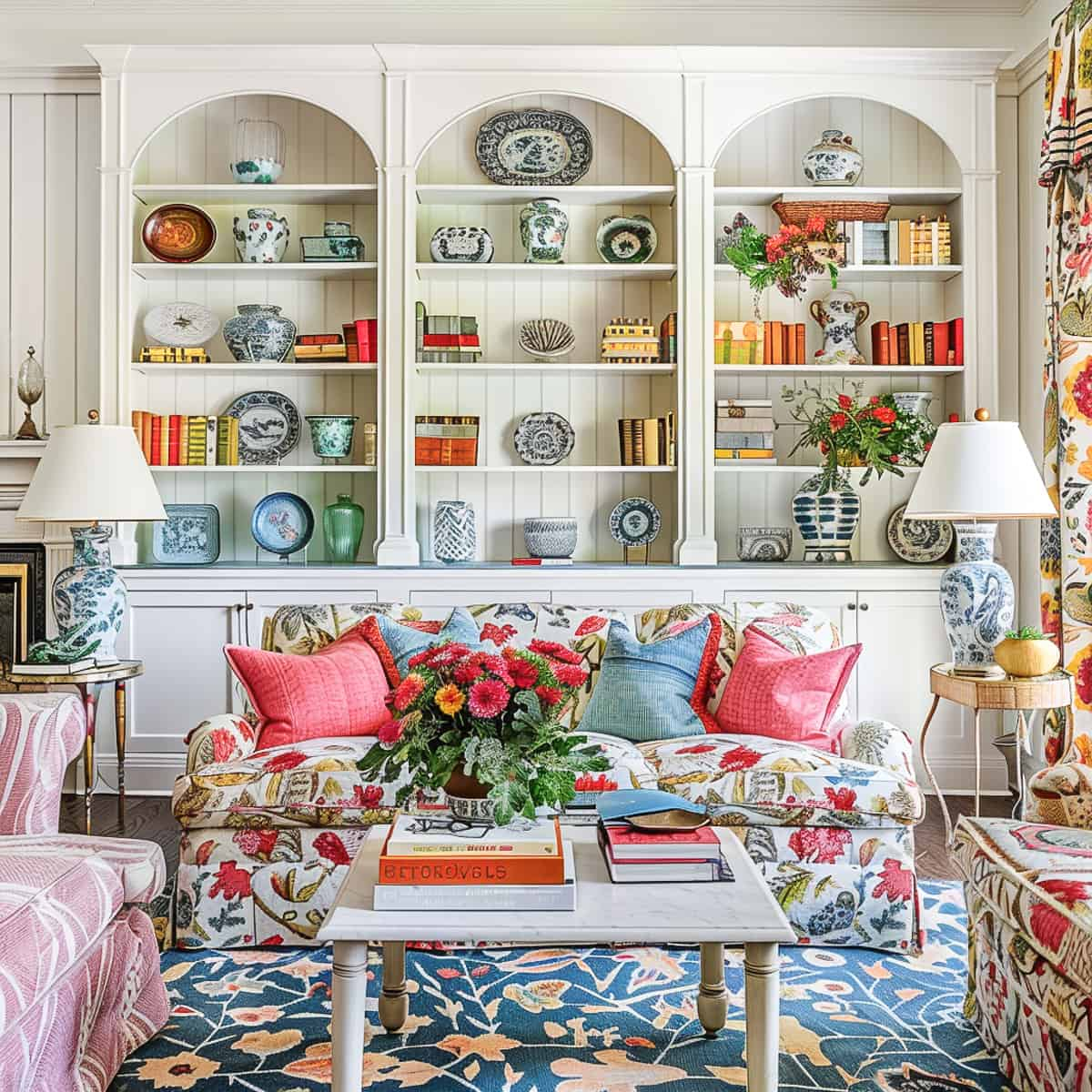
Proportion operates as the invisible architecture behind every successful shelf arrangement. When items are crammed onto shelves without regard for scale, the composition collapses into visual noise. Taller vertical elements, such as elongated ceramic vessels or framed artwork, must be balanced against horizontal anchors like stacked monographs or low wooden bowls. This rhythmic alternation prevents the eye from getting trapped in dead zones or bouncing erratically across the wall. It creates a seamless visual flow that mimics the balanced complexities found in nature.
Furthermore, color palette selection plays an indispensable role in maintaining domestic serenity. Monochromatic or low-contrast schemes—rooted in chalky whites, warm beiges, muted earthens, and soft charcoals—allow the mind to slip effortlessly into a state of calm. Introducing a singular, vibrant statement piece or an antique bronze artifact can puncture the monotony, provided it is given enough breathing room to shine. The objective is never to create a sterile, personality-free zone, but rather to curate a balanced ecosystem of objects that tell a cohesive personal story.
A Step-by-Step Methodology for Transforming Chaotic Shelves into Sanctuaries
Turning a chaotic storage catch-all into a refined designer feature demands a methodical approach that strips away excess before building up beauty. You cannot successfully style over clutter; you must start from absolute zero to understand the true spatial capacity of your shelving.
- Step 1 (The Complete Clear-Out): Remove every single object from your shelves and place them on a central table. Wipe down the wood, metal, or glass surfaces to create a clean slate, free of accumulated dust and psychological baggage.
- Step 2 (The Ruthless Audit and Sort): Evaluate every item individually, sorting them into three distinct categories: daily utility, profound emotional resonance, and pure excess. Donate or store items that fail to serve your immediate sense of calm or joy.
- Step 3 (Establishing Anchors and Focal Points): Place your largest, heaviest visual anchors first—such as heavy art books laid horizontally or a substantial ceramic sculpture—spacing them unevenly across different tiers to create natural asymmetrical tension.
- Step 4 (Layering Textures and Personal Artifacts): Introduce smaller, contrasting items like brass candlesticks, woven baskets, or family heirlooms, tucking them slightly in front of or beside your heavy anchors to build dimensional depth.
- Step 5 (The Negative Space Edit): Step back five feet, squint your eyes to blur the details, and evaluate the balance of empty air; remove at least twenty percent of the items you initially placed to ensure the shelves breathe.
Navigating Common Styling Traps and Field-Tested Practitioner Workarounds
Even with the best intentions, amateur shelf styling frequently falls victim to predictable traps that sabotage the desired sense of calm. Recognizing these pitfalls allows you to course-correct before your living room begins to feel cluttered or staged once again.
- Pitfall 1 (Symmetrical Monotony): Arranging objects in rigid, mirror-image pairs across matching shelves creates a sterile, institutional look rather than a relaxing home atmosphere. Practitioner Workaround: Embrace asymmetry by grouping items in odd numbers—triads and fives—and varying heights dynamically across alternating levels.
- Pitfall 2 (Over-Accessorizing with Trinkets): Filling every square inch of shelf space with tiny, disconnected souvenirs destroys negative space and amplifies visual noise. Practitioner Workaround: Group tiny objects inside lidded wooden boxes or shallow bowls, treating the container as a single, unified visual unit.
- Pitfall 3 (Ignoring Book Orientation): Exposing every single brightly colored book spine creates a chaotic rainbow effect that destroys neutral color harmony. Practitioner Workaround: Turn select books spine-in to display the raw paper edges, or stack them horizontally to create stable platforms for smaller decorative objects.
- Pitfall 4 (Neglecting Practical Function): Styling shelves purely as art installations while ignoring actual household needs leads to frustration when you cannot find everyday items. Practitioner Workaround: Integrate stylish storage solutions, such as woven rattan baskets or cloth-covered slipcase boxes, to conceal necessary clutter while keeping it accessible.
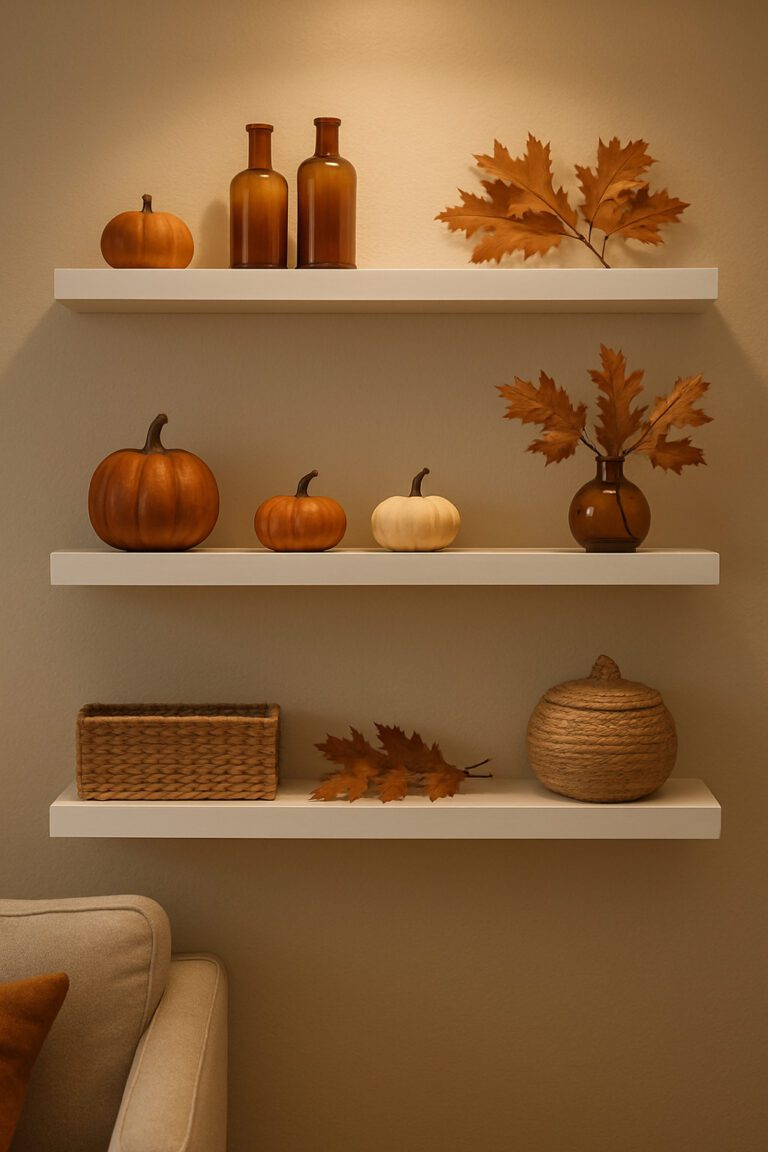
- Pitfall 5 (Static Permanent Displays): Leaving a shelf arrangement untouched for years turns it into invisible wallpaper that you no longer appreciate or notice. Practitioner Workaround: Rotate seasonal elements—such as exchanging heavy ceramics for fresh botanical stems in spring—to keep your relationship with your space alive and mindful.
The Broader Cultural Shift Toward Intentional Living and Mindful Home Environments
The surging obsession with shelf styling reflects a much deeper cultural pivot away from hyper-consumerism and toward mindful curation. For decades, modern consumer culture equated comfort with accumulation, encouraging us to fill every available square foot of shelving with mass-produced goods. Today, that paradigm is fracturing. Homeowners are realizing that physical abundance often correlates with emotional scarcity, prompting a collective desire to edit our surroundings down to only what is truly meaningful.
This movement is deeply intertwined with sustainable design practices. When we invest time in curating shelves with vintage ceramics, handmade pottery, and heirloom books rather than disposable decor, we participate in a more sustainable model of domestic life. Shelves become narrative archives of our lives, showcasing items with provenances, stories, and enduring craftsmanship. This connection to physical history anchors us in an increasingly digital and ephemeral world, providing a tangible sense of grounded identity.
Furthermore, the economic and practical value of well-designed storage cannot be overstated. In an era where urban real estate prices command a premium, square footage is scarce. Thoughtfully styled shelving maximizes vertical space without making compact apartments or homes feel claustrophobic. By creating distinct visual zones within open-plan living areas, shelves act as soft architectural dividers, giving multi-functional rooms a clear sense of purpose and psychological boundaries.
Practical Frameworks for Sustaining Long-Term Visual Harmony at Home
Creating a calm space is not a one-time interior design project; it is an ongoing daily practice of maintenance and mindful awareness. Without a sustainable system for keeping your shelves aligned with your lifestyle, even the most professionally styled bookcase will slowly devolve back into a landing strip for miscellaneous junk.
- The Weekly Reset Ritual: Dedicate ten minutes every Sunday evening to walk through your living spaces, return stray books to their shelves, and readjust shifted objects so you step into the new week with a clean slate.
- The One-In, One-Out Rule for Decor: Whenever you acquire a new ceramic vase, sculptural object, or collection of books, commit to removing an existing item to prevent creeping clutter from overtaking your spatial limits.
- Seasonal Micro-Edits: Use seasonal shifts—such as the transition from autumn to winter—as natural prompts to dust, re-evaluate, and subtly refresh your displays with tactile elements appropriate to the mood of the season.
The humble shelf is far more than an intersection of wood and hardware; it is a physical canvas for mental peace. In a world that constantly demands our attention, fragments our focus, and floods our senses with digital noise, the act of stepping back to curate a quiet, beautiful, and balanced display is a radical act of self-care.
When you invest time in editing your shelves, you are not merely decorating a wall. You are constructing a physical boundary against chaos, designing an environment that honors your need for tranquility, and turning your home into a true sanctuary. Take a hard look at your shelves today, embrace the power of the blank space, and let your home breathe again.