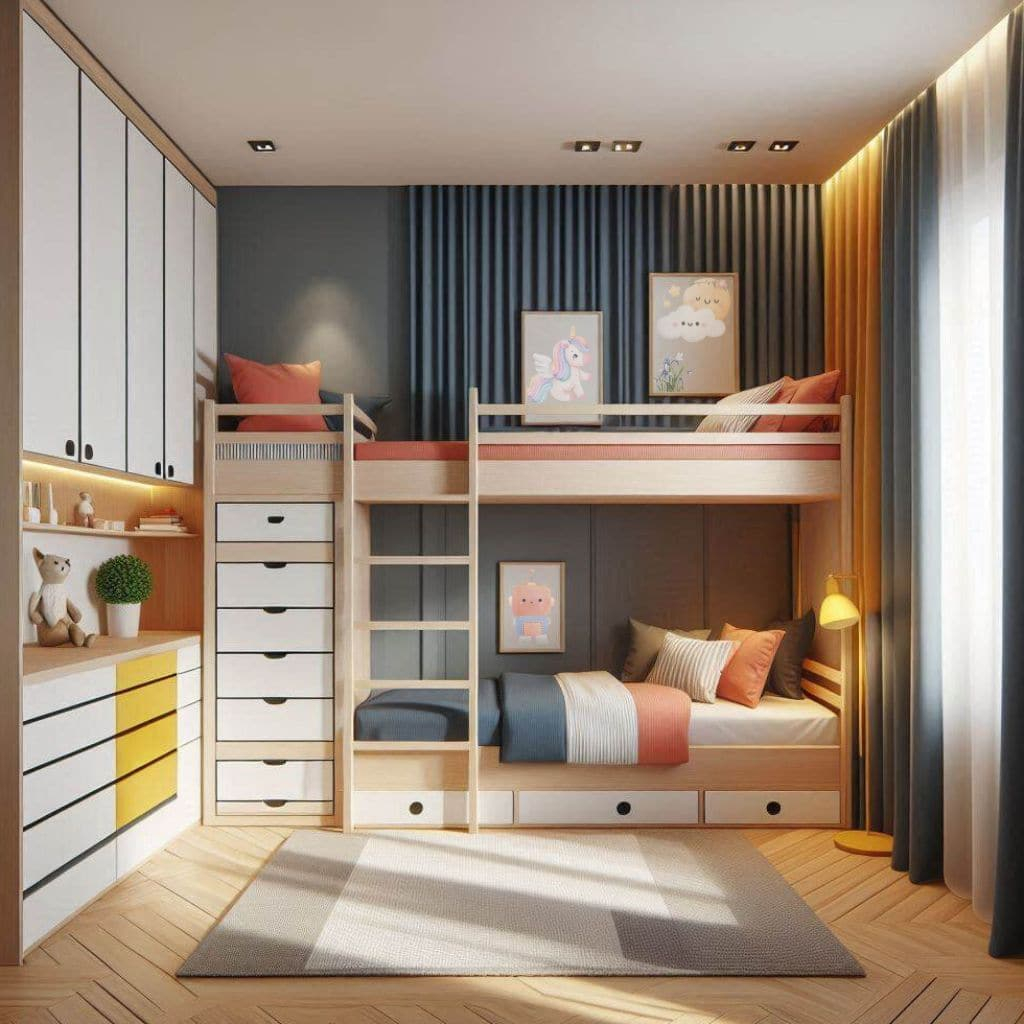
There is a distinct, rhythmic hum to parenting that revolves around sudden obsolescence. One morning you are assembling a pastel-hued crib with an allen wrench, and the next you are looking at a teenager who refuses to let you into their space because the walls are still painted in duck-egg blue. We buy into the micro-industries built around childhood phases—toddler beds, themed bedding sets, specialized toy organizers that become useless the second plastic blocks are replaced by sketchpads and laptops. The retail ecosystem whispers that love is measured in themed room makeovers, demanding fresh capital every thirty-six months.
Yet, building a sanctuary for a growing human does not require a blank-check renovation cycle. It requires a fundamental shift in how we look at spatial architecture and permanence. When you stop decorating for a specific age and start engineering a backdrop for a developing life, everything changes. You save money, cut down on landfill waste, and build a room that quietly adapts as your child shifts from chewing on wooden rattles to studying for chemistry midterms.
The core economics of children’s rooms are remarkably forgiving once you abandon the trap of single-use furniture and hyper-specific stylistic choices. Parents often feel paralyzed by the sheer velocity of childhood. Children outgrow their shoes in six months, their clothes in a year, and their entire worldview every few seasons. Treating their physical space like a permanent installation is a recipe for financial fatigue. The solution lies in building an ecosystem of layers: a robust, unchanging structural anchor flanked by modular, swappable components that absorb the shocks of growing up.
The Architecture of Adaptability and the Neutral Foundation
Every great room begins with an unshakeable, neutral baseline. This does not mean the space has to look like a sterile Scandinavian showroom devoid of personality or warmth. Instead, it means treating the fixed elements of the room—the walls, the flooring, the major case goods—as a quiet canvas. When walls are painted in warm off-whites, muted clays, or soft earth tones, they absorb the chaotic visual noise of childhood without competing with it. A neon plastic dinosaur toy looks jarring against a neon green wall, but against a grounded backdrop of textured linen-white or gentle sage, it simply looks like a kid’s toy living in a real home.
Flooring presents the first major financial hurdle for parents. Wall-to-wall synthetic carpeting marketed as "stain-resistant" is often a trap; it traps allergens, degrades under heavy traffic, and holds onto the ghost of spilled milkshakes forever. A better strategy is laying down durable hardwood, luxury vinyl plank, or finished plywood, and anchoring the play areas with high-pile washable rugs. When the toddler phase gives way to a sprawling Lego empire, and that later gives way to a teenage drum practice space, pulling up a rug costs a fraction of ripping out wall-to-wall carpeting.
Lighting also requires a departure from traditional nursery setups. Overhead flush mounts with built-in dimmers replace the need for dedicated nightlights or harsh glare fixtures. As your child transitions from bedtime stories to late-night essay writing, the lighting needs to shift accordingly. Layering light sources—a warm floor lamp for a reading nook, a sturdy desk lamp with adjustable color temperatures, and soft ambient overheads—ensures the room fulfills its utility across every single developmental epoch.
Decoding the Furniture Trap: Buying Once and Buying Smart
The furniture market preys on anxious parents by selling miniature versions of adult furniture. Toddler beds, miniature wardrobes, and themed racecar frames have a notoriously short functional lifespan. Investing in adult-scale, high-durability furniture from day one is the single most effective way to protect your wallet. A twin or full-size bed frame can serve a three-year-old just as comfortably as a seventeen-year-old, provided you pair it with safety rails during the early years and choose a mattress designed to handle the weight shifts of growing bodies.
Case goods demand the same rigorous scrutiny. Instead of a dedicated nursery changing table that becomes useless the moment potty training concludes, buy a standard low dresser and top it with a secure, removable changing tray. Once diapers are history, the tray comes off, a mirror or a piece of art goes up, and you have a functional bureau that stays with the child through high school graduation. Drawer slides should be full-extension soft-close metal hardware; cheap plastic tracks will buckle under the weight of textbooks and heavy winter sweaters within a few years.
Solid wood—such as birch, oak, or rubberwood—outperforms particle board and laminated MDF every single time. While flat-pack furniture offers immediate affordability, its structural integrity plummets the moment it is disassembled for a room rearrangement or a house move. Investing in secondhand solid wood furniture and sanding it down or applying a fresh coat of zero-VOC paint yields a piece that is virtually indestructible, saving hundreds of dollars over the long haul.
A Step-by-Step Blueprint for Engineering a Timeless Room
Executing a room that grows without breaking the bank requires a disciplined, chronological methodology. Skipping steps often leads to impulse purchases driven by short-term frustration.
- Step 1 (Audit and Clear the Fixed Elements): Strip the room down to its raw architectural bones. Evaluate natural light sources, electrical outlet placements, and heating or cooling vents to ensure furniture can be rearranged freely as needs change.
- Step 2 (Establish the Neutral Envelope): Paint the walls in a durable, washable matte or satin finish using zero-VOC formulations. Keep trim work simple and classic, avoiding overly ornate molding that dates the room quickly.
- Step 3 (Invest in Multi-Functional Anchors): Procure a full-sized bed frame with under-bed storage clearance and a sturdy, non-themed dresser. These two pieces will consume the lion’s share of your budget, so prioritize quality and timeless silhouettes.
- Step 4 (Implement Modular Storage Systems): Install modular shelving units or cubbies that can be reconfigured vertically. Use canvas bins, woven baskets, and clear acrylic dividers to corral toys today and textbooks tomorrow.
- Step 5 (Layer the Swappable Aesthetic): Introduce color, texture, and current interests through easily swappable textiles—throw pillows, duvet covers, curtains, and peel-and-stick wallpaper accents or framed art prints that can be swapped out over a weekend.
Navigating Common Pitfalls and Budgetary Missteps
Even the most well-intentioned room designs can derail if certain classic traps are not avoided. Over-customization is the silent killer of room longevity. Commissioning custom built-in shelving shaped like castle turrets or painting an elaborate mural of a cartoon jungle directly onto the drywall feels magical when your child is four. By age ten, that same child will feel trapped by the very fantasy world you spent weeks constructing, forcing an expensive, emotionally draining drywall repair and repainting cycle.
Another frequent miscalculation is ignoring vertical space. Floor space in children’s rooms is precious real estate, especially as bedrooms shrink in modern floor plans. Relying solely on low toy chests eats up square footage that could be dedicated to reading, building, or playing. Conversely, putting storage entirely out of reach creates a dependency where adults must clean up everything. The sweet spot is a tiered storage approach: heavy, frequently used items sit at floor level in accessible bins, while seasonal gear and keepsakes live higher up.
Ignoring material safety under the banner of budget savings is a dangerous compromise. Cheap plastics off-gas volatile organic compounds, and poorly anchored shelving units present a severe tip-over hazard. True budget-friendly design factors in safety from the start. Securing every heavy piece of furniture directly to wall studs using heavy-duty anti-tip brackets is non-negotiable, and sourcing GREENGUARD Gold certified paints and finishes protects indoor air quality while you sleep soundly.
The Economics of Scale: Future-Proofing for the Teen Years
As childhood bleeds into adolescence, the room’s functional center of gravity shifts dramatically. Play gives way to study, isolation, and self-expression. A room that has been built with an adaptable framework requires only minor surgical adjustments to accommodate this seismic shift. The toy bins roll out, and a dedicated workspace rolls in.
This is where the initial decision to buy adult-scale furniture pays massive dividends. The full-size bed no longer needs replacing; it simply gets a sophisticated, neutral linen duvet instead of the dinosaur sheets. The low dresser now holds skincare products and tech accessories instead of pull-ups and rattles. The modular shelving units that once held plush animals now display record collections, books, and architectural models.
Financially, this approach insulates families against the dreaded "teenage bedroom overhaul" tax. Instead of spending thousands of dollars on a complete room gutting when your child hits middle school, your total expenditure consists of a comfortable desk chair, a task lamp, and perhaps a fresh coat of paint on a single accent wall chosen by the occupant. This financial sustainability frees up resources for college savings, extracurricular activities, and family experiences that matter far more than interior design trends.
Actionable Takeaways for the Pragmatic Designer
Creating a resilient, affordable room relies on a few unyielding principles that every parent should keep pinned to the refrigerator:
- Prioritize Adaptability Over Theme: Never design a room around a transient obsession (dinosaurs, princesses, superheros). Let the child’s loose toys provide the theme; keep the room’s architecture strictly neutral.
- Buy Once, Buy Right: Avoid toddler-specific furniture. Scale up to standard twin or full-sized furniture immediately to bypass future replacement costs.
- Embrace Textile Transformations: Use inexpensive, easily swappable soft goods—pillows, blankets, rugs, and art prints—to let the room’s personality evolve without touching structural elements.
- Maximize Vertical Modular Storage: Utilize wall space intelligently with adjustable shelving systems that can transform from toy display to bookshelf as the child grows.
- Insist on Safety and Durability: Anchor all heavy case goods to wall studs and choose solid wood over particle board to ensure furniture survives multiple childhood phases.
The physical spaces we craft for our children act as the silent witnesses to their unfolding lives. They hold the quiet tears of midnight fevers, the explosive laughter of Sunday morning pillow fights, and the sullen, door-slamming silences of the teenage years. When we engineer these rooms with foresight, patience, and a healthy skepticism of retail marketing, we stop chasing fleeting aesthetic perfection.
Instead, we build a stable platform from which our children can launch into the world. A room that grows with them is more than a clever financial strategy or a series of smart layout choices; it is a physical manifestation of stability. It whispers a steady, reassuring message through every changing phase of life: you have space to change, you have room to grow, and you always have a home here.