Ever walked into a modern city apartment and felt an instant wave of low-key anxiety. You look around and see a treadmill tucked behind a sofa, a fold-down desk fighting with a dining table, and a yoga mat peeking out from under a TV stand. It is the classic modern dilemma. We are told we can have it all in 500 square feet, but trying to force one room to wear six different hats usually means nobody gets to relax.
Living in a bustling city in 2026 means space comes at a premium, sure. But in our quest to maximize every single square inch, we have accidentally turned our sanctuaries into chaotic Swiss Army knives. When a room tries to do everything, it winds up doing nothing well. Let’s talk about how we got here and how we can claw back our comfort.
The Mirage of the All-in-One Space
We’ve all seen those mesmerizing social media videos of tiny apartments where walls slide, beds disappear into ceilings, and coffee tables morph into formal dining setups for eight people. It looks brilliant on a screen. But when you actually live there? It’s an entirely different story.
Constantly shifting furniture around just to change your activity creates major mental fatigue. If you have to spend ten minutes reconfiguring your entire living room just to do a quick morning stretch, chances are you are just going to skip the workout altogether. The physical effort of transforming a room creates a friction point that pushes us away from using our own homes.
Visual Noise and the Death of Calm
Our brains are incredibly sensitive to environmental cues. When you sit down on the couch to watch a movie but your work laptop, a stack of bills, and an exercise bike are all staring back at you, your brain cannot fully unwind. That is visual noise, and it is a massive comfort killer in compact urban settings.
Clutter isn’t just about mess; it’s about a clash of conflicting purposes. A room stuffed with gadgets and furniture meant for totally different tasks sends mixed signals to your nervous system. You end up feeling like you should be working out while you are trying to relax, or feeling guilty about relaxing when you should be working.
The Logistics Nightmare of Moving Parts
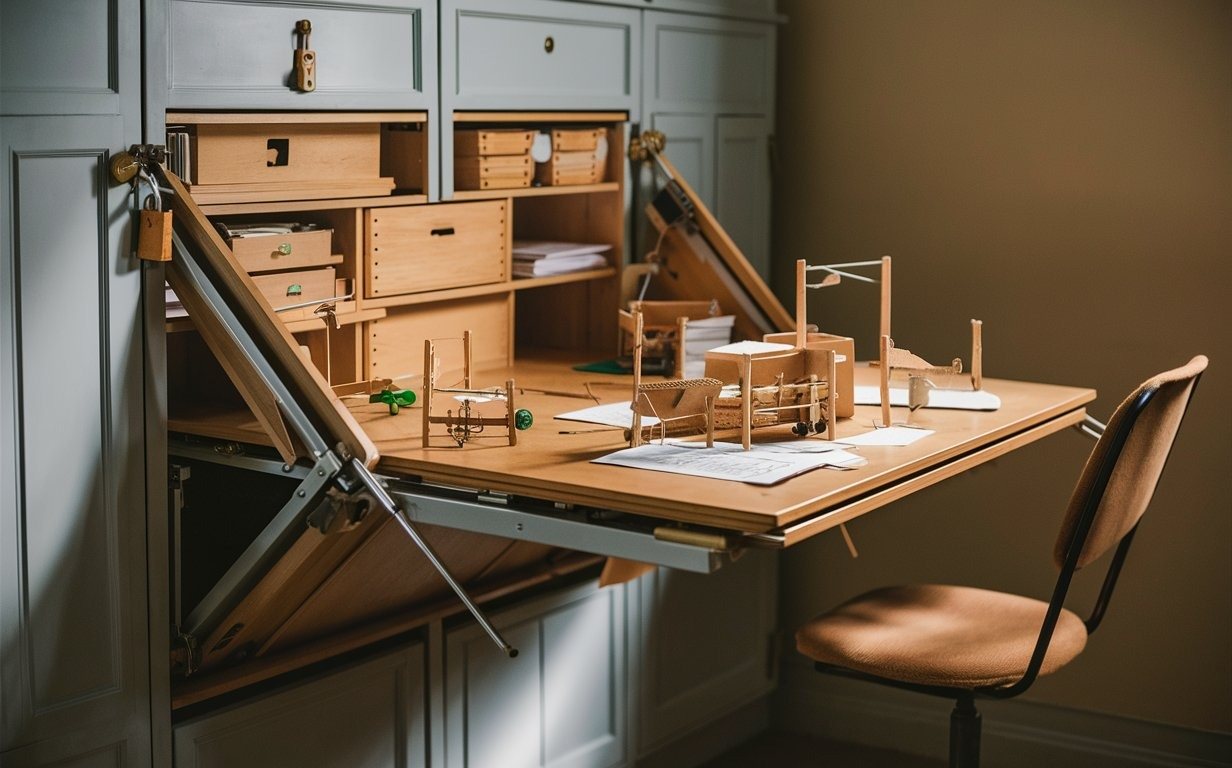
Let’s be real for a minute. Mechanical things break. Those hyper-complex, custom-built Murphy beds with integrated shelving and fold-out desks look sleek in a showroom, but after a year of daily wear and tear, hinges start to squeak and alignments go wonky.
When your entire daily routine depends on intricate furniture choreography, one broken part can paralyze your whole apartment. Suddenly, you can’t get to your clothes because the desk mechanism is jammed. Keeping things simple isn’t just about aesthetics—it’s about basic reliability and saving yourself from future maintenance headaches.
Losing the Soul of a Home
A home should feel like an extension of who you are, not a tightly engineered puzzle box. When every square inch is strictly optimized for utility, we lose those cozy, seemingly useless spots that actually make an apartment feel human.
Think about a comfortable, deep armchair where you can just sit with a cup of tea and look out the window. It doesn’t fold, it doesn’t storage your winter coats, and it doesn’t transform into a treadmill. But it offers pure, unadulterated comfort. When we overcomplicate our spaces, these little moments of quiet joy are usually the first things to get thrown out.
Smart Zoning Over Swiss-Army Designing
So, how do we fix this without buying a massive house in the suburbs. The secret lies in smart zoning rather than heavy modification. Instead of trying to make one area serve three radically different functions, try using light visual cues to separate your activities.
- Use a simple rug to define a specific relaxation zone.
- Deploy a lightweight, attractive folding screen to hide your workspace when the clock hits 5 PM.
- Invest in multi-functional furniture that doesn’t require an engineering degree to operate, like a storage ottoman.
By creating distinct boundaries, even very small ones, you allow your mind to switch gears effortlessly. You don’t need a massive layout; you just need clear intentions for the space you do have.
At the end of the day, comfort is about ease. If your living space feels like a puzzle you have to solve every single morning, it is time to scale back. It is totally fine if your living room is just a place to sit, talk, and read.
Take a hard look at your current layout. Are there elements you added because you thought you should maximize the space, but they actually just get in your way? Stripping back the complexity might mean you lose a little bit of theoretical functionality, but what you gain in peace of mind and genuine comfort is worth way more.
Creating a comfortable urban home isn’t about fitting a whole mansion’s worth of features into a tiny studio apartment. It’s about curating an environment that lets you breathe easily after a long day out in the frantic city. When we stop overcomplicating our rooms, we give ourselves the space to actually live.
Keep your setups straightforward, protect your relaxation zones fiercely, and don’t be afraid to leave some open space empty. Your mental health will thank you for it.