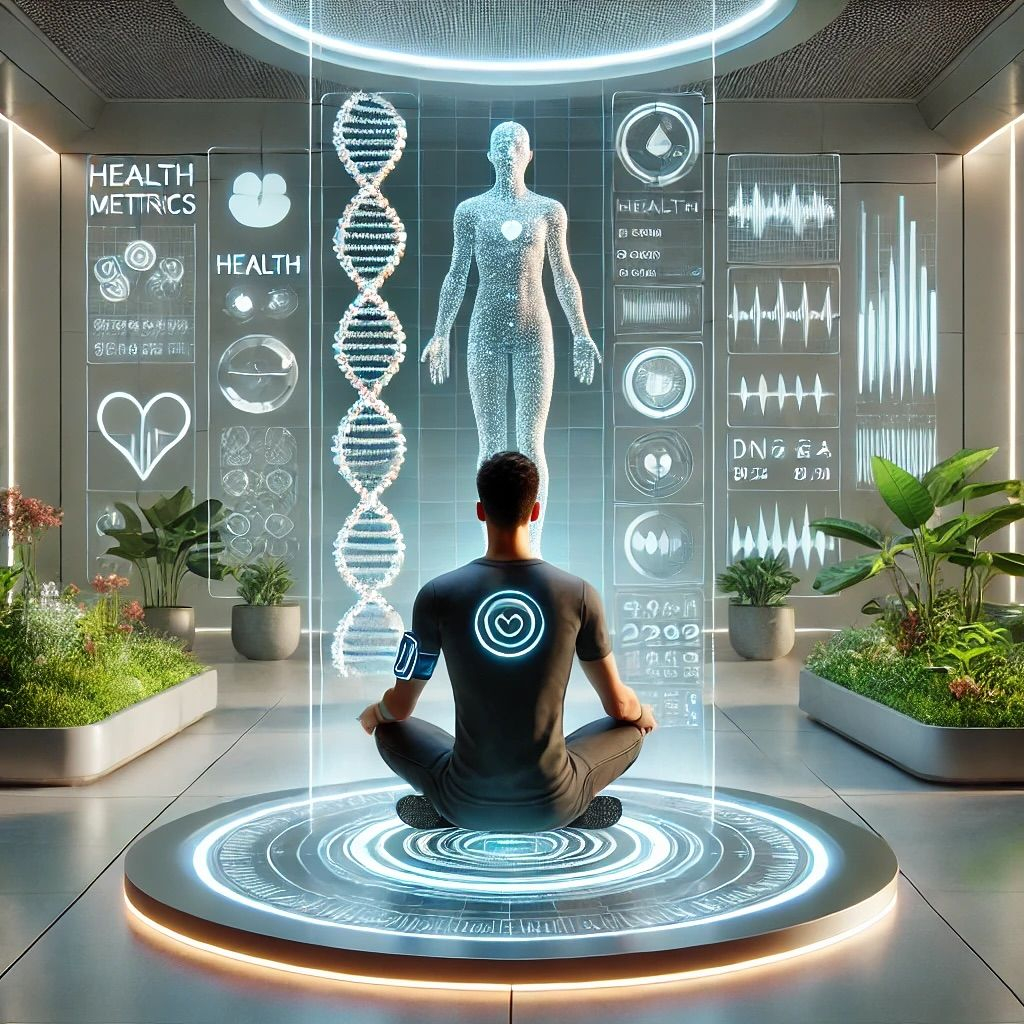
Remember when "smart home" meant having a dozen different apps on your phone just to turn on the living room lights or change the temperature. It felt less like living in the future and more like working an extra job as a digital tech support person for your own house. You would tap a button, wait for a spinning wheel, and pray the bulb actually connected.
Thankfully, the tide has completely turned here in 2026. The era of clunky, screen-dependent gadgets is fading fast, making way for something much more peaceful: ambient technology. Instead of forcing you to command your house, ambient tech operates silently in the background, learning your patterns and adjusting the enviroment around you without you ever lifting a finger.
The Disappearance of the Screen
For years, tech companies tried to glue screens onto every single surface imaginable. We had smart fridges with giant displays and wall panels that looked like tablets glued to the drywall. But let’s be honest, nobody wants to stare at another screen when they get home from a long day at work.
Ambient intelligence fixes this by becoming completely invisible. Instead of navigating menus, the house relies on subtle sensors tucked away in the architecture. It is all about shifting from active control to passive enjoyment, letting the tech melt into the background where it belongs.
Homes That Learn Your Daily Rhythm
Static schedules are officially a thing of the past. Older systems let you program the heat to go down at 10 PM, but what happens if you stay up late watching a movie. True ambient systems use adaptive automation to observe your actual behavior rather than sticking to a rigid timer.
If you usually sit at your desk on Friday mornings with a warm cup of coffee, the room senses your presence and dials in your favorite temperature. It notes when you move to the couch, shifting the lighting to a softer tone without needing a voice command. The house simply learns to dance to your specific rhythm.
Solving the Friction with Matter 1.5
A major reason people used to hate smart gadgets was that nothing talked to each other. Your smart blinds didn’t care what your thermostat was doing, and your security cameras lived in a completely different universe. It was an absolute mess.
With the widespread rollout of the Matter 1.5 protocol recently, those digital walls have crumbled. Now, devices across different brands speak the exact same language right out of the box. Your energy panels, window closures, and lighting arrays finally work as a single, cohesive ecosystem.
Energy Savings That Happen Safely at the Edge
Nobody likes opening a massive electric bill, especially with utility costs fluctuating so much these days. Ambient tech has stepped up by taking over energy management, but doing it in a way that protects your personal data.
Instead of sending constant video feeds or motion data to a distant cloud server, modern homes use advanced edge computing to process everything locally. The system can instantly figure out that a room is empty and shut off the appliances, saving up to 20% on your power bills while keeping your private life inside your walls.
A Focus on Wellness and Calm
There is a big difference between a home that is high-tech and a home that is truly comfortable. The ultimate goal of ambient intelligence is to reduce cognitive overload and make your living space feel like a peaceful sanctuary.
Think about how nice it is when the lights slowly mimic the natural sunset, helping your body produce melatonin naturally. Or how a system can tweak the humidity levels when it detects the air getting a bit dry. It is these tiny, unprompted changes that dramatically improve your sleep and lower your daily stress levels.
You might think that enjoying this level of convienence requires buying a brand-new house or doing a massive, expensive renovation. Luckily, the market has shifted heavily toward brilliant retrofit options that anyone can use.
- Start with pain points: Identify the one or two areas that annoy you the most, like a hallway that is always too dark at night.
- Prioritize interoperability: Look for devices that carry the Matter certification to ensure they will grow with you.
- Focus on sensors over buttons: Invest in high-quality presence detectors rather than more remote controls.
We are finally moving away from the novelty of tech for the sake of tech. The modern home isn’t supposed to feel like a spaceship; it is supposed to feel like a home, just one that understands you a little bit better every single day.
As we look at how far things have come, it is clear that true luxury isn’t about having the most gadgets. It is about having the fewest disruptions. Turning your living space into a calm, responsive environment is no longer a futuristic dream. It is just the way we live now.