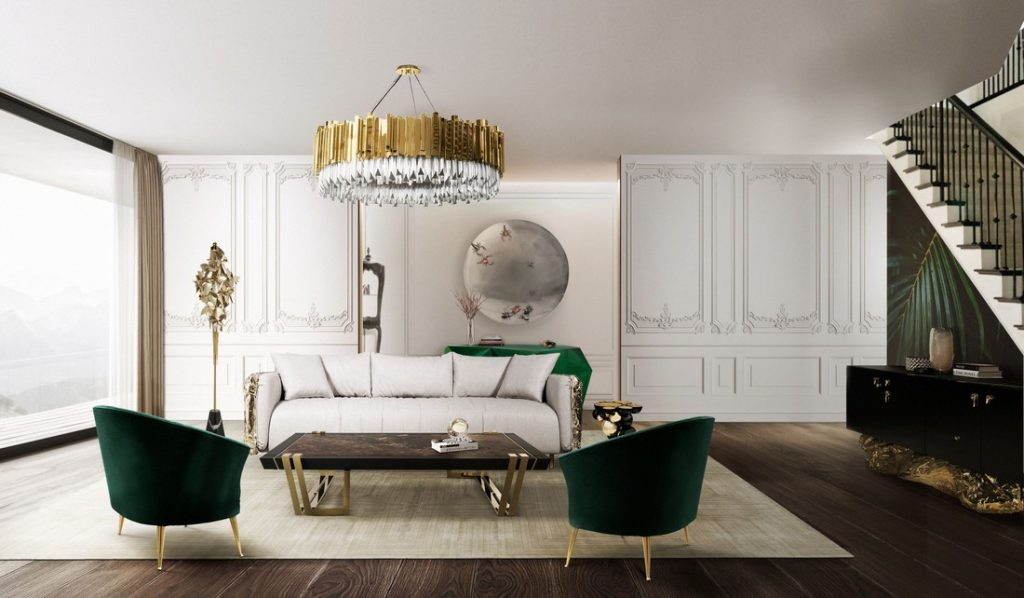
You walk into a room, and something just… clicks. It feels right, doesn’t it? Everything seems to belong, to fit together in a way that’s both comforting and visually pleasing. On the flip side, we’ve all been in those spaces where a giant sofa swallows the entire living area or a tiny rug gets lost in the middle of nowhere. What’s the difference, you ask? It often comes down to two powerful, yet frequently misunderstood, concepts: scale and proportion.
These aren’t just fancy design terms for the pros. Oh no. They’re the secret sauce, the silent conductors orchestrating the harmony of your home. Understanding them is like gaining a superpower for your interior design efforts. It’s about creating balance, ensuring every piece of furniture, every decorative item, and even the empty space – yes, that’s important too – works together to tell a cohesive, inviting story. In 2026, as our homes become more personalized sanctuaries, mastering these rules isn’t just about aesthetics; it’s about crafting spaces that truly feel good to live in.
What’s the Big Deal with Scale, Anyway?
Let’s start with scale. Think of scale as the size of an object in relation to other objects in the room, and crucially, in relation to the room itself. It’s about the overall magnitude. Imagine a grand, ornate armoire in a tiny studio apartment. It doesn’t matter how beautiful that armoire is; its scale is simply too large for the space, making the room feel cramped and overwhelmed. Conversely, a delicate, petite sofa in a vast, open-plan living area would look utterly lost, like a single pea on a huge dinner plate.
The trick here is to consider the "visual weight" of your furniture. A solid, dark wood piece carries more visual weight than an airy, light-colored metal one, even if their actual dimensions are similar. When selecting furniture, always measure your room first. Map out potential placements with painter’s tape on the floor. This simple step, often overlooked, can save you a world of heartache and expensive returns. You’re aiming for a comfortable conversation between the pieces and the room, not a shouting match or a whisper you can barely hear.
Proportion: The Art of Relationships
Now, let’s talk proportion. If scale is about absolute size, then proportion is about the relationship of parts to a whole, and parts to each other. It’s the ratio, the comparative sizing. Think of the golden ratio, that magical mathematical relationship found in nature and art, creating inherent beauty. While we don’t need to get out our calculators for every furniture purchase, the principle holds. A sofa might be perfectly scaled for your living room, but if its arms are too chunky for its delicate legs, or its back is disproportionately high, something will feel off.
Good proportion means that the various elements within a piece of furniture, and between different pieces, look balanced and harmonious. Consider a coffee table. It should be roughly two-thirds the length of your sofa and no more than two inches higher or lower than the sofa’s seat height. This creates a natural, easy-to-use surface that doesn’t dominate or disappear. It’s about finding that sweet spot where everything just fits together, creating a sense of visual ease and order.
The Magic of Negative Space
Don’t just fill your room with stuff. Please don’t. One of the most common mistakes people make is underestimating the power of "negative space," or white space, or empty space – whatever you want to call it. This is the breathing room, the visual breaks between your furniture pieces. Without it, even perfectly scaled and proportioned items can make a room feel cluttered and claustrophobic. It’s like trying to read a book with no spaces between the words; it becomes an illegible mess.
Aim for a comfortable flow. Can you walk around your furniture without bumping into things? Is there enough space for a lamp beside the armchair, or a side table next to the sofa? A good rule of thumb for pathways is at least 30 inches of clear space. For areas with heavy traffic, like a main hallway, you might want even more. Letting your furniture breathe allows each piece to be appreciated individually, and allows the entire arrangement to feel balanced and intentional.
Anchoring Your Space: The Rug Rule
Rugs are often an afterthought, but they are absolutely crucial in defining scale and proportion within a room. A rug acts as an anchor, grounding your furniture and delineating zones, especially in open-plan layouts that are so popular in 2026. The most common mistake? Choosing a rug that’s too small. A tiny rug floating in the middle of your living room is a design misstep that can make the whole area feel disconnected.
Ideally, all the main pieces of your furniture should sit on the rug, or at least the front two legs of each piece should. For example, in a living room, your sofa and armchairs should have their front legs on the rug. In a dining room, the rug should be large enough so that when chairs are pulled out, they still remain on the rug. This creates a cohesive "island" of furniture, pulling everything together and making the space feel larger and more unified.
Play with Heights and Lines
To really master scale and proportion, you need to think beyond just length and width. Consider height and the lines that your furniture creates. A room filled with pieces all at the same height can feel flat and uninteresting. Introducing varying heights adds visual interest and dynamic energy. Think of a tall bookshelf next to a low console, or a high-backed armchair paired with a lower sofa. This interplay creates rhythm and guides the eye through the room.
Similarly, pay attention to the lines. Is your room dominated by straight, angular pieces? Introduce a curved element, like a round coffee table or an arched lamp, to soften the space and provide contrast. Are your pieces all heavy and solid? Bring in something with an open, airy design, like a étagère or a glass-top table, to add lightness. It’s about creating a visual conversation, a dance between different forms and heights that keeps the eye engaged and the space feeling balanced.
Ultimately, the most important rule of scale and proportion is how it impacts you, the person living in the space. Does it feel comfortable? Does it allow for easy movement and function? A perfectly proportioned chair is useless if it’s too deep for you to sit comfortably, or if its arms are too high to rest your own. This human-centric approach is gaining even more traction in 2026, with a focus on well-being and functionality.
Think about how you use each piece and the room as a whole. Can you easily reach a drink from the side table while sitting on the sofa? Is the dining table large enough to comfortably seat your family and guests, without feeling like you’re crammed in? These practical considerations are just as vital as the aesthetic ones. After all, a beautifully designed room that’s uncomfortable or impractical isn’t truly well-designed, is it. It’s about finding that sweet spot where form and function live in perfect harmony.
So, there you have it. Scale and proportion aren’t just abstract concepts; they’re the invisible threads that weave together the tapestry of your home. They dictate how a room feels, how it functions, and how much you truly enjoy being in it. By paying attention to the size of your furniture relative to the room, the internal relationships of a piece, the crucial role of negative space, and even the simple elegance of a well-placed rug, you’re not just decorating.
You’re crafting an experience. You’re building a sanctuary. It takes a little practice, sure, and a keen eye, but trust me, once you start seeing your home through the lens of scale and proportion, you’ll never look at furniture – or a room – the same way again. Go on, give it a try. Your home, and your sense of peace, will thank you for it.