Ever felt like your desk is shrinking? You sit down to work, and suddenly, the walls seem to be closing in. Coffee cups pile up. Papers migrate from one corner to another. The laptop charger becomes a permanent resident on the floor. It’s frustrating. Especially when you know that deep down, you could be so much more productive if you just had… space. But here’s the thing. You don’t need a sprawling home office to get great work done. In fact, some of the most efficient people I’ve talked to work from corners no bigger than a closet.
The shift to remote and hybrid work isn’t new anymore. By 2026, it’s just how we live. Yet, our homes haven’t always caught up. We’re still trying to fit square pegs into round holes, forcing traditional office setups into studios, bedrooms, and even kitchen nooks. The result? Chaos. But it doesn’t have to be that way. With a little intention and some smart design choices, you can transform even the tiniest footprint into a powerhouse of productivity. It’s not about having more room. It’s about using what you have better.
The Psychology of Less: Why Clutter Kills Focus
Let’s talk about why clutter feels so heavy. It’s not just messy. It’s mentally exhausting. Your brain is constantly processing visual information. Every item on your desk, every pile of mail, every tangled cable—it all demands a tiny bit of attention. Multiply that by hundreds of items, and you’ve got a cognitive load that drains your energy before you even start working. Studies in environmental psychology have long shown that visual clutter competes for your neural resources. It makes it harder to focus. It increases stress levels. And in a small space, where everything is within your peripheral vision, the effect is amplified.
Think about it. When your workspace is clear, your mind feels clearer too. There’s a sense of calm. A readiness. You’re not fighting your environment; you’re working with it. This is especially crucial in 2026, where distraction is the default state of our digital lives. If your physical space is chaotic, it’s infinitely harder to maintain digital discipline. So, the first step isn’t buying a new desk. It’s understanding that less stuff equals more headspace. It’s about creating a sanctuary for thought, not a storage unit for junk.
Start by asking yourself: What do I actually need right here, right now? Not what I might need someday. Not what looks nice. What is essential for the task at hand? For most people, that’s a computer, a notebook, and maybe a pen. Everything else is negotiable. This mindset shift is powerful. It moves you from accumulation to curation. And in a small space, curation is your best friend.
Vertical Thinking: Using Walls and Height
When floor space is limited, look up. Seriously. The walls are your secret weapon. Most people underestimate the power of vertical storage. They keep everything on the desk surface or in drawers, leaving the walls bare or, worse, covered in random notes and posters that add to the visual noise. Instead, think of your walls as real estate. Prime real estate. Install floating shelves. Use pegboards. Mount monitors. Get things off the horizontal plane and onto the vertical one.
Pegboards are fantastic because they’re flexible. You can move hooks around as your needs change. Need a spot for headphones today? Move a hook. Need room for a plant tomorrow? Rearrange. It’s modular storage that doesn’t take up an inch of desk space. Floating shelves are great for books, supplies, or decorative items that bring you joy but aren’t used every minute. Just remember to keep them tidy. A messy shelf is still clutter, even if it’s high up.
Another trick? Go tall with your furniture. A narrow, tall bookshelf takes up the same floor footprint as a short, wide one but offers way more storage. Look for desks with hutch attachments or wall-mounted drop-leaf tables that fold away when not in use. These solutions maximize utility without sacrificing square footage. In 2026, furniture designers are finally catching on to this, offering sleek, multi-functional pieces that cater to urban living. Embrace height. It’s the easiest way to double your usable space without moving a wall.
The Art of Hidden Storage
Visible clutter is distracting. Hidden clutter is manageable. The key to a clean-looking small workspace is concealing the stuff you need but don’t want to see. Cables, chargers, extra notebooks, snacks—these things have a place, but that place shouldn’t be on display. Invest in furniture with built-in storage. Desks with drawers, ottomans that open up, benches with compartments underneath. If you’re renting or on a budget, simple baskets and boxes work wonders. Just make sure they’re uniform in style or color to reduce visual chaos.
Cable management is huge. Nothing screams "mess" like a spiderweb of wires behind your monitor. Use cable clips, sleeves, or raceways to bundle and route cords neatly. Label them if you have to. It takes ten minutes, but it saves you hours of frustration later. Plus, it makes cleaning easier. Dust bunnies love tangled cables. Keep them contained, and you keep the dust under control too.
Consider dual-purpose items. A tray on your desk can hold your daily essentials during work hours and then slide into a drawer when you’re done. A magnetic strip inside a cabinet door can hold scissors, tape, and other small tools. The goal is to have a home for everything, and for that home to be out of sight when not in use. This creates a sense of order and calm, even if the drawers are bursting at the seams. Out of sight, out of mind, right? Well, in this case, out of sight means peace of mind.
Light, Color, and the Illusion of Space
Small spaces can feel cramped and dark if you’re not careful. Lighting and color play a massive role in how spacious a room feels. Natural light is your best ally. Keep windows clear. Don’t block them with tall furniture or heavy curtains. If you can’t get natural light, mimic it. Use bright, cool-toned LED bulbs that resemble daylight. Avoid warm, yellow lights that can make a small room feel cozy but also closed-in and sleepy. You want to feel alert and awake, not like you’re in a cave.
Color matters too. Light colors reflect light and make walls recede, creating an illusion of depth. White, soft grays, pale blues, or gentle greens are excellent choices for small offices. They feel airy and open. If you love bold colors, use them as accents. A colorful chair, a vibrant rug, or a piece of art can add personality without overwhelming the space. Just don’t paint all four walls neon orange. That’s a recipe for headache city.
Mirrors are another old trick that works. Placing a mirror opposite a window bounces light around the room and doubles the visual space. It’s like adding a window where there wasn’t one. You can also use glass or acrylic furniture. A clear acrylic chair or a glass-top desk disappears visually, making the room feel less crowded. It’s about tricking the eye. You want the space to feel expansive, even if it’s technically tiny. These subtle design choices add up to a big impact on how you feel while working.
Tech Minimalism for Maximum Efficiency
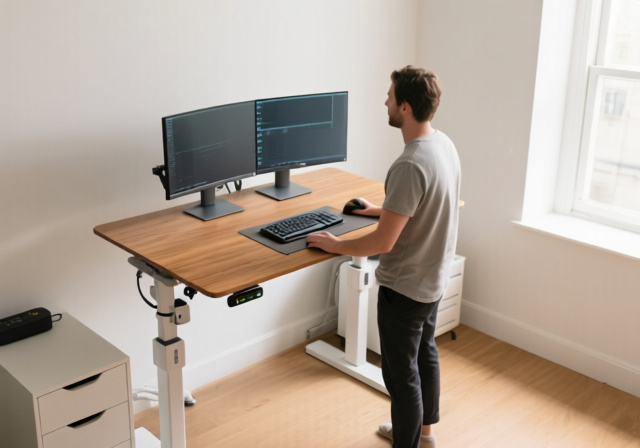
In 2026, technology is everywhere. But in a small workspace, too much tech can be suffocating. Be intentional about what devices you bring into your zone. Do you really need three monitors? Maybe one ultra-wide screen is better. It saves desk space and reduces cable clutter. Wireless peripherals are a must. A Bluetooth keyboard and mouse eliminate wire mess and give you flexibility to move around. Consider a laptop stand that raises your screen to eye level, improving posture and freeing up space underneath for a keyboard or notebook.
Digital clutter is just as bad as physical clutter. Keep your desktop clean. Use cloud storage instead of saving files locally. Unsubscribe from newsletters you don’t read. Turn off non-essential notifications. Your digital workspace should reflect your physical one: organized, efficient, and calm. Apps that help with focus, like website blockers or time trackers, can also help you stay on task without needing extra physical tools.
Charge stations are another area to streamline. Instead of having five different chargers plugged into five different outlets, use a single multi-port USB hub. Keep it in a drawer or a designated box. Plug in what you need, charge it, and put it away. Don’t let charging cables become permanent fixtures on your desk. Treat tech like tools. Use them, then store them. This discipline keeps your small space from becoming a tech graveyard.
Here’s the truth. No matter how well you design your space, it will get messy. Life happens. Projects expand. Coffee spills. The key isn’t perfection. It’s maintenance. Establish a daily reset ritual. At the end of each workday, take five minutes to tidy up. Put papers away. Wipe down the desk. Close tabs on your computer. Charge your devices. This small act signals to your brain that work is over. It creates a boundary between professional and personal time, which is crucial when your office is also your living room.
This ritual also ensures you start the next day fresh. Imagine sitting down in the morning to a clean, organized desk. It sets a positive tone. It reduces friction. You don’t waste time looking for things or clearing space. You just start working. Over time, this habit becomes automatic. It’s like brushing your teeth. You don’t think about it; you just do it. And the payoff is huge. A consistent routine keeps clutter from accumulating to unmanageable levels.
Involve your household if you share the space. Let them know your reset time. Ask them to respect the boundary. Maybe you use a screen or a curtain to physically close off the workspace after hours. This visual cue helps everyone understand that the space is "off limits" or "at rest." It’s about creating respect for the zone, both from others and from yourself. In a small home, boundaries are soft, but they’re necessary. Protect your peace.
Creating a functional workspace in a small area isn’t about magic. It’s about mindfulness. It’s about choosing what matters and letting go of what doesn’t. It’s about using light, height, and hidden storage to your advantage. And it’s about maintaining the space with care. You don’t need a mansion to be productive. You just need a plan. Start small. Pick one tip from this article and try it today. Move one item. Clear one surface. Breathe. You’ll be surprised at how much difference it makes. Your space shapes your mind. Make it count.