You know that feeling when you walk into a kitchen and it just feels… off? Maybe it’s too bright, like an operating room. Or maybe it’s so dim you can barely see what you’re chopping. It’s frustrating. We’ve all been there. You spend thousands on cabinets and countertops, but the space still lacks soul. Why? Because light isn’t just about seeing. It’s about feeling. It’s the invisible architecture that shapes how we experience a room.
Most people make the mistake of slapping one big fixture in the center and calling it a day. That’s like trying to dress for every occasion with just one outfit. It doesn’t work. In 2026, the approach has shifted. It’s not about the brightest bulb anymore. It’s about layers. Think of it like building a cake. You need the base, the filling, the frosting, and that little cherry on top. Each layer serves a purpose. When they work together, magic happens. Your kitchen stops being just a place to cook and starts being the heart of your home.
Let’s talk about why this matters. Poor lighting can make even the most expensive kitchen look cheap. Harsh shadows hide the beauty of your stone counters. Glare makes it hard to read a recipe. But get it right? And suddenly, chopping vegetables feels less like a chore and more like a ritual. Friends linger longer at the island. Morning coffee feels warmer. It’s a small change with a massive impact. So, let’s dive into how you can fix this, without needing a degree in electrical engineering.
The Foundation: Getting Ambient Light Right
Ambient light is the general glow of the room. It’s the base layer. Think of it as the canvas upon which everything else is painted. In the past, this meant one big ceiling dome light. Boring, right? And honestly, ineffective. Today, we aim for a soft, even wash of light that eliminates dark corners without creating harsh hotspots. The goal is to mimic natural daylight as much as possible, but softer.
Recessed lighting is still a go-to for many, but the way we use it has changed. Instead of spacing them out evenly like a grid, designers in 2026 are placing them strategically to highlight pathways and open spaces. You want enough light to walk around safely, but not so much that it feels sterile. LED technology has come a long way, allowing for fixtures that are nearly invisible when off but provide a beautiful, consistent glow when on. This is crucial because if your ambient light is too cool or blue, the whole room feels cold. Stick to warm whites, around 2700K to 3000K, to keep things cozy.
But here’s the thing: ambient light shouldn’t do all the heavy lifting. If you rely on it alone, you’ll end up squinting while prepping dinner. It’s meant to set the mood, not perform the work. A common mistake is installing too many recessed cans, which creates a "swiss cheese" effect on your ceiling. Less is often more. Combine recessed lights with other sources, like flush mounts or even indirect cove lighting, to create depth. This prevents that flat, one-dimensional look that plagues so many modern kitchens.
The Workhorse: Task Lighting That Actually Works
Now, let’s get practical. Task lighting is where the rubber meets the road. This is the light you need to chop, stir, read, and clean. Without it, you’re working in the dark, literally. The biggest offender here is the shadow cast by your own body or overhead cabinets. You lean over the counter to slice tomatoes, and boom—darkness. That’s why under-cabinet lighting is non-negotiable. It’s not just an upgrade; it’s a necessity.
LED strips have become the standard here, and for good reason. They’re slim, energy-efficient, and can be tucked away neatly. But don’t just slap them anywhere. Position them toward the front edge of the cabinet, not the back. This throws the light onto the workspace, not the backsplash. You want the illumination to hit the counter directly. Also, consider the color temperature. For task areas, you might go slightly brighter or cooler than your ambient light, maybe 3000K to 3500K, to help with visibility and focus. Just make sure it blends well with the rest of the room so it doesn’t look disjointed.
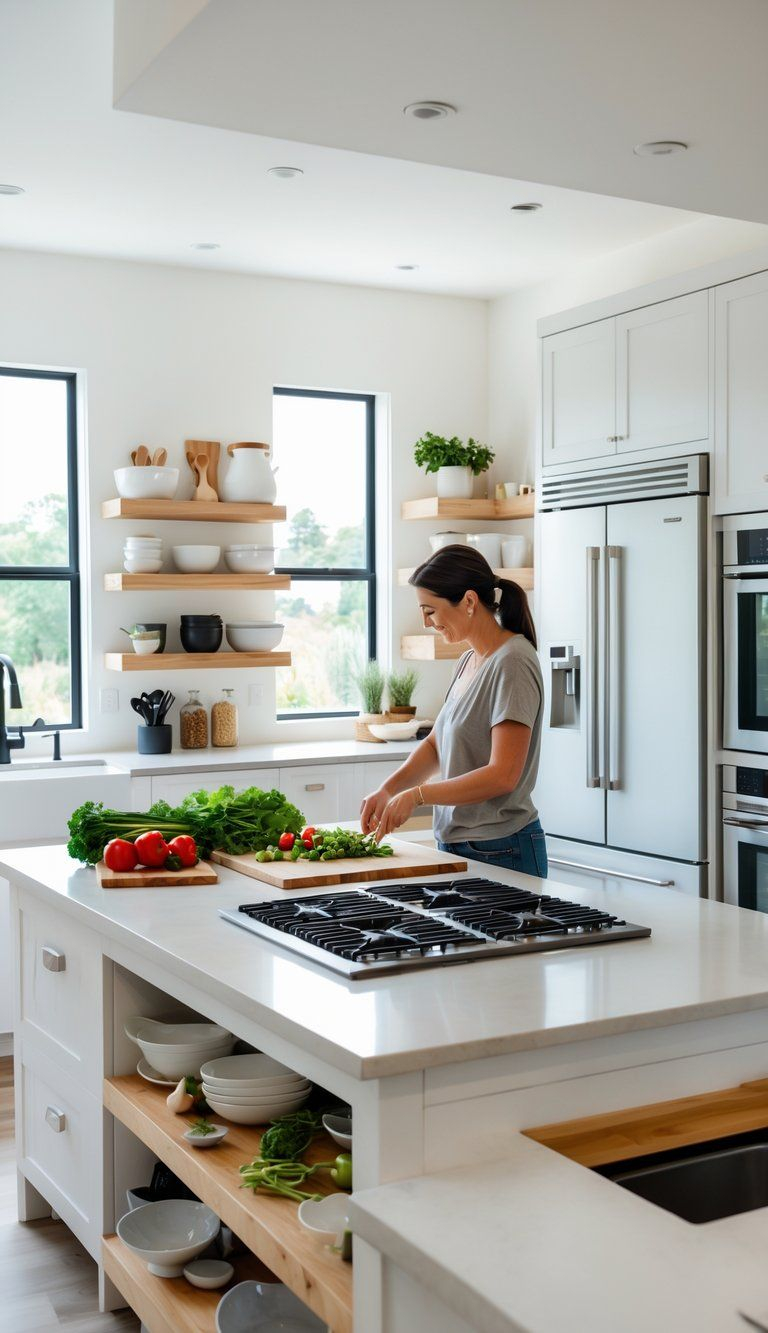
Don’t forget the island. If you have one, it’s likely your primary prep zone. Pendant lights over an island are popular, but are they providing enough task light? Often, they’re more decorative. If you’re doing serious cooking there, you might need additional recessed lights or a linear suspension fixture that provides broader coverage. The key is to eliminate shadows on your hands and knife. Test it out. Stand at your counter and see where the shadows fall. If you can’t see clearly, you need more light, or better placement. It’s that simple.
The Drama: Accent Lighting for Depth and Style
Accent lighting is the jewelry of the kitchen. It’s what makes the space feel curated and high-end. This layer is all about highlighting specific features. Got a beautiful backsplash? Light it. Open shelving with nice dishes? Illuminate it. A textured ceiling or architectural detail? Show it off. Accent lighting adds dimension. It draws the eye and creates visual interest. Without it, a kitchen can feel flat and uninspired.
One of the easiest ways to add accent light is with interior cabinet lighting. Glass-front cabinets look stunning when lit from within. It turns your dishware into a display. You can use small puck lights or LED tape inside these cabinets. Just ensure the wiring is hidden. Nothing ruins the look like visible cords. Another great spot is above the upper cabinets, if you have space between them and the ceiling. Washing the ceiling with light makes the room feel taller and more spacious. It’s a subtle trick, but it works wonders.
In 2026, we’re also seeing more creative uses of accent lighting. Toe-kick lighting, for instance, adds a soft glow at floor level. It’s great for nighttime navigation and adds a floating effect to your cabinetry. Or consider lighting inside a pantry or deep drawers. It’s not just about looks; it’s about function too. Being able to see what’s in the back of a deep drawer is incredibly helpful. The key with accent lighting is restraint. You don’t want to light everything. Pick two or three focal points and let them shine. Too much accent light can feel chaotic.
The Personality: Decorative Fixtures as Focal Points
Decorative lighting is where you get to have fun. These are the fixtures you choose because they’re beautiful. Chandeliers, sculptural pendants, unique sconces. They’re the statement pieces. While ambient, task, and accent lights are often hidden or subtle, decorative lights are meant to be seen. They add personality and style. They tell a story about who you are. Do you love mid-century modern? Go for a sputnik chandelier. Prefer farmhouse? Try some lantern-style pendants.
The trend in 2026 is towards mixing metals and materials. Don’t feel locked into matching every finish. A brass pendant can look amazing with matte black hardware. It adds visual tension and interest. However, keep some consistency. Maybe all your metals are warm-toned, or all your glass is clear. This ties the look together. Also, consider the scale. A tiny pendant over a large island will look lost. A massive chandelier in a small nook will feel overwhelming. Measure twice, buy once.
Placement matters here too. Hang pendants at the right height. Generally, 30 to 36 inches above the countertop is a good rule of thumb. But trust your eyes. If it feels too low or too high, adjust. And remember, decorative lights don’t have to be the primary source of illumination. They can be dimmed down to create a moody, intimate atmosphere during dinner parties. This flexibility is key. You want your kitchen to transition seamlessly from a bright, functional workspace during the day to a warm, inviting gathering spot at night.
The Control: Dimmers and Smart Zones
Here’s the secret ingredient that ties all the layers together: control. Without dimmers, your layered lighting plan is incomplete. Imagine having all these beautiful layers, but they’re either fully on or fully off. That’s no good. Dimmers allow you to adjust the intensity of each layer to suit the moment. Cooking breakfast? Brighten up the task lights. Hosting a dinner party? Dim the ambient and accent lights, and let the decorative fixtures glow softly. It’s about versatility.
In 2026, smart lighting systems are more accessible than ever. You don’t need a complicated, expensive setup. Simple smart bulbs or switches can let you control your lights from your phone or with voice commands. But even basic dimmers work wonders. The key is to zone your lights. Don’t put everything on one switch. Separate your ambient, task, and accent lights onto different circuits or switches. This allows you to turn on only what you need. For example, you might want under-cabinet lights on while watching TV in the evening, without turning on the bright overheads.
Think about your daily routines. When do you use the kitchen? What activities happen there? Map your lighting zones to these activities. Create a "cooking" scene, a "cleaning" scene, and a "relaxing" scene. This thoughtful approach ensures your lighting supports your lifestyle, not the other way around. It’s a small investment that pays off every single day. Plus, dimming your lights extends the life of your bulbs and saves energy. It’s a win-win.
Even with the best intentions, mistakes happen. One of the most common errors is ignoring color temperature consistency. Mixing cool white and warm white bulbs in the same viewable space looks messy and unprofessional. Stick to one main color temperature for your ambient and task lights, usually warm white (2700K-3000K). You can vary it slightly for accent or decorative lights, but keep it in the same family. Check the Kelvin rating on the box before you buy.
Another pitfall is forgetting about glare. Shiny surfaces like granite counters or glass tiles can reflect light painfully. Position your lights carefully to avoid direct reflection into your eyes. Use frosted bulbs or diffusers to soften the light. Also, don’t overlook natural light. Your lighting plan should complement daylight, not fight it. Consider how the sun moves through your kitchen during the day. You might need less artificial light in the morning and more in the evening.
Finally, don’t skimp on quality. Cheap fixtures often flicker, buzz, or burn out quickly. Invest in good LEDs with high CRI (Color Rendering Index) ratings. A high CRI means colors look more true and vibrant. This is especially important in a kitchen where you’re dealing with food. You want your veggies to look fresh and appealing, not dull and gray. Take your time. Plan ahead. And don’t be afraid to experiment. Lighting is personal. What works for one person might not work for another. Trust your instincts and create a space that feels right to you.
So, there you have it. Lighting isn’t just an afterthought. It’s a fundamental part of your kitchen’s design. By layering ambient, task, accent, and decorative light, and controlling them with dimmers, you can create a space that is both beautiful and functional. It transforms the way you live in your home. It makes cooking a pleasure and gathering a joy. Don’t settle for harsh, flat lighting. Embrace the layers. Your kitchen—and your eyes—will thank you. Start small if you need to. Add under-cabinet lights. Swap out a bulb. Install a dimmer. Every step counts. Here’s to a brighter, warmer, more inviting kitchen.