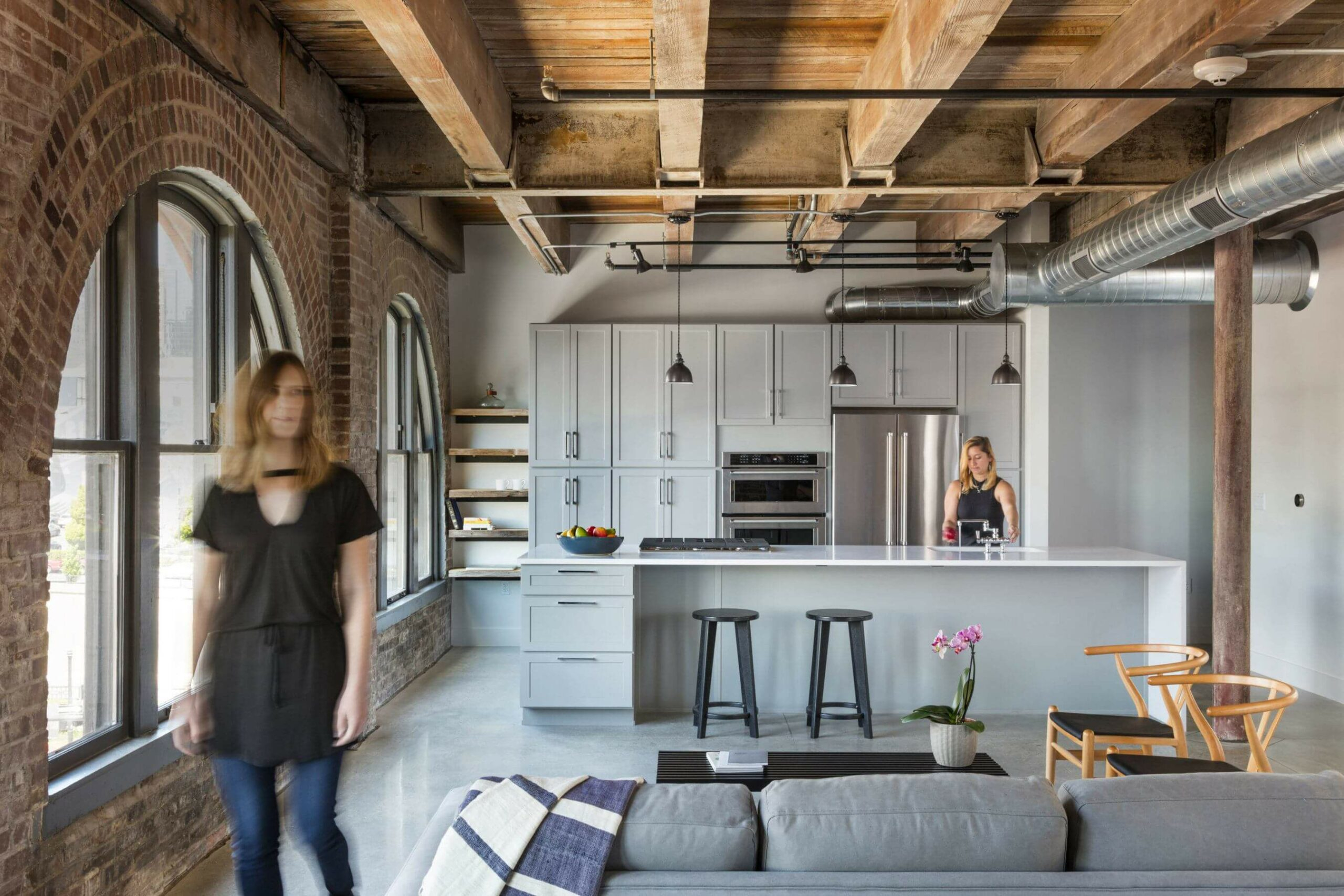
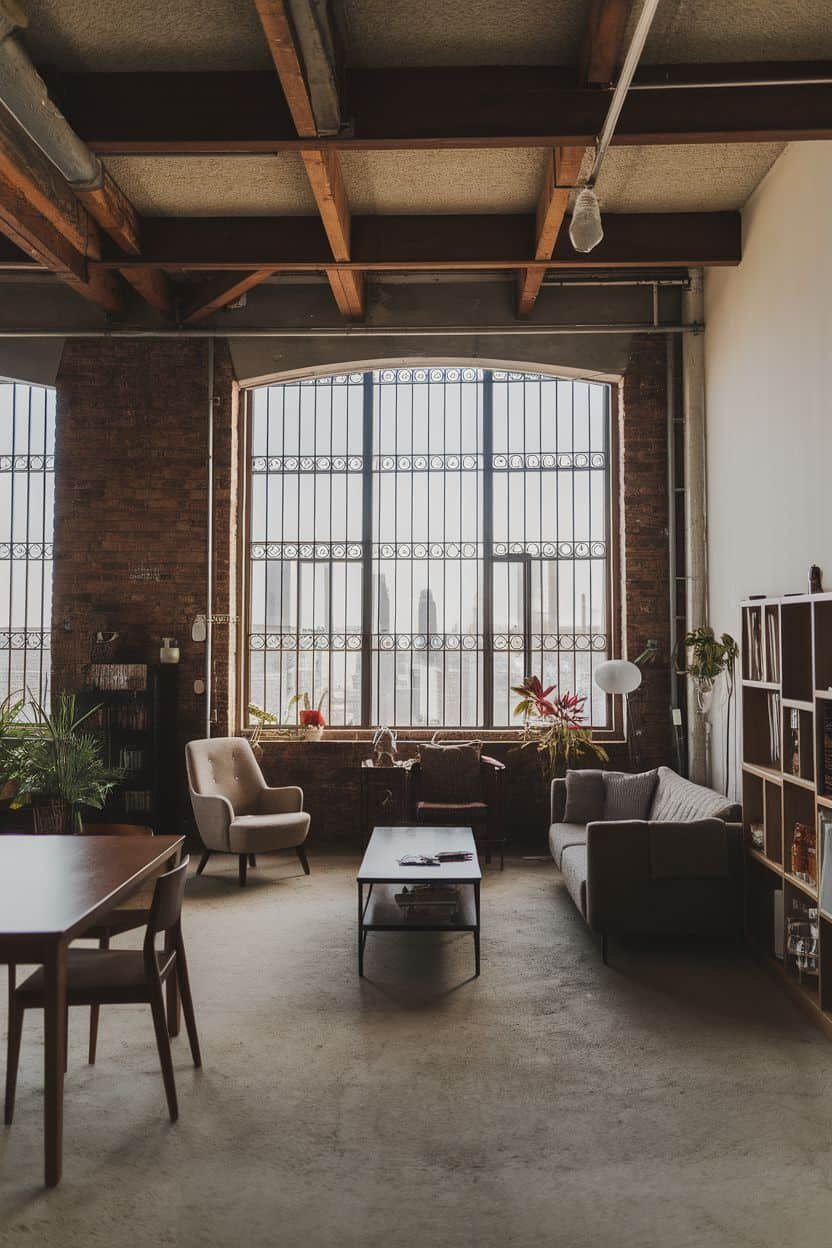
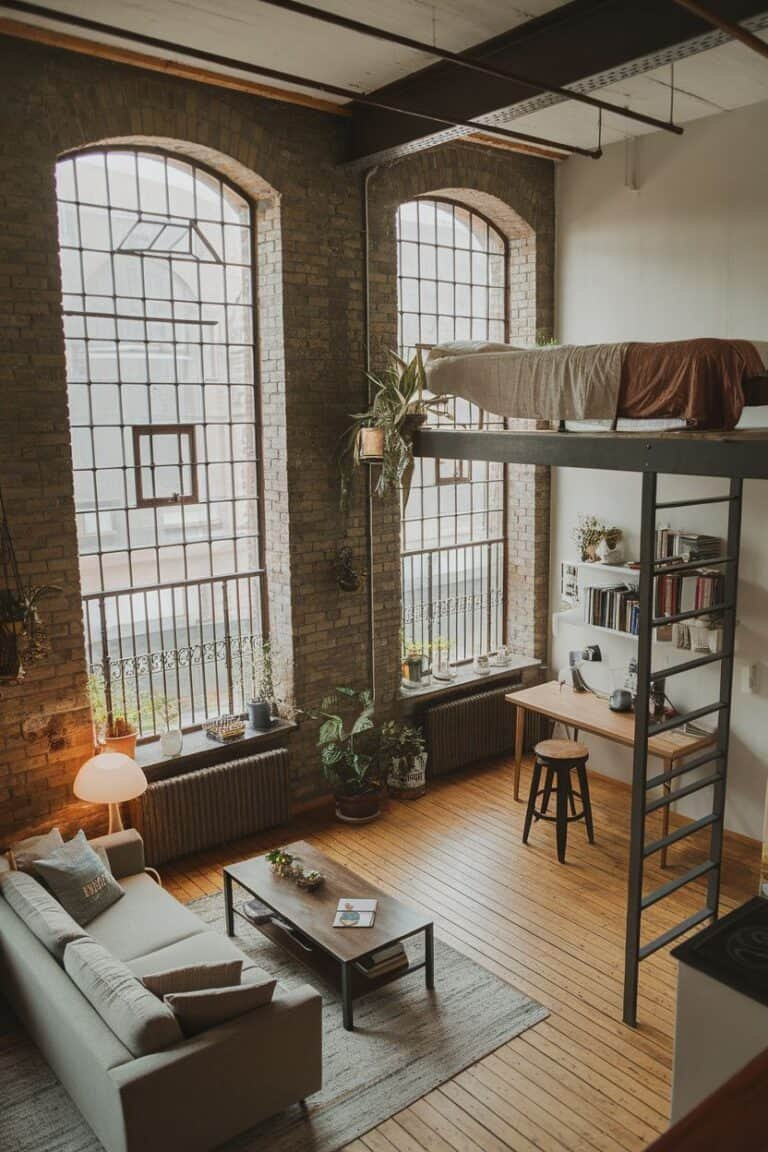
You can smell the phantom ghost of machine oil and hot steel the moment you walk into a converted 19th-century textile mill. The space speaks in a heavy, physical language: scarred maple floors that have absorbed a century of foot traffic, monumental iron-framed windows drawing in a north-facing wash of slate-grey light, and massive brickwork cured by decades of ambient heat. Most of us do not live in abandoned locomotive factories or converted Brooklyn warehouses. We live in mid-century suburban splits, drywall-heavy townhomes, or cookie-cutter apartments where the straightest line in the room is a strip of cheap plastic baseboard.
Yet, the urge to capture that raw, utilitarian grit inside domestic walls remains intensely powerful. The factory chic aesthetic rejects the sterile perfection of mass-produced flat-pack furniture in favor of honesty. It celebrates the scuff, the weld, the weld-burn, and the grain. The irony of the current design market, however, is that high-end retailers have weaponized this nostalgia. They charge four-figure sums for synthetic "reclaimed" wood consoles and factory carts that rolled off an overseas assembly line yesterday morning. True industrial style was never about boutique luxury; it was born from economic necessity, functional pragmatism, and industrial surplus.
Bringing this gritty elegance home without emptying your savings account requires shifting your perspective. You stop looking at the home improvement center’s lighting aisle and start scouting commercial surplus liquidators, salvage yards, and the dusty corners of second-hand marketplaces. Factory chic is less about purchasing a curated look and more about uncovering utilitarian objects and redeploying them in domestic spaces. When you look past the pristine veneer of modern consumerism, you realize that the raw materials of industry—galvanized steel, structural iron, unvarnished timber, and heavy-gauge wire—are often fundamentally cheaper than their polished retail counterparts.
The Raw DNA of Industrial Design and Why It Costs Less Than You Think
To recreate the factory look on a strict budget, you first need to understand the mechanical logic that governed historical manufacturing spaces. Nothing in a 1920s machine shop was decorative for the sake of decoration. Heavy cast-iron table bases existed solely to dampen the seismic vibrations of high-speed lathes. Copper pipe conduits were run externally along brick walls because tearing up reinforced concrete to hide wiring was economically impossible. Steel storage bins were stamped by the thousands because sheet metal was cheap, fireproof, and indestructible.
This functional honesty forms the core of why industrial design can be remarkably economical. When you strip away ornamentation, veneers, chemical stains, and protective lacquers, you remove the manufacturing steps that inflate retail prices. Raw hot-rolled steel plate, standard construction-grade lumber, and utilitarian hardware cloth cost a fraction of custom-milled cabinetry. By leaning into the unfinished aesthetic, you bypass the labor-intensive finishing processes that furniture factories charge a premium to apply.
Furthermore, the industrial palette is inherently forgiving. Perfection is the enemy of factory chic. A brand-new mahogany dining table demands pristine maintenance; a scratch breaks your heart. Conversely, a dining surface built from scaffolding planks resting on industrial trestles actually improves with every coffee ring, ink stain, and knife gouge. This durability shifts your financial calculus. You are buying materials designed to withstand industrial abuse, meaning your initial investment yields decades of resilient service without requiring delicate upkeep or replacement cycles.
Sourcing Salvage Materials Without Paying Boutique Markups
The single biggest budget trap in industrial decorating is walking into a trendy urban boutique and buying items marketed as "factory chic." These businesses function as middle-men, scouring salvage yards, marking up the inventory by three hundred percent, and selling it under a lifestyle brand name. To keep costs low, you must become your own primary source, cutting out the retail markup entirely by going directly to the industrial ecosystem’s secondary markets.
Commercial liquidators are the holy grail for budget-conscious decorators. When an old manufacturing plant, school, hospital, or commercial warehouse closes down, liquidation companies auction off the contents by the ton. This is where you find heavy-duty steel shelving units, laboratory stools with cast-iron screw adjustments, porcelain factory pendant lights, and heavy workbenches that would cost thousands if replicated today. Keep an eye on local auction listings, commercial real estate clearance notices, and government surplus property sites.
Beyond commercial liquidation, your local architectural salvage yard is an endlessly fertile ground for character-driven components. While salvage yards in major metropolitan areas have caught onto the design trend, rural yards or yards operating in industrial Rust Belt regions still price items based on utility rather than aesthetic demand. Look past the rust. A quick application of a wire brush and a coat of clear matte sealant can transform a grimy, grease-stained gear housing or steel locker door into a striking architectural wall sculpture.
Step-by-Step Practical Implementation Guide for Industrial Rooms
Executing a factory chic transformation requires a methodical approach that balances heavy structural elements with comfortable domestic living. Rushing out to buy a dozen metal chairs will make your living room look like a municipal waiting room rather than a sophisticated urban sanctuary. Follow these step-by-step methodologies to build your industrial space intentionally and economically.
- Step 1 (Audit and Expose Structural Realities): Walk through your rooms and identify hidden industrial potential. Remove plastic register covers and replace them with stamped cast-iron or brass floor vents. Check behind drywall corners or utility panels to see if an accent wall features original brick or heavy timber framing that can be exposed.
- Step 2 (Anchor the Room with Heavy Metal Base Furniture): Instead of matching bedroom or living room sets, source singular statement pieces built from iron and wood. Build your own media console or coffee table using structural steel angle iron for the frame and thick construction-grade Douglas fir or scaffolding planks for the surfaces.
- Step 3 (Layer Industrial Illumination): Swap standard builder-grade dome lights for utilitarian lighting fixtures. Hunt for vintage porcelain enamel warehouse shades, wire-cage pendant lights, or DIY your own lamps using rigid electrical conduit pipe, black iron floor flanges, and vintage-style Edison LED bulbs.
- Step 4 (Incorporate Raw Textile Contrast): Industrial spaces run the risk of feeling cold and acoustic-heavy. Soften the visual and auditory harshness by introducing heavy, tactile textiles like raw canvas drop cloth curtains, unbleached burlap accent pillows, cowhide rugs, or vintage wool military blankets.
- Step 5 (Curate Mechanical and Found Objects): Finish the space with authentic utilitarian artifacts rather than mass-produced retail knick-knacks. Use old wooden machinist’s boxes for coffee table storage, mount vintage galvanized metal letters on the wall, or display a collection of antique glass insulators on a floating iron bracket shelf.
Common Pitfalls and Field-Tested Workarounds for Factory Decor
Transforming a domestic environment into a functional industrial workspace can easily slide into parody if executed without restraint. The most common error is turning a residential bedroom into an abandoned factory floor complete with safety hazards and structural discomfort. Avoiding these aesthetic traps ensures your home remains a comfortable, livable sanctuary.
- Pitfall 1 (The Theme Park Trap): Overloading a room with literal warning signs, fire extinguishers, and factory clocks makes the space feel like a themed restaurant rather than a home. Workaround: Balance the heavy industrial pieces with organic textures, plush seating, and warm lighting to ground the utilitarian items in a residential context.
- Pitfall 2 (Sharp Edges and Unsafe Surfaces): Salvaged industrial steel often features razor-sharp burrs, flaking rust, or jagged edges that can slice skin or ruin clothing. Workaround: Always pass salvaged metal through a rigorous prep phase—grind down dangerous burrs, scrub away loose scale with a wire wheel, and apply a stabilizing clear coat like Rust-Oleum or Penetrol to seal the surface.
- Pitfall 3 (Acoustic Echo Chambers): Hard concrete, exposed brick, bare wood floors, and metal furniture create a terrible acoustic environment where voices bounce and echo aggressively. Workaround: Introduce sound-absorbing elements hidden in plain sight, such as a thick wool area rug, deep-seated upholstered armchairs, heavy canvas window treatments, or upholstered acoustic panels disguised as canvas art.
- Pitfall 4 (Buying Faux-Aged Retail Junk): Purchasing mass-produced furniture printed with fake rust and printed wood grain looks cheap and lacks authentic character. Workaround: If you cannot afford genuine vintage salvage, build or buy items made from real, honest raw materials—untreated dimensional lumber and plain steel—and let them age and patina naturally through your daily use.
- Pitfall 5 (Ignoring Scale and Proportion): Industrial furniture is often built for massive factory footprints, meaning standard residential proportions are easily overwhelmed. Workaround: Measure your ceiling height and floor area carefully before hauling home a massive work table; opt for slim-profile iron brackets and slender pipe legs that maintain visual lightness in smaller rooms.
The Broader Economic and Sustainable Value of Upcycled Industrial Style
Choosing the factory chic aesthetic is not merely a design preference; it is a quiet rebellion against the throwaway culture of modern consumerism. In an era where flat-pack furniture is frequently discarded during the first apartment move because cam-locks stripped out of particleboard, industrial design champions longevity. Real steel, cast iron, and solid timber can be disassembled, re-welded, sanded, and repurposed indefinitely. When you source salvage materials, you actively divert heavy-duty industrial waste from local landfills.
From an economic standpoint, building an industrial-style home acts as a hedge against inflation. While the cost of processed, high-end retail furniture fluctuates wildly based on trendy branding and supply chain bottlenecks, the foundational materials of industry remain universally available and relatively inexpensive. A length of black iron pipe costs the same whether it is destined for a plumbing stack or a custom bookshelf. By purchasing raw stock and applying basic hand tools, you capture the surplus value that corporate manufacturers usually claim for themselves.
Moreover, this design philosophy fosters a deeper connection to your living space. When you spend a Saturday afternoon wire-brushing a rusted factory cart base, sealing the metal, and bolting down a custom-cut wood top, that piece of furniture carries a narrative. It is no longer an anonymous box delivered by a courier service; it is a physical project with your own labor baked into its joints. That psychological ownership changes how you treat your home, shifting your mindset from passive consumption to active curation.
Actionable Recommendations and Key Takeaways for Your Project
Embarking on an industrial home makeover can feel overwhelming when viewed as a whole house project. The secret to success lies in treating your home as a collection of vignettes rather than a single massive overhaul. Begin with high-impact zones where utilitarian materials naturally make sense, such as the home office, kitchen, or entryway, before expanding into softer spaces like bedrooms.
Prioritize function over form in every purchasing decision. If an industrial element does not serve a clear purpose—whether it is holding books, shedding light, or providing a stable surface—leave it out to prevent clutter. Keep your toolkit simple: an angle grinder with a wire wheel attachment, a heavy-duty drill, a can of matte clear sealer, and basic woodworking clamps will allow you to fabricate and finish ninety percent of your own budget-friendly industrial decor.
Finally, embrace the patina of time. The beauty of factory chic is that perfection is explicitly not required. Let the minor imperfections tell a story. A dented steel filing cabinet used as a bedside table or a heavy workbench serving as a kitchen island brings a grounded, unpretentious gravity to your rooms that shiny, pristine retail items can never replicate.
The enduring appeal of factory chic lies in its absolute refusal to pretend to be something it is not. In a digital world where so much of what we touch and interact with daily is ephemeral, virtual, or slickly sanitized, our homes crave tangible reality. We yearn to feel the cold bite of cast iron, the coarse grain of raw timber, and the heavy weight of solid hardware.
By bypassing the luxury retail markup and tapping into the rich ecosystem of commercial salvage, industrial surplus, and smart DIY fabrication, you can curate a space that feels deeply authentic without compromising your financial well-being. The factory floor may belong to history, but its spirit of ingenuity, resilience, and unadorned utility can live on right inside your living room. Grab a wire brush, keep your eyes open at the local salvage yard, and start building a home with backbone.